
For nationwide aerial and dish removal assistance across the UK, contact the Dish Goodbye team at 0333 220 2436 or [email protected].
That rusting metal skeleton clinging to your chimney stack isn't just an eyesore; it's a structural hazard waiting for the next UK gale. If your household relies on broadband streaming, you've probably spent months wondering what to do with a redundant tv aerial that no longer serves a purpose. It's tempting to leave it alone, but unused aerials can cause serious trouble, from loosened mortar and chimney damage to water leaking down degraded coaxial cables straight into your home.
You don't have to put up with rattling brackets or risk costly exterior damp. In this guide, you'll discover how to deal with an unused TV aerial, eliminate property damage risks, and restore your home exterior to a clean, modern standard. We'll explore the real structural risks of aging mounts, weigh up DIY safety against specialist extraction, and explain how proper recycling leaves your roofline tidy and your brickwork weatherproof.
Key Takeaways
- Learn how aging chimney aerials act as heavy wind sails, loosening mortar joints and risking structural brickwork damage.
- Discover what to do with a redundant tv aerial when modern broadband streaming makes obsolete rooftop hardware unnecessary.
- Identify the crucial sealing techniques required to stop driving rain from tracking down perished exterior cables into your walls.
- Weigh the severe hazards of rooftop DIY against specialist extraction that safely protects your tiles and masonry.
- Explore how responsible scrap recycling restores a sharp, clutter-free roofline while keeping electronic waste out of UK landfills.
What Is a Redundant TV Aerial and Why Is It on Your Roof?
A redundant TV aerial is an obsolete rooftop antenna that remains bolted to your property long after you have stopped using it. Traditional aerial installers often push expensive digital upgrades or replacement masts you do not need. The reality for modern households is much simpler: broadcast equipment frequently becomes dead weight the moment you switch to internet entertainment. A standard television antenna once served as an essential link to terrestrial broadcasts, but today millions of these metal rigs sit completely disconnected from indoor sets.
The Shift from Broadcast Signals to High-Speed Internet Streaming
UK viewing habits have fundamentally transformed. With full-fibre broadband networks expanding nationwide and smart television apps dominating living rooms, live channels and on-demand box sets flow straight through home Wi-Fi. Terrestrial transmitters no longer dictate your evening schedule. Because streaming bypasses external coaxial feeds entirely, that bulky rooftop grid does nothing except collect soot, gather moss, and corrode in the damp British air. Figuring out what to do with a redundant tv aerial starts with recognizing that your home entertainment no longer relies on heavy metal arrays balanced over your head.
Common Reasons Old Aerials Linger on UK Properties
If these aerials serve no modern purpose, why do so many persist across the country? Most linger simply because rooftops remain out of sight and out of mind until something goes wrong. Previous homeowners often upgraded their viewing setups or vacated the property without tackling high-altitude removals. For current occupants, looking up at steep pitches, wet slate, and two-storey drops creates understandable anxiety about ladder safety.
Leaving the equipment untouched might feel like the easiest path, but ignoring rooftop clutter does not stop natural wear. Over time, outdoor hardware steadily degrades:
- Galvanised steel brackets lose their protective coating and rust through.
- Mounting bolts slowly work loose under continuous coastal or inland breezes.
- Cracked lead-in cables guide rainwater directly into external brickwork.
Taking the initiative to decide what to do with a redundant tv aerial prevents these slow-burning structural problems before winter storms turn a neglected fixture into an expensive domestic headache.
The Hidden Risks of Leaving an Unused Aerial on Your Property
Leaving an obsolete antenna on your roof isn't just an aesthetic compromise; it introduces real structural liabilities to your home. While it sits silently against the skyline, natural weathering and seasonal storms quietly exploit every fixture, bolt, and entry point. Deciding early what to do with a redundant tv aerial protects your brickwork, roof tiles, and interior living spaces from avoidable structural wear.
Masonry Stress, Chimney Deterioration, and Brickwork Cracking
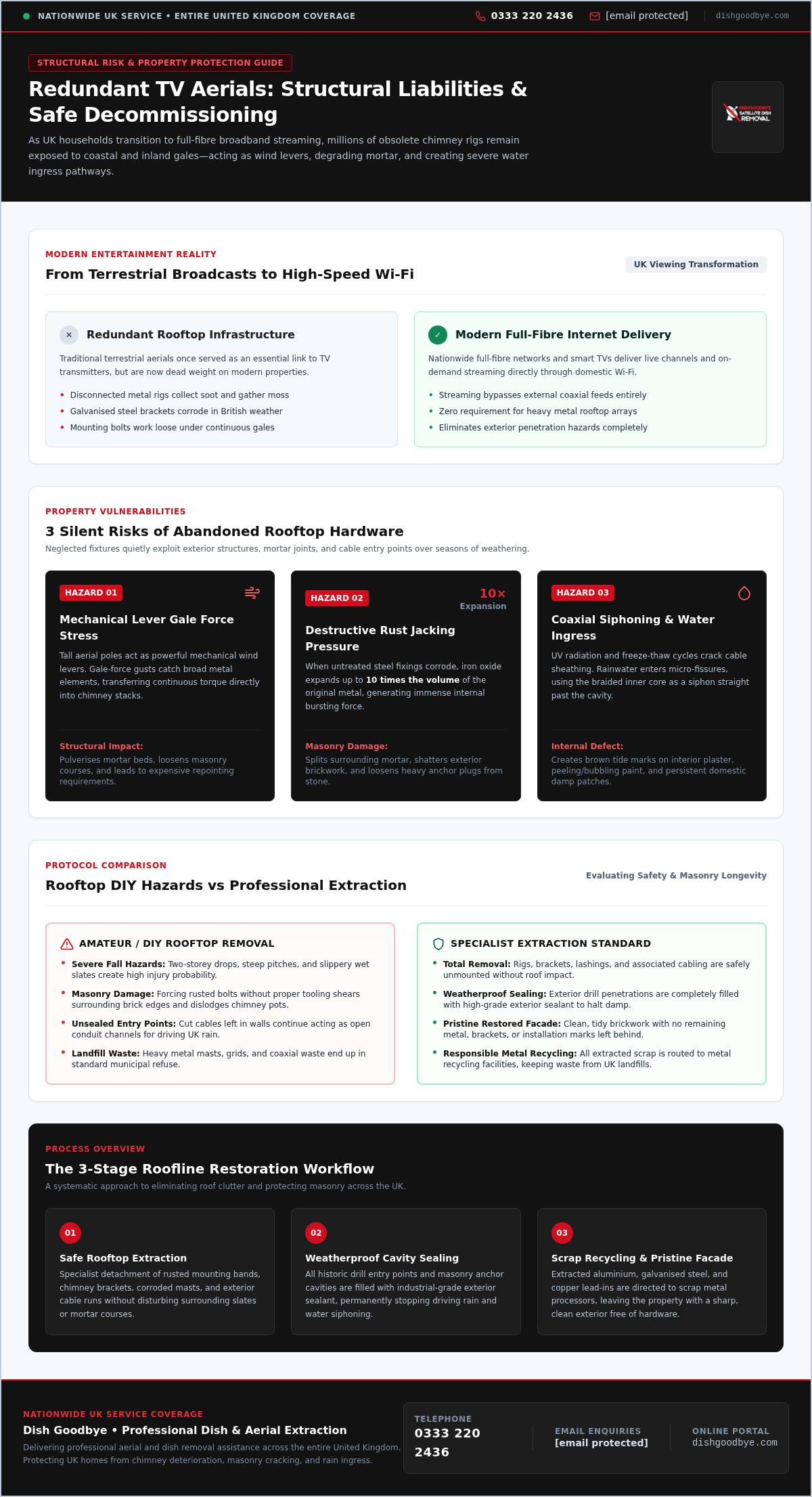
Gale-force gusts transform a tall aerial pole into a powerful mechanical lever. Every sudden blast catches the wide metal elements, transferring tremendous torque down into the mounting brackets and chimney stack. Over seasons of buffeting, this constant vibration pulverises surrounding mortar beds and loosens individual courses of masonry.
Compounding this mechanical leverage is a destructive process known as rust jacking. When untreated steel fixings corrode, iron oxide expands up to ten times the volume of the original metal. This expansion generates immense internal pressure inside brickwork and stone. Mortar splits, bricks crack, and anchor plugs work free. Arranging safe extraction through Dish Goodbye eliminates these mounting stresses before your chimney needs costly structural repointing.
Water Penetration and Cable Ingress Routes
Coaxial cables represent another overlooked pathway for home dampness. Decades of UV radiation and freeze-thaw cycles break down flexible exterior sheathing, leaving the rubber brittle and split. Rainwater enters these micro-fissures and uses the braided core inside like a siphon, drawing damp directly along cable runs.
Where those cables penetrate exterior brickwork, unsealed drill points invite trouble. Driving rain tracks down deteriorating lines straight past your wall's protective cavity. Water collects inside interior plaster, creating telltale brown tide marks, bubbling paint, and mould patches. Exploring professional dish and aerial extraction through Dish Goodbye ensures all obsolete cabling is stripped away and entry holes are fully filled with weatherproof exterior sealant.
Falling Debris and Property Survey Complications
Corroded lashings don't last forever. During severe UK winter weather, rusted brackets can snap clean away, sending heavy metal spars sliding down roof pitches. Loose equipment poses severe hazards to glass conservatory roofs, parked cars, and anyone walking along garden paths below.
Beyond immediate safety hazards, redundant hardware frequently complicates property transactions:
- RICS surveyors routinely mark loose or deteriorating roof gear as urgent repair items on home condition reports.
- Mortgage lenders may request specialized roof inspections before approving buyer applications.
- Prospective buyers often interpret peeling cables and rusted mounts as warning signs of broader property neglect.
Proactively figuring out what to do with a redundant tv aerial clears exterior clutter, protects your roofline, and maintains your home's structural integrity.
What to Do With an Unused TV Aerial: Your Best Options
Once you cut the cord on terrestrial broadcasting, rooftop equipment quickly transforms from an entertainment asset into an unnecessary burden. When deciding what to do with a redundant tv aerial, homeowners generally face three distinct paths. You can leave the assembly alone, attempt a high-risk weekend removal yourself, or turn to dedicated specialists to clear the roofline and seal your property.
Leaving It Alone vs. Proactive Removal
Doing nothing offers instant convenience, but that convenience is deceptive. As storms roll across the UK, winter gales test aging brackets and corroded fixings. Waiting for an aerial to snap, clatter down the roof, or shatter roof tiles turns a simple maintenance job into an urgent emergency repair. Taking proactive action removes that lingering worry entirely. Stripping away obsolete hardware provides an immediate visual lift, giving your home a tidy, modern profile. Thousands of UK homeowners now say goodbye to redundant tech to reclaim peace of mind.
DIY Dismantling vs. Professional Removal Services
Taking on an aerial removal yourself might seem cost-effective, but working at roof height is notoriously dangerous. Rooftop tasks demand specialised safety harnesses, secure ladder anchors, and the ability to handle seized, rusted bolts while balanced on steep pitches. One misstep can crack slate tiles, crush guttering, or cause catastrophic falls.
Professional removal eliminates all personal danger. Trained extraction experts have the correct access equipment, dismantle heavy masts with precision, and safely weatherproof masonry holes against penetrating damp. You can consult dedicated extraction experts at Dish Goodbye to handle unwanted rooftop hardware safely, nationwide.
Eco-Friendly Scrappage and Responsible Metal Recycling
Rooftop antennas contain valuable materials that must never end up in general household waste bins or domestic landfill. In the UK, aerials fall under Waste Electrical and Electronic Equipment (WEEE) regulations, meaning responsible recycling is a legal requirement. Proper processing yields immense environmental benefits:
- Aluminium elements and steel masts are sorted, melted down, and repurposed for industrial use.
- High-grade copper within old coaxial runs is stripped, reclaimed, and diverted from landfill.
- Recycling a standard domestic aerial saves approximately 50kg of carbon emissions compared to manufacturing virgin metals.
Choosing certified recycling facilities or working with a specialist team at Dish Goodbye ensures your old equipment is recycled responsibly across the UK, answering the question of what to do with a redundant tv aerial while protecting the environment.
Step-by-Step Guide to Safely Removing and Decommissioning an Old Aerial
Safely retiring rooftop hardware involves far more than simply unclipping an indoor lead and pulling on a ladder. Knowing what to do with a redundant tv aerial requires a disciplined sequence that protects both personal safety and the building fabric. Whether you are assessing your property's exterior or supervising an extraction, following a systematic decommissioning routine ensures your roofline ends up neat, tidy, and completely watertight.
Ground Assessment and Height Safety Protocols
Every safe extraction begins firmly on the ground. Step back into your garden or driveway to carry out a comprehensive visual survey. Identify any overhead power lines crossing the roof space, as alloy poles conduct electricity instantly. Note fragile ground features like conservatory glass, porch canopies, or loose gravel driveways where ladders might slip.
Working at roof level falls under the Work at Height Regulations 2005, requiring professional fall-arrest harnesses, ladder stabilisers, and purpose-built roof crawl boards. Never lean an extension ladder directly against a chimney stack. Aging mortar joints cannot bear lateral point-loads, and shifting bricks can trigger sudden ladder failure.
Dismantling Hardware and Cable Extraction
Once safe roof access is secured, hardware decommissioning proceeds methodically:
- Trace external coaxial cables down the elevation, clipping cable ties and removing masonry cleats cleanly without yanking the brick anchors loose.
- Apply penetrating fluid to rusted bracket nuts, allowing the spray to dissolve seized corrosion rather than forcing spanners against fragile mortar.
- Secure the main mast with tether lines before loosening chimney lashing bands or wall clamps, ensuring a controlled, balanced descent.
Rushing this stage risks dropping awkward aluminium frames onto slate tiles below, transforming a simple decluttering task into costly roof repairs.
Masonry Restoration and Weatherproof Hole Sealing
The job is not complete once the metal leaves the roof. Stripping brackets exposes raw drill points and crumbling plugs that act as open invitations for driving rain. Leaving these holes untreated creates direct paths for penetrating damp during wet British winters.
Clear out loose dust, old plastic plugs, and degraded debris from every fixing hole using a stiff wire brush. Inject exterior-grade silicone sealant deep into the cavity, or pack the void with colour-matched masonry repair mortar. Smooth the finish flush with the surrounding brick face so the repair blends invisibly into your exterior walls.
Want a seamless, hassle-free finish without ever climbing a ladder? Arrange safe extraction through Dish Goodbye for reliable nationwide removal across the UK, keeping your property secure, pristine, and fully protected from the elements.
How Dish Goodbye Restores Your Roofline Across the United Kingdom
Reclaiming your home's exterior should feel simple, swift, and completely satisfying. Instead of wondering what to do with a redundant tv aerial while worrying about roof damage or ladder safety, you can hand the entire job to specialists. Dish Goodbye provides a dependable, nationwide service across the entire United Kingdom, dismantling unwanted hardware and restoring property rooflines with zero fuss.
A Complete Exterior Decluttering Service
Our extraction process handles every trace of redundant equipment from top to bottom. Technicians safely remove the main antenna array, unbolt corroded brackets, release chimney lashing bands, and extract trailing coaxial wiring. Every raw anchor point and drill penetration is promptly filled with exterior-grade weatherproof sealant, smoothing the surface flush against your brickwork to stop moisture cold.
The transformation is instant. Completed work reveals a pristine, uncluttered exterior, leaving your roofline, chimney stack, and brickwork completely free of rusted metalwork. Your home instantly regains its clean architectural profile and strong kerb appeal.
Our Zero-Landfill Environmental Commitment
Discarded electronic hardware contains finite materials that require responsible handling. Dish Goodbye ensures 100% of dismantled components avoid domestic landfills through certified UK waste transfer facilities:
- High-grade aluminium masts and cross-elements are sorted for industrial melting.
- Heavy steel wall mounts and bolts are reclaimed through licensed scrap processors.
- Copper conductor wiring is stripped, separated, and fed back into manufacturing streams.
This zero-landfill commitment guarantees that answering what to do with a redundant tv aerial supports sustainable UK recycling while clearing your home.
Book Your Nationwide Removal Today
Ready to upgrade your property's exterior without lifting a finger? Our nationwide team is available across the whole of the UK, offering rapid turnarounds and fully equipped technicians who treat your property with meticulous care. Get in touch with our friendly team by calling 0333 220 2436 or emailing [email protected] to schedule your extraction. You can say goodbye to redundant aerials with Dish Goodbye and enjoy a tidy, protected home today.
Restore Your Home's Kerb Appeal and Protect Your Masonry
Leaving an obsolete rooftop antenna in place exposes your property to unnecessary risks. From harsh wind leverage that cracks chimney mortar to degraded coaxial lines that siphon water into your living room, the dangers only escalate with each passing storm. Resolving what to do with a redundant tv aerial is the quickest way to safeguard your brickwork and clear away visual clutter.
You don't need to balance on steep roofs or wrestle with seized bolts to achieve a tidy exterior. Specialist technicians handle high-level extractions safely across the entire United Kingdom. Every anchor point receives precision masonry hole sealing to prevent penetrating damp, and 100% of removed metals are sent to approved UK recycling facilities for responsible processing.
Reclaim your roofline and book nationwide aerial removal with Dish Goodbye. Contact our friendly team today on 0333 220 2436 or email [email protected] to enjoy a clean, weatherproof home.
Frequently Asked Questions
Do I legally have to remove a redundant TV aerial from my roof in the UK?
UK planning rules state that an antenna no longer needed for reception must be removed as soon as reasonably practicable under standard permitted development conditions. While enforcement on ordinary residential properties is rare, listed buildings and homes in conservation areas face stricter local authority oversight. If you are wondering what to do with a redundant tv aerial, removing it promptly keeps you fully compliant with planning conditions and prevents structural deterioration.
Can an old TV aerial cause damp inside my home?
Yes, degraded aerial fixtures are a frequent cause of hidden household damp. Perished coaxial cable jackets allow rainwater to travel down the wire core straight through external walls. Additionally, unsealed anchor holes from old mounting brackets let wind-driven rain bypass your exterior cavity, leading to internal plaster staining, damp patches, and mould growth behind skirting boards.
How much does it cost to remove a redundant TV aerial?
Professional removal costs vary depending on roof height, equipment location, and ease of access. Chimney mounts requiring specialised staging cost more than straightforward gable-end wall installations. Pricing also depends on whether you are removing an aerial on its own or combining it with satellite dish decommissioning. Contact Dish Goodbye on 0333 220 2436 or [email protected] for a direct quotation.
Can I take down an old TV aerial myself without specialist equipment?
Attempting DIY aerial removal without professional equipment is strongly discouraged due to significant fall risks. Rooftop work falls under the Work at Height Regulations 2005 and requires commercial harnesses, cat ladders, and secure anchor systems. Seized, corroded bolts make handling heavy alloy masts hazardous on steep pitches, and one slip can crack fragile roof tiles or cause severe injury.
Can redundant TV aerials be recycled at local UK household recycling centres?
Yes, TV aerials can be processed at local Household Waste Recycling Centres (HWRCs) within designated metal and WEEE disposal areas. Because aerials are classed as Waste Electrical and Electronic Equipment, throwing them into domestic wheelie bins or general landfill is illegal. Specialist extraction teams automatically transport all dismantled aluminium, steel fixings, and copper cables to licensed UK recycling facilities.
What happens to the holes in the brickwork after an aerial bracket is removed?
Leaving drill holes exposed invites water ingress, so every penetration requires immediate sealing. Professional removers clear out degraded plastic plugs and masonry dust before injecting premium exterior silicone or colour-matched repair mortar into each void. The compound is smoothed flush with the brickwork surface, sealing out water and leaving a neat exterior finish.
Will removing an old aerial improve my home curb appeal when selling?
Clearing obsolete rooftop hardware delivers an instant visual upgrade that enhances exterior curb appeal for potential buyers. A tidy, clutter-free roofline makes your home look properly maintained and modern. Furthermore, taking proactive action on what to do with a redundant tv aerial eliminates adverse flags on RICS property condition surveys regarding loose chimney fittings or exterior maintenance issues.
To arrange professional removal anywhere in the UK, contact Dish Goodbye at 0333 220 2436 or email [email protected].