
What if clearing away cables nobody uses could make a building look less dated? If you’re considering removing redundant cables from exterior wall surfaces, first identify what each cable connects to. Dish Goodbye provides UK-wide removal of redundant satellite dishes, aerials and associated cabling. Visit dishgoodbye.com, call 0333 220 2436 or email [email protected].
Old or untidy wiring is not necessarily redundant. Appearance alone can’t tell you whether a cable is still in use, and removing fixings carelessly can leave holes or damage the wall. Check what you can from a safe position before any work begins. Never interfere with a cable that may carry mains electricity.
This guide explains how to assess exterior cable clutter, plan a safe removal and leave the wall looking neater, with fixing holes filled and smoothed. It also covers responsible handling of removed materials. For UK-wide removal of redundant dishes, aerials and associated cabling, contact Dish Goodbye at dishgoodbye.com, 0333 220 2436 or [email protected].
Key Takeaways
- Loose, unused wiring can make a cared-for exterior look cluttered. Start by identifying what the cables connect to.
- A dish or aerial may be gone while its cable remains connected or in use. Don’t assume a line is redundant because it looks old.
- Plan removal as a complete job, including access, associated fixings, wall repairs and waste handling.
- Filling and smoothing fixing holes helps leave a neater finish after cables and brackets are removed.
- Dish Goodbye removes redundant cabling associated with dishes and aerials from residential and commercial properties across the UK.
How Redundant Exterior Cables Can Make a Building Look Dated
Loose wires looping across a wall, tangled runs beside a window or clips left on freshly painted brickwork can distract from an otherwise well-kept exterior. Even when a building is clean and cared for, leftover cables can make the facade look cluttered and older than it is.
Redundant exterior cables are wires no longer needed for the equipment they were originally connected to. But appearance alone can’t confirm whether a cable is disconnected, still in use or safe to remove. Before removing redundant cables from exterior wall surfaces, establish what they serve.
Which exterior cables might be redundant?
A cable running down an outside wall may be associated with a satellite dish or aerial, but its appearance doesn’t confirm its purpose. The dish or aerial may have been removed while the cable remains connected to equipment or in use elsewhere. If it’s safe to do so from ground level, follow the visible route towards the equipment at its end. If you can’t identify where it goes, don’t cut, pull or disconnect it based only on its age or appearance.
Why does cable removal change the look of a wall?
Long cable runs interrupt the clean lines of brickwork, render and painted surfaces. Removing wiring that has been confirmed as redundant lets more of the wall finish show through, making the exterior look simpler and tidier. This kind of visual order is also a feature of a structured cabling system, where building cables are organised rather than left as a tangle of unrelated runs.
Consider the small details too. Clips, brackets and fixing holes can remain after a cable is removed, leaving the wall looking unfinished. Dish Goodbye removes redundant cabling associated with dishes and aerials, along with associated brackets and fixings, then fills and smooths the holes left behind. That makes the clear-up more complete than simply removing the visible cable.
Cable removal is one practical part of an exterior refresh, not a full renovation. Clearing confirmed redundant wiring reduces visual clutter, while repairing fixing points helps the improvement look deliberate. First establish what the cable serves, then consider the cable and the marks its fittings leave behind.
Before Removing Exterior Wall Cables, Check What They Connect To
A cable can look old and still have a purpose. Before arranging its removal, identify any equipment it connects to and where its route appears to lead. A satellite dish or aerial may have been taken down while its cable remains connected elsewhere or continues to be used. Don’t treat a cable as redundant until its purpose is understood.
Keep this check visual. Look from a safe, accessible position and don’t disturb the wire or its fittings. If you can’t follow the route or confidently identify the connected equipment, leave the cable in place until its purpose is clear.
How can you assess a cable without disturbing it?
From a safe position, look for visible connections to a dish or aerial, where the cable enters the wall and any accessible section of its route. Check whether the associated equipment is still present, but don’t touch the brackets or fittings. Faded insulation, a messy appearance, age or an unused room doesn’t prove that a line is inactive. If its destination remains uncertain, don’t cut, pull or disconnect it.
When should removal be handled professionally?
Use professional help when cabling is fixed at height or attached to heavy equipment. The work may involve removing brackets and fixings as well as the cable, then attending to the wall. Dish Goodbye handles redundant cabling associated with dish and aerial removal, including the related brackets and fixings.
If you’re planning removing redundant cables from exterior wall areas and the route is unclear or difficult to access, don’t guess or attempt to reach it. A careful assessment helps avoid disturbing a cable that may still be needed.
Dish Goodbye provides UK-wide removal of redundant dishes, aerials and associated cabling. Start by noting what you can identify from a safe position, and leave uncertain or high-level equipment undisturbed. For an overview, visit professional dish and cable removal.
Plan a Clean, Safe Route to Removing Redundant Cables
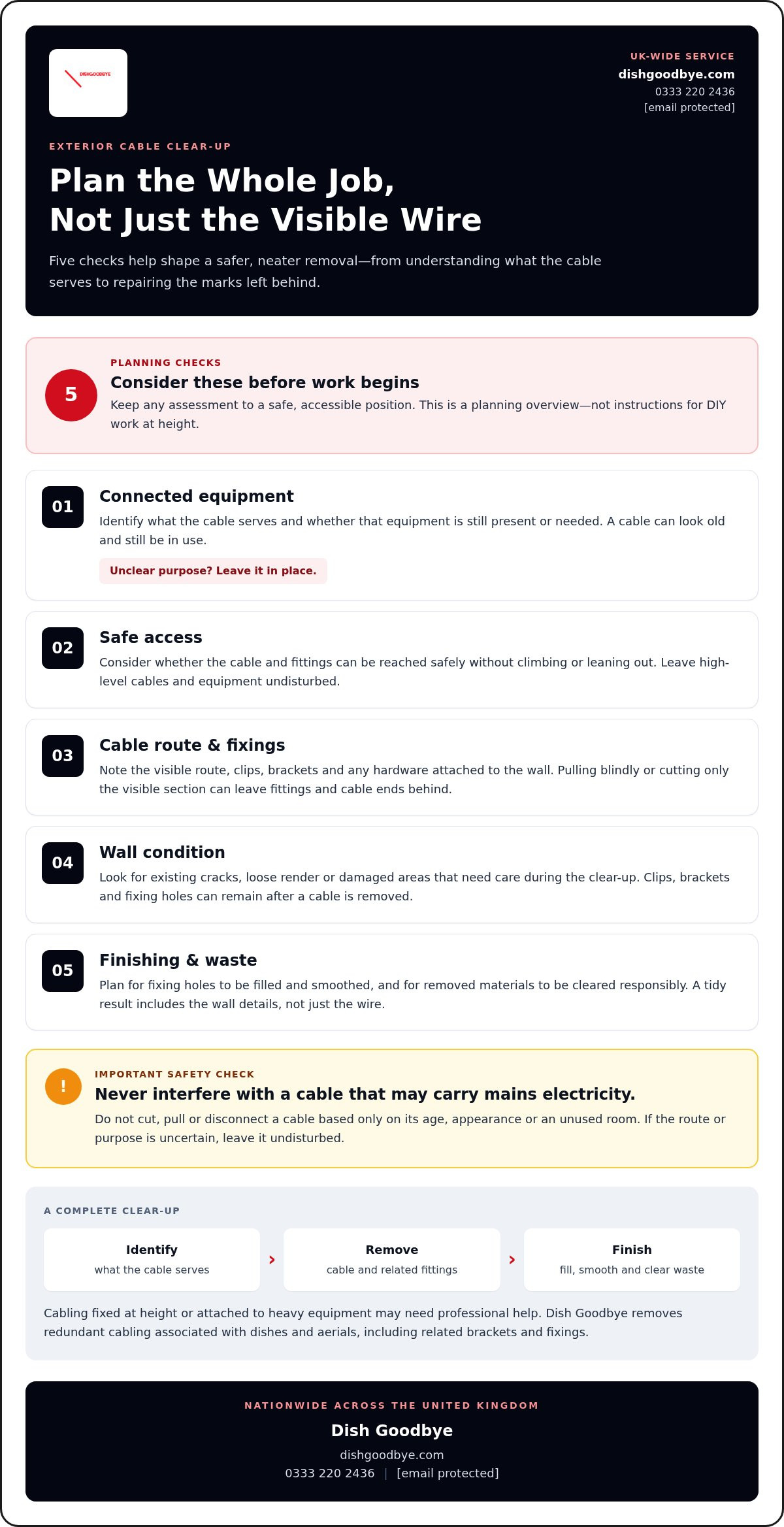
A tidy result depends on planning the whole job, not just removing the visible wire. This is a planning overview, not instructions for DIY work at height. Keep any assessment to safe, accessible positions and leave high-level cables or equipment undisturbed.
Before work begins, consider:
- Connected equipment: Identify what the cable serves and whether the equipment is still present or needed.
- Access: Consider whether the cable and fittings can be reached safely without climbing or leaning out.
- Cable and fixings: Note the visible route, clips, brackets and any dish hardware attached to the wall.
- Wall condition: Look for existing cracks, loose render or damaged areas that need care during the clear-up.
- Finishing and waste: Include filling and smoothing fixing holes, then clearing removed materials responsibly.
A simple cable run and wiring attached to a dish or other hardware may need different approaches. Pulling a cable blindly can tug at clips, disturb the wall or leave ragged entry points and holes. Cutting only the visible section may leave cable ends and fittings behind. Don’t remove equipment or wiring unless you understand its purpose.
Why plan removal and repair together?
Cable removal and wall repair are separate parts of the job, but both affect the finish. Once redundant wiring, brackets and clips are gone, fixing holes may still interrupt the surface. Dish Goodbye fills and smooths holes left by removed fixings, helping the exterior look more complete. Removed metal and electronic waste is processed through approved recycling centres.
Where a dish or aerial and its cabling are both redundant, planning their removal together can clear more of the visual clutter. Read about professional dish removal and property protection to learn how removal and care for the exterior fit together.
Plan the work in order: identify connected equipment, assess access, remove only confirmed redundant cabling and associated fittings, repair the fixing holes, then clear the waste. This is a more considered approach to removing redundant cables from exterior wall surfaces because it accounts for the fittings and the wall, not just the wire.
Repair Cable Fixing Holes for a Neater Exterior Finish
Removing a cable can make a wall look clearer, but marks left by clips and brackets can still catch the eye. Fixing holes may stand out on brickwork, render or painted surfaces, particularly when the exterior has recently been refreshed. A neat result means considering the wall as well as the wiring.
What happens to holes left by cable fixings?
When a clip or bracket is removed, its fixing point may leave a small hole or chipped patch. An open hole can also provide a route for water to enter the wall, so it’s sensible to attend to it rather than treating it as purely cosmetic. The effect depends on the wall material and its condition, so don’t assume every hole will look or behave the same way.
Filling and smoothing helps create a more continuous-looking surface and gives the cleared area a finished appearance. It can help protect the exterior, but no repair should be treated as a guarantee against damp. For more context, read this guide to unfilled exterior fixing holes and damp.
How does wall repair support a less dated appearance?
The cable may be gone, but scattered fixing marks can make the wall look as though the job stopped halfway through. A smoother finish gives brickwork, render or paint a tidier appearance. The final result depends on the surface and its condition, so don’t assume the repair will be an exact colour match.
Dish Goodbye fills and smooths fixing holes as part of its removal of redundant dishes, aerials and associated cabling. Coordinating this repair with other exterior work, such as painting or rendering, can help the overall finish feel consistent. It also means the wall is considered as a whole instead of leaving visible marks to deal with later.
For a neater finish, treat cable removal and making good as connected parts of the same refresh. Dish Goodbye removes redundant cabling and associated fixings across the UK, with removed metal and electronic waste processed through approved recycling centres. Arrange professional dish and cable removal for a more complete exterior clear-up.
Finish the Exterior Refresh with Complete Cable Removal
Dish Goodbye provides professional removal of redundant cabling associated with dishes and aerials across the United Kingdom. Visit dishgoodbye.com, call 0333 220 2436 or email [email protected].
A complete clear-up should remove confirmed redundant cables and leftover clips or brackets, then leave fixing holes filled and smoothed. This gives the wall a neater, more considered finish. The result depends on the existing material and condition, so focus on a tidy, well-finished surface rather than assuming it can always be made to look brand new.
What does a tidy finished result include?
Look beyond the cable itself. Associated redundant fittings should be removed and fixing points attended to, so the wall doesn’t appear half-finished. Dish Goodbye removes redundant cabling alongside dishes, aerials, brackets and fixings, then fills and smooths holes left by removed fixings. Removed metal and electronic waste is processed through approved recycling centres.
If you’re recording the improvement, after photos should show the cleared exterior with no satellite dish or aerial. The change can complement a broader kerb-appeal refresh, but keeping the cable removal and wall finish central helps the job feel complete.
How can you take the next step?
Dish Goodbye provides removal services for residential and commercial properties across the UK. The work brings together removal of redundant cabling associated with dishes and aerials, related fittings, filling and smoothing fixing holes, and responsible handling of removed metal and electronic waste. For more on this work, visit the professional dish removal service. A wider exterior refresh can build on the tidier wall without turning cable removal into a full renovation.
Ready to clear the visual clutter? Contact Dish Goodbye at dishgoodbye.com, call 0333 220 2436 or email [email protected] to arrange professional removal of redundant cabling associated with dishes and aerials.
Give Your Exterior a Cleaner Finish
Old cables can make a cared-for building look cluttered, but appearance alone won’t tell you whether a line is redundant. Identify its purpose first, then plan the whole clear-up: remove confirmed redundant cabling and associated fixings, and fill and smooth the holes they leave. This complete approach to removing redundant cables from exterior wall surfaces helps create a neater finish while accounting for the wall itself.
Dish Goodbye provides professional removal for residential and commercial properties across the UK. The service includes associated fixings and filling and smoothing the holes they leave. Removed metal and electronic waste is processed through approved recycling centres. For a tidier exterior, arrange professional removal of redundant exterior cables, call 0333 220 2436 or email [email protected].
Take the first step towards a cleaner-looking wall and a more cared-for exterior.
Frequently Asked Questions
Can I remove redundant cables from an exterior wall myself?
You can make visual checks from ground level, but removing a cable is a different matter. First identify what it connects to. Don’t cut or pull an unidentified line, and don’t attempt removal at height. If access is difficult or the cable’s purpose remains uncertain, leave it undisturbed. Professional removal can include redundant cabling associated with dishes and aerials, related fixings, and filling and smoothing the fixing holes.
How do I know whether an exterior cable is redundant?
Age and appearance alone can’t show that an exterior cable is redundant. From a safe position, look for visible connections to a satellite dish, aerial, wall entry point or other equipment. Check whether the equipment is still in place, but don’t touch fittings or pull the wire to investigate. If you can’t confidently identify the cable’s route or purpose, leave it undisturbed until it can be assessed.
Will removing exterior cables leave holes in the wall?
It can. Clips and brackets are fixed to the wall, so removing them may leave small holes or marks. Filling and smoothing these points helps create a more continuous-looking finish and can help protect the exterior. The final appearance depends on the wall material and its condition, so don’t assume the repair will be an exact colour match or make the surface look brand new.
Can redundant exterior cables cause damp?
The cable itself doesn’t inevitably cause damp, but open fixing holes may provide a route for water to enter the wall. That’s why it’s sensible to address holes left by cable clips or brackets after removal. Filling and smoothing can help protect the exterior, though the result depends on the wall and its condition. If you notice damp or damage, consider the wider state of the surface as well as the fixing points.
Should I remove cables before painting or rendering an exterior wall?
If a cable is confirmed as redundant, removing it and its fixings before painting or rendering can help prepare a less cluttered surface. Plan the order of work so cable removal, attention to fixing holes and the exterior finish fit together. Don’t remove a line just because it crosses the area being refreshed. First establish what it connects to, and leave uncertain or difficult-to-access cables undisturbed.
What happens to removed satellite and aerial cables?
Dish Goodbye removes redundant cabling associated with satellite dishes and aerials as part of its exterior removal service. This can include associated brackets and fixings, with holes left by removed fixings filled and smoothed. Removed metal and electronic waste is processed through approved recycling centres, making cable removal part of a more complete exterior clear-up.
Does Dish Goodbye remove exterior cables across the UK?
Yes. Dish Goodbye serves residential and commercial properties across the United Kingdom. Its removal work includes redundant cabling associated with dishes and aerials, along with related brackets and fixings. Technicians fill and smooth holes left by removed fixings, and removed metal and electronic waste is processed through approved recycling centres. Visit dishgoodbye.com, call 0333 220 2436 or email [email protected].