

An old dish can make a well-kept home look unfinished. Removing a satellite dish before selling your house can tidy the exterior, but it is not always the right choice. First consider whether it is still useful, serves a shared system, or is covered by an agreement with the buyer or property owner.
It is natural to want the exterior looking its best before viewings. But taking down the dish is only part of the job. The fixing holes and cable entry point also need attention, and working at height can make a seemingly simple task unsafe.
This guide explains when removal makes sense and when leaving the dish in place may be more practical. It covers safe access, wall repairs and sale arrangements, helping you decide without creating extra work at the last minute.
Contact: 0333 220 2436 | [email protected]
Key Takeaways
- Decide whether the dish is redundant, still useful or part of a shared system before arranging removal.
- Plan to make good the fixing holes and cable entry point; further decorating or exterior repairs may still be needed.
- Consider access, the dish’s condition and the surrounding area before attempting removal, especially at height.
- Agree whether the dish will stay or go as part of the sale, and consider any relevant property or lease arrangements.
- Learn what Dish Goodbye’s satellite dish removal covers and what details to include in an enquiry.
Can an Old Sky or Satellite Dish Be Removed?
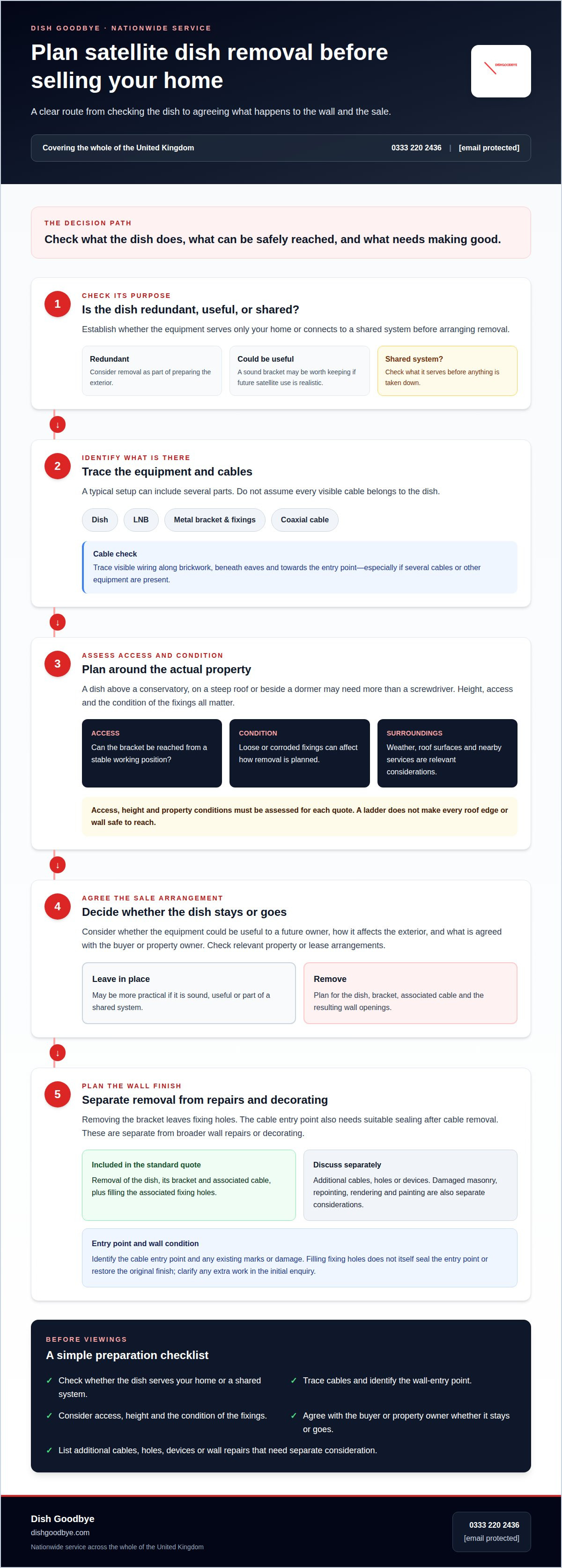
Yes, you can remove an old Sky or satellite dish, but first decide which parts should go. A typical setup includes a dish, an LNB, a metal bracket, fixings and coaxial cable. Removing the complete assembly clears the exterior. If satellite service may be useful again, you could keep a sound bracket and remove only the dish. First establish whether the equipment serves only your home or connects to a shared system.
The condition of the equipment also matters. A dish and bracket that look intact may be useful to a future owner, while a loose or corroded assembly may be better removed. Consider exterior cables separately: they may run along brickwork, beneath the eaves or towards an entry point. Do not assume every visible cable belongs to the dish.
When the bracket is removed, its fixing holes remain in the wall. Filling these holes helps leave a neater surface, but it is not the same as repairing damaged masonry, repointing, rendering or repainting. The cable entry point also needs a suitable seal after the cable is removed. An open hole can let water or cold air inside, and its location may allow insects through.
A suitable cable gland or colour-matched mastic plug can seal the entry point. Gaffer tape is not a lasting substitute. The aim is to close the opening without making the repair more conspicuous than necessary. If the wall is already marked or damaged, identify those areas separately from the fixing holes before arranging additional repairs.
- Remove the full assembly: take down the dish, LNB, bracket, fixings and associated exterior cable.
- Keep a sound bracket: leave it in place if future satellite use is a realistic possibility.
- Identify cables: trace visible wiring before removal, especially where routes serve other equipment.
- Finish the openings: fill associated fixing holes and seal the cable entry point appropriately.
Internal satellite wiring is often left in place because removing it can disturb decoration without much practical benefit. Removing exterior cable can make future painting or other façade work easier. Identify the route first, especially if several cables run across the wall or beneath the eaves.
For a sale, weigh the dish’s usefulness against the exterior’s appearance and the work needed afterwards. Complete removal means considering the dish, bracket, cable and resulting openings as separate parts of the job. Decide what stays, what goes and which visible marks need attention. This gives you a clearer plan for the exterior before viewings.
Making good the wall before decorating or selling
Removing a dish can reveal more than bracket holes. Check the wall for cracked mortar, chipped brick faces, staining and marks left by cables. These details affect what needs attention before painting, rendering or taking sale photographs. A small fixing hole and damaged masonry are different jobs, so assess each area separately.
Start by identifying every mark linked to the installation. Check the former bracket position, the cable route and the point where the cable entered the house. If the dish is still in place, plan repairs after removal, when the full pattern of fixings is visible. The cable entry hole needs closing as well as the holes made by the bracket screws.
Filling the fixing holes helps leave a neater surface on sound brickwork. The finish should suit the wall: mortar joints need a different appearance from the surrounding brick faces. A contrasting filler can stand out in close-up estate-agent photographs, even when the repair is small. Match the repair as closely as practical to the existing surface and mortar colour.
Before decorating, consider whether the wall needs more than filling. Crumbling mortar, chipped brickwork or a rough cable route may need separate masonry work. Filling the holes does not automatically include repointing, replacing damaged bricks, rendering or painting. What is needed depends on the visible condition and the finish you want for the property.
- Inspect the fixing points: note loose mortar, cracked brick faces and holes around the old bracket.
- Check the cable route: identify clips, surface marks and the wall-entry point that may need attention.
- Plan the finish: decide whether filling is enough or whether painting, rendering or masonry repairs are also needed.
- Review the result: look at the repaired wall from the garden, pavement and likely viewing-photo angles.
Timing matters if you are planning exterior decorating. Removing redundant cables before painting can leave a clearer surface and make the decorating work easier. Agree the order of removal and repairs so the wall is not painted before the holes are filled. If the house is already on the market, tidy repairs can make the exterior look better cared for, but removal alone will not necessarily restore the original finish.
For a property sale, distinguish removal from the final decorating standard. A standard Sky Dish Removal quote includes filling the associated fixing holes, while additional holes, cable runs, damaged masonry and painting need separate consideration. Describe any extra work clearly when requesting a quote. This helps set expectations before the wall is ready for its final finish.
Safe access and professional removal
A dish above a conservatory, on a steep roof or beside a dormer needs more than a screwdriver. Safe removal depends on reaching the bracket without leaning beyond a stable working position. A ladder does not make every roof edge or wall safe to access. The dish can also be awkward to control if its fixings have corroded.
Access, the condition of the fixings, weather and nearby services all affect the removal plan. Wet roof tiles, for example, can affect footing, while a loose bracket may shift as fastenings are undone. Overhead cables, a narrow path or a glazed extension can limit where equipment and removed parts can be handled. Consider these factors before starting work.
Do not climb a ladder, go onto the roof or lean out to take photographs for a removal quote. Share views of the building taken from the ground and explain where the dish is, such as above a first-floor window or behind a chimney. If its fixings look rusty or the assembly seems loose, mention that too. This gives a clearer picture without putting you in an exposed position.
- Access: note whether the dish is reachable from the ground or sits above a roof, extension or narrow side passage.
- Condition: describe visible rust, loose parts, damaged cables or a bracket that moves.
- Surroundings: identify nearby overhead services, fragile surfaces, windows and obstacles below the dish.
- Weather: consider whether wind, rain or slippery surfaces affect safe access on the day.
When removal involves climbing, leaning out or controlling a corroded assembly, a competent assessment of the work at height is important. It considers the access method, the structure supporting the dish and how the parts can be controlled during removal. A roof-mounted dish above a conservatory, for example, needs a different approach from a low dish on a clear wall.
Professional removal is especially useful when a dish is high, difficult to reach, unstable or fixed above a surface that could be damaged by falling parts. The work needs to account for the bracket, fixings and cable route, not just the visible dish. Unusual access, such as a high-rise façade or restricted courtyard, also affects how the work can be done safely.
Keep the sale timetable in mind, but do not let a viewing deadline lead to unsafe access. A clear description of the dish’s position and visible condition helps the removal plan account for real constraints. The aim is controlled removal that protects the surrounding wall and property as work proceeds. If access cannot be managed safely, wait until a suitable method is available.
Whether to leave a satellite dish when moving house
Leaving the dish may suit a buyer who wants satellite television, while removing it can create a tidier exterior. Sale paperwork and any shared-system arrangements help determine the sensible choice.
Leaving the Dish for the Next Owner
Leaving the dish means the exterior equipment stays with the property at completion. The fixtures and fittings form used during a UK house sale typically lists the satellite dish, helping buyers and sellers record what remains. Describe the dish clearly and agree its status before finalising the sale paperwork.
A buyer can request removal as a condition of sale, and the seller can decide whether to agree. Discuss the dish early rather than leaving its status unclear until moving day. If it stays, make clear whether the dish and visible cabling are included, so nobody assumes removal was agreed.
In a flat, house in multiple occupation or property with a communal system, the dish may serve other residents. Do not arrange removal without authority from the building owner or management company. A lease may also set conditions for installing a dish, and removal may require freeholder consent. These shared-property details matter more than a seller’s preference for a tidier wall.
A private dish may still be useful to the next owner, particularly if it looks relatively new and intact. A buyer planning to use satellite television, for example, may prefer the equipment to stay. If the dish looks damaged, redundant or out of place, removal may be the clearer agreement. Discuss the options rather than assuming either choice.
Buyer Appeal and Sale Value
A satellite dish can affect how a buyer sees the exterior, but its presence alone does not establish a particular effect on sale value. A neat, working-looking dish may seem useful to one buyer; an unused assembly and loose-looking cables may look like clutter to another. The property’s overall presentation and the buyer’s plans shape that response.
Use viewing feedback and direct conversations to understand whether the dish concerns a particular buyer. If removal is requested, agree whether it forms part of the sale arrangements and who will organise it. If it stays, record that clearly in the fixtures and fittings paperwork. This helps avoid different expectations after completion.
Internal satellite cabling is often left in place because removing it can disturb decoration without practical benefit. Focus the decision on the visible dish and exterior equipment instead. If a buyer asks for removal, consider the access and wall-finish work involved before agreeing a completion date. The seller can then make a clear, informed choice.
For shared buildings, check the lease or management arrangements before agreeing to removal. A communal dish may serve several homes, and one flat owner cannot treat it like a private installation. Clear agreement helps protect the sale process and prevents a decision about one exterior fitting from disrupting service for other residents.
Does a satellite dish affect house sale value or buyer appeal?
A dish can shape a buyer’s first impression, but its presence alone does not determine a home’s sale value. The effect depends on the property’s appearance, the equipment’s condition and what the buyer plans to use. A clean, working-looking dish may be useful to one viewer; a bulky, unused fitting may feel like exterior clutter to another.
There is no reliable fixed amount to add or subtract from a home’s value just because a dish is fitted. Instead, consider how it affects the overall presentation. A dish neatly mounted on a side wall may attract little attention, while one above the main entrance could stand out in listing photographs. Loose cables, visible rust or an untidy installation can make the exterior look less cared for.
Look at the dish from the angles buyers will see. Check the front path, garden, driveway and main approach to the entrance. A photograph of a dish against an otherwise well-kept façade may draw the eye more than one showing it on a less prominent elevation. This helps you judge whether it interrupts the home’s appearance or blends into the roofline.
- Condition: note whether the dish, bracket and visible cables look secure and tidy.
- Position: consider whether it features prominently in the front elevation or listing photographs.
- Usefulness: think about whether a buyer might want the existing satellite setup.
- Sale agreement: record whether the dish stays or removal is agreed.
Buyer appeal also depends on the person viewing the property. Someone who watches satellite television may value an existing setup. A buyer planning to use a different service may see no benefit, particularly if the dish looks worn. Do not assume every buyer will react the same way. Use feedback from viewings to understand whether the fitting has become a specific concern.
If a buyer asks for removal, make it part of the sale discussion rather than promising work informally. Agree who will arrange it and how the dish’s status will be recorded in the fixtures and fittings paperwork. A buyer can request removal as a condition of sale, but the seller can refuse. Clear agreement helps avoid an unexpected dispute near completion.
Removal can improve the appearance of an uncluttered exterior, but it does not automatically increase a home’s sale value. The result depends on the wall beneath the dish and the finish after removal. Weigh the work against the buyer’s preference, the dish’s condition and how prominently it is placed. This keeps the decision practical, rather than treating removal as a guaranteed way to change the sale outcome.
Dish Goodbye: Satellite Dish Removal
Dish Goodbye can remove an unused dish before a sale. Sky Dish Removal includes the dish, its bracket and associated cable, plus filling the related fixing holes. The service can help tidy the exterior when removal is agreed with the buyer.
Access, height and property conditions are assessed for each quote. Mention any additional cables, holes or devices in your initial enquiry, as these are quoted separately. Painting, rendering and wider masonry repairs aren’t part of the standard removal scope.
Dish Goodbye serves homes across the United Kingdom. For an enquiry, include the dish’s location and any extra items you’d like addressed.
To discuss your property, contact Dish Goodbye on 0333 220 2436 or [email protected].
Make the decision before your sale moves forward
Decide what you want buyers to see, then make the dish’s status clear as the sale progresses. If you are considering removing a satellite dish before selling your house, think about whether the buyer wants it, whether it serves a shared system and whether the exterior work fits your plans. Deciding early can help avoid last-minute changes around viewings or completion.
If removal is the right next step, Dish Goodbye offers Satellite Dish Removal and Sky Dish Removal. Share the dish’s position and the work you’re considering, including any additional cables, holes or devices. That gives the enquiry a useful starting point without assuming every repair or decorating task is part of removal.
Contact Dish Goodbye to discuss your removal enquiry and take the next step towards a sale-ready exterior.
0333 220 2436 | [email protected]
Frequently Asked Questions
Can I keep the bracket in case I want a dish again?
Yes, you can keep a sound bracket if you may want satellite service again. Consider whether it looks secure and tidy, and whether leaving it suits the agreed sale arrangements. If a buyer expects a clear exterior, discuss the bracket specifically rather than assuming dish removal means it will stay. State your preference before arranging removal.
Do you also remove the internal Sky wiring?
Internal Sky wiring is often left in place because removing it can disturb interior decoration without much practical benefit. If you want specific indoor cable runs removed, describe where they are and how they connect when making your enquiry. This distinguishes internal wiring from the exterior installation and makes your request clear from the outset.
Do you dispose of the old dish?
Discuss collection, recycling and disposal arrangements when requesting a quote. Tell Dish Goodbye if you want the removed dish taken away, and include any separate equipment you want dealt with. The arrangements can be confirmed before booking. Do not assume that detaching a dish automatically means it will be collected or recycled.
Should I remove a satellite dish before selling a house in the UK?
Remove the dish if it is no longer useful and you want a clearer exterior, but leaving a usable dish may suit the next owner. Consider the buyer’s preference, the dish’s condition and whether it serves a shared system. If a buyer requests removal, agree the arrangement as part of the sale rather than relying on an informal conversation.
Can I leave a satellite dish installed when selling a UK property?
Yes, a private dish can stay if you and the buyer agree. Record its status in the sale paperwork so there is no uncertainty about what remains at the property. In a flat or another shared building, the equipment may serve other residents. Do not treat shared equipment as a private fitting or make changes without the relevant authority.
How to repair holes and weatherproof the roof after removing a satellite dish
Fill the fixing holes and seal the cable entry point with a suitable cable gland or colour-matched mastic plug; gaffer tape is not a lasting substitute. This article does not provide instructions for weatherproofing roof penetrations.