
Commercial satellite dish removal quotes are based on the requirements of each job. Factors assessed include the building’s height and access, and the removal scope. A dish on an accessible wall is a different job from one fixed high on a hard-to-reach building.
Before arranging removal, it helps to understand what shapes the quote and what information to provide. This guide covers the work involved, when professional help is useful, and how ownership and site access can affect the next steps.
You’ll also learn what to clarify about the removal scope, including the dish, bracket, associated cable and fixing holes. Clear details help define the quoted work and plan a tidy finish without taking unnecessary risks.
Key Takeaways
- Each job’s requirements, including the property, access, height and equipment involved, are assessed individually.
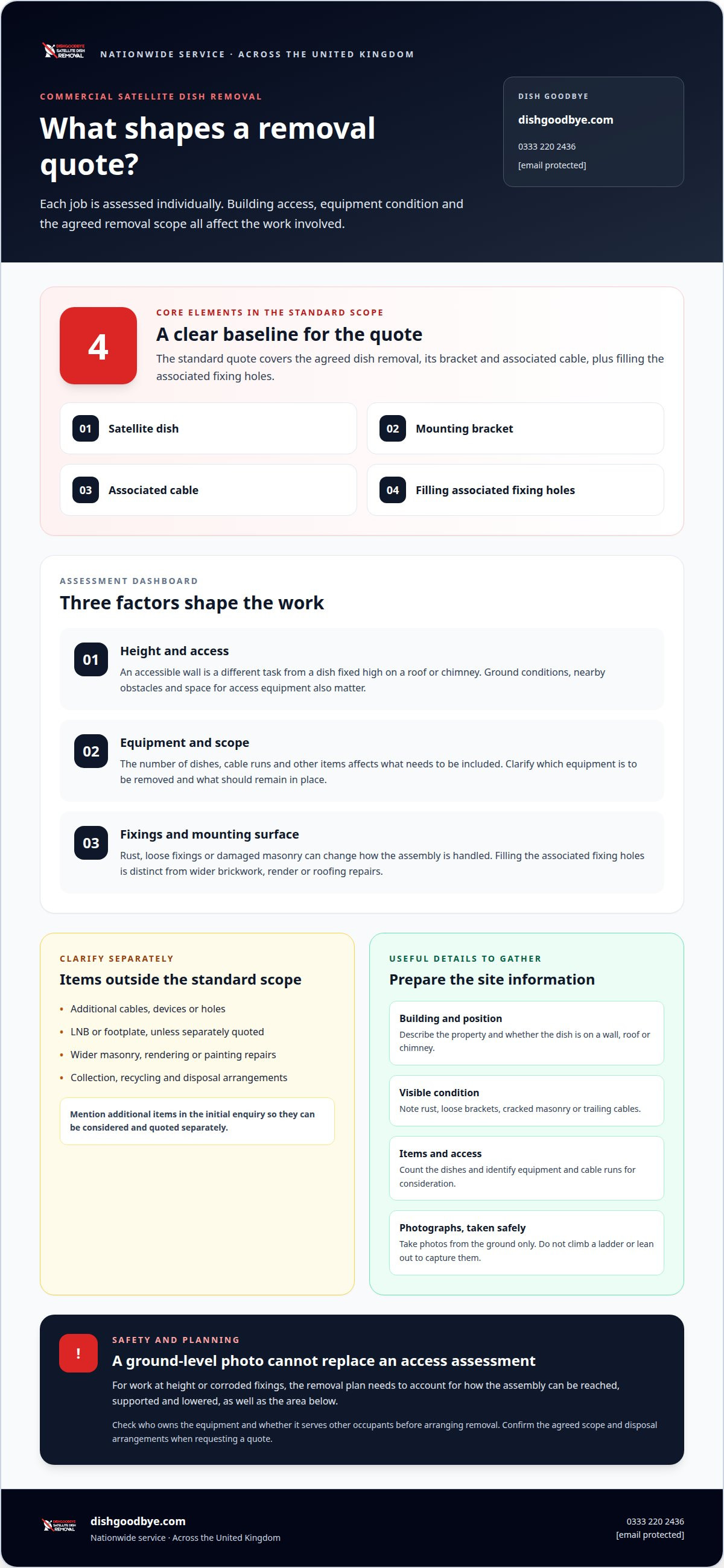
- Clarify whether the job covers the dish, bracket, associated cable and fixing holes; extra items may need to be quoted separately.
- Professional removal can help reduce the risks of working at height or handling corroded fixings.
- Check who owns the equipment and whether it serves other occupants before arranging removal.
- Commercial and residential properties can both need removal, but safe access and permission shape how the job proceeds.
How is a satellite dish removal job assessed in the UK?
Commercial satellite dish removal in the UK is assessed individually, rather than against a single standard scope. Property height, access, the number of items and the condition of the fixings all affect the work. A dish on an accessible wall is different from a corroded assembly fixed to a roof or chimney.
A safe removal starts with assessing access and the dish’s condition, then confirming how it can be disconnected, supported and taken down. The standard quote includes removal of the dish, its bracket and associated cable, plus filling the associated fixing holes. Additional cables are quoted separately.
When defining the work, consider the dish, LNB, bracket and footplate. Dish Goodbye’s standard removal includes the dish and its bracket, along with the associated cable and filling the fixing holes. The LNB and footplate are not included in the standard scope unless quoted separately. If you want the bracket or other equipment left in place, make that clear before the work is arranged. Corroded or weakened fixings need careful handling to avoid damaging the mounting surface.
Clarify the removal scope before work begins. The quote should identify which items are covered, such as:
- The dish.
- The mounting bracket.
- The associated external cable.
- Filling the fixing holes left by the agreed removal.
Additional cables, devices or holes need to be mentioned in your initial enquiry and are quoted separately. For example, a building with several dishes and cable runs has a different scope from one dish with its associated cable. Damage to brickwork, render or roofing is also separate from filling the associated fixing holes.
Rust can change the work involved. A corroded bracket may shed debris or stain masonry, while wind can shake a dish and strain its fixings. Movement may widen holes in brickwork or mortar, creating a potential route for water ingress. A loose or rusty assembly therefore needs more than a dish-only assessment.
External cables also need attention. Damaged coaxial cable can allow rainwater to travel down the cable and into a wall. Internal wiring is often left in place because removing it can disturb decoration without practical benefit. Be clear about which cables you want removed: additional cables are quoted separately.
For a commercial property, list each dish, bracket, cable run and access point in your initial enquiry. This helps define the work and makes clear what the quote covers. Ask about collection, recycling and disposal arrangements when requesting the quote.
Hiring a professional removal service
A professional removal service is useful when a dish sits above safe ground-level reach, has corroded fixings or forms part of a larger commercial installation. A competent assessment considers the mounting surface, equipment condition, nearby services and access before work starts. Roof work or steeply sloped ground can increase the risk of injury and property damage.
Get a written quote before work begins. It should describe the agreed removal, access arrangements and what will happen to the associated fixing holes. Filling holes left by the removed bracket is different from repairing cracked brickwork or damaged render. Describe any wider repairs separately so the scope is clear.
A useful quote also makes the equipment and cable scope clear. Identify the dish, LNB, bracket and footplate where relevant, and specify any additional cables, devices or holes in your initial enquiry. These are quoted separately. For a building with several dishes or cable routes, provide an item-by-item description to help define the work.
Before requesting a quote, gather practical details from a safe position:
- Describe the building type and the dish’s position, such as a wall, roof or chimney.
- Note visible rust, loose brackets, cracked masonry or trailing cables.
- Count the dishes and identify any associated equipment you want removed.
- Take photographs from the ground only; don’t climb a ladder or lean out to capture them.
Site details can help define the removal without requiring you to inspect a roof. For example, a photograph taken safely from the ground may show a dish on a commercial wall, nearby windows, ledges and potential obstacles. It cannot replace an assessment of access, fixings or working conditions.
For equipment at height, the removal team must consider how to reach, support and lower the assembly. A corroded bracket may not hold its shape when handled, and a loose dish can move in the wind. The method needs to account for the fixings and the area below, not simply the dish’s size.
Agree the finish and disposal arrangements before work begins. Confirm that the associated fixing holes will be filled, and describe any wider masonry, rendering or painting repairs separately. Ask about collection, recycling and disposal arrangements when requesting a quote, especially for a commercial site with several items.
Assessing property height and access
Property height and access affect the work involved in commercial satellite dish removal. A dish beside an accessible ground-floor wall presents a different task from one mounted on a chimney. The assessment considers the access required and the equipment to be removed.
A three-storey townhouse is one example where roofline access can influence the removal plan. The dish may sit above a narrow passage, behind a parapet or beside a chimney stack. Each position affects how the worker can reach the fixings and lower the dish safely. Height alone doesn’t tell the whole story.
Ground conditions matter too. Sloping ground, fragile surfaces, nearby entrances or limited space can restrict where access equipment can stand. A clear area beside a wall may allow a simpler approach than a tight courtyard with a canopy below. The dish’s position, the condition of its bracket and the mounting surface also shape the assessment.
For some chimney-stack work, a triple-extension ladder may be used to reach the dish. That doesn’t mean every roof or building is suitable for ladder access. The height, ladder position, ground and surrounding obstacles all need consideration. A tall commercial façade may call for a different access plan from a low roof with clear ground beneath it.
Climbing, leaning out or handling a corroded assembly calls for a competent work-at-height assessment. A rusty bracket may shift when handled, while a dish can catch the wind. The removal team needs to consider how the equipment will be supported and brought down, as well as the area below.
Access can also affect how much equipment is practical to remove during one visit. A site with several dishes across different roof levels may need separate access arrangements for each position. The amount of equipment matters alongside its height, especially when cables follow separate routes or fittings sit on different parts of the building.
For a useful assessment, describe the dish’s position, the building type and any visible obstacles from ground level. Photographs taken safely from the ground can show whether the dish sits on a wall, roof or chimney. Don’t climb a ladder or lean from a window to take them. A photograph never replaces an access assessment.
When requesting an assessment, mention narrow access routes, sloping ground, roof edges and nearby structures. These details help distinguish a straightforward wall removal from a roof-level job. Height, access and equipment quantity all affect the work, so each property needs an individual assessment before the scope is settled.
Checking equipment ownership and return requirements
A commercial dish can be reused or relocated if its owner approves and the equipment is suitable for the new position. Relocation is separate from removal, so agree who will arrange it before dismantling begins.
Start by identifying who controls the dish. In a commercial building, it may be linked to a tenant’s service, a landlord’s equipment or a communal system. Check property records, equipment labels and service paperwork to establish who can authorise removal. A dish serving several offices or flats should not be treated as belonging to one occupant.
Next, establish whether the equipment must be returned. If a service agreement or asset record identifies a supplier-owned dish, ask the responsible account holder to check its return instructions. Record the dish, LNB, bracket, cables and any labelled components separately. This helps distinguish provider-owned equipment from fittings fixed to the building.
For a shared system, involve the building owner or management company before scheduling work. One tenant’s request is not enough reason to remove a dish serving other tenants. Identify which rooms or occupiers rely on it, then agree whether the system should stay, be relocated or be removed. This helps avoid an unwanted service interruption.
Reuse depends on the condition of the dish and its fittings. Rust, bent metal, loose joints or cracked cable connections may make an assembly unsuitable for another location. A dish that looks sound still needs a suitable position and secure mounting. Keep the reuse decision separate from the removal scope, especially if different people will arrange each task.
Before work is agreed, make a simple equipment record:
- Note the dish’s location and any visible asset label.
- Identify the LNB, bracket, footplate and connected cables.
- Record whether the equipment serves one tenant or a shared system.
- Write down the decision: retain, return, relocate or remove.
Keeping a record helps prevent disputes about what was removed or left behind. For example, a property manager can document that one dish and its bracket are approved for removal, while another serves a communal system and must stay. Ground-level photographs can support the inventory without anyone climbing to inspect the roof.
Finally, confirm the removal and return arrangements before the job starts. State which components must remain on site, which need returning, and who will receive them. If collection or disposal is required, include those arrangements in the quote. Clear ownership and instructions make the decision easier, whether the dish is reused, relocated or taken away.
Commercial and residential satellite dish removal
Redundant satellite dishes can be found at both homes and commercial premises, but decisions may involve different people and equipment. Before removal, establish who owns the dish, who uses it and who can approve the work.
Planning Permission and Building Regulations
There isn’t one answer for every UK building: whether planning permission or building-regulations approval applies depends on the property and the exact work. Consider the building’s status and whether the job is limited to removing fixtures or includes wider changes to the structure or exterior.
Removing a dish and filling its associated fixing holes is a narrower scope than repairing damaged brickwork, render or roofing. Describe each task separately so the property manager can assess what approvals or controls apply at that site. Don’t assume wider making-good is included in dish removal.
Permits and Landlord Consent
If you don’t control the building, obtain the owner’s or management company’s authority before arranging removal. A dish serving a flat, HMO or communal system should not be removed without proper approval. One tenant’s request is not enough if the equipment serves other occupants.
Commercial sites may have their own access procedures. Follow the building’s process for contractor access and any required work permits, particularly if removal affects a shared area or roof. The site manager can identify who approves access and whether other occupiers need advance notice.
Commercial properties may have several dishes serving different tenants, offices or systems. A residential property may have one dish serving one household, while a block of flats may share equipment. Identify which services rely on each dish before deciding what stays, moves or goes.
Ownership matters too. A dish may belong to the property owner, a tenant or a service provider. Check asset labels and property records, then record the decision for each item. If equipment must be returned or retained, identify the dish, LNB, bracket and cables in the instructions. This helps prevent the removal of items someone expects to keep.
Safety and access shape the plan. Consider the dish’s position, the condition of its fixings, the weather and nearby services. A roof-mounted dish above a public entrance needs a different assessment from one on an accessible wall. Don’t ask staff or tenants to climb or lean out for photographs; use views from safe, existing positions.
Before scheduling, document the approved scope, affected occupants, access arrangements and any equipment that must remain. This gives the property team a clear record of the agreed work and helps coordinate removal across commercial or residential buildings.
Dish Goodbye: Satellite Dish Removal
Dish Goodbye provides commercial satellite dish removal for property managers clearing redundant equipment from commercial buildings. The standard quote covers the dish, its bracket and associated cable, plus filling the related fixing holes. Mention additional cables, holes or devices in your initial enquiry so they can be quoted separately.
Share the property location, dish position and access details to help define the work. Height and site conditions are assessed for each quote, which is useful when equipment sits on a roof, chimney or hard-to-reach wall. Collection and disposal arrangements are also discussed when quoting.
For a redundant Sky dish or other satellite dish, contact Dish Goodbye about your removal.
Make the next step straightforward
Turn the removal decision into a clear brief for the property. Note the approved equipment, the responsible contact, access details and any items that must remain or be returned. This gives your enquiry a practical starting point and helps keep the work aligned with the building’s requirements.
For commercial satellite dish removal, Dish Goodbye provides Satellite Dish Removal and Sky Dish Removal across the UK. The scope is assessed for the specific property.
When you’re ready to discuss the removal, contact Dish Goodbye. A tidy exterior starts with a clear plan, and you can take that next step whenever it suits your property.
0333 220 2436 | [email protected]
Frequently Asked Questions
Can I keep the bracket in case I want a dish again?
You can request that the bracket stays, but make this clear before arranging removal. The standard scope includes removing the bracket, so retaining it changes the agreed work. Consider whether the existing fixing points and bracket are in sound condition before planning to reuse them. A future dish may need a different position or mounting arrangement, depending on the property.
Can you remove a dish serving a flat or communal system?
A dish can be removed once the responsible party has authorised the work and the system’s users have been considered. For example, a dish may serve several flats even if it is mounted beside one tenant’s window. Identify the occupants or areas that rely on it and decide how they will be notified of any service interruption. This helps property managers coordinate the change.
Do you also remove the internal Sky wiring?
Internal wiring is separate from the associated cable covered by the standard removal scope. Tell Dish Goodbye if you want internal runs considered, and describe where they enter the building or which rooms they reach. A cable routed through a decorated hallway, for example, may involve different work from an external run. Internal wiring is often left in place when removal would disturb decoration without practical benefit.
Do you dispose of the old dish?
Collection and disposal arrangements are agreed as part of the quote, rather than assumed. If the dish must leave the site, say where it is located and whether the property has a designated collection point. For a managed building, confirm who can receive removed equipment and where it can be placed. This gives the property team a clear handover plan for the day of removal.
Do you provide removal services for commercial properties or just houses?
Dish Goodbye removes dishes from commercial properties and residential homes across the UK. For a managed site, provide an inventory showing each dish’s position and the relevant building entrance or access point. This is especially useful for properties with several blocks or installations. Dish Goodbye also provides Sky Dish Removal for redundant Sky dishes.
Do you seal the wall after removing the dish?
Filling the fixing holes associated with the removal is included in the standard quote. This does not mean every mark or previous opening on the building is included. If a property manager spots old holes from an earlier installation, mention them separately in the initial enquiry so the requested work can be described clearly.
Risk of Roof Leaking?
Roof fixings can leave openings that need attention after removal. If the roof already has cracked tiles, damaged flashing or signs of water entry, mention those conditions when describing the job. Filling the associated fixing holes is included in the standard quote, but broader roof repairs are separate. Don’t climb onto the roof to inspect or take photographs; use a safe, existing viewpoint.
How should removed satellite dishes and electronic equipment be recycled or disposed of in the UK?
Collection, recycling and disposal arrangements should be confirmed when quoting. Tell Dish Goodbye what equipment needs to be removed and whether it must be taken away, so the arrangements can be agreed for the job.