
Could removing an old dish also clear the cable clutter around your holiday let? Holiday let satellite dish removal can include the dish, its bracket, associated cable and filling the fixing holes. If you want other cables removed too, list them in your initial enquiry so they can be quoted separately.
It’s understandable to want a neat exterior without turning a straightforward property job into a bigger disruption. This guide explains what can be removed with a dish, how the work and disposal arrangements are handled, and what landlords and commercial property managers should consider. You’ll also learn how access, roof height, the removal scope and making good affect the quote, so you can plan the work around your property’s needs.
Dish Goodbye | 0333 220 2436 | [email protected] | dishgoodbye.com
Key Takeaways
- A standard dish removal covers the dish, bracket, connected cable and filling the associated fixing holes. Mention any additional cables or items in your initial enquiry so they can be quoted separately.
- Access, roof height, equipment condition and the requested work all affect how a removal is planned and quoted.
- Before arranging work on shared or communal equipment, obtain authority from the building owner or management company.
- Disposal arrangements are discussed as part of the quote, so you can understand how removed equipment will be handled.
- For a holiday let or rental property, consider who has authority over the property and coordinate the work to suit its occupancy and maintenance plans.
Can you remove old cables at the same time?
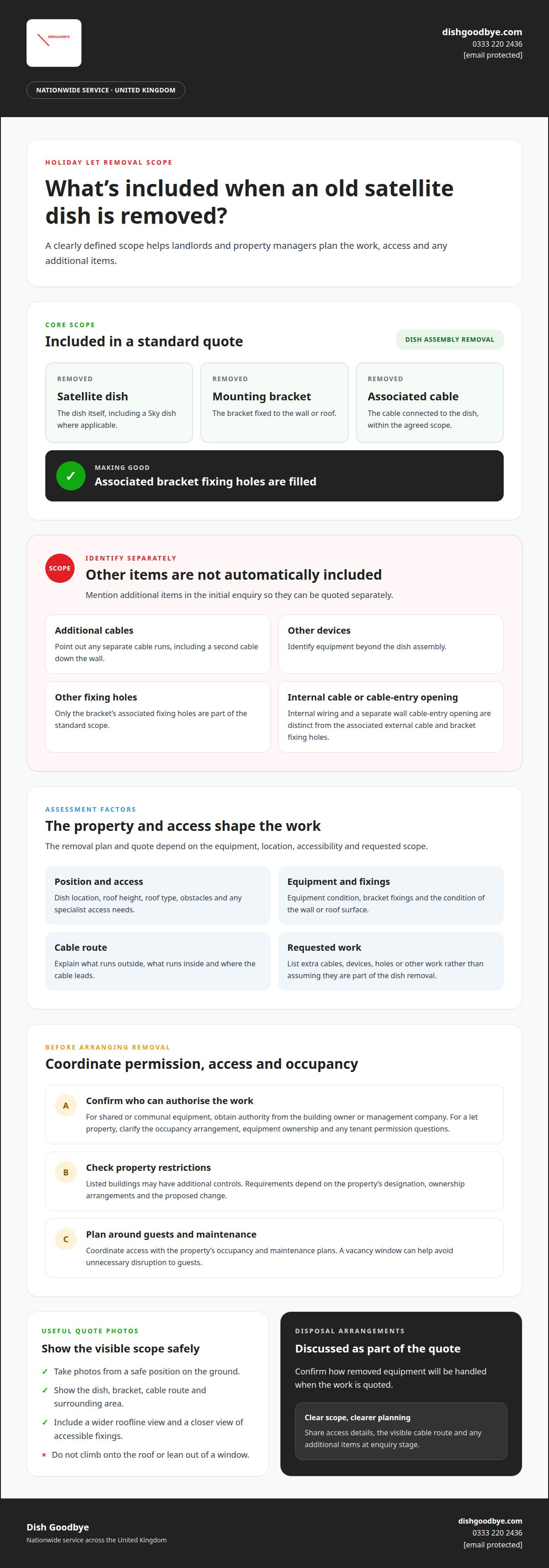
Yes, the cable connected to a satellite dish can be removed with the dish and its bracket. A standard quote includes removing that associated cable and filling the bracket’s fixing holes. Other cables, devices or holes are quoted separately, so list them in your initial enquiry. For example, point out a second cable running down the wall rather than assuming it is part of the dish connection.
First, distinguish external cable from wiring inside the holiday let. Accessible external cable may be removed with the dish, depending on the fixings and wall condition. Internal cable is different: tracing it through rooms could mean lifting floors or disturbing decoration. If removing it offers no practical benefit, leaving it in place can avoid unnecessary disruption to a guest room or living area.
Access and the mounting fixings also shape the work. The dish’s position, roof height, roof type and bracket condition all matter. A dish fixed to sound masonry is a different job from one mounted high on a roof or on a weathered surface. The fixing points help determine how the bracket can be released and its holes filled, without treating unrelated damage as part of the same work.
Photos can help show the visible scope when you request a quote. Take them from a safe position on the ground, showing the dish, bracket, cable route and surrounding area. Include a wider view of the roofline and nearby obstacles, then a closer view of accessible fixings. Don’t climb onto the roof or lean out of a window for a better angle.
The quote depends on the equipment, location and accessibility, as well as the requested removal scope. Roof height, roof type, the equipment’s condition, cable removal, making good and any specialist access needs can affect the assessment. A ground-level dish with one visible cable is not the same job as a roof-mounted unit with several old cable runs. Each extra cable or hole should be identified at enquiry stage for separate pricing.
- Show the dish, bracket and cable route in ground-level photos.
- List any extra cables, devices or fixing holes separately.
- Point out whether the cable runs outside, inside, or both.
A clear description distinguishes the cable connected to the dish, which is included in the standard quote, from additional runs around the property. It also helps explain access issues, such as a steep roof or an obstructed mounting point. For a holiday let, describe the cable route and the room it reaches to make clear what you want removed.
Do you provide aerial and satellite dish removal for landlords?
Landlords can arrange removal of redundant satellite dishes, including Sky dishes, when the equipment is no longer needed. Define the work clearly and plan around the property’s access, condition and occupancy.
Dish, LNB and Bracket Removal
A typical dish assembly includes the reflector, the small LNB receiver on its arm and the bracket fixed to a wall or roof. Removing only the dish can leave the bracket and fixings visible, so identify whether the whole assembly is redundant. The standard quote includes removing the associated cable and filling the bracket’s fixing holes. List other devices, cables or holes separately.
Before arranging the work, note the dish’s position and any visible damage. A loose bracket, cracked render or weathered roof covering may affect the work around the mounting point. Removal involves assessing access, dismantling the dish and bracket, and filling the associated fixing holes. A separate cable-entry opening or unrelated wall damage is not part of that work.
Planning and Listed-Building Restrictions
Planning requirements can depend on the property and the proposed change. A listed building may have additional controls, so don’t assume removing external equipment is automatically unrestricted. The building’s designation, ownership arrangements and the dish’s location are relevant when establishing which approvals apply.
For a rental property, the landlord should resolve any planning or listed-building questions before scheduling removal. This is especially relevant when the dish is fixed to a historic façade or shared structure. Requirements depend on the property’s status and circumstances, rather than one rule applying to every UK building.
The removal process is straightforward: assess the mounting position and access, dismantle the dish and bracket, remove the associated cable within the agreed scope, then fill the bracket’s fixing holes. A cable-entry opening through the wall is separate, so don’t assume it will be sealed when the fixing holes are filled.
A loose or storm-damaged dish raises different concerns from a stable, unused unit. Keep guests away from the area below it and don’t touch or climb towards the equipment. The mounting position, roof height and surrounding surfaces affect safe access and the removal plan. Agree the work scope and responsibility for affected areas before work starts, especially if the roof or wall is damaged.
Permission to remove a dish from a let property depends on the occupancy agreement, who owns the equipment and how the work affects the tenant. A landlord shouldn’t assume that owning the building settles every permission question. Clarify the arrangement before booking, especially if the dish serves the tenant or is part of shared equipment.
Between guest bookings, choose a vacancy window that allows safe access and time for the agreed work. Tell the person arranging access where the dish is mounted, whether it is a Sky dish, and whether any damage is visible. These details help avoid unnecessary disruption to check-in and give the removal team a clearer picture of the property.
Safe removal and disposal of old aerial and satellite equipment
Before removing equipment from a holiday let, establish what it serves and who controls it. This helps prevent a dish that looks redundant from disrupting a working television service or shared system.
Equipment Types and Safe Disposal
External equipment may include a satellite dish, its LNB, bracket and connected cable, or a separate television aerial. Communal installations may also include shared cabling or equipment serving several properties. Identify each item and its connections before agreeing the work, rather than treating every fitting on the wall as part of one dish.
Disposal is a separate practical detail. Ask about collection, recycling and disposal arrangements when requesting a quote, and agree the details before booking. Removal does not automatically include a particular recycling route or disposal outcome. Access and the building’s condition matter too: the team needs to consider the mounting point, roof coverings, gutters, masonry and nearby services while removing equipment.
Check whether the equipment is in use before arranging its removal. Look at the property’s television setup, trace which room the cable reaches, and ask the manager or current occupants whether they use it. A dish that looks old may still serve a receiver, while an aerial may connect to a different television point. Keep separate systems distinct until their purpose is clear.
Don’t remove shared or communal aerial and satellite equipment without authority from the building owner or management company. This matters in flats, holiday complexes and buildings where one installation serves several units. Confirm which dish or cable is private and which belongs to the shared system before agreeing the work. Removing the wrong component could affect other occupants’ reception.
Tenant Permission and Removal Notice
For a holiday let, check the booking or occupancy terms and arrange access with the person managing the stay. Give affected guests clear notice of the work, its location and expected disruption. Follow the applicable agreement and practical access arrangements rather than assuming a universal notice period. For shared equipment, obtain the building owner’s or management company’s authority first.
Where possible, schedule the work between bookings and tell the removal team about guest arrival times, locked gates or restricted access. If equipment looks loose or storm-damaged, keep people away from the area below it and describe the concern when arranging an assessment. Don’t climb onto the roof or try to secure the dish yourself.
Prepare a clear equipment list: identify the dish, aerial, cable route and any shared connection. Note whether the television service is still used, who controls the system and whether there is visible damage. These details support a safer assessment and clarify the removal and disposal arrangements for the property manager.
Removal for landlords and commercial properties
For landlords, removing redundant equipment can help maintain a consistent appearance across a property portfolio. A holiday cottage may need attention before its next listing update, while a block of flats may have several installations accumulated over time. Treat each building as a separate job, then record decisions centrally so property managers can track what has been addressed.
A simple property register can make future maintenance easier. Record the building, the location of redundant equipment, who manages the site and whether related work is planned. For example, a facilities manager could record a dish on the rear elevation separately from an aerial above the main entrance. This gives the owner a clear overview without confusing separate installations.
Commercial properties often involve several people in upkeep. The landlord, facilities manager and tenant may each need to know when exterior work is planned. Agree who will inform occupants and update the building’s maintenance record. At a hotel or office, a named site contact can also help staff understand which part of the exterior is being worked on.
Keep records specific and useful. Note the property’s condition, where the work took place and any follow-up maintenance the owner wants to arrange. If a later exterior inspection identifies a separate issue, such as damaged paintwork, record it as its own task rather than treating it as part of the dish removal.
For a portfolio, group decisions by building rather than issuing one general instruction for every site. One property may have a single redundant dish, while another may have equipment still serving occupants. A property manager can mark each installation as retained, under review or approved for removal. This helps prevent a routine maintenance plan from affecting equipment still in use.
Commercial owners can also use removal as a chance to refresh their exterior standards. Decide how visible fittings should be handled during future property inspections, and include that expectation in the maintenance process. For example, a letting agent can add an exterior check to its routine property review, then report redundant equipment to the owner for a decision.
Before coordinating work across multiple addresses, prepare a short site record for each property:
- Property name or internal reference and the responsible manager.
- Equipment location and the owner’s decision about its status.
- Relevant occupant or tenant communication responsibilities.
- Separate maintenance issues noted during the property review.
This approach keeps portfolio administration clear and avoids treating different buildings as identical. A well-maintained register helps owners see which properties still need a decision, which have been addressed and where separate exterior work remains on the maintenance list.
Can a holiday let owner remove a satellite dish without the tenant's permission in the UK?
There isn’t one answer for every UK holiday let. Before booking removal, check the occupancy agreement, who owns or controls the dish and what access arrangements apply. A landlord shouldn’t assume that owning the building settles questions about permission or notice.
Start with the agreement for the specific stay. Look for terms covering access, maintenance, external fittings and services provided to guests. Then establish whether the dish serves the holiday let alone or is part of a shared system. For example, a dish connected to one cottage may be different from communal equipment serving several flats.
If guests are staying at the property, tell them about the proposed work before arranging access. Explain where the dish is mounted, why it’s being removed and whether the television service could be affected. Follow the agreement and access arrangements when deciding what notice is appropriate; the same approach may not suit a short booking and a longer occupation.
Check whether the dish is part of the guest accommodation’s advertised facilities. If the listing promises satellite television, removing the equipment that provides it could affect the service guests expect. Confirm whether another reception method is available before changing the setup. If the dish is unused, record that clearly in the property information and removal instructions.
Shared equipment requires separate permission. The building owner or management company should authorise removal before work affects communal aerial or satellite equipment. In a converted house with multiple holiday units, identify which dish and cable serve each unit. A guest’s agreement to access their accommodation doesn’t replace authority over equipment serving other properties.
For an unoccupied property, organise access through the person responsible for the keys and site management. For an occupied let, agree a suitable time with the guest and explain any access needed inside. Keep a written record of the agreed work, access arrangements and any effect on services. This gives the owner, manager and removal team the same clear instructions.
Before confirming a booking for removal, establish:
- Which agreement governs the current stay and access.
- Who owns or manages the dish and connected equipment.
- Whether the dish serves one let or a shared system.
- Whether advertised television facilities depend on it.
- Who will arrange access and notify current guests.
These steps help prevent disputes over access or unexpected loss of a guest service. If the agreement is unclear, resolve that point before setting a work date. For a redundant dish on a holiday let, plan the satellite dish removal around the property’s permissions, occupancy and access arrangements.
Dish Goodbye: Satellite Dish Removal
Dish Goodbye removes satellite dishes and Sky dishes from holiday lets, rental homes and commercial properties across the UK. It’s a practical option when an unused dish detracts from your property’s exterior or you’re planning a refresh.
To get started, share the property location, where the dish is mounted and any access details that could help describe the job. This gives the team a clearer picture of the site and your requirements.
If you’re ready to discuss removing a redundant dish, contact Dish Goodbye about your property.
Make your next property update count
Holiday let satellite dish removal can be a useful step when refreshing a property’s exterior. Before scheduling other maintenance, decide how you want the building to look and which tasks should happen together. A clear plan makes it easier to coordinate access, guest arrangements and the finish you want.
Think ahead to the next changeover or maintenance visit. An unused dish can be dealt with as part of a wider effort to keep the property looking cared for, rather than left as a loose end on the to-do list. If you manage several properties, decide which needs attention first and keep arrangements clear.
Dish Goodbye can help with satellite dish removal for holiday lets and other properties. Take the next step when you’re ready to discuss the work. Contact Dish Goodbye to arrange removal.
Frequently Asked Questions
What if I don't know whether the aerial or cables are still in use?
Don’t assume an aerial or cable is redundant until you’ve traced its use. Check which rooms have connected television points, look for a receiver or set-top box, and ask the property manager or current guests. For example, a cable entering a cupboard may feed equipment that isn’t beside the television. Leave uncertain fittings in place until you know what they serve, then identify confirmed redundant equipment for removal.
Which areas do you cover?
Dish Goodbye provides removal across the United Kingdom. If you manage properties in different parts of the country, you can enquire about each address. Include the property postcode and where the dish is mounted, such as a rear wall or roofline. This helps describe the site and access involved. The service covers residential and commercial properties nationwide.
Who is responsible for removing a satellite dish at the end of a holiday let?
Responsibility depends on the property arrangements and who owns or controls the equipment. The owner or property manager commonly organises maintenance, but booking terms may affect access during a guest’s stay. For example, a dish provided as part of the accommodation may need discussion before removal. Check the agreement, establish whether the equipment is shared, and arrange access with the appropriate person before scheduling work.
How much does professional satellite dish removal cost in the UK?
The quote depends on the property and work required. Factors include the dish’s position, roof height, access conditions, equipment condition and any specialist access needs. A roof-mounted dish with restricted access, for example, calls for a different assessment from equipment mounted low on an accessible wall. Describe the site and requested work when seeking a quote so the job can be assessed accurately.
Can a satellite dish be removed safely without damaging the roof or exterior wall?
Removal is planned around the dish’s position, fixings, access and the condition of the surrounding surface. Dish Goodbye’s removals are carried out by an experienced, insured team using proper safety equipment. Roof coverings, masonry, render and nearby gutters can affect how the work is approached. Mention visible cracks or loose materials beforehand so the assessment accounts for the exterior’s existing condition.
Does satellite dish removal affect Sky, Freesat, or other TV services in a holiday let?
Removing a dish can affect reception if it supplies the property’s Sky, Freesat or other satellite television service. Before arranging the work, identify which receivers and rooms rely on it, and whether guests expect that service during their stay. A separate aerial or another setup may serve different televisions, so don’t assume every service uses the same equipment. Confirm the property’s intended television setup before removal.