
A chimney aerial does not have to stay in place just because it is high up. Removing a TV aerial from a chimney starts with assessing the stack and arranging safe access. The aerial and its mountings can then be dismantled, taking care around the chimney and nearby roof tiles or slates.
It is understandable to want the job finished neatly, with no loose equipment or exposed fixing points left behind. But roof-level work carries practical risks, especially if an aerial is loose or damaged. Climbing up to remove it yourself is not a safe shortcut.
This guide explains the main considerations when removing a chimney-mounted aerial, including the fixings, cable, chimney condition and access. You will also learn what to consider if the aerial serves more than one room or property, so you can understand the work before deciding on the next step.
Contact Dish Goodbye: 0333 220 2436 | [email protected]
Key Takeaways
- Assess the chimney stack and roof access before planning removal, as both affect how the work can be approached.
- Understand how the aerial mast, brackets and fixings are handled, and why the condition of the surrounding roof matters.
- Find out why a shared or communal aerial system should be considered before it’s disconnected.
- Learn what makes roof-level removal hazardous and why a loose or damaged aerial isn’t a safe DIY job.
- See how the job’s scope and property conditions help determine whether an aerial installer or roofer is the more suitable professional.
Chimney-mounted aerial removal and chimney condition
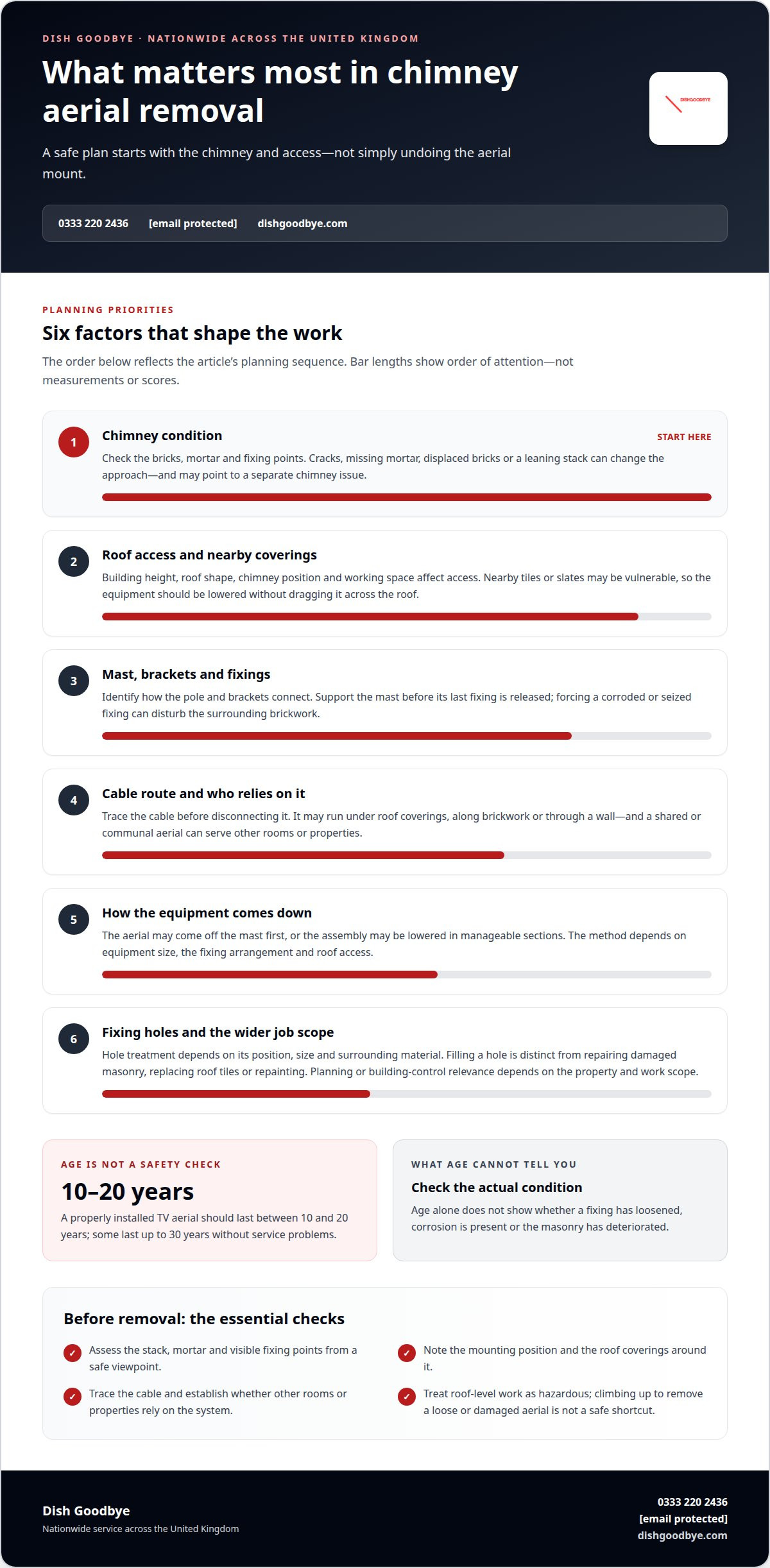
Removing a TV aerial from a chimney starts with assessing the stack, not simply undoing the mount. The chimney supports the aerial’s pole and brackets, so its visible condition affects the removal approach. A sturdy-looking stack may still have loose mortar or damaged bricks around the fixings. The roofline matters too: access and nearby tiles or slates need consideration before work begins.
Aerial age alone doesn’t show whether it’s unsafe. A properly installed TV aerial should last between ten and 20 years, and some last up to 30 years without service problems. But age doesn’t tell you whether a chimney fixing has loosened, whether corrosion is present, or whether masonry has deteriorated. For example, an older aerial can remain firmly attached while the mortar around its bracket begins to crumble.
Before removal, assess the stack from a safe viewpoint. Look for visible cracks, missing mortar, displaced bricks, leaning masonry and damage around the fixing points. Note whether the aerial is attached to the chimney itself or supported by a separate pole or bracket. These observations help distinguish aerial removal from a chimney problem requiring separate attention.
The fixing points need particular care during removal. A bracket secured into sound masonry is different from one attached to loose or damaged brickwork. Removing a fixing can expose a hole or disturb nearby material. The stack’s condition becomes clearer as the mountings are handled, so the work should account for the specific chimney.
Roof coverings also need attention. Aerial removal may affect nearby roof tiles or slates, especially where access is tight or the mountings sit close to the roof surface. No method can guarantee that none will be disturbed. A careful assessment identifies vulnerable areas and helps plan how the equipment can be lowered without dragging it across the roof.
Planning and building-control requirements do not have one universal answer for every UK property. Whether either is relevant depends on the property’s status and the scope of work, not just the presence of an aerial. A simple removal differs from work that also alters the chimney or roof. Establish those details before treating the job as a routine take-down.
- Assess the chimney’s bricks, mortar and visible fixings.
- Note the aerial’s mounting position and nearby roof coverings.
- Separate aerial removal from any apparent chimney repair needs.
- Consider property status and the full scope when assessing planning or building-control relevance.
These checks help shape the removal plan and protect the stack and roof. If the chimney has cracked masonry, loose bricks or a leaning profile, those signs matter more than the aerial’s age. Clear observations about the fixing points and roof layout help define the job before the equipment comes down.
Removal of aerial masts, brackets and fixings
A chimney aerial can include a metal mast, brackets, bolts and coaxial cable. Before loosening anything, identify how each part connects. A pole may pass through a bracket fixed to the chimney, while another arrangement uses several wall brackets along the stack. The fixing pattern determines the removal order and how the equipment can be lowered safely.
Start by tracing the cable from the aerial to where it enters the property. It may run beneath roof tiles, along brickwork or through a wall opening. Disconnecting it without tracing its route can leave it attached elsewhere or pull against an indoor connector. If it serves several rooms, removal can affect their terrestrial television reception.
Once the cable is separated, support the mast and aerial before releasing their fastenings. A long pole can shift suddenly when its final support comes away. The aerial may be removed from the mast first, or the assembly may be lowered in manageable sections. The method depends on the equipment’s size, fixing arrangement and roof access.
Remove bracket bolts and screws in a controlled way. Corrosion, paint or weathered mortar can make a fixing difficult to turn. Forcing a seized bolt, for example, can disturb the brickwork around the hole. If a bracket has several attachment points, releasing them evenly helps avoid unnecessary strain on the remaining fixing. Observe the chimney surface as each point is freed.
- Separate the cable from the aerial and follow its route.
- Support the mast before releasing its last secure fixing.
- Lower the aerial and pole without dragging them across roof coverings.
- Remove remaining brackets and inspect exposed fixing points.
Removing metalwork leaves fixing holes behind. Their treatment depends on their position, size and surrounding material. A small hole in sound masonry differs from a fixing that has loosened bricks or broken mortar. Filling a hole is also distinct from repairing damaged masonry, replacing roof tiles or repainting a surface. Do not assume those tasks are part of aerial removal.
Cable removal needs a clear scope too. An exposed cable can be removed separately from one threaded through walls or beneath roof coverings. Its route affects how much can be taken down without disturbing other parts of the building. If the aerial is shared with a neighbour or communal system, establish that before disconnection.
Keep the aerial, mast, brackets and cable together for handling after removal. Their condition and the agreed arrangements determine what happens next. A clear description of the visible mast, bracket positions, cable route and chimney access helps define the work before anyone goes onto the roof.
Safety considerations for roof-level work
A chimney aerial sits above the ground, often beside fragile roof coverings. Safe access depends on the building’s height, roof shape, chimney position and available working space. A chimney-mounted aerial may require a tower, scaffolding or a cherry picker. The access arrangement should allow proper reach to the mast and fixings without relying on an awkward reach from a ladder.
Loose or damaged equipment increases the risk. A bent mast can move unexpectedly, and a weak fixing may release under pressure. Homeowners should not attempt roof-level removal of a damaged or loose aerial. From the ground, note visible damage and where the aerial sits. Do not climb up to test whether the pole or brackets are secure.
Access planning also considers the ground around the property. A cherry picker needs room to position its platform, while scaffolding needs a suitable place beside the building. A narrow passage, extension roof or conservatory can affect access to the chimney. These details help determine whether a tower, scaffolding or another arrangement is practical for the roof.
Roof conditions matter during the work. Wet, icy or windy weather can make movement and handling harder. Tiles and slates can crack or shift under concentrated pressure, particularly near an aerial’s fixing points. A safe plan considers where a worker will stand, how tools will be carried and how the mast will be controlled as its supports are released.
Falling equipment is another hazard. The aerial, pole, brackets and tools need controlled handling, especially above entrances, paths or neighbouring spaces. Keep people away from the area below the work while equipment is being lowered. Plan the route from the chimney to the ground before removal starts.
- Assess the roof height, chimney position and approach space.
- Choose access such as a tower, scaffolding or cherry picker where needed.
- Keep people clear of the area beneath the aerial and tools.
- Plan how the mast and brackets will be supported and lowered.
Shared aerials raise a separate practical concern. Disconnecting an aerial that feeds neighbouring homes or several rooms can interrupt reception beyond the property owner’s television. Identify whether the system is communal or shared before work begins, then plan the disconnection around its connections.
Good preparation combines safe access with controlled removal. A steep roof, cramped side passage and heavy mast each create different handling challenges. If access cannot be arranged safely from the available position, change the method before anyone approaches the chimney. A damaged or loose aerial is a clear reason to leave roof work to a professional.
How to safely remove a TV aerial from a chimney
Safe removal follows a planned sequence, from identifying the aerial’s connections to addressing the exposed fixing points. The chimney’s condition and roof access shape each step. A loose mast, awkward roofline or damaged brickwork changes how the equipment can be handled. Homeowners should not climb onto the roof or attempt to remove a damaged or loose aerial.
Before disconnecting anything, establish whether the aerial serves only one home. A shared system may feed a neighbour’s television or several rooms through a splitter. Disconnecting it can affect terrestrial reception in those rooms. Identify the system’s users and cable route before removal begins.
A safe work sequence typically covers these stages:
- Assess the chimney, mast, brackets, cable route and roof access from a safe position.
- Arrange suitable access, which may involve a tower, scaffolding or cherry picker.
- Identify shared connections and plan disconnection to avoid interrupting other users unexpectedly.
- Support and lower the aerial and mast in a controlled way as their fixings are released.
- Remove the remaining brackets and deal with the associated fixing holes as agreed.
Each stage depends on the roof and access. For example, a mast close to a roof edge may need a different handling approach from one above a clear roof slope. A narrow passage beside the house can also affect whether scaffolding or a cherry picker can reach the chimney. Choose access arrangements to suit the property and working position.
Weather and roof surfaces affect handling too. Wet or slippery tiles make movement harder, while a long pole can be awkward to control near a roof edge. Plan where the mast will move and how it will be lowered. Keep people clear of the area below the work.
After the aerial comes down, inspect the chimney around each fixing point. A hole in sound material differs from a fixing that has loosened surrounding masonry. Note damaged bricks, mortar or roof coverings separately. Filling an aerial fixing hole does not automatically include broader masonry or roof repairs.
Finally, keep the scope clear. A cable running to one room differs from one feeding several rooms or a shared system. State which equipment and cable sections are to be removed, and identify any separate damage. This clarifies the removal sequence and helps prevent accidental disconnection or confusion about the finished work.
Roofer or aerial installer for chimney aerial removal?
The right professional depends on what the chimney aerial job involves. Removing the mast and brackets is different from repairing loose masonry or replacing damaged roof coverings. The key distinction is whether the work is limited to equipment removal or includes a separate roof or chimney repair. Describe the aerial’s position and any visible building damage when defining the job.
Aerial removal involves the equipment and its connections: identifying the mast, bracket arrangement and cable route, then planning how these parts will come down. If the aerial feeds several rooms or a shared system, account for those connections before disconnecting it. The removal plan should consider the effect on other users’ reception.
A roofer’s role is more relevant when the main concern is the roof itself. A cracked slate near the mast, water entry around a roof opening or damaged flashing calls for attention to the roof covering. Removing an aerial does not automatically repair these features. Keep equipment removal and roof repairs as distinct parts of the job.
Chimney masonry needs the same clear separation. A bracket fixing may leave a hole, but loose bricks, cracked mortar or an unstable stack point to a broader masonry issue. Filling an associated fixing hole is not the same as rebuilding brickwork or repairing the chimney. Describe visible damage beyond the mounting point separately.
Access can influence the required experience and work plan. A chimney above a steep roof, a narrow side passage or a conservatory may need different access arrangements. Towers, scaffolding and cherry pickers are possible methods, depending on the property. A loose or damaged aerial should not be tackled by a homeowner from the roof.
Before agreeing the scope, make the boundary clear:
- Identify whether the work covers the aerial, mast, brackets and associated cable.
- Describe any roof tiles, slates or chimney masonry that appear damaged.
- State whether the aerial may serve other rooms or a shared system.
- Separate equipment removal from roof, masonry, rendering or painting work.
This distinction helps avoid expecting equipment removal to include every repair around the chimney. Taking down a mast and filling its fixing holes, for instance, does not mean replacing a cracked roof slate. The access method, fixing layout and visible property condition shape the removal plan. Clear details distinguish equipment removal from work requiring a separate repair scope.
Dish Goodbye
Dish Goodbye provides Sky Dish Removal and Satellite Dish Removal for homeowners with redundant dishes. If your property has a satellite dish as well as a chimney aerial, describe each as a separate part of the job. The dish’s position and access help clarify the removal required.
For help with a redundant satellite dish, contact Dish Goodbye on 0333 220 2436 or email [email protected].
Choose a clear next step
If you’re considering removing a TV aerial from a chimney, use the details you’ve gathered to define the work. The aerial’s mounting position, cable route and visible chimney condition help clarify the scope. Keep equipment removal separate from roof or masonry repairs so the expected work is clear from the start.
Consider whether the aerial serves other rooms or a shared system before disconnecting it. This can help prevent an unwanted interruption to someone else’s television reception. For a redundant Sky or satellite dish, Dish Goodbye provides removal.
Contact Dish Goodbye about a redundant satellite dish and take the next step towards a tidier exterior.
Contact Dish Goodbye: 0333 220 2436 | [email protected]
Frequently Asked Questions
Can I remove a TV aerial chimney bracket myself in the UK?
Do not remove a chimney bracket yourself if doing so means climbing onto the roof. A bracket can release suddenly, and reaching it may put you on fragile tiles or slates. If the aerial is loose or damaged, stay off the roof and arrange professional removal. From the ground, note the bracket’s position and whether the aerial appears to serve more than one room.
What tools and safety equipment are needed to remove a chimney aerial?
The equipment needed depends on the chimney, roof shape, aerial fixings and access around the property. A professional may need suitable access equipment, tools matched to the bracket fixings, and a way to control and lower the mast. Protective clothing alone does not make a roof safe to work on. A steep roof or narrow side passage, for example, may change the access plan before any tools reach the chimney.
How do I remove and seal bolts or holes left by a chimney aerial bracket?
Removing bolts and filling holes involves working at the chimney, so do not attempt it from an unsecured roof position. Once the bracket is removed, the hole’s size and surrounding masonry determine the appropriate treatment. A small fixing hole in sound material differs from one surrounded by loose mortar or damaged brick. Filling the fixing point does not repair wider masonry damage, rendering or painting.
What are the risks of removing a TV aerial from a chimney?
The main risks include falling from roof level, dropping equipment, disturbing roof coverings and damaging weak chimney masonry. A loose mast may shift as its support is released, while force on a seized fixing can affect nearby brickwork. Disconnection can also interrupt reception if the aerial serves other rooms or a shared system. Keep people away from the area below the work and leave loose or damaged equipment alone.
Is it better to remove a chimney aerial or leave it in place?
An old aerial is not automatically unsafe, so it can stay in place if it is secure and still wanted. If it is no longer needed, have the chimney and access assessed before removal. First establish whether it serves other rooms or a shared system.