
What if removing redundant satellite dishes could be managed as one coordinated building project, rather than a series of separate tasks? That’s the practical approach to communal dish removal for residents association members looking to reduce disruption and keep the exterior consistent. Dish Goodbye provides satellite dish removal across the United Kingdom. Visit dishgoodbye.com, email [email protected] or call 0333 220 2436.
Responsibility can feel unclear when work affects shared walls or roofs. A coordinated plan gives residents and association representatives a clear scope, helps prevent piecemeal work and makes it easier to agree the project with the freeholder or managing agent. Check the relevant property documents and permissions before work begins.
This guide explains how to organise removal, from listing redundant dishes and associated equipment to planning access and informing residents. Dish Goodbye removes dishes, brackets, fixings and redundant cabling, then fills and smooths fixing holes to help protect the building exterior. Removed metal and electronic waste is processed through approved recycling centres. For a coordinated project across the UK, visit dishgoodbye.com, email [email protected] or call 0333 220 2436.
Key Takeaways
- Manage communal dish removal for residents association members as one coordinated property project, with a clear scope for the shared exterior.
- Review the relevant property documents and agree any necessary permissions with the freeholder or managing agent before arranging work.
- Set a complete scope covering dishes, brackets, fixings, redundant cabling, fixing holes and responsible waste processing.
- Keep residents informed about the work and arrangements affecting shared areas to help reduce disruption.
- Review the finished work against the agreed scope, including whether fixing holes have been filled and smoothed.
Why communal dish removal needs a coordinated plan
Several redundant satellite installations can leave a shared exterior cluttered with dishes, brackets, cable runs and fixing points. For an association committee, the first task is to agree what the project covers and how to organise the work across the building. A clear scope gives residents and representatives a shared understanding of what will be removed and what will be addressed afterwards.
Communal dish removal is the coordinated removal of redundant satellite equipment from shared residential property, including associated fixings and cabling. A clear plan makes communal dish removal for residents association representatives easier to explain, organise and review. It also helps create a consistent finish across the building.
What counts as communal satellite dish removal?
An individual appointment deals with equipment at one household. A communal project considers redundant installations across shared parts of a residential building, such as exterior walls or a roof. The scope can include dishes, supporting brackets, fixings and associated redundant cables. Dish Goodbye also fills and smooths holes left by previous installations, helping leave the exterior tidier and addressing exposed fixing points that could contribute to damp issues.
Why associations benefit from agreeing the scope first
Start by noting the affected elevations, shared areas and known redundant installations. A simple record helps representatives distinguish included work from anything outside the project. It also lets residents know which equipment, cables and fixing holes are covered, instead of leaving them to guess.
Before arranging work, review the association’s governing documents and the property’s approval process. Responsibilities and permissions depend on the building’s arrangements, so don’t assume the same process applies everywhere. The UK planning permission system provides general background. Use the relevant property documents to understand the approvals that apply to the project.
Keep the scope practical: identify the equipment and areas to be cleared, include associated fixings and redundant cabling, and specify that fixing holes will be filled and smoothed. This gives the association a consistent basis for communicating the work and reviewing its completion.
What a professional communal dish removal service should cover
A thorough project follows clear stages. Redundant equipment is dismantled and removed, including supporting brackets, fixings and associated cabling. The fixing holes left by previous installations are then filled and smoothed. Removed metal and electronic waste is processed through approved recycling centres.
A complete communal dish removal service clears redundant equipment, addresses the fixing holes it leaves behind and sends removed metal and electronic waste to approved recycling centres. This gives an association a practical scope to share with residents and use when reviewing the finished work.
From dish and bracket removal to tidier walls
Taking down the dish is only part of the job. Brackets and fixings can remain attached, and redundant cables may still run across an exterior wall. Include these items in the agreed scope to avoid leaving behind a partly cleared area. Dish Goodbye removes dishes, associated brackets, fixings and redundant cabling, then fills and smooths fixing holes to help protect the building exterior.
Filling and smoothing the holes helps leave the wall tidier and can help address potential damp issues associated with exposed fixing points. This work covers the holes left by the removed installations, not wider exterior repairs or a specified finish.
If the association records the work with photographs, make sure any “after” images show the cleared area without a satellite dish or aerial. This makes the result easier to review and shows clearly whether equipment remains.
How responsible recycling fits into the project
Plan how removed materials will be handled as part of the project. Dish Goodbye processes removed metal and electronic waste through approved recycling centres. Including this step in the scope gives representatives a clear account of what happens to those materials after they leave the building.
For communal dish removal for residents association projects, treat equipment removal, fixing-hole work and recycling as connected stages. Residents can then understand what the work covers, and representatives can review the exterior against the agreed scope.
To learn more about the removal service and how its stages can fit a shared-property project, visit Dish Goodbye’s satellite dish removal service.
How to assess a communal dish removal plan
Coordination doesn’t need to mean a complicated process. Break the review into checkpoints: agree which areas and equipment are included, confirm the work scope, then compare the finished work with that scope. For communal dish removal for residents association representatives, this approach helps identify gaps before work starts and makes the result easier to assess.
Questions that clarify the work scope
Identify known redundant dishes and the shared exterior areas they’re attached to. Include the equipment around each dish, not just the dish itself. Brackets and fixings can be overlooked if the scope names only the dish, and redundant cables can be left behind if they aren’t included. Agree how fixing holes will be filled and smoothed, and how removed metal and electronic waste will be processed.
| Scope point | Incomplete scope | Complete scope |
|---|---|---|
| Dishes | Identifies some dishes, or leaves the included areas unclear | Lists the agreed redundant dishes and affected areas |
| Brackets and fixings | Focuses on dish removal alone | Includes associated brackets and fixings |
| Redundant cabling | Doesn’t say whether cables are included | Includes the agreed redundant cabling |
| Fixing holes | Doesn’t describe what happens after removal | Includes filling and smoothing fixing holes |
| Waste processing | Leaves handling of removed materials unspecified | States that removed metal and electronic waste goes to approved recycling centres |
A simple way to review the finished work
Use a short checklist rather than relying on memory. Record each agreed area and note observations as you review it. This makes it straightforward to compare the completed work with the project scope.
- Areas: List the elevations or shared areas included in the project.
- Equipment: Check that the agreed dishes, brackets and fixings have been removed.
- Cabling: Note whether the redundant cables included in the scope are gone.
- Fixing holes: Look for holes that have been filled and smoothed. This is an exterior finish step, not a claim of structural repair.
- Waste: Review the agreed handling of removed materials, including processing metal and electronic waste through approved recycling centres.
These checkpoints keep the review manageable: define what’s included, communicate it clearly and assess the result against the same list.
How residents associations can organise removal with less disruption
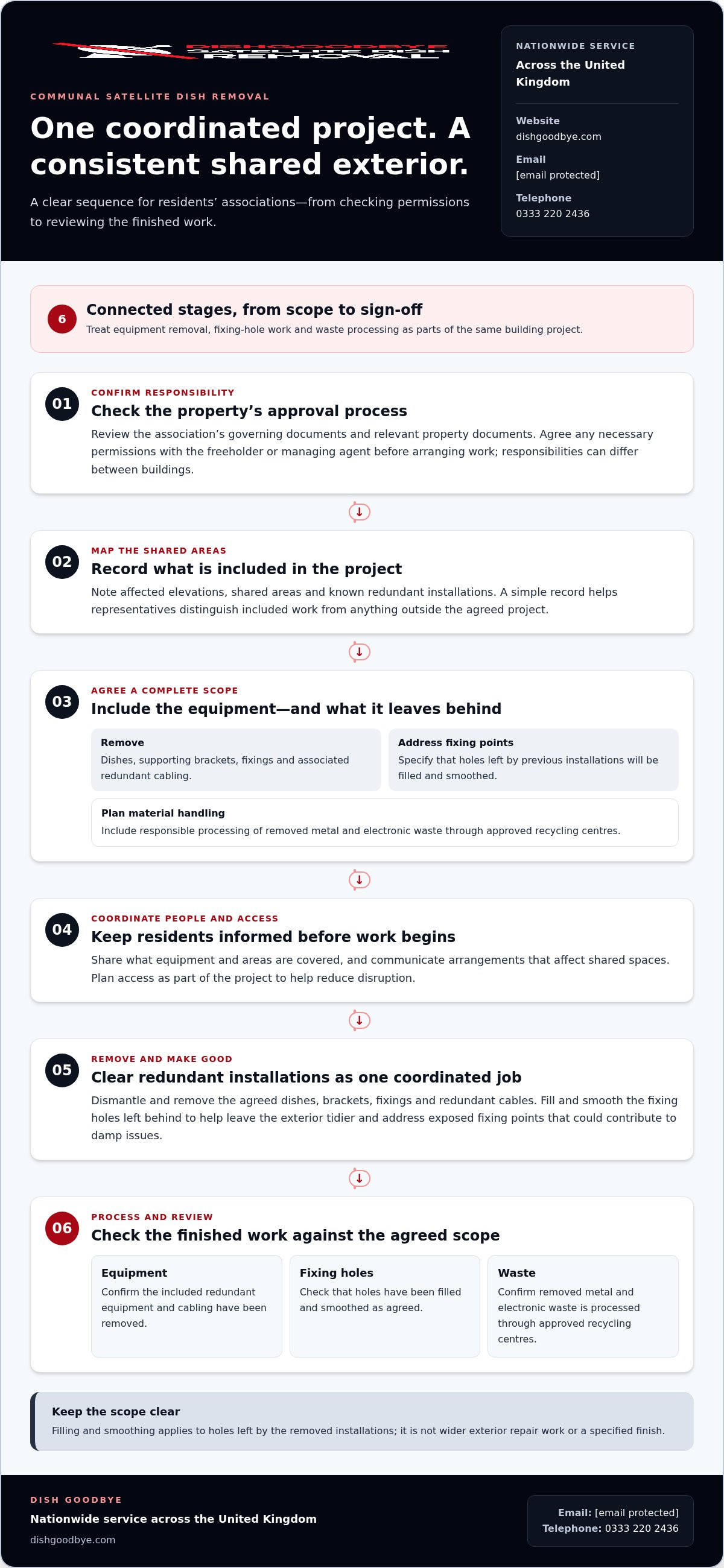
Preparation makes a shared removal project easier to manage. The committee can work through clear stages: record what’s involved, review the property’s own processes, inform residents, then assess the completed work. This helps keep arrangements consistent without assuming a single access or notice procedure applies to every building.
A straightforward project sequence for committee members
- Record the known installations. Note redundant dishes and the shared exterior areas they’re on. Include visible brackets, fixings and redundant cabling to build a useful initial picture.
- Review the association’s documents. Check relevant decision-making procedures and property documents before confirming arrangements. Where needed, coordinate with the freeholder or managing agent, following the process that applies to the building.
- Agree the project scope. Set out which equipment and areas are included, and specify that fixing holes will be filled and smoothed. A written scope gives representatives and residents a shared reference.
- Tell affected residents what to expect. Explain what’s being removed and any arrangements for shared areas. Keep the message practical and consistent, using the association’s usual communication approach.
- Review completion. Compare the work with the agreed areas and scope. Note whether the included equipment and cables are gone and the fixing holes have been addressed.
Communicating the work and reviewing completion
Clear updates help prevent uncertainty. Residents should know what the project covers, what will happen to fixing holes and which shared areas are involved. If arrangements change, share the update through the association’s usual channels so residents receive consistent information.
Keep a simple completion record against the original scope. List each agreed area and note whether dishes, brackets, fixings and redundant cables were removed, whether fixing holes were filled and smoothed, and whether anything needs follow-up. This creates a useful record without implying structural repair or including work that wasn’t agreed.
Planning one coordinated communal dish removal for residents association project can be simpler than managing unrelated tasks across the building. Dish Goodbye provides satellite dish removal across the United Kingdom. To discuss a coordinated project, visit Dish Goodbye’s satellite dish removal service, email [email protected] or call 0333 220 2436.
Arrange communal dish removal across the UK with Dish Goodbye
Once the association has agreed the scope and relevant property arrangements, the next step is to plan the work. Dish Goodbye provides satellite dish and aerial removal for residential and commercial properties across the United Kingdom. A coordinated project brings the agreed removal tasks together under one clear scope for representatives to communicate and review.
What associations can expect from Dish Goodbye
The removal service covers redundant dishes and associated equipment, including brackets, fixings and cabling. Dish Goodbye also fills and smooths fixing holes left by previous installations to help protect the building exterior.
Representatives can plan around the full sequence, not just removal of the visible dish. The agreed scope can identify which shared areas and installations are included, and the completion review can refer back to those details. This keeps the project focused and gives residents a clear picture of the work.
For committees organising communal dish removal for residents association projects, Dish Goodbye provides a nationwide service for properties throughout the UK. The company handles removal for shared residential buildings as well as individual residential and commercial properties.
Take the next step on a shared-property project
Bring together notes on affected areas, known redundant installations and relevant property arrangements. With that information ready, committee members or property representatives can discuss the project scope with Dish Goodbye and plan a coordinated approach for the building.
For details about the removal service, visit Dish Goodbye’s UK removal service. To discuss a communal project, call 0333 220 2436 or email [email protected].
Website: dishgoodbye.com
Phone: 0333 220 2436
Email: [email protected]
Make your shared exterior easier to manage
A coordinated plan gives the association a clear scope, helps residents understand what to expect and makes the completed work easier to review. Include dishes, brackets, fixings and redundant cabling, along with filling and smoothing fixing holes and responsible processing of removed metal and electronic waste.
Dish Goodbye provides communal dish removal for residents association projects across the United Kingdom. Bring together your agreed scope and property arrangements, then arrange your communal dish removal with the team. A shared project can be organised one clear step at a time.
Website: dishgoodbye.com
Phone: 0333 220 2436
Email: [email protected]
Frequently Asked Questions
Can a residents association arrange removal of multiple satellite dishes together?
Yes. An association can organise removal as one coordinated project covering multiple redundant dishes on a shared property. First, record the affected areas and known installations, then agree what the work includes and explain the scope to residents. Before confirming arrangements, check the association’s governing documents and any property-specific approval process. A shared plan helps representatives organise the work and review its completion.
What does communal satellite dish removal include?
Communal satellite dish removal can cover redundant dishes, including Sky dishes, and their brackets, fixings and associated redundant cabling. Dish Goodbye also fills and smooths fixing holes left by previous installations. Agree which shared exterior areas are included so residents understand the project and representatives can review the completed work against the same scope.
Does dish removal include filling the holes left in the wall?
Yes. Dish Goodbye fills and smooths the fixing holes left by previous installations as part of its removal service. Addressing these points helps leave the exterior tidier and can help prevent potential damp issues associated with exposed fixing holes. This work relates to the holes left by removal, not structural repair or a particular finish specification.
How should a residents association organise communal dish removal?
Start by recording known redundant dishes and the affected shared areas. Review the association’s decision-making and property documents, then agree a scope covering dishes, brackets, fixings, redundant cabling, fixing holes and waste processing. Share a clear update with affected residents, including relevant arrangements for shared areas. After the work, compare the completed areas with the agreed scope and note any remaining observations.
What happens to satellite dishes after they are removed?
The work can also include removing associated brackets, fixings and redundant cabling, clearing the agreed redundant equipment rather than just the dish. Include waste processing in the project scope and refer to it during the completion review.
Does Dish Goodbye provide communal dish removal across the UK?
Yes. Dish Goodbye provides satellite dish removal across the United Kingdom for residential and commercial properties. For communal projects, the service covers dishes, brackets, fixings and redundant cabling, with fixing holes filled and smoothed. Association representatives can discuss the project at dishgoodbye.com, by calling 0333 220 2436 or emailing [email protected].