
Choosing the right satellite dish disposal uk option is about more than deciding where the dish will go. If it is fixed to a roof or high wall, access can make removal risky. Brackets, fixings and redundant cables also need attention if you want to leave the exterior clear. For information about Dish Goodbye’s satellite dish removal service across the UK, call 0333 220 2436 or email [email protected].
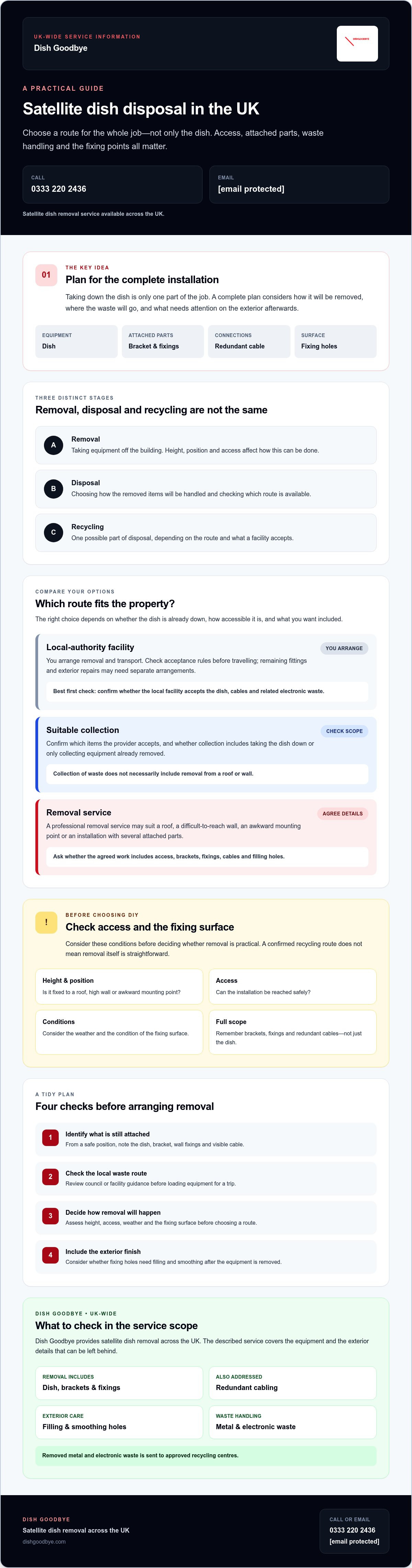
Before taking equipment to a household recycling centre, check whether your local facility accepts it. Then consider how the dish can be removed safely, what needs to happen to the fittings and cables, and whether the fixing holes need attention. Taking down the dish is only one part of the job.
This guide compares disposal routes, explains what to check before choosing one and outlines when professional removal may suit your property. It also covers brackets, redundant cables and the holes left behind, so you can plan a complete next step. To ask about Dish Goodbye’s UK-wide satellite dish removal service, contact 0333 220 2436 or [email protected].
Key Takeaways
- Good satellite dish disposal uk starts with choosing a removal route that suits your property, not just finding somewhere to take the dish.
- Check your local authority’s guidance before travelling, as recycling centre acceptance and collection options can vary.
- Consider height, roof access, weather and the fixing surface before deciding whether DIY removal is practical.
- Plan for brackets, fixings and redundant cables as well as the dish, so the exterior can be left clear and cared for.
- When comparing removal services, check what the work includes. Dish Goodbye operates across the UK, with removal, hole filling and processing of removed metal and electronic waste through approved recycling centres.
Satellite Dish Disposal UK: What Needs Removing and Why?
Satellite dish disposal UK means deciding how an unwanted dish and its associated parts will be removed and handled. The job may look simple, but a tidy result can involve more than taking the dish off the wall. Consider the removal method, the waste route and the condition of the exterior together.
A satellite dish uses a reflector to receive signals, alongside components such as an arm and low-noise block, or LNB. For a basic overview of what a satellite dish is, see Wikipedia. When the equipment is no longer needed, check the full installation rather than focusing only on the dish.
What counts as a redundant satellite dish?
A redundant dish is an unused satellite dish, including a Sky dish, attached to a home or commercial property. It may be disconnected, while its bracket, wall fixings and cable remain in place. Complete removal covers the dish, bracket, fixings and redundant cable, with the resulting waste handled through a suitable route.
Check that scope before arranging help or planning a collection. If the dish comes down but its bracket and cable stay behind, the exterior may still look unfinished. Identify all visible parts from a safe position before deciding what needs to be done.
Disposal, dismantling and recycling are different steps
Dismantling means taking equipment apart or removing it from the building. Disposal is deciding how the removed items will be handled. Recycling is one possible part of that process, depending on the route available and what the facility accepts. These steps are not interchangeable: a dish can be taken down while fixings remain attached or the waste is handled through a different route.
For a closer look at the recycling side, read the UK satellite dish recycling guide. Check local facility guidance before taking equipment there, as acceptance can vary.
Why disposal and exterior condition belong together
An unused dish can make an otherwise tidy wall or roof look cluttered. Removing the dish, bracket and visible cable clears the installation, but the fixing points still need attention. Holes left by previous fittings may need filling and smoothing to help care for the exterior and create a neater finish.
Dish Goodbye provides satellite dish removal across the UK, including associated brackets, fixings and redundant cabling. The service also includes filling and smoothing installation holes, with removed metal and electronic waste sent to approved recycling centres. This addresses both the unwanted equipment and the marks it leaves behind.
Which UK Satellite Dish Disposal Option Fits Your Property?
The right satellite dish disposal uk option depends on where the equipment is fixed and how it will be handled once removed. A dish that is already down may be suitable for a confirmed facility or collection route. A dish still attached to a high wall or roof is a separate access and removal task.
Local-authority facility: You arrange removal and transport. Check acceptance rules first. Any remaining fittings and exterior repairs are your responsibility unless you arrange them separately.
Suitable collection: Confirm that the provider accepts the dish and any related items. Ask whether collection includes taking it down or only collecting equipment that has already been removed.
Removal service: A professional handles the removal. Check whether the agreed scope covers access, brackets, fixings, cables and filling holes.
Can a household recycling centre accept an old dish?
Possibly, but do not assume every household recycling centre accepts dishes, cables or associated electronic waste. Check your council or facility guidance before loading equipment into a vehicle. Confirm which materials and components they take and whether any preparation is required.
Acceptance is only one part of the decision. A facility may provide a route for waste, but it will not remove a dish that is still fixed to the building. Assess its height, position and access separately before deciding how to get it there.
When is professional removal the more practical route?
A removal service may be a better fit if the dish is on a roof, a difficult-to-reach wall or an awkward mounting point, or if several attached parts need clearing. Do not treat a confirmed recycling option as proof that DIY removal is straightforward. Access and the condition of the fixing surface still matter.
Before choosing a provider, ask exactly what the job includes. A complete removal may cover the dish, bracket, fixings and redundant cable, with holes filled and smoothed afterwards. Read more about professional satellite dish removal if you are weighing up that option.
Dish Goodbye provides satellite dish removal across the UK, including associated brackets, fixings and cabling, plus filling and smoothing holes and sending removed metal and electronic waste to approved recycling centres. If that scope suits your property, see UK-wide satellite dish removal.
Is DIY Satellite Dish Disposal Safe and Practical?
Taking down a dish may look like a matter of loosening a few fixings and putting the equipment out of sight. In practice, satellite dish disposal uk can involve working above ground, handling a bulky item and dealing with brackets and cables. The mounting position and condition of the surface matter more than how easy the fixings look from below.
Height changes the risk. A dish within safe reach from ground level is different from one fixed to a roof, high gable or upper wall. Roof access can be awkward, and rain or wind can make a difficult task less predictable. The wall or roof surface matters too. Loose, cracked or weathered material may not hold fixings as expected, and forceful removal could cause damage.
What should you check before attempting removal?
Start with a view from ground level. Note where the dish is mounted and whether all parts are genuinely reachable without climbing or leaning out of a window. Look for visible brackets, trailing cable or signs of damage, but do not climb to inspect them. A visual check can help you describe the job without putting yourself at risk.
Do not pull at wiring or disturb fixtures if you are unsure what they connect to, or if the mounting looks unstable. Stop and seek appropriate help instead. A household recycling centre accepting an item does not make removing it from a wall or roof any safer.
When should you leave removal to a professional?
Choose professional help if the dish is at roof level, access is awkward, the mounting surface looks fragile or damaged, or you cannot confidently identify the attached components. These are signs that the job may be more than a straightforward take-down. A removal service can handle the dish and associated brackets, fixings and redundant cables together, and may include filling and smoothing the holes left behind. Confirm the scope before arranging work.
Stop and get help if reaching the dish requires unsafe access, the mounting looks damaged, or you are uncertain about the cables or fixtures. There is no need to turn a small property task into a fall or an avoidable repair. Dish Goodbye provides satellite dish removal across the UK, including associated fittings and cabling, with holes filled and smoothed as part of its service.
How to Prepare for Satellite Dish Disposal Without Leaving a Mess
A little preparation can make satellite dish disposal uk clearer and help you compare suitable options. You do not need to climb up or touch the installation to gather useful details. Start with this sequence:
- Confirm the disposal route. If you are using a household recycling centre or collection service, check what it accepts and whether the dish must already be removed.
- Note the mounting location. From a safe position, record whether the dish is fixed to a wall, roof, chimney area or another exterior surface.
- Identify visible fittings. Look for brackets, fixings and cables, but do not pull at them or climb for a closer view.
These details help you describe the whole task, not just the dish. A photo taken safely from the ground can also show its position and the surrounding access. If the dish is difficult to see, do not take risks to get a better picture. A clear description is useful too.
What information helps you arrange removal?
Explain where the dish is mounted and mention anything that could affect access, such as a narrow passage, an obstructed area or a roof-level position. Note any known cracks, loose material or other damage around the fixing surface. Share only what you can see safely. There is no need to test whether a bracket or cable is secure.
If you are unsure what a cable connects to, leave it untouched and mention that uncertainty when asking for help. For more on identifying old exterior wires, see this guide to redundant exterior cables.
What should a complete disposal job leave behind?
Think beyond the dish itself. Brackets, fixings and redundant cabling may also need to be removed, depending on the agreed scope. Ask who will handle each part and how the removed materials will be dealt with. This avoids arranging a waste route for the dish while leaving attached components unresolved.
Dish Goodbye’s satellite dish removal service covers associated brackets, fixings and cabling. It also includes filling and smoothing holes left by previous installations, with removed metal and electronic waste sent to approved recycling centres. If you would like to discuss removal for your property, request information about satellite dish removal.
Choose a UK-Wide Satellite Dish Disposal Service That Finishes the Job
A removal service should make the whole task clear, from taking down the dish to dealing with parts left attached to your property. For satellite dish disposal UK, compare the work included rather than focusing on dish removal alone. A clear scope helps you understand what will be removed, how waste will be handled and what condition the exterior will be left in.
What to ask before booking a dish removal service
Use this checklist when comparing providers:
- Coverage: Does the service operate across the UK and cover your property?
- Removal scope: Are the brackets, fixings and redundant cables included alongside the dish?
- Waste handling: Ask how removed metal and electronic waste is processed.
- Exterior finish: Check whether filling and smoothing the fixing holes is part of the described service.
- Access: Explain where the dish is mounted and ask whether any access concerns affect the work included.
These questions make it easier to compare like with like. One provider may collect a dish that has already been removed, while another may offer a service that includes dismantling attached components. Do not assume cables or wall repairs are covered unless the provider confirms them.
Dish Goodbye provides satellite dish removal across the UK. Its service includes dismantling dishes, brackets, fixings and associated cabling, filling and smoothing holes left by previous installations, and sending removed metal and electronic waste to approved recycling centres. This gives you a defined scope to consider when choosing a removal option for your property.
Make the next step simple across the UK
Before contacting a provider, summarise the property location, the dish’s position and any visible access concerns. Mention whether it is on a wall, roof or chimney area, and note any known damage. Photos taken safely from the ground can help explain the job, but do not climb or handle fittings to get a closer view.
If you are looking for a UK-wide option, arrange satellite dish removal with Dish Goodbye. Get in touch by phone on 0333 220 2436 or email [email protected].
Choose a Clear, Complete Route for Your Old Dish
A good satellite dish disposal uk plan considers more than where the equipment will go. Check what your local facility accepts, assess whether the dish can be accessed safely, and account for brackets, fixings and redundant cables as well as the dish itself. A tidy result may also mean dealing with the holes left in the exterior.
Dish Goodbye provides satellite dish removal across the UK. The service includes associated brackets, fixings and cabling, filling and smoothing holes left by previous installations, and processing removed metal and electronic waste through approved recycling centres.
Ready to clear the old installation? Arrange UK-wide satellite dish removal and share the dish’s location and any access concerns. It is a practical step towards a clearer, better-cared-for exterior.
Call 0333 220 2436 or email [email protected].
Frequently Asked Questions
Can I take an old satellite dish to my local recycling centre?
Possibly, but check your council or local facility’s guidance before transporting it. Acceptance can vary, so confirm whether the dish, LNB, cables and other electronic parts are accepted. A recycling centre may provide a disposal route for equipment you have removed, but it will not take a dish down from your roof or wall. Consider safe removal separately, especially if access is difficult.
How should I dispose of an old Sky dish in the UK?
First decide how the Sky dish can be removed safely, then confirm how the dismantled equipment will be handled. Check local facility guidance before taking it to a household recycling centre, as acceptance varies. If the dish is high up or you want the brackets, fixings and redundant cables dealt with too, consider a removal service. Dish Goodbye provides Sky dish removal across the UK.
Is it safe to remove a satellite dish myself?
It may not be safe, particularly if the dish is on a roof, high wall or awkward-to-reach surface. Height, weather, loose fixings and damage to the mounting surface can make the job harder than it appears. Do not climb or disturb wiring you cannot identify. If you cannot reach the dish safely from ground level, or the structure looks fragile, stop and seek professional help.
What happens to the brackets and cables when a dish is removed?
That depends on the removal service or arrangement, so confirm the scope before booking. Brackets, fixings and redundant cables can remain attached even after the dish is gone. Dish Goodbye’s removal service includes dismantling associated brackets, fixings and cabling. Ask how removed metal and electronic waste will be handled, and whether filling and smoothing wall holes is included.
What happens if I leave the holes from an old satellite dish unfilled?
Unfilled fixing holes can leave the exterior looking unfinished and may affect the property over time. Dish Goodbye notes that filling and smoothing holes left by previous installations helps maintain the building’s exterior and prevent potential damp issues. If you are arranging removal, ask whether hole filling is included and what the work covers. The condition and material of the surface may affect what attention it needs.
Does satellite dish disposal include removing the dish from the roof?
It can, but do not assume every disposal option includes taking a dish down from a roof. A recycling centre generally addresses waste acceptance, not removal from the property. Before arranging a service, explain where the dish is mounted and ask whether the provider’s scope covers that position and access. If reaching it would involve unsafe roof access, do not attempt the work yourself.
How can I make sure an old satellite dish is recycled responsibly?
Ask the provider or facility how it handles the dish’s metal and electronic components, and confirm that the chosen route accepts the items you have. Local recycling guidance can vary, so check before transporting equipment. Dish Goodbye processes removed metal and electronic waste through approved recycling centres. Also confirm that brackets, fixings and redundant cables are included in the disposal plan.