
What if a few unused aerials are making a well-kept commercial building look neglected? Redundant aerial removal for commercial properties can clear visual clutter and help the facade look cleaner and better maintained. Dish Goodbye provides satellite dish and aerial removal across the UK. Visit dishgoodbye.com, call 0333 220 2436 or email [email protected].
Unused equipment and loose cabling can distract from a building’s exterior. Before removal, establish whether the equipment is still in use and consider what will be left behind, including brackets, fixings and holes. Planning the whole job helps avoid a partial clear-out that leaves the facade looking unfinished.
This guide explains how to assess redundant equipment, plan its removal and review the finish afterwards. It also covers how filling and smoothing fixing holes can help leave the exterior neater, and how removed metal and electronic waste is sent to approved recycling centres.
Key Takeaways
- Dish Goodbye provides commercial aerial and dish removal across the UK. Visit dishgoodbye.com, call 0333 220 2436 or email [email protected].
- Survey visible aerials, brackets and cabling, then confirm with responsible building stakeholders which equipment is redundant.
- Removing unused equipment can clear visual clutter and make an exterior look more orderly.
- Plan for the complete job: removal includes associated brackets, fixings and cabling, with installation holes filled and smoothed.
- Removed metal and electronic waste is processed through approved recycling centres.
How redundant aerial removal can improve a commercial building’s facade
Unused aerials, bulky brackets and loose cables can make a commercial exterior look cluttered, even when the rest of the building is well cared for. Clearing equipment that is no longer needed can create a simpler, more orderly finish.
Redundant aerial removal for commercial properties means clearing aerial equipment that is no longer needed, along with its associated brackets, fixings and cabling. It is a practical part of facade maintenance, with attention to both the equipment and the fittings left behind.
What counts as a redundant aerial on a commercial property?
Potentially redundant equipment can include disused TV aerials, satellite dishes, mounting brackets, fixings and trailing or unused cables. It may be attached to a wall, positioned on a roof or fitted to another exterior surface.
Do not assume an aerial is unused just because it looks old or disconnected. First record what is visible, then establish whether the equipment is still needed. Checking relevant property records and speaking with the people responsible for the building can help confirm what belongs in the removal scope.
Why exterior clutter matters to a building’s overall presentation
A building’s facade is its visible outer face, including architectural features and practical fittings. Scattered cables and redundant hardware can draw the eye away from the structure’s cleaner lines. Even small items can look untidy against a freshly maintained wall or roofline. The building's facade is best considered as a whole, rather than as a collection of isolated fittings.
Removing equipment that has been confirmed as unnecessary can make the exterior feel less busy and more consistent. The fixing points matter too: removal looks more complete when holes are filled and smoothed instead of left as obvious marks.
Removing unused aerial equipment can simplify a facade and help the building look more consistently maintained.
Dish Goodbye removes redundant aerials, dishes, brackets, fixings and associated cabling, and fills and smooths installation holes. Removed metal and electronic waste is sent to approved recycling centres.
What redundant aerials and fixing holes can mean for a commercial exterior
Taking down an unused aerial is only part of a complete exterior tidy-up. Brackets, screws and lengths of redundant cable can remain visible afterwards, leaving a wall or roofline looking unfinished. Looking at the whole installation helps make the removal more thorough.
Brackets, fixings, and cables: the details that keep facades looking cluttered
A dish or aerial may be gone, yet its mounting bracket, fixings or cable clips can still mark the spot. A cable running along a wall or through an exterior surface can also interrupt the building’s lines. Before work begins, identify the equipment and associated components to be removed. Clearing those parts as well as the aerial creates a more complete visual result than taking down the main item alone.
Why filling and smoothing fixing holes matters
Removing fixings can leave small holes in the surface. If left untreated, they may look like unfinished work and, depending on their position and exposure, could contribute to moisture concerns. That does not mean every hole will cause damp, and a hole alone is not enough to diagnose a problem. It does make the finish worth including in the removal plan.
Dish Goodbye fills and smooths holes left by previous installations. Treating the fixing points helps the cleared area look neater and more consistent with the surrounding exterior. The removal therefore addresses what remains after the equipment comes away, rather than leaving visible marks as the final detail.
Removing redundant equipment, associated brackets, fixings and cabling, then filling and smoothing installation holes, can leave a commercial exterior looking clearer and more finished.
That is the practical value of redundant aerial removal for commercial properties: addressing the full installation and its visible traces as one maintenance task. Find out more about aerial and dish removal. Removed metal and electronic waste is sent to approved recycling centres.
Visit dishgoodbye.com, call 0333 220 2436 or email [email protected].
How to assess and prioritise commercial aerial removal
A simple survey helps facilities managers turn a cluttered-looking exterior into a clear, organised scope of work. It also helps avoid treating equipment as redundant based only on appearance.
A simple facade survey for facilities managers
Work through the building by area, such as each elevation, roof section or separate block. Record each item’s location so it can be identified clearly later. Photos can document the starting condition and make the proposed scope easier to review.
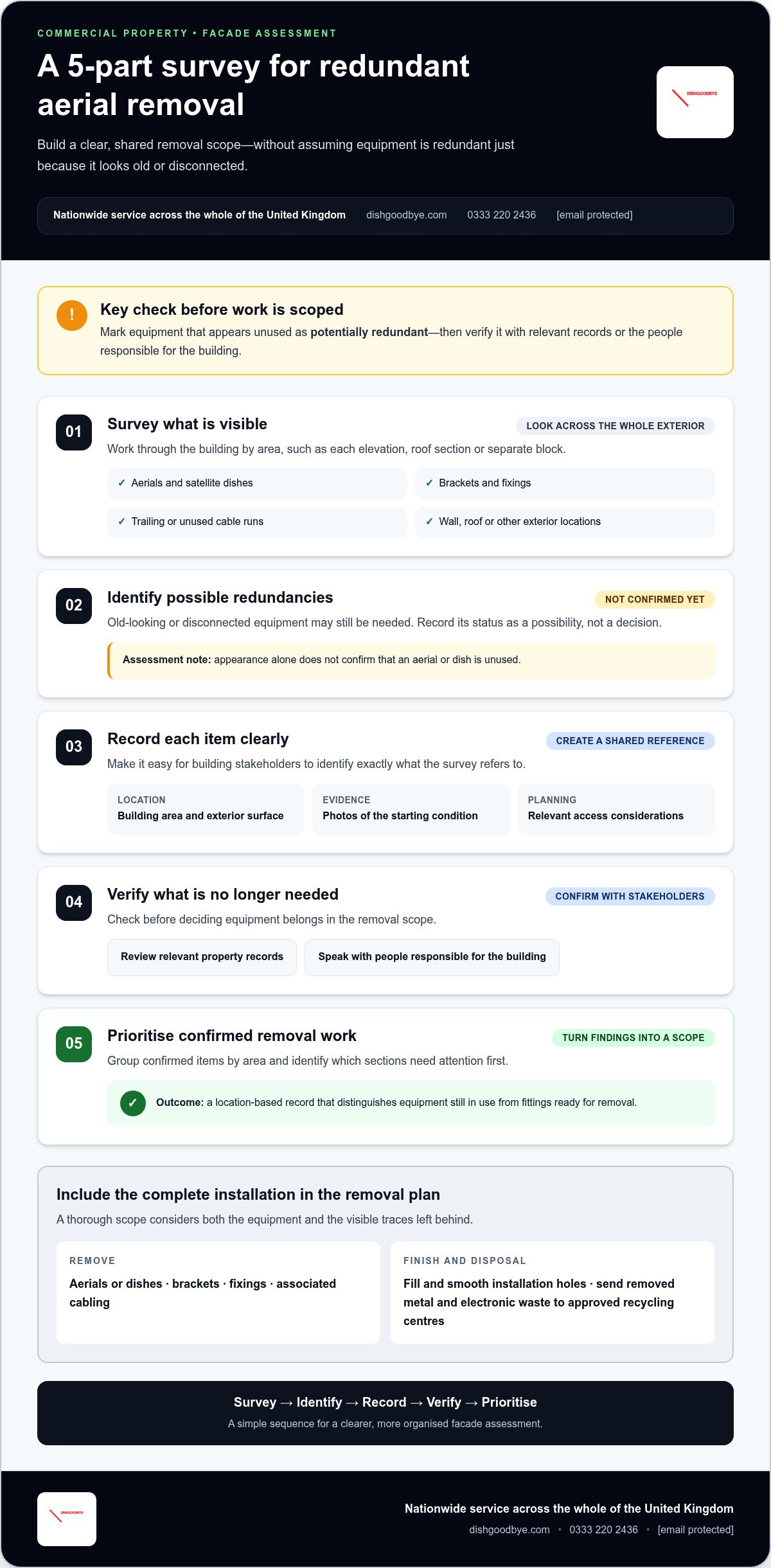
Use this straightforward assessment:
- Survey: Note visible aerials, dishes, brackets, fixings and cable runs.
- Identify: Mark items that appear unused as potentially redundant, not confirmed redundant.
- Record: Log each item by building area and exterior surface, and note relevant access considerations.
- Verify: Review relevant property records or speak with responsible building stakeholders before deciding equipment is no longer needed.
- Prioritise: Group confirmed removal work by area and identify the sections that need attention first.
This record gives building stakeholders a shared reference point and helps distinguish equipment that still serves a purpose from fittings that may be ready for removal. Include access considerations in the planning notes, without trying to prescribe technical removal methods from a visual survey.
Prioritising removal across a commercial building
Start with areas where redundant equipment is most visually prominent, such as a main-facing wall or a roofline visible from the surrounding grounds. Then consider other areas as part of the same maintenance plan. Grouping work by building section can create a more consistent result than addressing isolated items piecemeal.
Compare survey notes with available property records and input from the people responsible for the building before setting priorities. If satellite dishes are present, include them in the assessment and scope. For further context on the removal process, read this guide to professional dish removal service.
A well-organised survey makes redundant aerial removal for commercial properties easier to plan as one facade-maintenance task. Dish Goodbye removes redundant aerials, dishes, brackets, fixings and associated cabling across the UK.
How to plan redundant aerial removal for a cleaner commercial facade
A clear plan turns an exterior survey into a tidy, complete result. For redundant aerial removal for commercial properties, agree what is in scope, arrange removal, include treatment of fixing holes, then review the finished exterior. This sequence keeps attention on both the equipment and the marks or fittings that may remain afterwards.
What a complete removal scope should address
Set out each item and its location before work begins. The scope can include the aerial or satellite dish, associated brackets and fixings, and redundant cabling. Dish Goodbye removes these components as part of the service, helping avoid a partial clear-out that leaves visible hardware behind.
Include fixing-hole treatment in the plan. Dish Goodbye fills and smooths holes left by previous installations, helping the cleared area look neater and more finished. Removed metal and electronic waste is processed through approved recycling centres, making responsible handling part of the overall job. For more on clearing unused equipment, read this guide to removing aerials and other redundant equipment.
How to review the finished facade
Once removal is complete, compare the exterior with the agreed scope and survey notes. Check that the specified aerials or dishes, brackets, fixings and redundant cable runs have been removed. Look at the former fixing points too: they should be filled and smoothed as planned, rather than left as obvious unfinished marks.
Review each building area included in the work so no scoped item is overlooked. If before-and-after photographs are used to document the result, ensure every after photo shows the cleared exterior without any satellite dishes or aerials. That keeps the visual record consistent with the completed work.
A well-defined scope, complete removal and a careful review make facade maintenance easier to manage. Arrange commercial aerial and dish removal across the UK with Dish Goodbye.
Make commercial facade improvements simpler with Dish Goodbye
Clearing redundant aerial equipment is a practical way to reduce visual clutter and support a tidier commercial facade. A planned removal addresses more than the most visible dish or aerial: it includes associated parts and the fixing marks left behind, helping the exterior look more complete.
What Dish Goodbye handles during a commercial aerial removal
Dish Goodbye removes redundant aerials and satellite dishes, along with their brackets, fixings and associated cabling. This complete approach helps prevent a partial clear-out where the main equipment is gone but leftover fittings or cables still interrupt the facade.
Fixing holes left by previous installations are filled and smoothed as part of the service. This finishing step helps cleared areas look neater and better maintained. Removed metal and electronic waste is processed through approved recycling centres, so responsible handling is part of the removal process.
For building managers, bringing these details together can make the work easier to include in a broader exterior maintenance plan. A survey record identifying the equipment and the building areas involved gives the removal scope a clear starting point. Dish Goodbye provides commercial removal across the UK, helping property teams address redundant equipment as one considered task rather than a series of separate fixes.
The next step for a more orderly building exterior
Start by outlining what equipment appears redundant and where it is located. Include dishes or aerials, visible brackets and fixings, and cable runs. If equipment has not been confirmed as unused, review relevant property records or speak with the people responsible for the building before adding it to the removal scope.
Once the scope is clear, arrange removal and include hole filling, smoothing and the handling of removed materials in the plan. After the work, review the areas covered to confirm the specified equipment and associated components have been cleared. If you keep after photographs, show the finished exterior without any satellite dishes or aerials.
Ready to clear redundant equipment and create a cleaner, more orderly facade? Arrange redundant aerial removal with Dish Goodbye.
Take the next step towards a tidier commercial facade
A cleaner exterior starts with identifying equipment that is genuinely redundant and planning its removal as a complete job. Clearing aerials or dishes alone may leave brackets, fixings and cabling behind, so include those details and the treatment of fixing holes in the scope. This makes redundant aerial removal for commercial properties a more considered part of facade maintenance.
Dish Goodbye provides removal across the UK, including associated brackets, fixings and redundant cabling. Installation holes are filled and smoothed, and removed metal and electronic waste is processed through approved recycling centres. The result is a simpler, better-maintained exterior, with the finishing details included in the job.
Ready to clear unused equipment from your building? Arrange redundant aerial removal with Dish Goodbye and take a practical step towards a more orderly facade.
Frequently Asked Questions
What is redundant aerial removal for commercial properties?
Redundant aerial removal for commercial properties means removing unused aerial equipment from a commercial building, including associated brackets, fixings and cabling. The aim is to clear unnecessary exterior clutter rather than leave disconnected-looking components in place. Dish Goodbye also fills and smooths holes left by previous installations, helping the facade look more orderly after the equipment is removed.
Can removing a redundant aerial improve a commercial building’s appearance?
Removing equipment that is no longer needed may help a commercial building look cleaner and more consistent. Unused aerials, brackets and cables can draw attention away from a well-maintained exterior. The overall finish also depends on what remains after removal, so include associated fixings and treatment of installation holes in the plan. This can support a tidier facade, but it does not guarantee higher property value, increased occupancy or other business results.
What happens to the holes left by commercial aerial removal?
Dish Goodbye fills and smooths holes left by previous installations as part of the exterior tidy-up. This helps the areas where equipment was fixed look more finished once the aerial, dish and fittings have been removed. Unfilled holes may contribute to damp concerns in some circumstances, but that does not mean every hole causes damp. This work addresses the fixing holes, not a diagnosis of existing building damage.
Does commercial aerial removal include the brackets and cables?
Yes. Dish Goodbye’s removal service includes the aerial or dish, associated brackets and fixings, and redundant cabling. Considering the complete installation helps prevent a partial clear-out where visible equipment is gone but other components remain on the exterior. Including those details in the scope can support a neater finish across the areas being cleared.
How should a facilities manager plan redundant aerial removal?
Start by surveying visible aerials, dishes, brackets and cable runs, then record where each item is located. Identify equipment believed to be redundant and review relevant property records or speak with responsible building stakeholders before treating it as unused. Group the work by building area to create a coordinated plan, and include fixing holes so filling and smoothing are considered as part of the exterior tidy-up.
What happens to removed aerials and metal components?
Dish Goodbye ensures removed metal and electronic waste is processed through approved recycling centres. Include waste handling in the overall removal plan alongside clearing redundant equipment and its associated components. This describes the disposal approach without implying a particular recycling rate or additional environmental outcome.
Does Dish Goodbye remove redundant aerials from commercial properties across the UK?
Yes. Dish Goodbye provides a nationwide service across the United Kingdom for redundant satellite dishes, aerials and antennas at commercial and residential properties. Removal includes associated brackets, fixings and cabling, and installation holes are filled and smoothed to help leave a tidier exterior. To get started,