

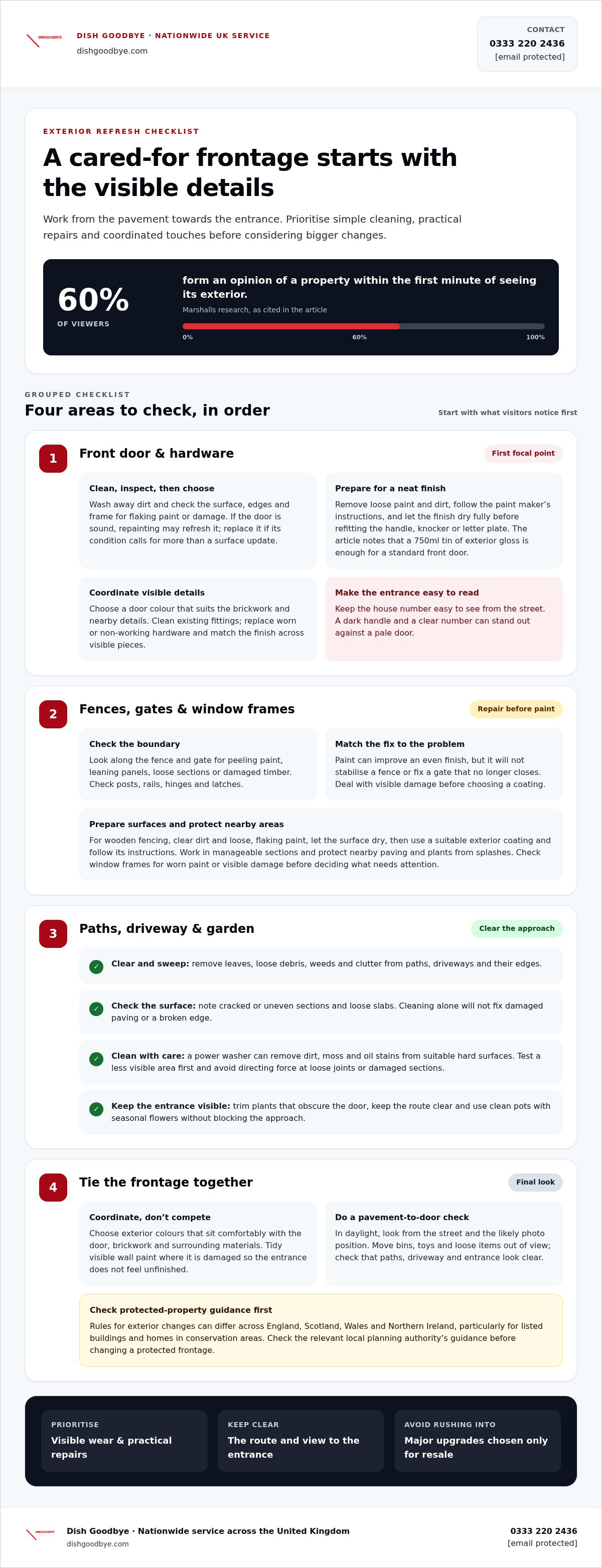
Marshalls research suggests 60% of viewers form an opinion of a property within the first minute of seeing its exterior. Improving kerb appeal before a house valuation can start with simple updates: clean and refresh the front door, tidy fences and gates, and make sure windows look cared for. These details help create a welcoming first impression without needing a major makeover.
It’s easy to focus on work inside the house, but the view from the pavement sets the tone before anyone steps through the door. A fresh coat of paint, neat boundaries and clear windows can make the exterior feel looked after and inviting.
Here are practical ways to refresh the front door, fence, gate and window frames, alongside straightforward garden and pathway improvements. You’ll also learn how to choose updates that work together, so the property looks polished and well maintained before its valuation.
Key Takeaways
- Refresh a tired front door with cleaning, considered paint and simple hardware updates.
- Make the approach feel welcoming by clearing paths and driveways of dirt, moss and clutter.
- Check fences, gates and window frames for worn paint or visible damage before deciding what to repair.
- Use tidy planting, working lights and coordinated exterior colours to give the frontage a cared-for look.
- Prioritise practical improvements that make the property feel well maintained, rather than rushing into major upgrades.
1. Refreshing the front door with paint and replacement hardware
Across England, Scotland, Wales and Northern Ireland, rules for exterior changes can differ, particularly for listed buildings and homes in conservation areas. Before altering a protected frontage, check the relevant local planning authority’s guidance for your property and proposed work.
There’s no single total for painting, gardening and replacing a front door: the work, materials and property condition determine the spend. For a simple refresh, start with cleaning and repainting. Replacing a door is a larger project, especially if the existing one is worn or damaged.
Start with the front door. Wash away dirt, then inspect the surface, edges and frame for flaking paint or damage. If the door is sound, repainting can refresh it without replacing the whole unit. Choose an exterior paint colour that suits the brickwork and nearby details, rather than one that clashes with the house.
Prepare the door before painting by removing loose paint and dirt, then follow the paint manufacturer’s instructions for the surface and drying conditions. A 750ml tin of exterior gloss is enough to paint a standard front door. Let the finish dry fully before replacing the handle, knocker or letter plate, so fresh paint stays clean and smooth.
Small hardware changes can sharpen the result. Clean the existing handle and letter plate first, and replace them if they look worn or no longer work properly. Match the finish across visible fittings, and make sure the house number is easy to see from the street. For example, a dark handle and clear number stand out against a pale door.
Replace the door if its condition calls for more than a surface refresh. Choose a design that complements the property’s architectural style, and make sure the frame and surrounding finish look tidy. A freshly painted door beside peeling exterior walls can feel unfinished, so assess the entrance and nearby wall surfaces together.
Before photographs or viewings, clear the front garden and pathways. Sweep away leaves and loose debris, remove weeds from path edges, and trim plants that obscure the entrance. Add a few seasonal flowers in clean pots beside the door, keeping the route clear for visitors and the camera’s view open.
For a consistent frontage, repair visibly damaged paint on exterior walls and choose colours that sit comfortably with the door and surrounding materials. Walk from the pavement towards the entrance, noting chipped patches, clutter and anything blocking the house number. Tackle these visible details before arranging photographs or welcoming buyers.
Rules for painting or replacing exterior features may depend on the property’s protected status and location. Check the applicable local planning authority’s guidance before changing a protected frontage.
2. What is kerb appeal?
Kerb appeal is the impression a home creates from the street, before a visitor enters. The exterior includes the front door, windows, walls, garden, driveway and paths. Marshalls research suggests 60% of viewers form an opinion of a property within the first minute of seeing its exterior. A clear, cared-for approach helps the whole home feel welcoming.
Start at the pavement and look towards the entrance as a buyer might. Check for weeds, moss, leaves or loose debris on the driveway. Sweep the surface and clear the edges, then look for cracked or uneven sections that need attention. Remove path obstructions and tidy overgrown plants so visitors can reach the front door easily.
For a deeper clean, choose a method suited to the driveway material. A power washer can remove accumulated dirt, moss and oil stains from suitable hard surfaces. Test a small, less visible area first, then work evenly across the surface. Avoid directing force at loose joints or damaged sections, where water could worsen existing problems.
Cleaning alone won’t fix a broken edge or sunken paving. Identify the repair that would make the clearest difference, such as replacing a loose slab or fixing a cracked path. Keep the route to the entrance clear while work is underway. A neat driveway beside a damaged walkway still draws attention to the problem, so assess both together.
Extend the clean to the home’s exterior. Wash visible grime from accessible surfaces, clean windows and remove cobwebs around the entrance. From ground level, check gutters for obvious debris or damage, and note areas needing attention. Aim for a consistent finish: clean walls, clear glass and tidy paths create a brighter outdoor impression.
Which kerb appeal improvements should you avoid because they may not add value? Avoid major upgrades chosen solely for resale, especially bold finishes or elaborate features that may not suit buyers’ tastes. Large renovations can also distract from simple maintenance, so prioritise visible wear and practical repairs first.
Finally, assess the frontage in daylight from the camera’s likely position. Move bins, toys and loose items out of view, then check that the driveway, paths and entrance look clear in photographs. Choose a few coordinated touches, such as trimmed greenery and clean paving, rather than decorations that compete with the house.
3. Repainting fences, gates and window frames
A fence or gate frames the approach to a home, so peeling paint and leaning panels can make the frontage look neglected. Walk along the boundary and check each post, rail, hinge and latch. Note loose sections or damaged timber before choosing paint. An even finish can enhance the entrance, but paint won’t fix an unstable fence or a gate that no longer closes.
For a wooden fence, clear away dirt and loose, flaking paint before applying a suitable exterior coating. Let the surface dry, then paint rails and posts in manageable sections, following the product instructions. Protect nearby paving and plants from splashes. Choose a colour that complements the front door, brickwork and neighbouring boundary, rather than one that competes with the house.
Gates need a practical check as well as a visual refresh. Open and close each one, tighten loose fittings, and look for rust on metal hinges or latches. Repair damaged parts before painting, so the finish doesn’t hide a fault. A gate that swings freely and sits neatly against its post makes the entrance more inviting and the boundary look cared for.
Inspect window frames closely, especially along lower edges and joints where water can leave marks. Clean the frames first, then look for peeling paint, cracked seals, damp patches or soft, rotting wood. Repair sound timber and repaint it with an appropriate exterior finish. If a wooden frame has irreparable damp or rot damage, replacement is more suitable than covering the problem with paint.
Clean windows after working on the frames, removing paint marks and grime from the glass. Clear glass lets more daylight inside and gives the exterior a brighter appearance. Check visible handles and hinges too: a loose handle or stiff opening can detract from a well-presented window. From the pavement, compare adjoining frames so one freshly painted section doesn’t highlight neglected areas beside it.
Include gutters, fascias and the roofline in the same visual inspection. From ground level, look for sagging gutter sections, visible debris, damaged fascia boards or missing roof tiles. Clear accessible gutters only when it’s safe, and arrange appropriate attention for repairs requiring specialist access. Don’t climb onto a roof to inspect it; ground-level views can flag issues without creating a fall risk.
Finish with a slow walk around the frontage in daylight. Check that the fence colour, gate finish and window frames work together, and that repaired areas look tidy from the pavement. A positive first impression comes from consistent upkeep: clean windows, sound boundaries and an exterior without obvious peeling paint or damage.
4. DIY improvements to the property's exterior
Start with a ground-level inspection of the frontage. Look for cracked paving, loose fence panels, damaged paint, blocked gutters and missing roof tiles. Write down each visible issue, then separate simple cleaning from repairs requiring specialist skills. This quick audit keeps your effort focused on the details buyers see first, rather than cosmetic extras that leave practical problems untouched.
For a low-cost refresh, clear clutter from the entrance, sweep paths and remove weeds from paving joints. Trim overgrown plants, tidy flowerbeds and use existing pots to add colour. Clean windows and wipe outdoor lights, then check they work. These small jobs require little equipment and can make the frontage feel cared for without buying new features.
Choose a consistent exterior colour scheme before painting. Compare the door, boundary fence and visible trim with the brickwork, roof and neighbouring properties. A restrained palette helps the house feel cohesive; competing colours can make separate details look untidy. For example, repeat one neutral tone on the gate and window trim, then use planting for seasonal colour.
How can you improve kerb appeal on a tight budget before a valuation? Prioritise cleaning, clearing clutter, trimming plants and fixing obvious minor damage. Reuse pots and materials already at home, and avoid buying decorative items before addressing peeling paint or broken paving.
Plan work around the valuation date, allowing time to complete repairs and finishes properly. Paint needs suitable conditions and drying time, while garden tasks may need repeating if plants grow quickly or weather leaves paths dirty. Finish larger jobs early enough to inspect the result, then sweep and tidy shortly before the visit.
Seasonal presentation needs a little upkeep. In autumn, clear fallen leaves from paths and entrances; during dry spells, water containers and remove faded flowers. Before winter viewings, keep walkways clear of snow and ice. In every season, trim plants that block windows, house numbers or outdoor lighting, and store toys or tools out of sight.
Could cosmetic improvements or rushed repairs negatively affect a valuation? Yes. A quick cover-up, such as placing stick-on tiles over a visible fault, may look like an attempt to conceal a problem and draw attention to it. Where possible, repair the underlying issue using suitable materials, and don’t hide known defects beneath a rushed finish.
Finish by viewing the property from the pavement and checking the entrance, walls and garden together. Correct mismatched paint, move bins out of the main view and make sure pathways remain clear. A short final review helps catch unfinished edges or fresh clutter before photographs or the valuation visit.
5. Which kerb appeal improvements have the biggest impact on a UK house valuation?
Prioritise visible maintenance over decorative upgrades. A neat entrance, clean windows, sound boundaries and a tidy garden help the property appear cared for. Start with defects that stand out from the pavement, such as peeling paint, a loose gate or damaged paving. Then weigh the effort required for each fix against its likely effect on presentation.
Research offers context, but it doesn’t promise a particular valuation outcome. A Royal Institution of Chartered Surveyors study states that improving kerb appeal can increase a home’s value by as much as 10%. Treat that as an indication of potential, not a figure to apply directly to your property or use as a guaranteed uplift.
Buyer preferences also show why presentation matters. Evolution Money research found that 30% of buyers would pay more for a property with good kerb appeal. That finding reflects reported buyer willingness, not a promise that an individual home’s valuation will rise. Condition, location and comparable homes still shape a valuation.
For practical impact, tackle repairs that suggest neglect first. Replace a broken fence panel, repair a damaged path and address visibly deteriorated exterior paint. Clean windows and clear the approach, then make sure the front garden looks maintained. These changes improve the overall impression without a major redesign that buyers might prefer to choose themselves.
Next, consider updates that make the home feel cohesive. Coordinate the door, gate and window-frame colours with the brickwork and roof. Trim plants that obscure the entrance, and keep house numbers easy to see. A working exterior light can help the entrance look cared for during darker viewings, while clear paths make the frontage easier to assess.
Be cautious about major projects undertaken solely before a valuation. A new driveway or extensive landscaping may involve substantial work, yet its style may not suit every buyer. Focus instead on clear defects and straightforward upkeep. In period homes, preserve original details that remain in good condition; replacing characterful features unnecessarily can diminish the property’s appeal.
Use a simple priority order: repair visible damage, clean the exterior, tidy planting, then add modest finishing touches. Photograph the frontage after the work and review it from the pavement. If a defect remains obvious in the image, address it before spending time on less noticeable upgrades. This keeps preparation focused on features that shape the first impression.
A valuation assesses the property, not a guaranteed reward for cosmetic work. Keep known issues visible and explain completed repairs honestly. The strongest preparation combines a well-maintained exterior with realistic expectations about what presentation can influence.
Kerb appeal can influence buyer perceptions, while a valuation also reflects condition, location and comparable homes. Improved kerb appeal doesn’t guarantee a particular adjustment to an individual valuation.
Dish Goodbye: Sky Dish Removal
Dish Goodbye provides Sky Dish Removal for homeowners preparing a property exterior for valuation or sale. A redundant dish and its visible bracket or associated cable can distract from freshly cleaned walls and a tidy frontage. The quote includes removal of the dish, its bracket and associated cable, plus filling the associated fixing holes.
Tell Dish Goodbye about any additional cables, holes or devices in your initial enquiry, as these are quoted separately. Access, height and property conditions also affect how removal is assessed. This service is a practical next step when an unwanted Sky dish is drawing attention away from other exterior improvements.
For details, visit the Dish Goodbye service website, call 0333 220 2436 or email [email protected].
Make your next move with confidence
Use the valuation to understand how your home is seen, not as a reason to rush into every possible upgrade. Focus on visible upkeep and repairs that suit the property. Note completed work and any issues that still need attention, so you can discuss them clearly during the valuation.
Improving kerb appeal before a house valuation can help the exterior feel considered and welcoming, but presentation alone can’t guarantee a particular valuation. A balanced approach keeps your effort practical: address the details that shape the first impression, and leave major changes for a clear reason.
If a redundant dish is still drawing the eye, Dish Goodbye offers Satellite Dish Removal and Sky Dish Removal. Choose a suitable next step for your property and give the frontage room to look its best.
Visit the Dish Goodbye service website to take the next step. A few well-chosen improvements can help you approach valuation day with a tidier, more confidently presented home.
Contact Dish Goodbye on 0333 220 2436 or email [email protected].
Frequently Asked Questions
What is kerb appeal?
Kerb appeal describes how a home’s visible exterior presents from the street. It involves more than decoration: the condition of the entrance, windows, boundaries and outdoor space all contribute. For example, a clear house number, tidy bins and an unobstructed view of the front windows make the frontage easier to take in at a glance. It shapes a first impression, but doesn’t by itself establish a property’s value.
Which exterior repairs should I prioritise before a UK property valuation?
Prioritise defects that are prominent, affect access or may indicate a wider maintenance issue. A loose gate, broken step or visibly damaged window frame deserves attention before decorative details. Make a short list from the pavement, then inspect each item more closely before deciding what needs repair. Don’t disguise a defect with paint or covering materials; a neat finish should follow a sound repair.
How should I tidy and landscape the front garden to improve kerb appeal?
Keep the entrance and house features easy to see. Arrange pots so they don’t narrow the route or hide the door, and choose plants that suit the space and your ability to maintain them. Check that climbing growth isn’t covering windows, signs or exterior fittings. In a small front garden, a few well-kept containers can create a tidy focal point without overcrowding the frontage.
Does repainting or replacing a front door increase a home's value in the UK?
Repainting or replacing a front door may improve presentation, but neither guarantees a higher valuation. If the door opens and closes properly and its surface is sound, repainting can give it a cleaner finish. Consider replacement if damage or poor operation makes it look neglected. Choose a design that suits the property, particularly if an original door contributes to its character, and weigh appearance against condition.
Contact Dish Goodbye on 0333 220 2436 or email [email protected].