
A dish several storeys up isn’t a ladder job. If you’re wondering how to remove a dish from a high-rise building safely, start with permission and a controlled access plan, not by reaching out from a window or roof edge. Dish Goodbye: dishgoodbye.com, 0333 220 2436, [email protected].
It’s natural to be concerned about loose brackets, falling parts, cables and damage to the façade. A high-rise removal needs careful coordination to protect people below and the building itself.
This guide explains what to arrange before work begins, including who may need to authorise access and how to plan the job. It also covers the risks of attempting exterior work yourself, what happens to redundant cabling and fixings, and how filling and smoothing fixing holes helps leave the exterior tidy. Dish Goodbye removes redundant satellite dishes, brackets, fixings and cabling across the UK. Removed metal and electronic waste goes to approved recycling centres. Visit dishgoodbye.com, call 0333 220 2436 or email [email protected].
Key Takeaways
- Identify who can authorise the work and arrange building access before planning removal.
- Understand why removing a high-rise dish safely requires a controlled plan, not familiar DIY tools.
- Use the dish’s position and the building layout to plan access.
- Include brackets, fixings and redundant cables in the removal plan, not just the dish.
- Filling and smoothing fixing holes and responsibly handling waste help leave the exterior tidy.
Why high-rise satellite dish removal needs more than a basic dismantle
A dish on a high-rise isn’t simply a few bolts to undo. Its position can make access difficult, and loose components could fall towards people or property below. The work also takes place on the building exterior, where careless handling can damage the surface or leave fixings behind.
High-rise dish removal is planned work that combines controlled access, secure handling of the dish and its components, and care for the building façade. The plan depends on the dish’s location and the building layout. Don’t improvise a method based on familiar tools or a view from inside the flat.
What makes a dish on a high-rise different?
Height limits ordinary reach, and mounting points may be outside a window or on a shared façade. Brackets, bolts and sections of the dish can shift during dismantling, so they need to be handled in a controlled way. The cable may also run across or into the exterior, making it part of the removal plan.
Balconies and occupied areas add practical complications. A balcony may not provide safe or suitable access to the mounting points, while work on a shared wall can affect other residents and building operations. A photograph or ground-level view may show where the dish is, but it cannot establish the condition of the fixings, the safe access route or the right removal method.
Who should be involved before work is planned?
First, clarify who has authority over the relevant part of the building. The resident may have arranged the dish, but that doesn’t automatically establish who owns it or controls access to the exterior. Depending on the property arrangements, the landlord, building manager, owner or another responsible decision-maker may need to be involved.
Keep two questions separate: who can approve access and work on the building, and how the dish can be removed safely. The building’s ownership and management arrangements determine the approval route. Share what you know about the dish and its installation with the responsible person. Approval to reach an exterior area is not, by itself, a technical removal plan.
This distinction matters if the equipment may serve more than one home. Don’t assume that a dish near your flat belongs to you or serves only your household. Establish its purpose and ownership before arranging removal, so shared equipment isn’t mistaken for an individual redundant dish. Once the responsible people and the dish’s purpose are clear, planning can focus on its position, access constraints and protection of the façade. That groundwork helps make the answer to how to remove a dish from a high-rise building a planned job, not a routine DIY dismantle.
What to arrange before removing a dish from a high-rise building
Good preparation helps avoid confusion about ownership, access and who may be affected. Building arrangements differ, so there isn’t one approval route or access procedure for every high-rise. Speak to the person responsible for the building about its requirements before work is planned.
Confirm authority and agree building access
Begin by identifying the dish and what it serves. It may belong to one resident, or it may be part of equipment shared by several flats. If you’re unsure, don’t assume it’s redundant or arrange its removal until the relevant decision-maker has clarified its purpose and ownership.
Next, establish who can approve access to the exterior and agree how the work will be coordinated. Depending on the building, that conversation may involve a resident, landlord, owner or building manager. Permission to access an exterior area is separate from planning the technical removal. Agree both before setting a date.
Ask the building manager or owner about access procedures. Discuss how balconies, entrances and the area beneath the dish will be managed, especially if they’re occupied or used by other residents. Access from an individual flat doesn’t automatically provide permission to work on a shared façade.
Prepare residents and the work area
Once the responsible people are involved, agree how residents will be informed. A clear notice or direct message can explain which access points or areas may be affected and when the work is planned. The work plan should set out how the immediate area below the dish will be kept clear. Residents and passers-by should follow instructions given on site.
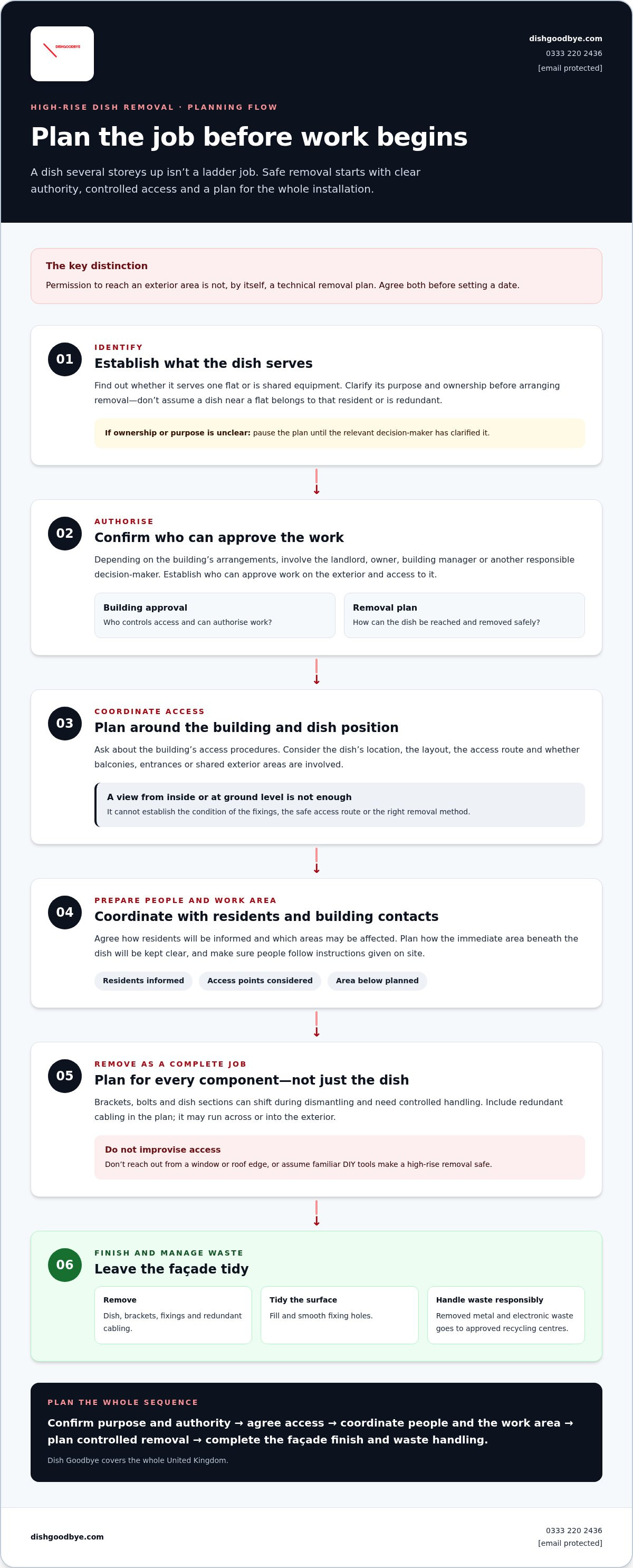
Before removal begins, use this planning sequence:
- Identify the dish and establish whether it serves one flat or shared equipment.
- Confirm who can authorise the work and access to the exterior.
- Agree how the relevant building areas will be accessed and managed.
- Plan around the dish’s position and the people who may be affected.
- Communicate the arrangements to residents and anyone responsible for the building.
Don’t treat a general online reference as a substitute for UK or building-specific guidance. For example, the OSHA Fall Protection Standards are published by a US agency, so they are not UK rules. They may offer general background on fall protection, but the building’s procedures and suitable professional planning should guide the work here.
Preparation should cover the whole job, not just the dish. Complete removal can include brackets, fixings and redundant cabling, followed by filling and smoothing fixing holes. Dish Goodbye sends removed metal and electronic waste to approved recycling centres. See the professional dish removal service for removal that addresses the hardware and the finish.
DIY or professional removal: which approach suits a high-rise dish?
A spanner may be familiar, but a dish several storeys up is a different kind of job. The question isn’t just whether you can loosen the fixings. It’s whether the dish can be reached and controlled safely, whether parts can be kept from falling, and how the exterior will be left afterwards. For a high-rise dish, professional removal is the practical choice. Don’t climb, lean out or try to dismantle equipment from an exposed position.
Why height changes the DIY decision
From a flat, a dish may look close enough to reach. But a resident may not be able to assess the bracket, fixings or mounting surface safely, or know how those parts will move as they’re loosened. Access and the area below matter as much as taking the dish apart. If safe access isn’t clear, don’t proceed with DIY removal.
What a professional approach should account for
A planned removal considers the building, the dish’s position, available access and any occupied areas nearby. It also considers how to control the dish and loose components, rather than treating the job as a quick dismantle. The plan should cover the exterior too, so the work doesn’t end with brackets or redundant cables left behind.
The difference is easiest to see in the full scope of the job:
- Access: DIY may rely on whatever seems within reach. A professional approach plans around the building and the dish’s actual position.
- Loose parts: A dish, bracket or fixing can shift as it’s removed. Controlled handling accounts for components throughout the work.
- Exterior finish: Taking down the dish alone may leave fixings and cable in place. Complete removal can address the hardware and redundant cabling, with fixing holes filled and smoothed.
A tidy result depends on more than making the dish disappear from view. Leaving old brackets or cable attached can make the job feel unfinished, while careless removal may mark the surrounding surface. Dish Goodbye removes the dish, brackets, fixings and redundant cabling, then fills and smooths the fixing holes. Removed metal and electronic waste goes to approved recycling centres.
So, how to remove a dish from a high-rise building safely? Treat it as planned exterior work, not a DIY task made simple by familiar tools. Share what you know about the dish and coordinate with the person responsible for the building, then leave the removal to a controlled approach. To see how the service works, explore the professional dish removal service.
How a planned high-rise dish removal should proceed
A high-rise removal works best as a sequence, not a quick dismantle. First, review the dish’s position and surroundings. Then plan access and the work area, remove the hardware in a controlled way, and check the exterior when the work is complete. The details depend on the building and dish, so don’t assume the access method in advance.
A safe removal sequence accounts for access, secure handling of every component and the area below the work. Consider the setting as a whole, including mounting points, nearby building features and people who may use affected areas. The endpoint should be clear: the dish and associated redundant parts are removed, and the mounting area is checked.
Plan access and control the work area
Before removal, review where the dish sits and how it is fixed to the building. Its position in relation to balconies, windows, the façade and shared areas can affect suitable access. A view from the ground or inside a flat may not show the condition of the mounting points or every constraint, so the plan should reflect the actual site.
Access arrangements should account for controlled handling of the dish and its parts, as well as the area beneath the work. The building’s responsible people can help coordinate access and communication with occupants. Let residents know which areas may be affected, and follow the arrangements for keeping the immediate work area clear. The method should suit the building and dish position rather than assume one approach works for every high-rise.
Remove the hardware and check the exterior
Once access and the work area are planned, removal should cover the dish and the parts that support or connect it. Brackets, fixings and redundant cabling can remain attached if attention is given only to the dish. Handling each component deliberately helps avoid a half-finished result and ensures loose items aren’t treated as an afterthought.
After removal, check the mounting area for leftover fixings and visible damage. This final look helps establish whether the exterior is tidy and whether anything remains attached. Filling and smoothing fixing holes helps protect the exterior, but it doesn’t mean every kind of façade damage is repaired. Keep the scope clear: address the fixing holes and note other visible issues rather than assuming they’re included.
That sequence explains how to remove a dish from a high-rise building without turning the article into risky instructions for working at height. A site-specific plan, controlled removal and a final exterior check keep attention on safety and finish. For professional satellite dish removal, contact Dish Goodbye.
Finish the job: protect the façade, manage waste and arrange removal
A complete removal deals with more than the dish. Brackets, fixings and redundant cabling also need attention, followed by a check of the mounting area and a tidy finish. Dish Goodbye provides satellite dish removal across the UK. Visit dishgoodbye.com, call 0333 220 2436 or email [email protected].
Restore the mounting area after removal
Once the dish and its hardware are gone, don’t leave fixing holes exposed. Filling and smoothing them helps protect the exterior and leaves a neater surface. Open holes can provide a route for moisture to enter, although damage isn’t inevitable. Address the fixing points as part of the removal rather than leaving an unfinished façade.
Check that brackets and redundant cables have also been removed, then look over the mounting area for leftover fixings or visible damage. Filling and smoothing fixing holes completes that part of the finish, but it isn’t a repair to other damage. A final check helps distinguish completed work from any separate issue that may need attention.
Manage the removed materials responsibly
The dish is only one part of the job. Dish Goodbye sends removed metal and electronic waste to approved recycling centres. This gives the removal a clear endpoint: redundant equipment is dealt with rather than left beside the building or in a shared area. For more on responsible disposal, read this UK guide to satellite dish recycling.
Arrange a straightforward professional removal
For a high-rise property, professional removal is a practical alternative to attempting exterior work at height. Dish Goodbye removes redundant dishes, brackets, fixings and cabling across the United Kingdom, then fills and smooths fixing holes to help protect the exterior. Each job is shaped around its requirements, so the access plan and work arrangements can account for the building and dish position.
Knowing how to remove a dish from a high-rise building safely means planning the complete job, from the dish and connected parts to the finished mounting area and responsible waste handling. Arrange satellite dish removal with Dish Goodbye.
Make your next step a safe one
Before anything is removed, confirm the building’s arrangements with the responsible person and choose a controlled way to proceed. This helps prevent confusion about access and ensures the work takes account of residents and the property.
If you’re still weighing how to remove a dish from a high-rise building, don’t let the apparent simplicity of the hardware dictate the decision. A high-level location calls for a considered plan, not a quick fix. Leave the access and dismantling to a professional service and move towards a tidier exterior without taking on the work yourself.
Arrange professional satellite dish removal with Dish Goodbye, serving the whole of the United Kingdom. Take the next step and leave the height-related work to Dish Goodbye.
Frequently Asked Questions
Can I remove a satellite dish from a high-rise building myself?
No. A high-rise dish isn’t a safe DIY removal. Height, access, falling components and building approval make this different from a ground-level task, even if the fixings look familiar. Don’t climb, lean over an edge or try to reach the dish from a window or balcony. Coordinate with the person responsible for the building, then arrange controlled removal through a professional service. That’s the safer approach for residents and the property.
Do I need permission to remove a satellite dish from a high-rise building?
That depends on who owns or manages the building, whether the dish serves one flat or shared equipment, and the building’s procedures. Before arranging exterior access, establish who can authorise the work and what process applies. A resident’s connection to the dish doesn’t automatically provide permission to work on a shared exterior. Approval routes vary between UK buildings, so speak with the responsible decision-maker.
Can a satellite dish be removed while residents are still living in the building?
Yes, residents can remain in the building, but occupancy needs to be considered in the work plan. A balcony, entrance or walkway near the dish, for example, may be in regular use. The building’s decision-maker and removal team should agree how occupants will be informed and which areas need to remain clear during the work. Arrangements depend on the site, so don’t assume there’ll be no disruption or a particular schedule.
How long does it take to remove a dish from a high-rise building?
There’s no single duration for every removal. The time depends on factors such as the dish’s position, the condition of its fixings, the length and route of its cabling, and the building’s access arrangements. Planning access and the affected work area is part of the job. The removal plan should reflect the specific building rather than rely on a generic time estimate.
Will removing a satellite dish affect my television service?
It could if the dish still connects to equipment or a service used by someone in the property. An old-looking dish isn’t necessarily disconnected. Before removal, check whether anyone in your household relies on it and decide what service you want to keep. If the equipment is shared, clarify who else may use the connection. Removing the dish doesn’t, by itself, establish whether a subscription has been cancelled.
What happens to the holes after a high-rise satellite dish is removed?
Don’t leave fixing holes open once the brackets are gone, as exposed openings may allow moisture to enter. Dish Goodbye fills and smooths holes left by previous installations to help protect the exterior and leave a neater finish. This work addresses fixing holes, not pre-existing damp or wider structural damage. Treat other issues around the mounting area separately rather than assuming they’re resolved by filling the holes.
What happens to the old dish and its cables after removal?
The dish, brackets and redundant cabling should be dealt with as part of the removal, so unwanted hardware isn’t left attached or abandoned on site. A complete removal considers the connected parts as well as the dish itself.