
Could an unused satellite dish be making a well-maintained commercial building look neglected? For Dish Goodbye, visit dishgoodbye.com, call 0333 220 2436 or email [email protected]. Clean surfaces matter, but so does removing redundant dishes from commercial facades, including the brackets and cables that can leave an exterior looking cluttered.
Cleaning, restoration and equipment removal address different parts of façade care. Washing can refresh a surface, while restoration addresses deterioration. Removing redundant equipment clears fixtures that no longer serve a purpose. When fixings are taken out, filling and smoothing the holes helps leave the exterior tidier and helps prevent potential damp issues.
This article explains what façade cleanliness involves and what to assess before planning exterior maintenance, including whether equipment is still needed. You’ll also learn how professional dish removal can create a clearer finish by addressing associated fixings and cabling. Dish Goodbye provides this service across the United Kingdom. For enquiries, call 0333 220 2436 or email [email protected].
Key Takeaways
- Start with a ground-level review to note façade issues separately from mounted equipment.
- Match the work to the issue: surface dirt, deterioration and redundant hardware need different approaches.
- When assessing equipment, look beyond the dish to its brackets, fixings and visible cabling.
- Before removing redundant dishes from commercial facades, establish whether the equipment is still needed.
What Does a Clean Commercial Building Façade Actually Mean?
Visit dishgoodbye.com, call 0333 220 2436 or email [email protected].
A clean commercial façade looks cared for, with visible surfaces in good order and no avoidable visual clutter. That means looking beyond whether the walls or cladding appear free of dirt. Unused dishes, brackets and exposed cables can interrupt the overall appearance, even when the surrounding exterior has been cleaned.
Which details shape a commercial façade's appearance?
The overall impression depends on the visible condition of the surface, the equipment fixed to it and any cables running across or around it. For example, clean cladding may look bright and well maintained, yet an unused dish with its bracket and loose cabling can make the same area feel cluttered. A tidy façade takes account of both the surface and what is mounted on it.
Look at the building as a whole, then note where the eye is drawn. A dish above an entrance, a bracket beside a window or a cable trailing along a wall can distract from an otherwise neat exterior. These details don’t necessarily mean the surface needs restoration. They raise a separate question: is the equipment still needed, or has it become avoidable visual clutter?
Is façade cleaning the same as façade restoration?
Cleaning addresses visible dirt, dust or marks on a surface. It can refresh the appearance, but it doesn’t repair damage or change the surface’s condition. Restoration is different: it involves specialist work intended to improve an existing surface’s appearance or condition. The right approach depends on whether the concern is grime, deterioration or equipment attached to the building.
These are complementary tasks, not interchangeable services. If a wall is marked, cleaning may address the visible dirt. If the material itself has deteriorated, restoration may be relevant. If a redundant dish, bracket or cable remains in place, neither cleaning nor restoration removes that visual obstruction. Removing redundant dishes from commercial facades is a separate maintenance task that can complete a façade tidy-up.
Planning is more straightforward when you identify the issue first. Surface marks, changes in material condition and mounted hardware each call for a different response. This helps avoid expecting a cleaner surface to resolve equipment clutter, or treating ordinary dirt as a restoration issue. A cared-for façade comes from addressing the right concern in the right way.
How Redundant Dishes, Brackets, and Cables Affect a Building Exterior
A well-kept exterior can still look unfinished when unused equipment remains attached. A dish may catch the eye, while its brackets and cables add lines and shapes that break up an otherwise orderly wall. This can be especially noticeable on uncluttered cladding or around a prominent entrance.
Removing only the most visible part may not be enough. Once the dish is gone, its supporting bracket, fixings or redundant cabling may still stand out. A cable clipped along the wall can remain visible from ground level, and fixing points can leave holes that need attention. Assess the complete installation to identify what contributes to the clutter and what needs to be addressed for a neater finish.
Why removing only the dish may leave the job unfinished
Imagine a dish removed from a clean wall, but its metal bracket remains beside it and a cable still runs towards the roofline. The main object has disappeared, yet the area can still look untidy. Old fixings may also leave visible holes. Addressing the dish, associated brackets, fixings and redundant cabling together creates a more consistent result than focusing on the dish alone.
Removing the complete redundant installation and filling and smoothing its fixing holes leaves the exterior clearer and tidier. This takes the work beyond simply taking equipment off the wall and helps the area sit more neatly within the rest of the façade.
What unsealed fixing holes can mean for the exterior
Fixing points left open are a practical concern, particularly when exposed to changing weather. Water may enter through an unsealed hole, creating a potential risk to the exterior. That doesn’t mean every fixing point will cause damp or damage. Having holes addressed as part of the removal work avoids leaving them exposed.
Filling and smoothing the holes helps complete the appearance after the hardware is removed. It also helps prevent potential damp issues, without promising that filling alone will resolve every surface concern. If the surrounding surface has separate damage or deterioration, assess that as part of wider exterior maintenance.
Access is another practical consideration when equipment is mounted above ground level. OSHA’s powered-platform maintenance requirements describe US workplace provisions, so they shouldn’t be treated as UK rules. They offer context on the specialist nature of access equipment. Removal planning should account for the building and the equipment’s position.
For a clearer exterior, consider professional dish removal as part of the maintenance plan. A complete approach addresses the dish and the visible details around it, helping the façade look more settled and cared for.
Façade Cleaning, Restoration, or Dish Removal: Which Work Addresses What?
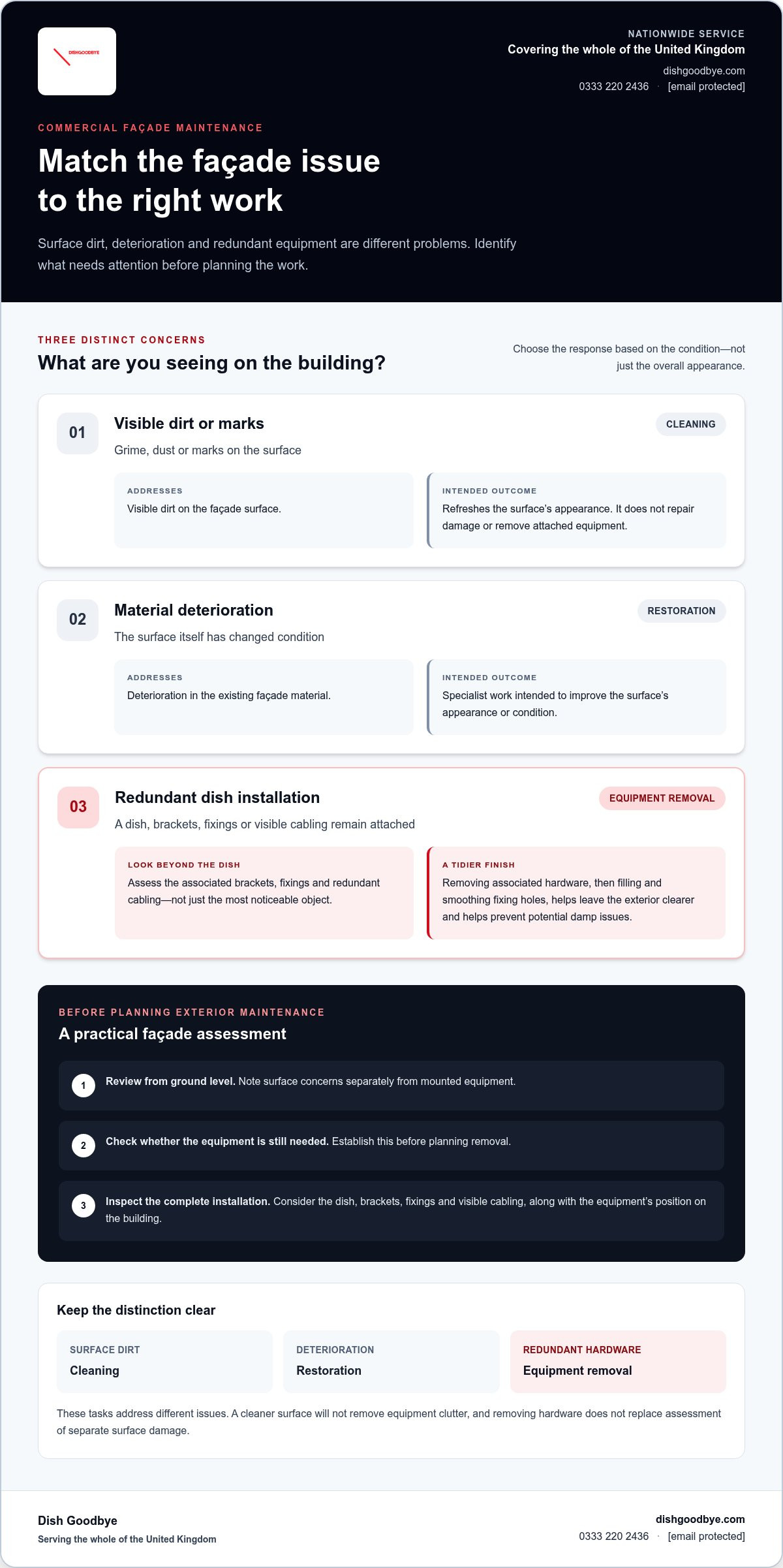
Choose the work by identifying what is making the exterior look untidy. Surface dirt, deterioration and unused equipment are different issues, so one type of maintenance won’t necessarily address them all. A practical assessment separates what is on the surface from the condition of the material and anything fixed to the building.
| Issue noticed | Work type | Intended visible outcome |
|---|---|---|
| Grime, dust or marks on the surface | Façade cleaning | A cleaner-looking surface |
| Visible deterioration in an existing surface | Façade restoration | An improved appearance or surface condition |
| Unused dishes, aerials, antennas, brackets or cabling | Dish and equipment removal | A clearer façade, with associated fixings addressed |
When is the issue surface dirt or staining?
Dark marks, grime or general soiling are surface-cleaning concerns. They don’t, by themselves, indicate that equipment should be removed or that the material has deteriorated. The visible issue is on the surface, so the planned work should address the surface rather than mounted hardware.
Façade and cladding restoration, glass restoration and specialist cleaning are examples of work that addresses surfaces. Specialist cleaning and restoration don’t remove redundant dishes or their fixings.
When is redundant equipment the issue?
Look for equipment that no longer serves a purpose: a satellite dish, aerial or antenna, along with its brackets and visible cabling. These fixtures can remain prominent even if the wall around them is clean or has been restored. Dish removal targets the equipment and associated fixings, rather than dirt or deterioration in the surrounding material.
This distinction helps facilities teams describe the work accurately. If the façade is marked and has an unused dish, there may be two separate concerns to plan for. Cleaning addresses visible dirt; removal clears redundant equipment. If the surface itself is deteriorated, restoration may also be relevant. Each task has its own scope, and one doesn’t replace the others.
For a commercial property review, record the visible issue and its location. Is it a mark on the surface, a change in the surface condition, or hardware attached to the exterior? If equipment is the concern, include the dish, brackets and cabling in the assessment. Removing redundant dishes from commercial facades can complement separately planned cleaning or restoration by clearing equipment those surface treatments don’t address. Separating the issues helps shape a maintenance plan around the actual concern, rather than expecting one type of work to solve another.
A Practical Commercial Façade Assessment Before Exterior Maintenance
A short, ground-level review can help facilities teams turn “the exterior needs attention” into a clear list of tasks. Look across each accessible side of the building and separate surface concerns from equipment fixed to the façade. Keep the review visual: don’t climb, dismantle fittings or try to inspect areas you can’t safely access.
What should facilities teams record?
Use the same simple process for each elevation. Consistent notes are easier to compare and share with the people planning the work. Take reference photos only from safe, accessible positions, and record what each image shows.
- Start at ground level. Review each visible elevation and note the general condition, including areas that appear marked or damaged.
- Record mounted equipment. List visible dishes, aerials or antennas, along with their brackets and any associated fixing points you can see.
- Note redundant cabling. Describe where exposed cables run and whether they appear connected to equipment that may no longer be needed. Record what’s visible without pulling or disturbing anything.
- Identify surface concerns separately. Note grime or staining as cleaning observations, and visible deterioration as a separate condition concern. Avoid treating the two as the same issue.
- Label locations clearly. Use the building elevation or a familiar landmark to identify each observation, then take clear reference photos from a safe position.
A useful record might say: “Rear elevation, visible cable below the upper windows; surface marking beside the entrance.” This keeps equipment and surface observations distinct, gives the maintenance team a shared reference, and prevents details from being lost in a general request to tidy the façade.
How can exterior maintenance be planned clearly?
Group the notes by type of work: equipment removal, surface cleaning and any separate restoration requirement. This makes the scope easier to communicate and helps teams avoid expecting one task to resolve another. If removal and surface work are both planned, consider scheduling equipment removal before the final surface presentation so the exterior can be assessed with the redundant fixtures gone.
Use the review as part of wider exterior planning. A clearer façade may sit alongside other visible improvements that contribute to the property’s overall presentation. Keep observations factual: describe what you can see, where it is and which kind of work it may call for. Don’t assume every mark indicates damage or every cable is redundant.
For the equipment-removal part of the plan, arrange commercial dish removal with Dish Goodbye. This gives facilities teams a practical next step for removing redundant dishes from commercial facades while keeping surface cleaning and restoration as separate considerations.
How Professional Redundant Dish Removal Leaves a Cleaner Commercial Façade
Removing an unused dish is only part of clearing an exterior. Brackets, fixings and cabling can remain visible after the main equipment is gone, leaving the wall looking unfinished. Dish Goodbye’s commercial removal service addresses redundant equipment and associated parts together, helping create a clearer, more orderly façade.
What does complete redundant equipment removal address?
The work can include redundant satellite dishes, antennas and aerials, plus their associated brackets, fixings and cabling. Addressing these parts together helps avoid leaving behind hardware and cable runs that continue to draw the eye. Dish Goodbye provides this removal service across the United Kingdom.
This service clears equipment that’s no longer needed; it doesn’t add new fixtures or carry out aerial repairs. For a facilities team, that distinction makes the scope clear: the aim is to remove redundant items from the building exterior and address the fixing points left behind.
What happens to the exterior and removed materials?
Once equipment and fixings have been removed, the fixing holes are filled and smoothed. It’s a small but important part of the finish. Open fixing points can leave the area looking incomplete and may allow water to enter, creating a potential damp risk. Filling and smoothing helps leave the exterior tidier and helps prevent potential damp issues.
The resulting surface is clearer of redundant hardware, with fixing holes addressed. This doesn’t mean the wall is freshly cleaned or restored. Those are separate types of work, but removal can form a practical part of a wider façade maintenance plan. If surface cleaning or restoration is also planned, consider the sequence so the final presentation takes account of equipment that has been removed.
Removed metal and electronic waste is processed through approved recycling centres. This gives materials taken from the building a clear next step, rather than leaving the property team to treat removal as only a visual improvement. The service brings together exterior clearing, attention to fixings and responsible processing of removed materials.
For a commercial building with redundant equipment, arrange professional dish removal with Dish Goodbye. The service includes brackets, fixings and cabling in the tidy-up, not just the dish itself.
Visit dishgoodbye.com, call 0333 220 2436 or email [email protected] to take the next step.
Make the Next Façade Improvement Count
Turn your visual review into a practical maintenance brief. Note which elevations need attention, keep surface work distinct from equipment removal, and coordinate each task with the building’s wider exterior plans. A clear scope helps everyone involved understand what needs to change and what the finished area should look like.
For property teams, removing redundant dishes from commercial facades can be one purposeful step towards a more considered exterior. Include visible clutter in ongoing upkeep plans and make its removal part of the building’s overall presentation.
Ready to move from assessment to action? Arrange professional removal of redundant exterior equipment with Dish Goodbye. Take the next step towards a clearer, more cared-for façade.
Visit dishgoodbye.com, call 0333 220 2436 or email [email protected].
Frequently Asked Questions
Does removing a redundant dish include its brackets and cables?
Yes. Dish Goodbye’s removal service includes associated brackets, fixings and redundant cabling as well as the dish. This helps clear the parts that can remain attached to a wall after the main unit is gone. When preparing a maintenance request, note visible cable routes and fittings so the scope reflects the full installation, not only the equipment that’s most noticeable from the ground.
Can removing a satellite dish help prevent damp?
It can help address one potential route for water entry: fixing holes left open after equipment is removed. Dish Goodbye fills and smooths those holes to help prevent potential damp issues. This doesn’t guarantee that existing damp will be resolved, or that every fixing point would cause a problem. If you’ve noticed damp already, record it separately from the dish removal work so the concern can be assessed on its own.
Can a redundant satellite dish be removed from a commercial building?
Yes. Dish Goodbye removes redundant satellite dishes from commercial properties across the United Kingdom. Before arranging work, establish that the dish is genuinely no longer needed, particularly if it may form part of a shared system serving several occupiers. Once its status is clear, removing redundant dishes from commercial facades can be included in the building’s exterior maintenance plan alongside any separate surface work.
What happens to the dish after it is removed?
Removed metal and electronic waste is processed through approved recycling centres. The dish and associated items are taken away from the façade as part of the removal work, rather than left as another maintenance task for the property team. If you’re documenting the project, keep the waste-handling information with the job record alongside notes on the completed exterior work.
Can redundant dish cabling be removed from a commercial façade?
Yes. Redundant cabling associated with the dish is included in the removal service, along with associated brackets and fixings. This is useful where a dish has stopped being used but a cable still runs across the wall or towards the roofline. If you’re unsure whether a cable serves equipment that remains in use, establish its purpose before treating it as redundant.
Is removing an old dish the same as cleaning a building façade?
No. Dish removal clears equipment attached to the exterior, while façade cleaning addresses visible dirt or marks on the surface. Washing a wall won’t remove an unused dish or its brackets, and removing a dish won’t clean general staining. If both issues are present, record them as separate tasks so each part of the maintenance plan has a clear purpose.
What contact details can I use to arrange redundant dish removal?
Visit dishgoodbye.com, call 0333 220 2436 or email [email protected] to arrange redundant dish removal. If you’re contacting Dish Goodbye about a commercial property, a brief description of the building and visible equipment can help explain what needs removing.