
Dish Goodbye service website: dishgoodbye.com | 0333 220 2436 | [email protected]
An old satellite dish won’t automatically lower a home’s value, but a weathered dish and unrepaired fixing points can make the property look poorly maintained. The impact of an old satellite dish on property value depends on its condition, where it’s mounted and whether any holes or brackets have been properly dealt with.
It’s understandable to focus on the dish itself: it’s visible, dated and often no longer used. But the surface beneath it matters too. Fixing points that aren’t sealed or repaired can allow water in, while leftover brackets and cables can make the exterior look cluttered.
This article explains how buyers may view an unused dish, why fixing holes and mounting brackets deserve attention, and what removal and making good can change. You’ll get a clear sense of when tidying up the installation can improve your home’s presentation, and why it shouldn’t be treated as a guaranteed increase in sale price.
Key Takeaways
- An unused dish may affect a home’s first impression, but its condition and the state of the roof fixings matter too.
- Pay attention to holes and brackets left behind, as unfinished roof details can create maintenance concerns as well as visual clutter.
- When selling, weigh the dish’s usefulness against its appearance and any signs of damage before deciding whether to leave it in place.
- Roof work needs careful planning and appropriate equipment; the right approach depends on the dish’s position and the property.
- Removing a redundant Sky dish and filling its associated fixing holes can help leave the exterior looking tidier.
Removing unused dishes and making good the roof
Removing a redundant dish can tidy a roofline, but the fixings need attention too. A neat finish means dealing with the bracket and associated fixing holes, not simply taking down the dish.
Choosing Whether to Remove the Dish Before Selling
Removing a dish before selling means taking down equipment that no longer serves a purpose and addressing its fixing points. Leaving it in place may make sense if it still works and the buyer wants it, but a corroded dish, loose bracket or trailing cable can suggest neglected maintenance. Weigh its usefulness against its appearance and condition. A dish alone does not establish a change in property value; roof damage or visible disrepair can shape a buyer’s impression.
Planning and Conservation Restrictions
Planning controls can depend on the building and its location, so the same assumption may not suit every UK property. A listed building, conservation-area address or existing planning condition can affect changes to exterior features. Before arranging removal, review the property documents and ask the relevant local planning authority whether restrictions apply. This matters because taking equipment down may still alter the building’s appearance, especially where it is visible from the street.
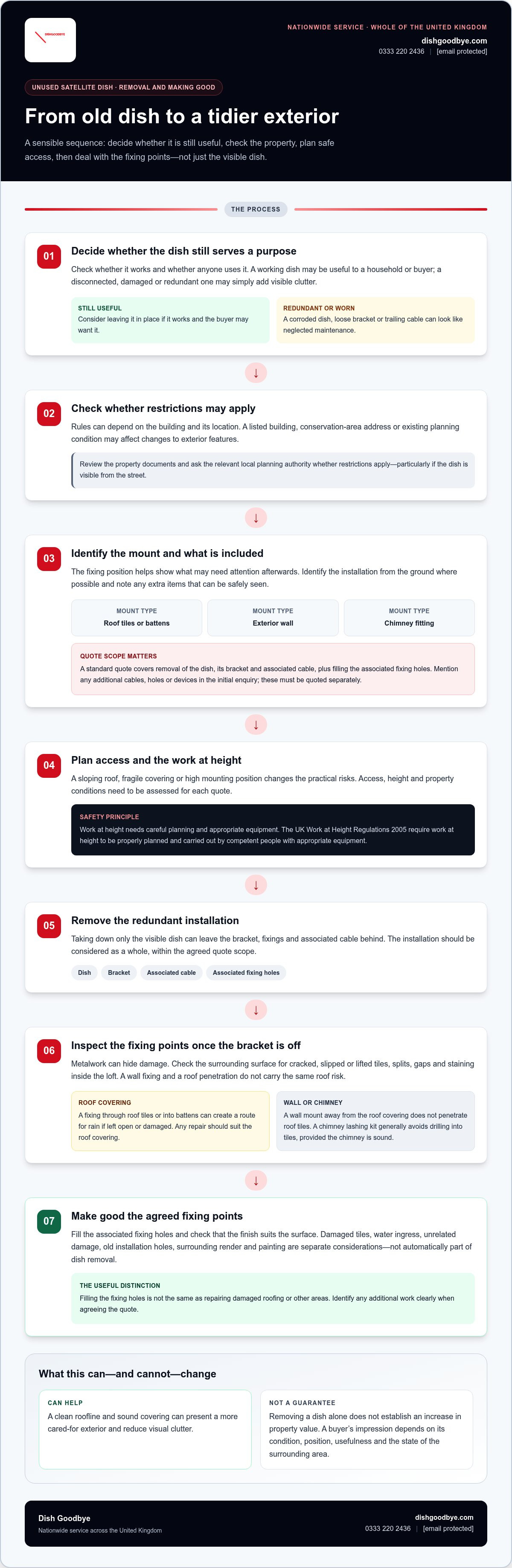
Start by identifying how the dish is mounted. A bracket fixed through roof tiles or into battens creates potential entry points for rain. Each fixing can become a leak path if removal leaves an open hole or damaged covering. Look from the ground for a roof-mounted bracket, an exterior wall mount or a chimney fitting. The mounting position helps show which parts of the roof or masonry may need attention afterwards.
Don’t treat the dish as the only part to remove. A roof installation may include a bracket, bolts and cable routed beneath tiles or along the wall. Taking away the visible dish while leaving its mount behind can preserve the most noticeable clutter and leave fixings exposed. Note the associated cable where it can be safely seen, and record whether additional cables or devices are present. Mention any extra cables, holes, dishes, aerials or other devices in your initial enquiry, as they must be quoted separately.
Once the mount is removed, inspect each fixing point and the surrounding material. Look for cracked, slipped or lifted tiles, split surfaces, gaps and staining inside the loft. A hole through a roof covering needs a repair suited to that covering. Where a tile is damaged, making good may involve removing the mount and replacing the affected tile. A surface smear of sealant is not a dependable substitute for repairing damaged roofing.
Sealant can dry out and crack over time, leaving a route for water even if the hole looked covered immediately after removal. Check the area again after the bracket comes away, because metalwork can hide damage beneath it. If water has reached the roof space, the visible fixing hole may not show the full extent of the problem. Distinguish roof repairs from simple hole filling when assessing what needs attention.
Not every installation carries the same roof risk. A bracket fixed to brickwork away from the roof covering does not penetrate roof tiles, although its wall fixings still need making good. A chimney lashing kit generally avoids drilling into tiles, provided the chimney is sound. These distinctions matter during inspection: focus on the actual fixing points rather than assuming every old dish has caused roof damage.
Work at height requires careful planning, not an improvised climb with household equipment. According to UK Government, the UK Work at Height Regulations 2005 apply to work at height and require it to be properly planned and carried out by competent people with appropriate equipment. A sloping roof, fragile covering or high mounting position changes the practical risks. Assess access and the roof condition before deciding how removal should be carried out.
After removal, check that the finish matches the surface around it. Roof holes and damaged tiles need suitable repairs; wall holes may need different treatment. Filling the fixing holes left by the dish and bracket does not automatically repair unrelated damage, old installation points or surrounding render. Make a clear record of what was removed and repaired, such as the bracket, its fixing holes and any separately identified roof damage.
For a sale, a clean roofline and sound covering present a more cared-for exterior than an unused dish with exposed fixings. The useful sequence is to assess the mount, arrange safe removal of redundant hardware, inspect the roof or wall, then repair affected areas. That approach addresses appearance and the practical risk of water entry without assuming that removing a dish alone increases the home’s sale price.
Is it better to remove an old satellite dish or leave it in place when selling?
Removing an old dish before a sale can make the exterior look tidier, while leaving a working one may suit buyers who use satellite television. The decision depends on its condition, usefulness and effect on the property’s appearance. There’s no fixed increase in sale value from removal alone. A rusty dish with dangling cable presents differently from a maintained dish that still serves the household.
Begin with a practical check: does the equipment still work, and does anyone use it? A dish connected to a Sky box needs correct alignment to receive channels. If the household relies on it, removal could take away a useful feature. If it’s disconnected, damaged or redundant, it may offer little to a prospective buyer beyond another item to maintain or remove.
Consider what buyers can see from the street and during a viewing. A dish above the front elevation, paired with loose cable or a weathered bracket, can draw attention away from a freshly painted door or clean windows. At the rear of a property, the same dish may be less prominent. The mounting location and overall presentation matter more than the simple fact that a dish exists.
Separate appearance from condition. A tidy, secure installation may be acceptable to a buyer who wants satellite reception. A loose fixing, cracked tile or water mark near a roof mount raises a different concern. Buyers may ask about visible defects during a viewing or survey. Addressing an obvious maintenance issue gives clearer information than hoping it goes unnoticed.
Use these checks to make a decision before listing:
- Check use: Confirm whether the dish still serves a Sky box or another satellite receiver.
- Inspect the view: Look at the dish from the pavement, garden and main viewing rooms.
- Look for defects: Note loose brackets, exposed cable, damaged tiles or staining below the mount.
- Consider the buyer: Decide whether the equipment is a useful feature or unwanted clutter for the likely household.
- Plan the listing: If removal is chosen, complete it before photographs so images show the finished exterior.
Timing affects how smoothly the choice fits into a sale. If removal is planned, arrange it before estate-agent photography and viewings. That avoids showing one condition in listing images and another during a visit. If the dish stays, present it as an existing feature, not as a promise that every television service is ready to use. The receiver, cabling and alignment all affect whether it works.
Don’t assume a satellite dish provides Freeview. Freeview is terrestrial television, while satellite reception uses different equipment and signals. A buyer wanting Freeview needs a suitable aerial and receiver for the location. That distinction helps you describe the property accurately. For example, a working satellite dish may suit someone with a compatible receiver, but it doesn’t replace a suitable terrestrial aerial.
The impact of an old satellite dish on property value is usually tied to the condition and presentation buyers encounter, rather than a set valuation adjustment. Removal can improve a cluttered roofline, but poor making good may leave a more concerning impression than a sound installation. If you leave the dish, check that its bracket appears secure and the cable is neatly routed. If you remove it, make the final exterior finish part of the decision.
For a straightforward choice, match the action to the evidence: retain a useful, well-presented installation; remove redundant equipment that distracts from the home; and address visible damage either way. A clean, accurate listing helps buyers understand what remains. It also keeps the decision focused on the property’s actual condition, rather than treating every old dish as an automatic reason to reduce an offer.
Before deciding, consider what removal leaves behind on the roof. When mounting a satellite dish on a roof, gaskets and high-quality sealers can help reduce the likelihood of future leaks. If the dish has already been removed, a temporary sealant patch may not be a lasting answer: sealants used as temporary fixes after satellite dish removal can dry out and crack over time, potentially leading to leaks and damage.
Where the roof or mounting point needs attention, professional repairs after satellite dish installation or removal can help avoid compromising a roof’s warranty or integrity. Careful removal and sound repair are therefore part of the presentation decision, rather than treating the dish as an appearance issue alone.
Dish Goodbye: Sky Dish Removal
Dish Goodbye provides Sky Dish Removal for homeowners preparing a property for sale or clearing an unused installation. The standard quote covers removal of the dish, its bracket and associated cable, plus filling the fixing holes left by that equipment. This can help leave the roofline or wall looking tidier, without suggesting removal alone will raise a home’s sale price.
Mention any additional cables, holes, dishes, aerials or other devices in your initial enquiry, as these must be quoted separately. Access, height and property conditions are considered when preparing the quote. This helps define the work around the actual installation, whether the dish is mounted on a roof, wall or chimney.
For details about the Sky Dish Removal service, visit the Dish Goodbye service website or contact the team at [email protected] or 0333 220 2436.
Make the next step part of your sale plan
Use your property’s next viewing or photography date as a simple planning marker. Decide whether the dish still serves a purpose, then consider how its condition fits the home you want buyers to see. The impact of an old satellite dish on property value isn’t a figure to assume in advance. Focus instead on presenting the exterior clearly and dealing with the work that matters to your property.
If removal is the right choice, arrange it alongside other exterior preparations rather than leaving it until the final viewing. That gives you time to consider the finished appearance and any further maintenance separately. A clear plan can make the run-up to a sale feel more manageable, without turning one redundant fitting into the whole story of your home.
Choose the next step that suits your property and your plans. Visit the Dish Goodbye service website to explore your options and move towards a cleaner, more considered exterior.
Frequently Asked Questions
Can an old satellite dish reduce a property's value in the UK?
An old dish can influence a buyer’s impression, but it doesn’t automatically reduce a UK property’s value. A buyer may be more concerned if it looks unstable, has exposed wiring or sits beside visible roof damage. For example, a tidy, working dish may be useful to someone with a compatible receiver, while a damaged installation could prompt questions about maintenance. The impact depends on the property and the buyer.
Do estate agents consider satellite dishes unattractive to buyers?
There’s no single view shared by every estate agent or buyer. A dish that stands out above a front entrance may distract from the home’s exterior in listing photographs, while one positioned discreetly at the rear may attract little notice. Condition matters too: a clean, secure installation presents differently from a rusty dish with loose cable. Consider how it looks from the street and in the main property photos.