
Before communal TV aerial removal, confirm who owns the shared system and whether other homes rely on it. Rooftop equipment should only be removed when it is no longer needed and taking it down will not disrupt other residents’ reception.
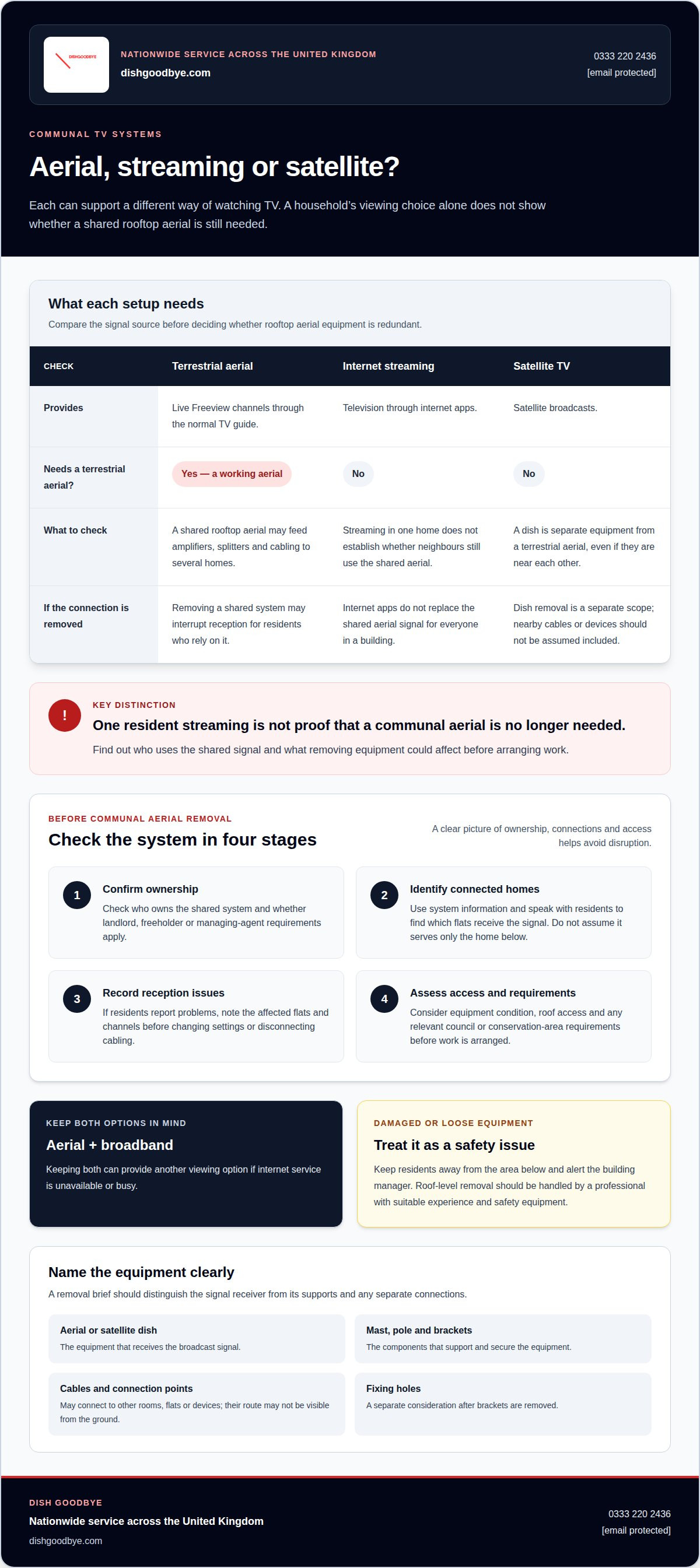
It’s easy to assume that streaming means rooftop equipment is redundant. In the UK, watching live Freeview channels through the normal TV guide requires a working aerial, while internet apps and satellite television do not need a terrestrial aerial. Keeping both can also provide another viewing option if broadband is unavailable or busy.
This guide explains what may be removed from communal and commercial systems, why ownership and the effect on other properties matter, and how access and roof-level safety shape the work. You’ll also learn when streaming may make an aerial unnecessary, what can happen to internal cabling, and why damaged or loose equipment at height should be handled professionally.
Key Takeaways
- Streaming may replace aerial TV for your household, but it doesn’t mean a shared system is no longer needed by others.
- Find out whether the aerial serves other homes before removal, and understand how communal equipment can distribute signals around a building.
- Removal can involve the aerial, pole and brackets; what can be taken down depends on the equipment, fixings and access.
- Roof-level work, especially around damaged or loose equipment, needs to be handled with safety and access in mind.
- Tenants and leaseholders should understand the landlord, freeholder or managing agent’s requirements before arranging changes to shared property.
Should I remove an old rooftop aerial if I mainly stream?
Streaming may suit your household, but it doesn’t show whether a rooftop aerial still serves other properties. Before communal TV aerial removal, identify who uses the shared signal and what removing the equipment would affect.
Checking Who the Aerial Serves
A shared aerial system uses rooftop equipment and cabling to distribute television signals to multiple homes. Identify the connected properties first, because removing one part may interrupt reception for tenants who still use it.
For example, one rooftop aerial may feed amplifiers, splitters and internal cabling throughout a block. A landlord or property manager can identify which flats receive the signal by reviewing system information and speaking with residents. Don’t assume the aerial serves only the flat directly below it. The distribution network may run through several rooms or properties.
Streaming changes the viewing choice for individual residents, not the needs of the whole building. In the UK, watching live Freeview channels through the normal television guide requires a working aerial. Internet apps and satellite can provide television without a terrestrial aerial. Keeping both an aerial and broadband reception offers another option if internet service is unavailable or busy.
Retuning individual televisions won’t establish whether a communal system is redundant. Repeated retuning can also make a communal aerial fault harder to diagnose. If several tenants report reception problems, record which flats and channels are affected before changing settings or disconnecting cabling. Individual TV equipment may meet one resident’s needs, but it won’t replace the shared network for everyone.
Storm-damaged or loose equipment needs prompt attention, not a rooftop DIY attempt. Keep residents away from the area below the aerial and alert the building manager so the hazard can be assessed. Roof-level removal of damaged equipment should be left to a professional with suitable experience and safety equipment. Don’t assume streaming makes unstable equipment safe to ignore.
Council and conservation-area requirements can vary across the UK. A property’s location or designation may affect which approvals apply, so establish the relevant requirements before arranging rooftop work.
Removal Costs and Access Equipment
The work required depends on the equipment, its condition, the building and the access needed. When requesting a quote, describe the aerial’s position, visible damage and any known shared connections so the work can be assessed against the actual site.
Access arrangements also shape the job. A clear ground-level position differs from a steep roof or restricted courtyard, where suitable access equipment may be needed. The building manager should include photographs and access details in the enquiry; the height, fixing condition and surrounding space help determine a safe approach.
Aerial, dish, pole and bracket removal
Rooftop television equipment can include a TV aerial, mast, wall bracket, satellite dish, cables and connection points. Each part has a different role, so identify the exact equipment before work begins. A TV aerial receives terrestrial signals, including Freeview, while a satellite dish receives satellite broadcasts. A property may have both, even if residents now watch through streaming apps.
The aerial itself is only one part of the installation. A pole or mast holds it in position, and brackets secure that support to a chimney, wall or roof structure. Fixings can be exposed to the weather and may be corroded or difficult to access. Their condition affects how the equipment can be detached safely. Removing the visible aerial but leaving a loose pole or bracket behind can leave the exterior untidy and the unwanted structure in place.
A satellite dish is separate equipment, even when it sits beside an aerial or shares a cable route. Identify the dish, mounting bracket and associated cable as a distinct removal scope. Don’t assume that removing one device also covers nearby cables, junction boxes or other equipment. Describing each item clearly helps prevent misunderstandings about what will be taken down and what will remain connected.
Reception and interference can help explain why equipment is still in use, but they don’t reveal every connection. A communal aerial, for example, may feed several flats through distribution equipment, while a dish may serve a separate receiver. A cable may disappear inside the roof space or follow an external wall, making its destination hard to see from the ground. Treat each visible cable as potentially connected until its purpose is understood.
A practical removal scope distinguishes between:
- The aerial or satellite dish, which receives the broadcast signal.
- The mast, pole and brackets, which support and secure the equipment.
- Associated cabling and any separate devices or connection points.
- Fixing holes left after brackets are removed, which may need separate treatment.
That distinction matters when property managers prepare work schedules. A brief that says “remove the aerial” may not account for a corroded mast, a second dish or cables entering several flats. List the visible components and note which system serves each area. Photographs can clarify the equipment’s position, but they can’t show where concealed cabling runs.
Removal methods depend on the mounting position, condition of the fixings and suitable access. A wall-mounted aerial may require a different approach from equipment fixed to a chimney or roof edge. Roof-level work needs safe access and careful handling, especially if a bracket is damaged or equipment is unstable. Separate scopes for aerials and dishes also make it easier to plan work without disturbing equipment that remains in use.
Communal systems for flats and commercial buildings
A communal television system distributes a shared signal to separate homes or business units. Its aerial is only one part of the network, so removing rooftop equipment can affect people beyond the unit arranging the work.
In a block of flats, a rooftop aerial may feed a central amplifier, then branch through splitters and internal cabling. One outlet might serve a living room, while another serves a bedroom or communal lounge. In an office building, distribution may also reach reception areas, meeting rooms or staff facilities. A fault or disconnection at a central point can therefore affect several users at once.
Cambridge City Council’s report provides a historic example of the scale such systems can reach: its communal television network served 6,142 homes through 96 television master stations at the time of the report. That example shows why a single visible aerial shouldn’t be treated as a standalone device. The signal route, connection points and properties served all matter when planning removal.
Commercial buildings can have a different arrangement from residential blocks. A hotel may distribute television to guest rooms, while a care setting may also feed shared lounges. A direct connection to one unit doesn’t prove that the rooftop equipment serves only that unit. Building plans, equipment labels and visible cable routes can help clarify which parts belong to the shared system.
Before scheduling work, the property manager can prepare a simple system record:
- List the buildings, floors or business units thought to receive the signal.
- Note the location of rooftop equipment, cabinets and visible distribution points.
- Record reported reception problems and the affected areas.
- Identify equipment that must remain connected during any planned work.
This record helps distinguish a local fault from a wider network issue. If one office loses reception while adjacent units remain unaffected, for example, the cause may be closer to that outlet. If several floors lose signal together, a shared distribution point may be involved. These patterns don’t identify the fault by themselves, but they provide useful context before equipment is disconnected.
Internal cabling doesn’t always need to be removed with rooftop equipment. In a finished flat, cables may run beneath flooring or behind decorated walls. Taking them out could disturb surfaces without helping the building. A practical scope can focus on redundant external equipment while leaving internal routes undisturbed, provided those cables no longer create a safety or operational issue.
For a network serving multiple tenants, agreeing on the intended outcome is essential. The manager should confirm which signal sources will remain, which properties need continued reception, and whether a satellite system operates separately. This avoids treating the aerial, satellite equipment and every connected cable as one interchangeable system. It also gives residents and building teams a clear understanding of what will change and what will stay in place.
Safe access and removal at height
Roof-level aerial work needs a safe access plan based on the equipment’s position, condition and surroundings. Weather, connected cables and the building’s layout all affect how removal should be approached.
Applicable Building Regulations and Safety Standards
For UK communal aerial removal, the appropriate safety measures depend on the building, access method and work involved. Assess the roof, equipment, weather and connected electrical systems before work starts.
No single regulation or standard can be named for every property from these details alone. A property manager should arrange for the task to be planned by someone with suitable experience and safety equipment, particularly where roof access or specialist access equipment is required.
Risks to Shared Aerials and Roof Fixings
Removing a shared aerial can interrupt reception if its signal or cabling still serves other properties. Roof fixings may also be loose, corroded or damaged, creating a risk of movement during handling.
A mast or bracket can fall if detached without control, while pulling connected cables may disturb the distribution system or damage the roof entry point. Treat unstable equipment as a hazard, and keep people clear of the area below until it has been assessed.
Access should suit the aerial’s exact position. A low wall-mounted installation differs from a mast fixed beside a chimney or above a narrow courtyard. The route to the work area, roof condition and space around the building influence whether a ladder, platform or other access equipment is suitable. Assess the access method for the property rather than assuming that an approach used elsewhere will work.
Weather can change the risk. Wind may move a long mast or dish during handling, and wet surfaces can make roof access more hazardous. If conditions make the planned method unsafe, don’t proceed using that method. A damaged aerial after a storm needs particular care, since bent supports or weakened fixings may shift when touched.
Identify connected cabling before releasing any fixings. A cable may carry a signal to other flats or run alongside electrical equipment in a service area. The person planning the removal should identify the connections and avoid pulling or cutting unknown cables. If the system’s route is unclear, treat it as active until its purpose is established.
Useful planning details include the aerial’s position, visible damage, roof access points, nearby electrical equipment and any known connections to other properties. A property manager can also define an exclusion area below the work and notify affected occupants. These details help the person carrying out the removal choose suitable access and control how equipment is lowered, rather than allowing parts to fall onto a roof or pavement.
Safe removal of a communal installation means protecting people and the building. A controlled method should account for the mast, bracket, cabling and roof fixings as separate parts. If the work needs specialist access equipment, or the building’s height and layout create unusual constraints, assess the method against those conditions before arranging the work.
Do tenants need permission to remove a communal aerial?
Tenants and leaseholders should check the relevant landlord, freeholder or property-management requirements before arranging communal aerial removal. A rooftop aerial can be part of shared building equipment, so an individual resident shouldn’t treat it as equipment serving only their home.
Start by identifying who manages the property and controls the shared system. In a rented flat, this may mean contacting the landlord or appointed managing agent. In a leasehold block, the freeholder or management company may have requirements for changes to communal areas or exterior fittings. The responsible contact can also explain how removal requests are handled in the building.
The key distinction is whether the equipment serves one property or several. A small aerial fixed to a flat’s private balcony, for example, may have a different status from a mast on the shared roof connected to distribution equipment for other flats. A cable entering one home doesn’t prove that the rooftop aerial serves only that resident.
Before submitting a request, describe the proposed work clearly. Include the equipment’s position, visible brackets and cables, whether it appears connected to other homes, and any damage. Photos taken from a safe, ground-level position can help explain the location. Don’t climb onto the roof or disconnect equipment to trace its route.
A useful request to a landlord, freeholder or managing agent should set out:
- Which aerial, pole, dish or bracket is being considered for removal.
- Whether it is on a shared roof, wall or other communal area.
- Which homes or business units may rely on its signal.
- Whether reception problems or visible damage prompted the request.
- What should happen to connected cabling and fixing points.
This information helps the responsible property contact assess the effect on residents and the building. Removing a shared aerial, for instance, could affect flats that still receive live Freeview through it, even if one tenant watches television through internet apps. If only one outlet has a reception fault, the issue may be within that property rather than the rooftop system.
Keep the reply and agreed scope with the building’s maintenance records. A written record can show which equipment was discussed, who authorised the work and whether the signal system should remain operational elsewhere. It also helps avoid confusion if another resident later reports a reception problem or asks why a bracket or cable remains.
Don’t arrange removal based only on a tenant’s change in viewing habits. First establish the property’s process and whether the equipment is shared. This helps protect residents’ reception and keeps work on communal parts coordinated through the appropriate building contact.
Dish Goodbye: Sky Dish Removal
Dish Goodbye can help when you want a redundant Sky satellite dish removed, rather than a communal TV aerial. The quoted scope includes removal of the dish, its bracket and associated cable, plus filling the associated fixing holes. Additional cables, devices or holes must be mentioned in your initial enquiry and quoted separately.
For a managed property, arrange any necessary permission first and describe the dish’s position, access conditions and condition. This helps establish the work required. Ask about collection, recycling and disposal arrangements when requesting a quote.
To discuss Sky Dish Removal, contact Dish Goodbye on 0333 220 2436 or email [email protected].
Make the next step clear
For a property manager, the next step is to turn the removal decision into a clear work brief. Record which equipment is redundant, who has authorised the change and what should remain connected. This gives residents and the people arranging the work a shared understanding before anything is removed.
Communal TV aerial removal and satellite dish removal are different jobs. If the agreed task is removing a redundant Sky dish, Dish Goodbye provides Sky Dish Removal and Satellite Dish Removal. The quoted scope covers removal of the dish, its bracket and associated cable, plus filling the associated fixing holes. Additional items must be mentioned in your initial enquiry and quoted separately.
Once the building’s requirements and intended scope are clear, take the practical next step and contact Dish Goodbye about removal. A tidy, well-managed exterior starts with a clear plan.
For enquiries, contact Dish Goodbye on 0333 220 2436 or email [email protected].
Frequently Asked Questions
Do you work on commercial and communal TV systems?
Dish Goodbye undertakes commercial Sky and satellite dish removal. Communal TV aerial removal is different from removing an individual dish, because an aerial network may serve several properties. For a commercial building, identify whether the equipment is a satellite dish or part of a shared terrestrial aerial system before defining the work. This keeps the removal scope clear and avoids treating all rooftop equipment as interchangeable.
Who is responsible for removing a communal TV aerial in a UK block of flats?
Responsibility for a communal aerial usually sits with the building management company, landlord, freeholder or appointed managing agent. The responsible party can coordinate the decision, authorisation and communication with residents. A tenant who no longer watches live television, for example, should raise the request with the property contact rather than arranging disconnection independently. The system may serve other flats, even if its cabling enters the tenant’s home.
How much does it cost to remove a communal TV aerial in the UK?
Dish Goodbye provides a fixed, upfront quote with no hidden fees. The quote covers removal of the dish, its bracket and associated cable, plus filling the associated fixing holes. Additional cables, holes or devices must be mentioned in your initial enquiry and quoted separately. Describe the equipment, its condition, roof position and access arrangements when requesting a quote.
Can a communal aerial be removed if some residents still use it?
Not without considering the effect on those residents and agreeing how their television service will continue. One resident’s switch to streaming doesn’t show that other flats have stopped using the shared aerial. One household may watch online while a neighbour still relies on live Freeview through the communal system. A building-wide decision should account for current use and any planned alternative before the aerial is disconnected.
How should residents check whether a communal aerial is still connected or in use?
Residents can report whether their television receives live Freeview through an aerial socket and whether reception changes when the system has a fault. The property manager can gather reports across the building and compare which flats are affected. Don’t climb onto the roof or disconnect cables to investigate. A service cupboard, building plan or maintenance record may help identify shared equipment without disturbing connections or risking damage.
What are the steps for arranging safe communal aerial removal from a roof?
Start by identifying the equipment, the properties it serves and the person authorised to approve the work. Then record its roof position, visible damage, access restrictions and any known cable routes. Agree which equipment must remain in place and notify affected residents. Finally, arrange a site-specific access and removal plan. Residents should not handle loose or storm-damaged equipment. Keep clear of the area beneath it.
Can residents use individual aerials, satellite dishes or streaming instead of a communal aerial?
Yes, these can be alternatives, but each provides television differently. Live Freeview through the normal TV guide requires a working aerial; streaming apps use an internet connection, while satellite viewing uses a dish. An individual aerial or dish may also depend on the flat’s position and the building’s arrangements. Before changing shared equipment, establish the property’s requirements and consider whether other households still rely on it.
Contact Dish Goodbye on 0333 220 2436 or email [email protected].