
The antenna is only part of the job. Commercial rooftop antenna removal should account for roof requirements, equipment relocation, safe access and building restrictions. Before work begins, agree who will coordinate any equipment move, protect the roof and address the fixing holes.
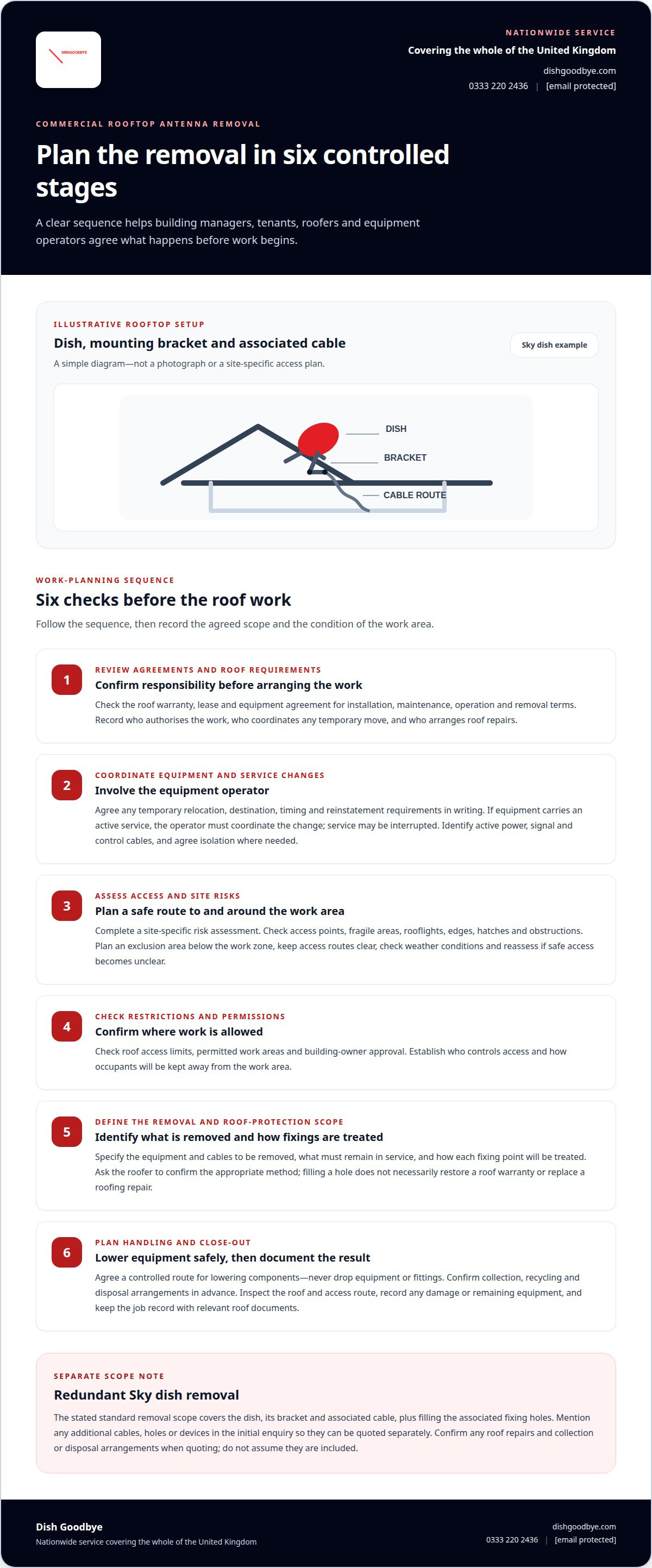
It is understandable to focus on removing redundant equipment, but rushing can create avoidable complications for the building and its daily operations. Plan the work in a practical order: review the lease and roof requirements, coordinate any temporary equipment move, assess access and site risks, and arrange permissions. Then define which equipment and cables are being removed and how fixing holes will be treated. A clear plan helps building managers, tenants and equipment owners understand the scope and prepare for the work.
Key Takeaways
- Review the roof warranty and equipment agreement before planning removal, including who handles temporary relocation and roof repairs.
- Plan safe access and work around building operations, rooftop hazards and equipment that may need to remain in service.
- Check roof access limits, permitted work areas and building-owner approval before setting the removal scope.
- Removal requirements affect the quote, so clearly identify the equipment, cables, access conditions and any roof repairs involved.
- For a redundant Sky dish, Dish Goodbye’s removal service includes the dish, its bracket and associated cable, plus filling the associated fixing holes.
1. Roof warranties, leaks and temporary equipment relocation
Before commercial rooftop antenna removal, locate the roof warranty and the agreement covering the antenna. Review clauses on installation, maintenance, operation and removal. A lease may make the tenant responsible for roof damage or damage to an existing warranty caused by these activities. This matters when the owner, tenant and equipment operator are different parties. Record who authorises the work and who arranges any roof repairs.
Begin with a record of the roof’s condition. Photograph the antenna base, brackets, cable route, nearby seams and any existing defects. Note water staining inside the building beneath the installation. This helps distinguish an older leak from damage noticed after removal and gives the roofer a useful reference if the roof needs attention. Keep the photographs with the work order and warranty documents.
Check how the antenna is fixed to the roof. A bracket on a non-penetrating frame raises different repair questions from bolts passing through the roof covering. Ask the roofer to identify the approved method for treating each fixing point. Do not assume that filling a hole restores the roof warranty or replaces a roofing repair. Even a sealed fixing hole may need inspection if water has reached insulation or the roof deck.
Temporary relocation requires coordination with the equipment operator and the person responsible for roof works. Some agreements require the tenant to move the antenna at its own expense when maintenance or repairs need access. A lease may also require relocation or de-energising during roof works, followed by removal and roof restoration when the agreement ends. Put responsibility, destination, timing and reinstatement requirements in writing before arranging access.
Can a rooftop antenna be removed while mobile or broadcast services remain operational? Yes, if the affected equipment can be isolated or removed while other service equipment stays active. If the antenna carries an active service, its operator must coordinate the change because the service may be interrupted.
Keep planning categories separate. The public comment period for a proposed new tower in Canada is at least 30 days, according to Innovation, Science and Economic Development Canada. That consultation period concerns a proposed new tower, not permission for routine antenna removal in the UK. For a UK roof project, use the property agreement and roof warranty to establish the relevant approvals and repair process.
Before work begins, write down the sequence: operator coordination, roof access, removal, fixing-point treatment and final inspection. Give the roofer the planned work date and the precise equipment location. This creates a clear job record for tracking warranty conditions, service changes and leak concerns.
2. Safe working practices and environmental responsibilities
Complete a site-specific risk assessment before anyone accesses the roof. Walk the route from the entry point to the antenna, noting fragile areas, rooflights, edges, access hatches and obstructions. A ladder route near a rooflight, for example, needs different controls from a clear service walkway. Record who controls access and how building occupants will be kept away from the work area.
Working at height creates fall risks, and tools or fittings can fall onto people below. Set an exclusion area beneath the work zone and keep the roof access route clear. Check the weather before work, as wet surfaces and strong winds can make equipment harder to handle. Stop and reassess if conditions change or safe access becomes unclear.
What are the risks of removing rooftop antennas, including structural damage and working at height? Key risks include falls, falling parts, damage to roof coverings and disturbance of cables or equipment still in use. Inspect the work area, identify how the antenna is fixed, and agree on access, handling and roof-protection controls before removal begins.
Check the antenna’s connections before cutting or disconnecting anything. Ask the equipment operator to identify active power, signal and control cables, and to isolate equipment where needed. Mark cables that must remain and compare them with the removal scope. This helps prevent severing a live connection or pulling a shared cable that serves another rooftop device. Secure loose cable ends rather than leaving them across a walkway.
Plan how each component will be lowered. Never drop brackets, fixings or cable from the roof. Use a controlled route that avoids entrances, loading areas and occupied spaces. A colleague at ground level can keep people clear and receive equipment safely. Check the landing area before lowering bulky items, especially where vehicles or deliveries pass.
How are removed antennas and associated cabling disposed of or recycled? Separate the dish or antenna, metal brackets, fixings and cable where practical, then agree collection, recycling and disposal arrangements before work starts. The final route depends on the materials and the agreed service, so don’t assume every component will be recycled.
Keep an inventory of what leaves the roof, including equipment set aside for reuse. Place cables and small fixings in labelled containers to prevent loose litter. Before closing the job, inspect the roof and access route for debris, unused cable ties and sharp metal fragments. Photograph the cleared work area and record any damage or remaining equipment for the property file.
Before closing the job, inspect the roof and record any damage. Set out responsibility for the roof in the work arrangements and clarify it with the relevant parties beforehand. A sample clause makes the tenant responsible for roof damage and impairment of an existing roof warranty caused by installing, using, maintaining, operating or removing the antenna and related equipment.
3. Working around rooftop restrictions and limitations
Commercial roofs often have designated equipment zones, access routes and areas that must stay clear. Check the building plan, roof rules and occupancy agreement before deciding how to remove an antenna. A sample rooftop clause limits the antenna area to approximately 100 square feet. Another permits up to three dishes, each no larger than 3 feet in diameter. These examples show why the actual site documents matter more than assumptions about a typical roof.
Map the route from the roof access point to the equipment. Mark rooflights, fragile coverings, drains, service walkways and neighbouring plant. A narrow route beside ventilation equipment, for example, may prevent carrying a large antenna in one piece. Plan how to dismantle or lower it without blocking maintenance access. Keep other tenants’ equipment and escape routes clear throughout the work.
Some rooftop clauses require landlord approval of antenna plans and specifications before installation, and prohibit roof penetrations. Although removal differs from installation, these terms can affect how the equipment was mounted and what the building expects during reinstatement. Check for restrictions on drilling, lifting, noise, working hours and temporary storage. Record any limits in the work plan and share them with the people responsible for the site.
How do you choose a qualified contractor for commercial rooftop antenna removal in the UK? Choose one who can explain the access plan, removal scope, roof-protection method and controls for people below. Request a clear written description of the work, including how fixings and any cables that must remain will be handled.
What equipment and access arrangements are needed for commercial antenna removal? They depend on the roof height, access route, antenna size, fixing method and space available to lower components. The plan may require controlled lifting equipment, tools suited to the fixings, containers for small parts and a protected landing area at ground level.
Building restrictions can change the removal sequence. A shared roof may require a named site contact to provide access, escort workers or coordinate with other maintenance teams. A roof with a single hatch may require equipment to be brought up in smaller sections. If offices are occupied below, agree how staff will be notified and which entrances must stay open.
Summarise the restrictions in a short site brief. Include the approved access point, equipment location, prohibited roof areas, lifting route and building contact. Add a simple roof sketch if several antenna positions or service routes could be confused. Before work begins, compare the plan with the actual roof and pause if a locked door, temporary barrier or newly placed plant blocks the agreed route.
4. What factors affect the cost of removing a rooftop antenna?
A quote for rooftop antenna removal reflects the work required at that specific building. The price depends on the individual job and is provided after a quote request. The main factors are the equipment included, its fixings, roof access, removal method and any agreed work to the roof afterwards.
Start by describing the equipment clearly. One compact dish with an accessible bracket is a different task from several large antennas, support frames or cabinets. Include the number and type of items, their positions and any equipment that must remain. Clear details help the quote reflect the actual scope rather than assumptions based on a brief description.
Fixings and cable routes matter too. A bracket on an accessible frame differs from one bolted through the roof covering or connected to equipment elsewhere. Identify redundant cables and those serving other devices. Mention additional cables, holes or devices in your initial enquiry, as they must be quoted separately.
Access can shape the removal plan. Share the building height, roof entry point, route to the antenna and any restrictions on moving equipment through the property. A narrow hatch, internal stairs, locked access or busy loading area may affect handling and coordination. If the work must fit around tenants or building operations, include those arrangements in your enquiry.
The roof itself matters as well. Describe the roof covering, the antenna’s fixing method and any visible damage around its base. If a roofer has identified a repair requirement, explain whether that work is part of the requested scope. Equipment removal and repairs to unrelated roof defects are separate tasks, so listing them separately helps avoid misunderstandings.
Before requesting a quote, gather these details:
- The number, type and location of antennas or dishes.
- Which brackets, fixings and cables should be removed.
- Any equipment or cabling that must remain operational.
- The roof access route and relevant site restrictions.
- Any roof treatment, repair or disposal arrangements being requested.
Photographs can clarify details that words may miss. Take clear images of the equipment, fixings, cable routes and access point without entering restricted areas. Label each image by roof location if the building has several antenna positions. Include relevant plans or a written scope if available.
Finally, compare the written quote with the work requested. Check that it identifies the equipment and associated tasks rather than assuming every old cable, device or roof defect is included. A precise enquiry gives the removal team a clearer basis for assessing access, labour and equipment needs, and gives the property manager a reliable record of what has been agreed.
5. What permissions are needed from a landlord or building owner to remove a commercial antenna?
Start with the lease, licence or rooftop occupancy agreement that authorised the antenna. Check who controls the roof and can approve access. The tenant may occupy the building while a landlord, managing agent or equipment operator controls other parts of the arrangement. Identify the right contact before booking removal and keep their written response with the property records.
Look for clauses covering removal, alterations, access and reinstatement. A sample clause may require the tenant to remove the antenna at its own cost when the lease ends or is terminated early, and repair any damage caused by removal. Another may let the landlord require the antenna to move to a location reasonably acceptable to the tenant. These are examples of agreement terms, not universal rules for UK properties.
Request written permission from the building owner if the agreement requires consent or removal changes the roof. Include the equipment location, proposed access route, work scope and intended treatment of fixing points. If a managing agent is involved, establish whether they can approve the work or must refer it to the landlord. Do not rely on a casual conversation when the agreement calls for written approval.
A rooftop agreement may give the landlord broad discretion over consent and allow a fee for each device. Read the exact wording before arranging a date. If the agreement gives the landlord the right to select an alternative antenna location, clarify whether that applies to removal or only relocation. Ask the equipment operator to coordinate any move, disconnection or service change.
Prepare a concise approval request with the details the owner needs to assess the work:
- The antenna, bracket and related equipment proposed for removal.
- Any cables or devices that must remain in place.
- The access route, work area and proposed timing.
- The approach to roof protection and making good fixing points.
- The person responsible for coordinating the operator and building access.
For a shared commercial building, include the facilities manager and any tenant whose equipment or access route could be affected. Removing an antenna beside another tenant’s rooftop unit, for example, may require a clear boundary around that equipment. Ask the owner to record any conditions, such as an approved route, restricted roof area or required inspection, in the written permission.
Keep the approval, agreement, scope and completion record together. Note any agreed changes before work starts, then document the cleared area afterwards. This gives the property manager a practical record if questions arise about access, reinstatement or responsibility for damage.
One sample clause allows the landlord to withhold or condition consent to a rooftop antenna at its sole and absolute discretion and reserves the right to charge a fee for each device. Treat this as a reason to seek an express decision before arranging work, rather than assuming consent will follow standard terms. Ask the landlord to state any conditions and applicable device fee in writing, and check that the approved scope aligns with them. Keep that response with the removal records.
Dish Goodbye: Sky Dish Removal
Dish Goodbye provides Sky Dish Removal for redundant Sky dishes on commercial properties. This is a practical option when the equipment to be removed is a Sky dish, rather than a wider mobile or broadcast antenna system.
The quote includes removal of the dish, its bracket and associated cable, plus filling the associated fixing holes. Additional cables, holes or devices must be mentioned in your initial enquiry and quoted separately. Access, height and property conditions inform the assessment, so include clear site details and photographs where possible.
For a redundant Sky dish, visit the Dish Goodbye service website to get in touch.
Make the next step clear
Turn your planning decisions into a clear work request. Identify the equipment to remove, who has approved access and what outcome the building needs afterwards. This gives everyone a shared reference as commercial rooftop antenna removal moves from planning to action.
For a redundant satellite or Sky dish, Dish Goodbye offers Satellite Dish Removal and Sky Dish Removal. The quote includes removal of the dish, its bracket and associated cable, plus filling the associated fixing holes. Additional cables, holes or devices must be mentioned in your initial enquiry and quoted separately. Access, height and property conditions inform each quote.
Take the next practical step and contact Dish Goodbye through its service website to discuss removing a redundant dish. A well-defined request helps keep the work aligned with your building’s needs, leaving you ready to move forward with a tidier roof and a clear plan. Contact Dish Goodbye on 0333 220 2436 or email [email protected].
Frequently Asked Questions
What does commercial rooftop antenna removal involve?
The process involves identifying redundant rooftop equipment, coordinating any active services and planning how items will leave the building. The scope should distinguish the antenna from shared infrastructure, such as cables serving other equipment. For example, a property manager can mark retained cables on a roof plan before the visit. This helps avoid removing something another tenant or service still relies on.
What health and safety rules apply to rooftop antenna removal in the UK?
Plan the work around a site-specific risk assessment, safe roof access, fall prevention and controls for falling objects. The method should also cover emergency communication and what happens if weather makes roof access unsafe. Agree who can stop work, how the team will contact building staff and how people below will be kept clear. The property manager should share site hazards and access restrictions before work starts.