
Contact: dishgoodbye.com
What if those small drill holes left by your old satellite dish are actually invitations for expensive structural damage? It is easy to think the job is finished once the hardware is gone, but leaving your masonry exposed is a gamble with the British weather. Proper wall repair after dish removal is a critical structural safeguard against damp, not just a cosmetic touch-up. We know how frustrating it is to see unsightly scars on your home's exterior, especially when you are worried about moisture seeping into your living space.
As a nationwide service operating across the UK, we want to help you reclaim your property’s curb appeal and ensure total protection against the elements. In this guide, we will show you how to professionally seal and restore your exterior walls using the right materials for brick or render. You will learn the exact steps to achieve a clean, invisible repair that keeps your home dry and looking sharp. It is time to enjoy a well-managed home where maintenance is simple and the results are seamless.
Contact: dishgoodbye.com
Key Takeaways
- Understand why sealing old fixing points is vital for preventing penetrating damp and structural freeze-thaw damage.
- Identify the specific damage caused by heavy-duty M8 anchors and wide cable apertures in your masonry.
- Master the essential steps for wall repair after dish removal, from deep cleaning apertures to selecting colour-matched fillers.
- Discover how a professional restoration reclaims your home's curb appeal by creating a seamless, moisture-proof finish.
- Say goodbye to unsightly holes and restore your building envelope to ensure long-term domestic harmony and efficiency.
Contact: dishgoodbye.com
Why Wall Repair is Essential After Satellite Dish Removal
Removing a satellite dish feels like a victory for your home's exterior. However, it's only half the job. Those sturdy brackets were held in place by heavy-duty fixings that don't just disappear. Leaving these holes unsealed creates vulnerable entry points in your property's skin. Professional wall repair after dish removal is the only way to ensure your building envelope remains watertight. Without it, you are leaving your home open to freeze-thaw damage. This happens when water enters the holes, freezes during a cold snap, and expands. This pressure can cause the face of your bricks to pop off, leading to costly masonry repairs. We see this often in properties across the UK where hardware has been removed but the fixings were ignored.
We believe that restoring your wall is a vital part of improving curb appeal across the UK. It is about more than just looks. It protects the integrity of your insulation and internal plasterwork. A neglected hole is a highway for damp that can ruin your interior decor. When water bypasses the outer leaf of your masonry, it can saturate the insulation inside the cavity. This reduces your home's thermal efficiency and can lead to mould growth on your inside walls. We treat every hole as a priority to keep your home dry and efficient. Investing in wall repair after dish removal ensures that your home remains a sanctuary, free from the creeping threat of moisture.
The Invisible Threat of Moisture Ingress
Don't be fooled by the size of the damage. Even a single 10mm bolt hole can channel litres of driving rainwater directly into your cavity wall. This moisture doesn't just sit there. It can corrode wall ties and cause rot in internal timber frames. By understanding damp proofing and the way moisture travels, you can see why professional sealing is essential. We prevent these long-term structural headaches by restoring the barrier between your home and the elements. A small hole acts like a funnel, catching every drop of rain that hits the wall and directing it straight into the heart of your building. This is why a simple dab of DIY filler often isn't enough; you need a deep, structural seal that bonds with the existing masonry.
Maintaining Property Value and Aesthetics
First impressions matter. A wall peppered with old, rusty holes suggests a lack of maintenance to potential buyers. It looks messy and neglected. A clean, smooth exterior creates a modern, decluttered environment that feels fresh and inviting. When you look at after photos of a professional job, you should see a seamless, dish-free finish. No scars, no rust stains, and no worries. It is a simple lifestyle upgrade that makes your home feel well-managed. By reclaiming your wall's original appearance, you are telling the world that your home is cared for. This attention to detail can even influence the speed of a sale or the final valuation of your property. Our nationwide team is dedicated to helping you achieve that perfect, clear-wall look.
Contact: dishgoodbye.com
Contact: dishgoodbye.com
Identifying the Damage: Brackets, Fixings, and Cable Holes
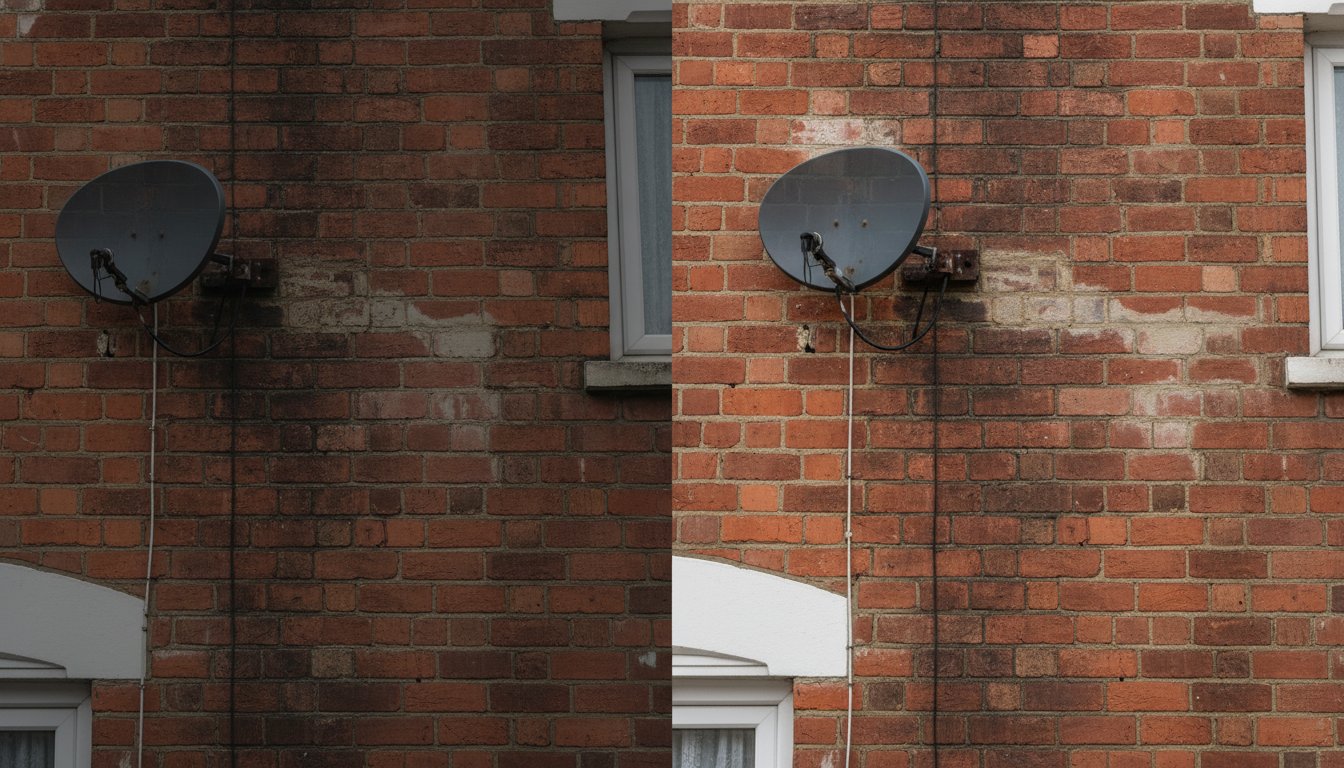
Once the old hardware is gone, the true state of your masonry becomes clear. It is rarely a pretty sight. Most satellite brackets across the UK are secured with heavy-duty M8 or M10 expanding shield anchors. These are not simple plastic wall plugs. They are substantial steel fixings designed to anchor a heavy metal dish against gale-force winds. When these are removed, they leave deep, wide apertures that go far beyond the surface. These holes often penetrate both the brick face and the mortar bed, creating a direct path for moisture to enter your home's structure. Assessment is your first step toward a successful restoration. We always recommend checking for chipped areas or "spalling" around the old fixing points before you begin.
It is not just the bracket holes you need to worry about. Coaxial cables require their own entry points to get the signal inside. Installers often took the path of least resistance, drilling through window frames or directly through the brickwork. These apertures might be smaller in diameter, but they often go entirely through the wall. If you are looking for a professional finish, you can't ignore these secondary holes. If you want to skip the hassle and ensure every entry point is handled correctly, our Dish Removal Services are designed to take the weight off your shoulders. We ensure the hardware and the wires are gone, leaving you with a clean slate for wall repair after dish removal.
Bracket Bolt Holes vs. Cable Apertures
There is a major difference in how you should treat structural fixing holes versus signal wire apertures. Bracket bolts are deep and wide, often reaching 80mm to 100mm into the masonry. They require a structural filler that can bond deeply within the cavity. Cable holes are narrower but create a "bridge" between the outside and your interior. We always remove redundant cabling entirely back to the entry point before sealing. This prevents "wicking," where water travels along the plastic cable jacket and into your wall. Each type of hole needs a specific approach to ensure the seal is both airtight and watertight. This attention to detail transforms a messy chore into a satisfying win for your home's hygiene.
Assessing Brickwork and Render Conditions
Take a close look at where the holes are located. Is the damage in the "face" of the brick or the mortar joint? Holes in the mortar are easier to hide, but holes in the brick face require a colour-matched filler to remain invisible. You should also look for fine cracks radiating from the old bracket site. These are often caused by wind-loading stress over many years. Spalling is the flaking or chipping of brickwork caused by water entering these neglected holes and freezing. If you see flaking brick, the damage has already started. Catching this early is the secret to a low-effort, high-impact home restoration that lasts for years. We believe a well-managed home starts with these small, proactive fixes.
Contact: dishgoodbye.com
Contact: dishgoodbye.com
Step-by-Step Guide to Restoring Your Exterior Walls
A successful restoration starts with proper preparation. First, clear the aperture. Use a small bottle brush or a blast of compressed air to remove dust, brick fragments, and old debris. If you leave dust behind, your filler won't bond correctly. It is a simple step that saves a lot of frustration later. Once the hole is clean, you can begin the process of wall repair after dish removal. This prep work ensures your repair lasts as long as the building itself.
Applying the material requires a bit of patience. Don't just smear it over the top. Use a narrow tool to push the filler deep into the hole. If the aperture is deep, apply the material in layers, letting each one set slightly. This ensures the repair is structural, not just cosmetic. Pack the filler tightly to the back of the hole to prevent air pockets. These pockets can trap moisture, which leads to cracking when the temperature drops. We aim for a solid, dense fill every time.
Texture matching is the secret to an invisible result. If your wall is smooth render, use a damp sponge to level the surface. For rough-cast or pebble-dash, you might need to flick a little grit onto the wet filler or use a stiff brush to stipple the surface. Once it is dry, use masonry paint or a brick tint to blend the patch into the surrounding area. We want your home to look like the dish was never there. This attention to detail is what restores your property's original character.
Choosing the Right Materials for UK Properties
UK homes face unique weather challenges, so material choice is critical. While acrylic fillers are great for small gaps, they don't always breathe like traditional masonry. Avoid using silicone on brickwork. It traps moisture and cannot be painted, leaving a shiny, obvious scar on your wall. For a full list of the gear you will need, check out our guide on professional dish removal service. We recommend using sand and cement for mortar joints and specialist brick-dust fillers for brick faces to ensure a long-lasting, breathable seal.
Sealing Cable Entry Points
Don't forget the wires. If cables were routed through uPVC window frames, use a high-quality frame sealant that matches the colour of your windows. For brick exit points, "blow-out" covers or grommets provide a tidy, professional finish. Remember to patch the internal wall too. This stops cold draughts and prevents heat loss, keeping your home cozy and efficient. It is these small details that turn a basic job into a total restoration. By sealing both sides, you create a complete barrier against the elements.
Contact: dishgoodbye.com
Contact: dishgoodbye.com

Preventing Long-Term Issues: Damp and Brickwork Erosion
Many homeowners believe that a few small holes are merely an eyesore. This is a dangerous assumption. In the UK, high rainfall and humidity turn every unsealed aperture into a structural liability. While old satellite brackets act as thermal bridges, the empty holes they leave behind are far more damaging. They allow liquid water to bypass the brick's protective face and enter the core of your wall. This is why thorough wall repair after dish removal is a non-negotiable part of landlord property maintenance. If you manage multiple properties, ignoring these small entry points can lead to massive restoration bills across your portfolio.
Brickwork erosion is a silent, destructive process. Most UK bricks have a hard, fired outer surface designed to shed water. When you leave a bolt hole open, you provide a shortcut for moisture to get behind that hard shell. It saturates the softer interior of the brick, causing it to crumble and degrade from the inside out. We see this often. A small bit of neglect leads to a structural failure that could have been avoided with a simple seal. Don't wait for your masonry to fail. Reclaiming your home’s health is as simple as sealing those gaps before the next storm hits.
The Link Between Old Fixtures and Internal Damp
Water is persistent. It uses capillary action to pull itself through tiny gaps and deep into your wall cavity. This process acts like a sponge, drawing moisture through the masonry even when there is no direct pressure. Once inside, it creates a moisture bridge that saturates your internal walls. This saturation causes your internal plaster to "blow" or bubble and creates the perfect environment for black mould growth. It is a health hazard and a massive domestic headache. Every penetration in your home’s skin needs a permanent seal to maintain a hygienic, dry living space. We focus on ensuring that every point where redundant tech once sat is restored to its original, weather-proof state.
Freeze-Thaw Cycles and Structural Integrity
The UK winter is particularly harsh on damaged masonry. Our temperatures often hover right around the freezing point, leading to frequent and rapid freeze-thaw cycles. When water trapped inside a hole freezes, it expands by approximately 9%. This expansion creates immense internal pressure that can turn a small drill hole into a significant structural crack or cause the brick face to sheer off entirely. Ensuring a weather-tight seal before the winter season begins is the best way to protect your investment. If you want to avoid these risks entirely, let us handle the hard work with our professional Satellite Dish Removal service. We ensure your building envelope is restored before the first frost hits.
Contact: dishgoodbye.com
Contact: dishgoodbye.com
The Dish Goodbye Approach: Professional Restoration
Removing a dish is often viewed as a simple mechanical task. We see it differently. For us, it's about restoring the building envelope and giving you back a clean, uncluttered home. Our approach to wall repair after dish removal is meticulous and thorough. We don't just unscrew the bracket and leave. Our technicians arrive with a full kit of specialized fillers designed to match standard UK brick and mortar colours. This ensures that the final result is not just a plugged hole, but a virtually invisible restoration that blends perfectly with your masonry. We want you to feel a sense of relief every time you look at your refreshed exterior.
We take pride in leaving every property in a better state than we found it. Every hole is smoothed and weather-proofed as part of our standard service. This prevents the moisture ingress discussed earlier, ensuring your home remains a dry, healthy environment. Beyond the aesthetics, we take full environmental responsibility. We recycle 100% of the metal and e-waste we remove. This means your old tech doesn't end up in a landfill, but is instead processed responsibly as part of a modern, sustainable cycle. It is a total lifestyle upgrade that prioritizes both your comfort and the planet.
Why Professional Removal Beats DIY
Tackling this task yourself often leads to unfinished results or unnecessary risks. Safety is our first priority. Removing dishes from height requires specialist ladders and appropriate PPE that most homeowners simply don't have. It's easy to underestimate the weight of an old steel dish when you are balanced on a standard ladder. We take that danger away. Our "clean finish" guarantee means you won't be left with remaining brackets, dangling wires, or unsightly scars. You get total peace of mind knowing your property is protected against moisture for years to come. It's a satisfying, low-effort experience that lets you reclaim your weekend and your home's beauty.
Our Commitment to a Cleaner Exterior
We focus on the total removal of redundant tech to declutter your property and refresh your curb appeal. A clear wall feels like a fresh start for your home’s exterior. You can see how we handle satellite dish recycling to keep your local community and the planet clean. We believe in a future where homes are free from obsolete hardware and the structural damage it causes. If you're ready to transform your property, contact us at dishgoodbye.com for a nationwide service quote. We're here to make your home restoration swift, seamless, and completely stress-free.
Contact: dishgoodbye.com
Contact: dishgoodbye.com
Restore Your Home’s Beauty and Protection
Your property deserves to look its best and remain shielded from the unpredictable British weather. We have explored why sealing those old fixing points is far more than just a cosmetic touch-up; it is a vital structural shield against damp and long-term erosion. By identifying specific masonry damage and using the correct restoration materials, you can ensure your wall repair after dish removal provides a long-lasting, invisible finish. Don't let redundant hardware and unsightly holes compromise your property's value or your peace of mind.
We are here to make the transition to a cleaner exterior effortless and satisfying. Our nationwide UK service includes the complete removal of old hardware, 100% recycling of all metal and e-waste, and professional hole filling and smoothing as standard. Ready for a cleaner, safer home exterior? Get a professional dish removal and wall repair quote today. It is time to say goodbye to the clutter and enjoy the relief of a well-managed, modern home that stays dry and looks fantastic.
Contact: dishgoodbye.com
Contact: dishgoodbye.com
Frequently Asked Questions
Do I really need to fill the holes after removing a satellite dish?
Yes, you must seal every hole to prevent moisture from entering your building envelope. Even small apertures act as funnels for driving rain, which leads to internal damp and structural damage over time. Proper wall repair after dish removal is the only way to keep your home dry. It is a simple step that protects your property and ensures long-term domestic harmony.
What is the best filler for holes in brickwork?
The best choice is a specialist brick-dust filler or a traditional sand and cement mortar mix. These materials bond deeply with your masonry and allow the wall to breathe naturally. Avoid using standard interior fillers as they will crumble when exposed to the elements. Using the right material ensures your repair stays intact through heavy rain and harsh winter frosts.
Can I use silicone sealant to fill satellite dish holes?
No, you should avoid using silicone sealant for masonry repairs. Silicone is not breathable and cannot be painted, which means it leaves a shiny, obvious scar on your wall. It also tends to pull away from the brickwork over time, creating new gaps for water. Stick to masonry-based fillers for a professional, invisible result that lasts for years without failing.
How do I match the colour of my mortar when repairing a wall?
Mix different ratios of silver sand and cement until the dry colour matches your existing joints. You can also buy pre-coloured mortar repair kits designed for standard UK brickwork. Always test a small amount first and let it dry completely, as the colour changes significantly during the curing process. This attention to detail is the secret to a seamless, satisfying finish.
Will removing my old dish and repairing the wall improve my house value?
Yes, it significantly improves curb appeal and reassures potential buyers that the property is well-maintained. A clean, "dish-free" exterior suggests a modern, organized home and removes any fears about hidden damp issues. Buyers appreciate a property that is ready to move into without a list of small, messy repairs. It is a low-effort upgrade with high-impact results.
What happens if I leave the old satellite dish cables in the wall?
Leaving redundant cables creates a "wicking" effect where water travels along the plastic jacket and into your interior walls. This often leads to bubbling plaster and black mould growth inside your home. We always recommend removing cables back to the entry point and sealing the aperture. It is a vital part of a complete wall repair after dish removal strategy for any hygienic home.
Can I repair a hole in render myself?
You can perform the repair, but matching the texture of rough-cast or pebble-dash is notoriously difficult. A flat patch on a textured wall often stands out more than the original hole. If your home has a smooth render finish, a DIY fix is more manageable with a damp sponge. For complex textures, professional help ensures the repair is totally invisible and weather-proof.
How much does it cost to have a professional remove the dish and fix the wall?
Professional costs depend on factors like the height of the dish and the accessibility of your masonry. While prices vary across the UK, the investment is much lower than the cost of treating structural damp caused by neglected holes. We recommend getting a specific quote to ensure the hardware is recycled and the wall is smoothed and weather-proofed to a high professional standard.
Contact: dishgoodbye.com