Contact dishgoodbye.com for nationwide satellite and aerial removal services across the UK.
That rusted metal skeleton on your roof is more than just an eyesore; it's a structural stepping stone that invites pests to compromise your loft and walls. Many homeowners ask, are old tv aerials a pest risk, and the reality is that these redundant structures act as perfect nesting platforms. It's exhausting to be woken by birds nesting at dawn or to find guano staining your patio. You likely already feel that your home should be a sanctuary, not a landing strip for local wildlife. Dealing with the mess is a chore you don't need.
This guide will help you discover how redundant roof equipment attracts unwanted guests and show you the most effective way to protect your home from pest-related damage. You'll learn exactly how these metal structures compromise your home's hygiene and why professional removal is the best way to stop pests before they move in. We'll explore the hidden risks of rodent entry and why clearing your roof can save you from £300 pest control bills. It's time to say goodbye to the clutter and hello to a cleaner, quieter home.
Contact dishgoodbye.com for nationwide satellite and aerial removal services across the UK.
Contact dishgoodbye.com for nationwide satellite and aerial removal services across the UK.
Key Takeaways
- Learn why we view redundant roof structures as "stepping stones" that invite birds and rodents to settle on your property.
- Discover the definitive answer to why are old tv aerials a pest risk and how they provide the perfect foundation for heavy, damp nests.
- Identify the visual and audio warning signs of an infestation, from unsightly guano staining to scratching noises in your eaves.
- Understand the hidden dangers of secondary infestations, including how bird mites can migrate from old nests into your living areas.
- See why we recommend total extraction over temporary deterrents to ensure a permanent, pest-proof finish for your home.
Contact dishgoodbye.com for nationwide satellite and aerial removal services across the UK.
Contact dishgoodbye.com for nationwide satellite and aerial removal services across the UK.
Why Old TV Aerials and Satellite Dishes Attract Pests
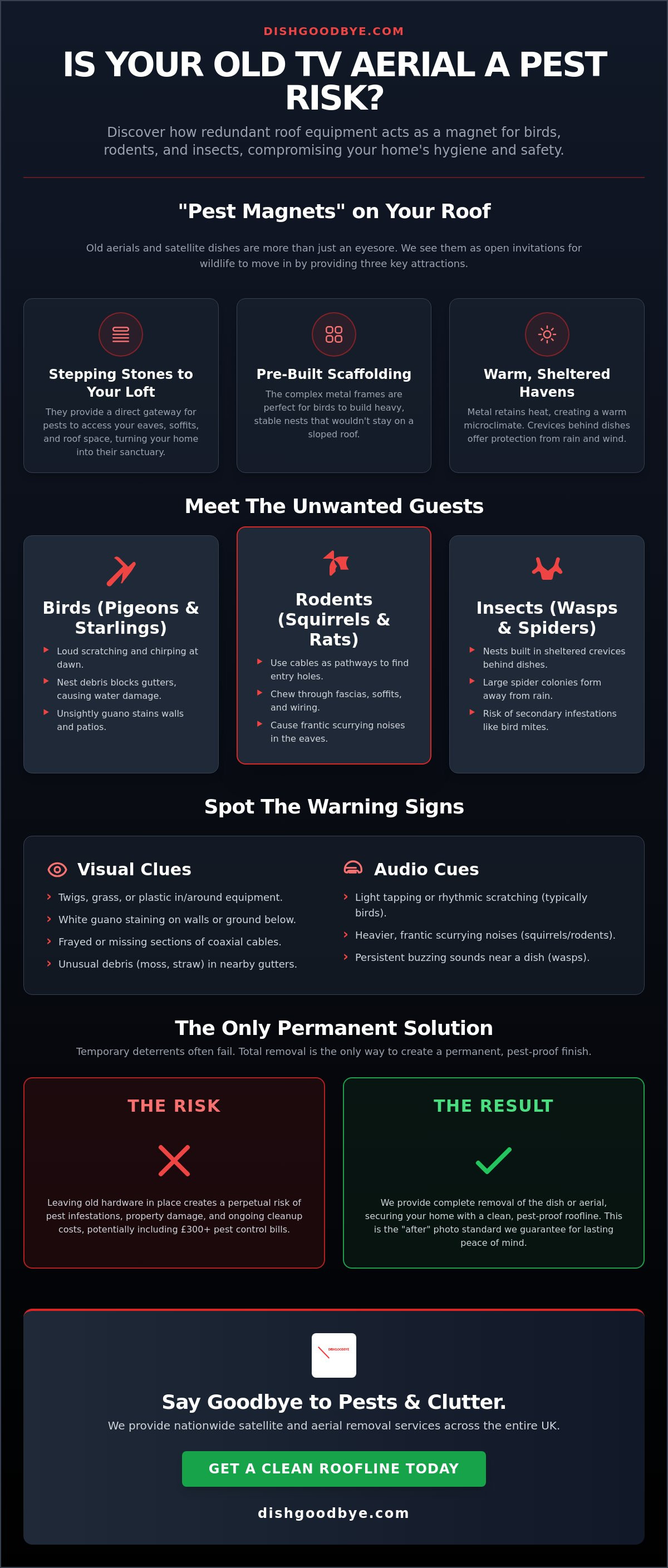
Redundant telecommunications hardware on your roof is a silent invitation to local wildlife. We often describe these structures as a "pest magnet" because they offer height, stability, and warmth. If you've ever wondered, are old tv aerials a pest risk, the answer lies in their structural design. These metal frames aren't just eyesores; they are complex environments that provide a secure foundation for biological growth and nesting. Because they are often located near eaves and soffits, they serve as a direct gateway for animals looking to move from the outside world into your cozy loft space. If you want to clear your roofline and remove these hazards, we are here to help at dishgoodbye.com.
The material itself plays a role in attracting unwanted guests. Metal structures retain heat from the sun long after the temperature drops in the evening. This creates a warm microclimate that is irresistible to many common household pests looking for a place to breed. This consistent warmth, combined with the protection from the wind, makes your old aerial or dish the most attractive "real estate" on your street for insects and small mammals.
The Nesting Instinct: Birds and Brackets
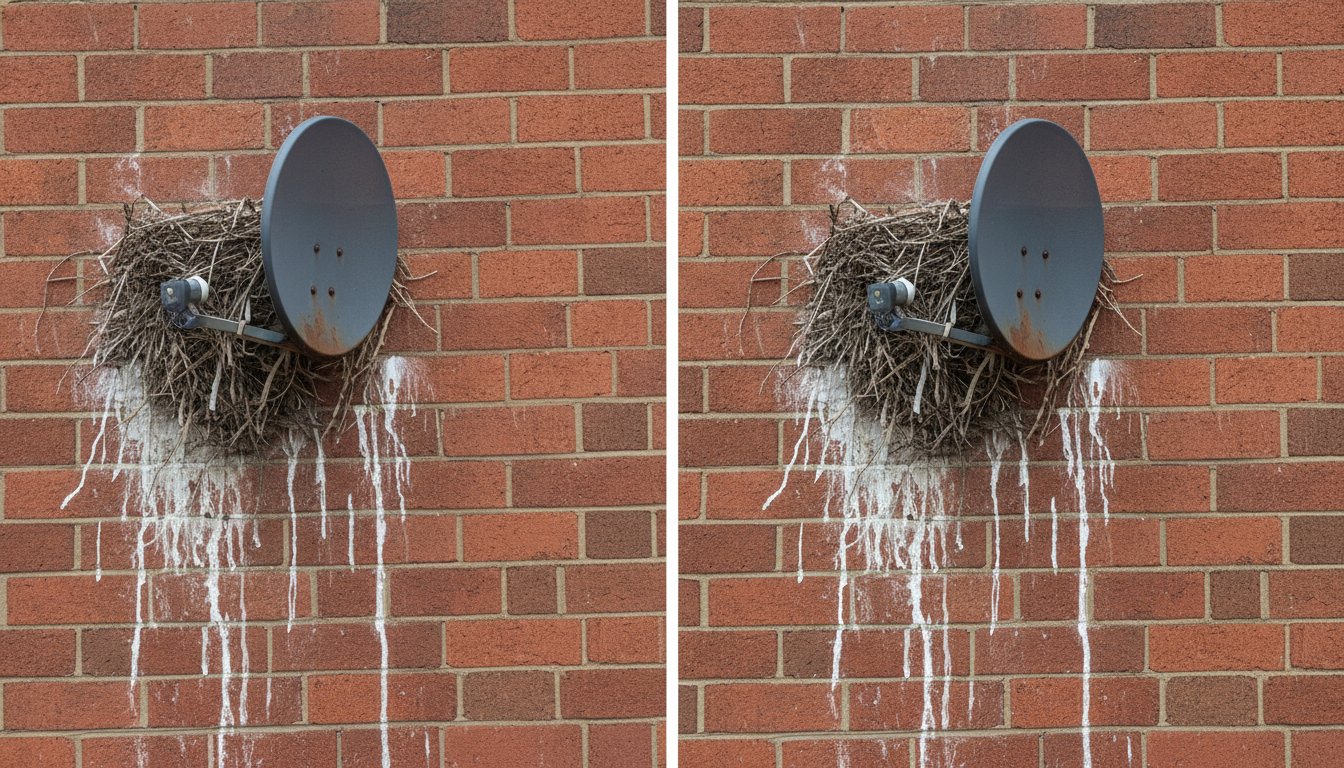
Birds like pigeons and starlings have a natural drive to find high, stable platforms for their young. An old aerial is essentially a pre-built scaffold. It allows them to weave heavy, complex nests that would otherwise slide off a sloped roof. Once these birds move in, the noise nuisance begins. You'll likely hear the frantic chirping and scratching of fledglings at the first sign of dawn. Beyond the noise, the debris from these nests eventually washes into your gutters. This leads to blockages and water damage that can cost hundreds of pounds to repair.
Shelter and Protection from the Elements
Satellite dish brackets are equally problematic for your home's hygiene. The narrow gap between the back of the dish and your brickwork creates a sheltered crevice. It's a prime location for wasps to build nests or for large spider colonies to thrive away from the rain. Squirrels also love these high-ground vantage points. They use the brackets to sit and survey your garden before attempting to chew through your fascias. Even the old cabling is a hazard; rodents use these wires as tactile pathways to navigate your walls and find tiny entry holes into your home's interior.
Contact dishgoodbye.com for nationwide satellite and aerial removal services across the UK.
Contact dishgoodbye.com for nationwide satellite and aerial removal services across the UK.
Signs of Pest Infestation Around Your Roofline
Identifying the early warning signs of an infestation saves you from the stress of a full-blown invasion. You don't need to climb a ladder to find out if your redundant hardware has become a local wildlife hotel. Often, the evidence is hiding in plain sight. If you notice frequent bird activity specifically centred on your redundant hardware, it's rarely a coincidence. Homeowners frequently ask, are old tv aerials a pest risk, and the visual evidence usually confirms they are. Look for these key indicators during your next garden walkabout:
- Nesting Materials: Twigs, dried grass, or bits of plastic protruding from behind satellite dishes or aerial brackets.
- Guano Accumulation: Significant white staining on the walls, windowsills, or patios directly below the equipment.
- Cable Damage: Visible fraying or missing sections of the outer sheath on redundant coaxial cables.
- Debris in Gutters: An unusual amount of moss or straw collecting in the guttering near the equipment.
If you spot these signs, it's time to consider a professional satellite dish removal to clear the way for a cleaner, quieter home.
Audio Cues: Identifying the Culprit
Your ears are often the first tools to detect a problem. The sounds of an infestation change depending on who has moved in. Birds usually create a light, rhythmic tapping or scratching sound as they adjust their nests. In contrast, squirrels produce a much heavier, frantic scurrying noise that echoes through the eaves. These sounds are typically loudest at dawn and dusk when pests are most active. If the noise seems to be coming from inside the ceiling, check your loft space. Use a torch to look for light leaks near where cables enter the building; these gaps are often the primary entry points for rodents following the path of an old wire.
Exterior Visual Inspections
Safety is the priority when checking your roofline. We recommend using a pair of binoculars to inspect your aerial from ground level. This allows you to see the fine details without the risk of working at height. Look closely at the perching spots. A permanent perching spot is easily identified by a thick layer of "bird white" or guano. This isn't just a cosmetic issue; it's a sign of a high-traffic area. Pay special attention to the wires. Rodents have a biological need to gnaw, and old cabling provides a perfect, tactile surface. If the wires look gnawed or stripped, it's a clear signal that pests are using your roof as a playground.
Contact dishgoodbye.com for nationwide satellite and aerial removal services across the UK.
Contact dishgoodbye.com for nationwide satellite and aerial removal services across the UK.
The Hidden Risks: Structural Damage and Health Hazards
We've already explored how redundant equipment acts as a magnet; now we must address the tangible damage it leaves behind. When homeowners ask us, are old tv aerials a pest risk, we point to the structural compromise that starts at the roofline. In our experience across the UK, we find that the primary threat isn't just the pests themselves but the moisture they trap. We see how heavy nests act like sponges, holding rainwater against your brickwork and preventing it from drying out after a typical British downpour. This trapped water eventually leads to localised damp and crumbling mortar, which we often find hidden behind the equipment. We believe the true risk is found in the integrity of your walls and chimney stacks.
We also observe the physical strain these structures place on your home. In high winds, a nest-heavy aerial acts like a sail, vibrating and pulling against its fixings. We've seen cases where this vibration loosens the very bricks the bracket is bolted to, creating hairline cracks. These cracks then invite more water, accelerating the cycle of decay. We know that clearing the roofline isn't just a matter of tidiness; it's a vital step in maintaining the structural health of your property.
Cable Ingress and Rodent Entry
We know that rodents are opportunists that only need a tiny opening to cause chaos. A mouse can squeeze through a gap as small as a pencil, and we frequently find that old cable entry points are the perfect front door. Over time, we see the sealant around these holes degrade and crack, widening the gap. We observe pests following the tactile path of the old wire directly into your loft or wall cavities. This is a prime example of how unfilled holes from fixtures can cause damp and provide a permanent highway for rodents. We focus on extracting these cables entirely to shut down these entry routes for good.
Secondary Infestations: Mites and Insects
We often deal with the aftermath of secondary infestations that homeowners don't expect. Bird mites are tiny parasites that live on the hosts, and we know that once the birds fledge, these mites migrate. We see them crawl through window frames and vents into bedrooms, looking for a new food source. We also find that stagnant debris like feathers and droppings in the nest attract blowflies and carpet beetles. We don't just treat the symptoms; we remove the source. By taking down the old aerial or dish, we break the cycle of infestation and ensure your indoor air stays clean for your family.
Contact dishgoodbye.com for nationwide satellite and aerial removal services across the UK.
Contact dishgoodbye.com for nationwide satellite and aerial removal services across the UK.
Prevention Methods vs. Professional Removal
Don't fall for the trap of temporary fixes. When homeowners first discover are old tv aerials a pest risk, the immediate instinct is often to buy deterrents. You'll see bird spikes, plastic owls, or reflective tape on roofs across the UK. These are just sticking plasters on a larger wound. Patching holes while leaving the equipment in place is like locking the front door but leaving the windows wide open. The metal structure itself remains a permanent invitation for wildlife. Complete removal is the only 100% effective way to stop roofline pests for good. It transforms your home from a target back into a clean, quiet sanctuary.
Trying to manage pests without removing the aerial is a losing battle. Even if you block one entry point, the presence of the bracket or dish encourages the animal to find another way in. Rodents are persistent. They can chew through many common DIY sealants if they smell the warmth of your loft. By removing the hardware, you remove the motivation for them to be on your roof in the first place. It's the difference between managing a problem and solving it once and for all.
The Problem with Deterrents
Birds are remarkably clever and highly adaptable. We often see pigeons nesting directly on top of "anti-bird" spikes or using the metal prongs as additional support for their nesting materials. Beyond being largely ineffective, these gadgets ruin your home's kerb appeal. Your roofline ends up cluttered with plastic and metal that requires constant maintenance. These temporary fixes often carry ongoing costs and never deliver the satisfaction of a clean finish. If you want a maintenance-free result, you need to say goodbye to the old tech entirely. It's a lifestyle upgrade that prioritises your comfort and time.
The Permanent Solution: Total Extraction
Our process is designed for a definitive, satisfying result. We don't just snip a few wires and leave the heavy lifting to you. We perform a total extraction to ensure your home is protected.
- Step 1: Safely dismantle the redundant aerial or satellite dish using professional access equipment.
- Step 2: Remove all brackets and fixings that provide perching spots or structural support for nests.
- Step 3: Extract old cabling and seal the entry points professionally to prevent rodent ingress and damp.
Safety is the most important factor to consider. Attempting to remove an aerial from a chimney stack or high gable using a standard DIY ladder is incredibly dangerous. Falls from height are the single biggest cause of fatal workplace injuries in the UK. Professional teams have the right insurance, training, and safety kits to handle the job without risk to your health or your roof tiles. If you're ready to clear the clutter and protect your home, book your removal today.
Contact dishgoodbye.com for nationwide satellite and aerial removal services across the UK.
Contact dishgoodbye.com for nationwide satellite and aerial removal services across the UK.
Clean Rooflines: The Dish Goodbye Process
We don't just remove the hardware; we restore your home's harmony. Our process is a definitive break from the clutter and noise of the past. If you've been worried that are old tv aerials a pest risk, our total extraction service provides the ultimate peace of mind. We clear every trace of redundant technology, ensuring your roofline is as clean as the day your house was built. This isn't a partial fix. We remove the brackets, the bolts, and every inch of old cabling to ensure no "tactile pathways" remain for rodents to follow into your home.
The transformation is immediate and satisfying. Once the metal skeletons are gone, the constant chatter of nesting birds disappears. Your patios stay clean, and your brickwork is no longer at risk from acidic guano. We believe that maintaining a home should be a low-effort experience, and our service is designed to deliver that result in a single visit. You're not just buying a removal; you're investing in a lifestyle upgrade that prioritises your time and your property's hygiene.
Professional Hole Filling and Smoothing
Fixing holes are open invitations for damp and insects. We use a specialist technique to seal every cavity, filling and smoothing the surface to match your existing masonry. This isn't just about aesthetics; it's about structural integrity. A clean exterior significantly improves curb appeal and removes the entry points pests rely on. We leave your walls looking pristine, as if the equipment was never there. By the time we're finished, the only evidence of our visit will be a beautiful, decluttered home that feels fresh and well-managed.
Environmentally Responsible Disposal
Old aerials and dishes are classified as Waste Electrical and Electronic Equipment (WEEE) in the UK. It is illegal to dispose of them in general household waste, but we take that burden off your shoulders. We handle the entire disposal process for you with a zero-landfill promise. By processing all metal and electronic waste through approved UK recycling centres, we ensure your home upgrade is also a win for the planet. Recycling aluminum, a key component of many aerials, uses 95% less energy than producing it from raw materials. For more details on how we handle your old tech, check our Satellite Dish Recycling guide. We make it easy to be environmentally conscious while reclaiming your home's exterior.
Ready to experience a quieter, cleaner home? We operate across the entire United Kingdom, bringing professional satellite dish removal to your doorstep. Say goodbye to the pests and the mess today.
Contact dishgoodbye.com for nationwide satellite and aerial removal services across the UK.
Contact dishgoodbye.com for nationwide satellite and aerial removal services across the UK.
Reclaim Your Roofline and Protect Your Home
Don't let redundant metal hardware dictate the hygiene of your household. You've seen how these structures invite everything from nesting birds to inquisitive rodents. If you are still wondering, are old tv aerials a pest risk, the evidence is clear; they are structural stepping stones for trouble. Removing them is the only way to break the cycle of noise and mess for good. It's time to choose a permanent resolution that prioritises your comfort and your home's long-term health.
Our nationwide team is ready to help you achieve a pristine, pest-free finish. We provide complete extraction of all brackets and cables, followed by professional hole-filling to prevent damp from taking hold. We also ensure 100% of the waste is recycled through approved UK centres; you can enjoy a cleaner home and a clearer conscience. Get a free quote for professional aerial and dish removal at Dish Goodbye and start your transition to a better-managed home today. You'll love the quiet, decluttered result.
Contact dishgoodbye.com for nationwide satellite and aerial removal services across the UK.
Contact dishgoodbye.com for nationwide satellite and aerial removal services across the UK.
Frequently Asked Questions
Do old TV aerials attract birds to nest?
Yes, old aerials provide a stable, high-altitude framework that is perfect for birds to weave heavy nests. Pigeons and starlings favour these metal structures because they offer a secure foundation that won't slide off a sloped roof. Once a nest is established, it becomes a permanent landing strip that attracts more birds to your property year after year.
Can squirrels enter my loft through an old satellite dish cable hole?
Yes, squirrels are opportunistic and will use any existing gap to access the warmth of your loft space. If you've wondered are old tv aerials a pest risk, the cable entry point is a significant factor. Over time, the sealant around these holes degrades and cracks, allowing rodents to chew through and expand the opening to enter your home's interior.
Will removing my old aerial stop bird noise in the morning?
Yes, removing the redundant hardware eliminates the primary perching and nesting platform that birds rely on. Without the stable metal bars to land on, birds will move elsewhere to find a new spot for their dawn chorus. You'll finally enjoy quiet mornings without the frantic scratching and chirping echoing through your eaves and bedroom ceiling.
What are bird mites, and can they come from an old nest on my aerial?
Bird mites are tiny parasites that live on birds and can migrate into your living areas once the fledglings leave the nest. These pests often crawl through window frames or vents near the old equipment in search of a new food source. Removing the nesting site at the source is the only way to permanently stop these mites from invading your home.
Is it safe to remove a pest-infested aerial myself?
It isn't recommended to remove an old aerial yourself due to the significant dangers of working at height. Dealing with aggressive wasps or nesting birds while balanced on a ladder is a major safety hazard. Professionals have the specialist safety gear and insurance required to handle these risks safely while protecting your roof tiles from damage.
How much does it cost to have an old aerial removed in the UK?
The cost of removal typically depends on the height of your property and the complexity of the access required. Prices vary across the United Kingdom based on your specific location and the type of equipment being cleared. Investing in professional removal is a practical way to avoid much higher costs associated with long-term pest damage and structural repairs.
Does Dish Goodbye seal the holes left behind by the aerial brackets?
Yes, we ensure a pest-proof finish by filling and smoothing fixing holes after we remove your redundant satellite dish. We use high-quality fillers to match your masonry, which prevents moisture ingress and stops insects from using the old holes as entry points. You'll be left with a pristine wall that looks as if the equipment was never there.
What happens to the old aerial once it has been removed?
Every piece of metal and electronic waste we remove is processed through an approved UK recycling centre. We are committed to a zero-landfill policy, ensuring that all redundant tech is recycled in accordance with WEEE regulations. This responsible approach helps protect the environment while successfully clearing the clutter from your home's exterior and reclaiming your kerb appeal.
Contact dishgoodbye.com for nationwide satellite and aerial removal services across the UK.