
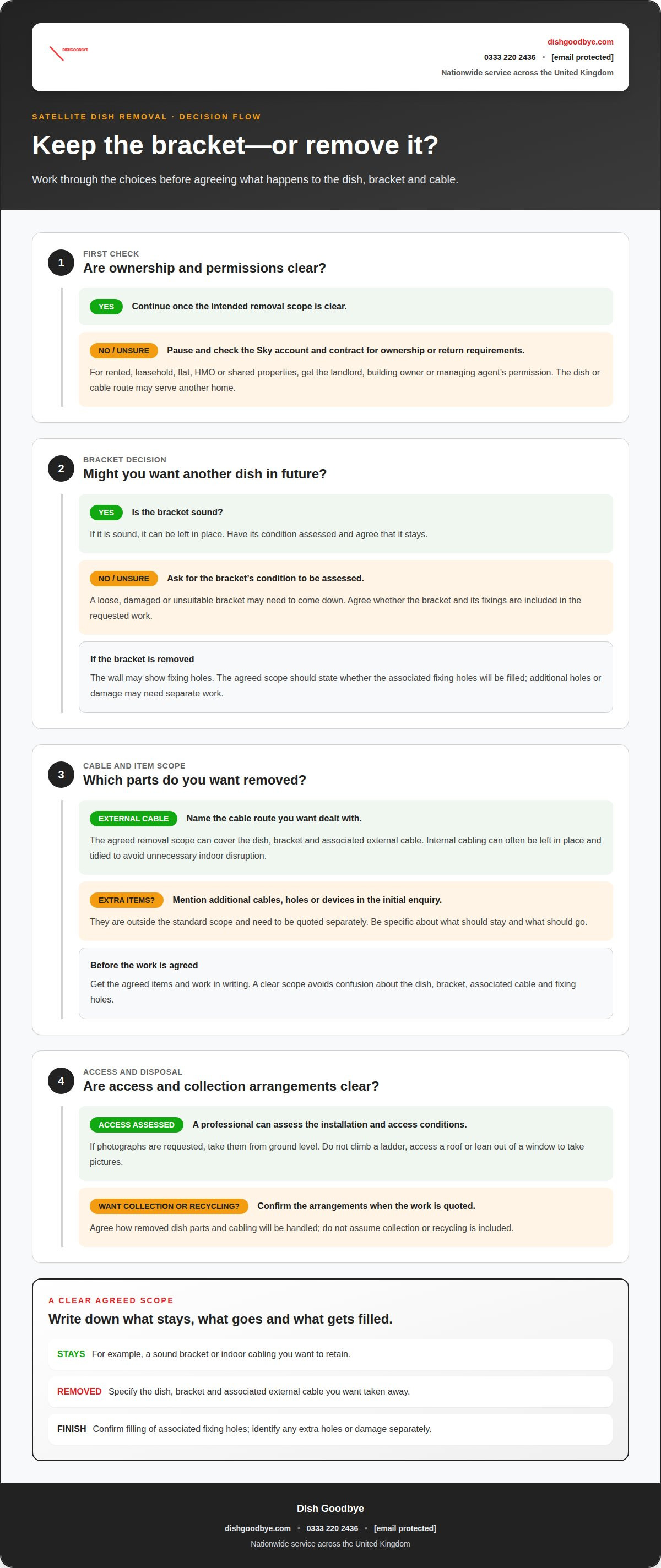
Keeping the bracket may be the tidiest option if it is sound and you may want another dish in future. When removing old satellite dish cables, the key is to deal with redundant wiring and seal the entry point without leaving a rough finish.
Before arranging removal, check whether the dish or equipment has any return requirements. A professional can assess which cable is redundant, remove the agreed items and explain how the entry point will be sealed. If you want the removed dish collected or recycled, ask about those arrangements when requesting a quote.
Here, you’ll learn when a bracket can stay, what to consider before removing cables, and why sealing the wall entry point matters. You’ll also see how Dish Goodbye’s satellite dish removal covers the dish, bracket and associated cable, plus filling the associated fixing holes. Any additional cables, holes or devices need to be included in the initial enquiry and quoted separately. For contact, call 0333 220 2436 or email [email protected].
Key Takeaways
- Check equipment ownership and return requirements before arranging removal, and get the right authority for shared or rented properties.
- A sound bracket can sometimes stay in place if you may want a dish again; the removal scope can cover the dish, bracket and associated external cable.
- Dish parts and cabling may contain recyclable materials, but collection and disposal arrangements should be agreed when the work is quoted.
- Sealing the cable entry point helps leave a neater finish. Existing damage or additional holes may need separate work.
- Internal cabling can often be left in place and tidied, avoiding unnecessary disruption to indoor decoration.
Checking equipment ownership and return requirements
Before removing an old dish, establish who controls the equipment. Check the relevant Sky account and contract first. Ownership and return requirements can vary, so do not assume an unused dish is yours to discard. Confirm whether an agreement or account condition affects the dish or associated equipment. This helps define what can be removed and what should stay.
Separate the outdoor installation from equipment used inside the home. A dish, its bracket and external cable are different from a receiver or other connected equipment. Make a clear list of what you want removed. For example, you might want the outdoor dish and cable gone while keeping indoor equipment. This gives the removal professional a clear scope to discuss.
Property arrangements matter too. If the dish serves a flat, HMO or communal system, get permission from the building owner or management company before arranging removal. One dish or cable route may serve more than one home. Removing it without permission could affect other residents or shared equipment. Tenants should ask the landlord or managing agent before removal, even if the dish appears to serve only their home.
Use a simple pre-visit checklist to keep your request clear:
- Identify whether the property is rented, leasehold or managed as a shared building.
- Check the Sky account and contract for equipment ownership or return requirements.
- Tell the professional which outdoor parts you want removed, such as the dish, bracket and cable.
- Explain whether the installation may serve another flat or shared system.
- Send safe photographs taken from ground level, if requested. Never climb a ladder, access a roof or lean out of a window for pictures.
These details help the professional assess access, the installation and the requested work. A photograph can show where the cable enters the wall, but it cannot establish ownership or permission. Resolve those questions separately before removal proceeds.
Before chargeable work starts, make sure the removal quote is in writing. It should describe the agreed items and work, rather than rely on a broad request to “remove the dish”. If account terms or property permissions require equipment to remain or be returned, clarify that before agreeing the scope. This keeps the removal plan aligned with the relevant account, building arrangements and your intended outcome.
For an old satellite dish in the UK, check the relevant Sky account and contract before arranging removal. Ownership and return requirements can vary, so confirm the position through those records before committing to a removal plan.
Can I keep the bracket in case I want a dish again?
Yes. A satellite dish can be removed while leaving its bracket in place, provided the bracket is sound and you may want another dish later. This avoids removing a fixing that could still be useful. A professional can assess its condition and agree whether it stays or comes down.
An aerial installer, electrician or roofer may be able to remove dish cables, but the right choice depends on the work and access. For the dish, bracket and external cable together, choose a professional experienced in satellite dish removal. A roofer may be relevant where roof access is involved, while an electrician’s work may focus on connected electrical equipment.
There are several possible scopes. The dish and its LNB can be removed while leaving a sound wall bracket. Alternatively, the professional can remove the dish, bracket and associated external cable. Agree which outcome you want before work begins. A bracket left behind may still need attention if it is loose, damaged or unsuitable for future use.
Removing the bracket means dealing with its fixings as well as the dish. The wall may show fixing holes once the bracket is taken away. Make clear whether the agreed work includes filling those associated holes. Additional holes or damage may require separate work, so describe them in the initial enquiry rather than assuming they form part of the removal.
Use these points to define the scope:
- Keep the bracket: Ask for its condition to be assessed, especially if future installation is a possibility.
- Remove the bracket: Include the bracket and its fixings in the agreed work, not just the dish.
- Remove the LNB: Identify it as part of the dish assembly you want taken away.
- Clarify the cable: Specify the external cable route and whether indoor cabling should remain.
Access affects the plan. A dish mounted high on a wall, near a roof edge or above an extension needs a suitable access assessment. Never climb a ladder, go onto the roof or lean out to take photographs for a quote. Ground-level images can show the dish, bracket and cable route without putting you in an unsafe position.
Before chargeable work starts, put the agreed items in writing. A clear scope might state that the dish and LNB are coming down, the bracket is staying, and the external cable is being removed. That detail helps avoid a mismatch between the finish you expect and the work arranged.
Safe disposal and recycling of dish components
Dish parts and coaxial cable can be handled separately, so agree what you want done with them before the visit. Age alone does not show that a cable contains hazardous materials; electrical risk depends on whether connected equipment remains in use or has been safely disconnected.
Recycling and Disposal Options
Removed components should be handled according to the arrangements agreed for the job, rather than left beside the property. Dish, LNB, bracket and cabling may contain recyclable metals, but do not assume recycling or disposal is automatic. Ask about collection, recycling and disposal when requesting a quote, so you know what arrangements apply after removal.
Tell the professional which parts you want included. For example, list the dish, bracket, LNB and external cable separately if you want all removed. A receiver or other indoor device is a different item, so mention it rather than assuming it is part of the dish removal. A clear list also helps distinguish equipment you want to keep from unwanted parts.
Disposing of Cable in the UK
For an old satellite coaxial cable in the UK, ask for its collection and disposal arrangements when requesting a written quote. Removing the cable and deciding how it will be handled are separate parts of the job. State whether your request covers external cable only or indoor wiring too, then agree the scope before work begins.
Coaxial cable may contain recoverable copper, but its final destination depends on the arrangements agreed for the job. Do not assume the cable will be recycled or taken to a particular facility. Ask about collection, recycling and disposal when requesting a quote, and confirm the arrangements that apply.
Before any cable is cut or removed, the professional needs to establish whether it remains connected to equipment in use. When arranging a professional visit, share what you know about the receiver and any active service. Do not handle a cable whose status is unclear.
Keep the removal scope precise. Dish Goodbye’s standard quote includes removal of the dish, its bracket and associated cable, plus filling the associated fixing holes. Mention any additional cable runs, devices, extra dishes, aerials or other holes in your initial enquiry, as these are quoted separately. A written description helps prevent a cable being mistaken for part of the agreed work.
Finally, consider whether indoor wiring needs to come out at all. Internal cable can often remain in place, with its ends capped and tidied, avoiding unnecessary disturbance to decoration. If you want internal wiring removed too, name its route and endpoints in your request. This lets the professional assess the additional work and discuss how it will be handled before the visit.
Capping and sealing wall entry points
A satellite cable entry point needs a suitable seal once its cable is removed. A cable gland or colour-matched mastic plug can close the opening; gaffer tape is not a suitable substitute. Agree how the entry point will be handled as part of the removal scope, so the finish is clear before work begins.
An unsealed hole can let water, cold air and insects into a home, depending on its location. For example, an opening on an exposed wall may face different conditions from one beneath a sheltered eave. The professional can assess the visible entry point and discuss suitable sealing for it.
Keep cable-entry sealing separate from filling the dish bracket’s fixing holes. The cable hole is where wiring passes through the wall; fixing holes are left by screws or bolts. Dish Goodbye’s standard removal quote includes filling the associated bracket fixing holes, but a cable opening or other old hole is not automatically included.
- Cable entry point: Identify the opening where the external cable passes through the wall.
- Bracket fixing holes: Clarify whether the agreed work includes filling holes left by the bracket.
- Other damage: Describe cracks, loose material or previous repairs separately.
Existing damage may need more than sealing. A damaged opening, crumbling edge or gap around an older cable may require a separate repair beyond the agreed work. Do not assume rendering, painting or broader masonry repairs are part of cable removal. Describe visible issues in your initial enquiry so they can be considered when the work is scoped.
The chosen seal also affects appearance. A suitable cable gland can provide a defined closure, while a colour-matched mastic plug can blend more closely with the surrounding wall. The wall material, opening and finish influence which option is appropriate. A neat result starts with the actual entry point, not a generic patch applied over it.
Before chargeable work starts, get the agreed scope in writing. It should distinguish removal of the external cable, sealing its entry point, and filling the associated bracket fixing holes. If the opening is damaged, the quote should make clear whether that repair is separate. This helps prevent cable removal from being mistaken for complete wall restoration.
For a clear request, describe each visible opening and its location, such as the cable entry beside a window and the bracket holes below the dish. Ground-level photographs can help show these details. Do not climb or lean out to photograph a high wall; access conditions need professional assessment.
Satellite dish cable removal
Unused external cable can be removed; internal cable can often stay, with its ends capped and tidied. A professional can assess visible indoor routes and identify likely unused runs, while building requirements depend on the property and its arrangements.
Removing or Capping Unused Cables
Removing a cable clears its visible route, while capping leaves wiring in place for a neater finish. The choice matters because internal cable may run behind decoration, making removal disruptive. A professional can assess the visible route and discuss whether to remove it or leave the ends capped. Say if you want indoor wiring included, not just the external cable.
Removing an external cable can leave an entry point that needs suitable sealing. If indoor wiring remains, its ends should be capped and tidied rather than left loose. For example, a cable entering beside a window may be removed outside while the internal section stays discreetly in place. Agree which sections are included before work starts.
Rules for Cable Removal
Building and planning requirements depend on the property and its circumstances, so do not assume one rule covers every UK home. Shared systems require permission from the building owner or management company. For rented homes, ask the landlord or managing agent before removal. These permissions matter even when the intended work concerns only one cable.
A professional can identify indoor cable by following its visible route from the exterior entry point towards an outlet or receiver. They can distinguish the requested external section from indoor wiring that may remain. If several cables run together, describe which outlets or equipment are no longer used. This helps define the intended scope without disturbing unrelated wiring.
Keep the decision practical. Removing an indoor cable can involve access behind furniture, along skirting boards or near an outlet. Leaving it in place may avoid disturbing decoration, especially when the cable is hidden. The professional can explain what is visible and what the requested work covers, but hidden routes may not be apparent from outside.
Before work begins, agree whether the scope covers external cable only, internal cable too, or a capped indoor end. Also establish whether the dish is still in use and whether connected equipment has been safely disconnected. This prevents an active connection from being mistaken for redundant wiring. If the equipment status is unclear, do not handle or cut the cable yourself.
Access affects how the external route is reached and assessed. A high wall, roof edge or extension may change the access plan. Never climb a ladder or lean out to photograph the cable. Ground-level pictures can show the entry point and visible route, helping the professional understand your request before agreeing the work.
For professional help with an agreed dish and cable removal, request a removal quote.
Dish Goodbye: Satellite Dish Removal
Dish Goodbye removes satellite dishes, including the dish, its bracket and associated cable. The standard quote also includes filling the fixing holes left by those items. If you want additional cables, holes, aerials or devices included, mention them in your initial enquiry so they can be quoted separately.
Share details about the property and access, as these affect the work assessment. You can also ask about collection, recycling and disposal arrangements when requesting a quote. This is a practical next step if you have checked ownership and permissions and are ready to have redundant equipment removed.
Contact Dish Goodbye to discuss your removal. Call 0333 220 2436 or email [email protected].
Make the next step a clear one
Before arranging work, decide what you want the finished exterior to look like. A short written description can distinguish a cable-free wall from one where an indoor cable remains neatly capped. It can also explain whether you want the bracket retained. This gives the removal request a clear outcome, rather than leaving the finish open to guesswork.
When removing old satellite dish cables, focus your enquiry on the result you want and the parts involved. Mention the property type, visible cable route and any access details you can safely observe from the ground. This helps shape a removal scope around your property without turning the task into a ladder job or a technical project for you.
Dish Goodbye offers Satellite Dish Removal and Sky Dish Removal. If you’re ready to discuss the work, contact Dish Goodbye about your removal.
Call 0333 220 2436 or email [email protected]. A clear request is a simple first move towards a tidier exterior.
Frequently Asked Questions
How can a professional safely remove old satellite dish cables from a house in the UK?
A professional first establishes which cable runs are redundant and what the agreed removal covers. For example, if a cable serves a receiver still in use, that connection needs to be distinguished from the unused exterior run. The property’s access and cable route also help shape the work plan.
How can a professional remove satellite coaxial cable while minimising the risk of damage to walls or roof tiles?
A professional assesses the cable route and access before removing it, rather than pulling blindly at a visible end. If the coaxial cable runs beneath roof tiles or through a wall, its route helps determine how to handle it without placing unnecessary strain on the surrounding surface. Share what you know about the cable’s indoor endpoint, such as a living-room outlet, to help identify the correct run.
How can a professional seal holes left by satellite dish cables to help prevent water ingress?
A professional can seal a cable entry point with a suitable cable gland or colour-matched mastic plug, rather than gaffer tape. The right approach depends on the opening and its condition. For example, a damaged or crumbling edge may need repair beyond sealing. Agree the scope beforehand, since sealing the cable entry is distinct from filling bracket fixing holes or carrying out wider masonry, rendering or painting work.