
Should the dish stay put while your 1970s home gets a fresh render? Removing satellite dish before rendering clears brackets and cables from the wall so your renderer can inspect and prepare the surface without equipment in the way. Dish Goodbye provides satellite dish removal across the UK. You can call 0333 220 2436 or email [email protected] to discuss the work.
It’s understandable to worry that taking a dish down could leave holes, staining or exposed brickwork. Removal can include taking away redundant brackets, fixings and cabling, then filling and smoothing the fixing holes. Your renderer can inspect the exposed area and advise what else, if anything, is needed before the new finish is applied.
This guide covers when to arrange removal, what to check before work begins, and when high-mounted equipment or old cables may call for professional help. It also explains how to coordinate removal with your renderer and what to ask about the wall’s condition. Dish Goodbye removes dishes and fills and smooths fixing holes, but doesn’t provide rendering. Plan for each professional to handle their part of the work. For UK-wide satellite dish removal, call 0333 220 2436 or email [email protected].
Key Takeaways
- Removing satellite dish before rendering clears brackets and cabling so the renderer can assess the wall without hardware in the way.
- Check what removal includes. Dish Goodbye removes redundant fixings and cables, then fills and smooths the holes left behind.
- Consider access, working height, equipment and your confidence before deciding whether DIY removal is suitable.
- Arrange removal before the renderer prepares the wall, then confirm what surface condition and preparation they require.
- Dish Goodbye provides satellite dish removal across the UK, helping you plan a clear handover to your rendering professional.
Why remove a satellite dish before rendering a 1970s house exterior?
Should redundant equipment come off before the renderer starts? In most renovation plans, it makes sense to arrange removal first. A dish, its wall brackets and cable runs can obstruct access to parts of the exterior, making it harder to inspect and prepare the wall as a continuous surface. Removing them gives the renderer a clearer view and access to the area behind the fittings.
Remove wall-mounted equipment before rendering so the renderer can inspect the exposed surface and decide how to prepare it. Removal is one step in the renovation, not a substitute for the renderer’s assessment or for applying the finish. Dish Goodbye removes redundant dishes, brackets, fixings and associated cabling, and fills and smooths the fixing holes left behind. Your renderer can then advise on any additional preparation needed for the wall and render system.
What can a satellite dish leave behind on an older exterior?
Once a dish is no longer needed, its visible hardware can stand out against a refreshed exterior. The installation may also leave brackets, screw fixings and cable runs across or down the wall. A satellite dish is mounted equipment, so the surface behind its fittings may be difficult to assess while they remain in place.
After removal, check the exposed area for fixing holes and other visible marks. The condition varies from house to house. A 1970s build doesn’t automatically have a particular wall construction or the same issues as another home of the same age. Ask the renderer to assess the surface before deciding what preparation it needs.
How does removal fit into a wider exterior refresh?
Include dish removal as a specific task in your renovation plan. Arrange it before the renderer assesses the wall, then ask what surface condition and preparation they expect. This makes the handover clearer without assuming that filling and smoothing fixing holes completes the render preparation. Dish Goodbye provides removal across the UK, but doesn’t provide rendering.
Plan the order of work early: remove redundant equipment, let the renderer inspect the newly exposed wall, then agree on any further preparation. This avoids leaving brackets or cables in place while the renderer is trying to assess the area. Dish removal is one part of an exterior refresh, not a replacement for the renderer’s advice on the finish.
What happens to the wall when a satellite dish is removed before rendering?
With the equipment gone, the wall is easier to inspect, but removal doesn’t automatically mean it’s ready for a new finish. The work involves taking away the dish, its brackets and fixings, and redundant cabling. Check the whole cable route when planning the job: a line may run away from the dish across or down the wall, so focusing only on the mounting point can leave equipment behind.
Why brackets, fixings, and cables matter before surface preparation
Brackets and fittings can cover parts of the wall and limit access to the area the renderer needs to assess. Cables may cross the planned work area or be attached at points away from the dish. Clearing these items first gives the renderer a better view of the exposed surface and helps them decide what further preparation is needed for the chosen finish.
For high-mounted equipment, consider access and personal safety rather than treating removal as a quick ladder job. The Health and Safety Executive offers guidance on working at height safety regulations. If access looks awkward or you’re unsure you can work safely, arrange professional removal instead of taking unnecessary risks.
What does filling and smoothing fixing holes achieve?
Dish Goodbye’s removal service includes filling and smoothing holes left by previous installations. This addresses the visible fixing points and leaves the renderer with an unobstructed wall to inspect. It doesn’t promise an invisible repair, specify a particular final texture or confirm that the whole surface is ready for render. Wall condition and preparation needs can vary.
Removal and hole filling clear the old installation; the renderer assesses the wall and determines any further preparation before applying render. Ask your renderer what condition they expect the surface to be in and whether additional work is needed for your chosen finish. That check helps avoid assumptions about what removal includes or what the wall needs next.
So, removing satellite dish before rendering means more than taking the main unit off the wall. Include the brackets, fixings and redundant cable runs in the plan, then leave the assessment of render preparation to your chosen professional. Dish Goodbye provides satellite dish removal across the UK, including filling and smoothing fixing holes. To learn more, visit satellite dish removal.
DIY removal or professional help before rendering: how should you decide?
Decide based on the job, not just how simple the dish looks from the ground. A low, easily reached installation may seem manageable, but access, working height, footing, the condition of the fixings and your confidence all matter. If removal would mean an awkward reach or an uncertain climb, professional help can avoid the need to improvise.
Keep the roles clear. A dish removal service takes away redundant equipment and may include filling and smoothing the fixing holes. Your renderer assesses the exposed wall and advises on preparation for the finish you’ve chosen. One task doesn’t replace the other.
When should a homeowner avoid removing the dish themselves?
Pause if the equipment is high up, access is difficult, your footing isn’t stable or you can’t tell whether the fixings are secure. Don’t improvise with a ladder or attempt work at height if you’re not confident you can do it safely. If the wall looks damaged or its condition is unclear, leave the assessment to an appropriate professional rather than guessing what lies behind the fittings.
For removing satellite dish before rendering, professional help can also simplify the handover: the renderer can assess the wall once the dish, brackets and redundant cabling are out of the way. Dish Goodbye provides satellite dish removal across the UK, with fixing holes filled and smoothed as part of its service. It doesn’t provide rendering, so speak to your renderer separately about further surface preparation.
What should you ask before arranging removal?
Check the scope before booking so you know what will be cleared and what the renderer will need to assess afterwards. Ask:
- Does the removal include the brackets, fixings and redundant cabling, not just the dish?
- Are the fixing holes filled and smoothed as part of the service?
- How are removed metal and electronic waste handled?
Dish Goodbye removes redundant equipment and sends removed metal and electronic waste to approved recycling centres. Confirming these details helps you plan the work without assuming every removal service includes the same tasks. Once removal is arranged, tell your renderer what has been completed and ask what condition they expect the wall to be in before preparation begins.
How to plan satellite dish removal before your rendering project
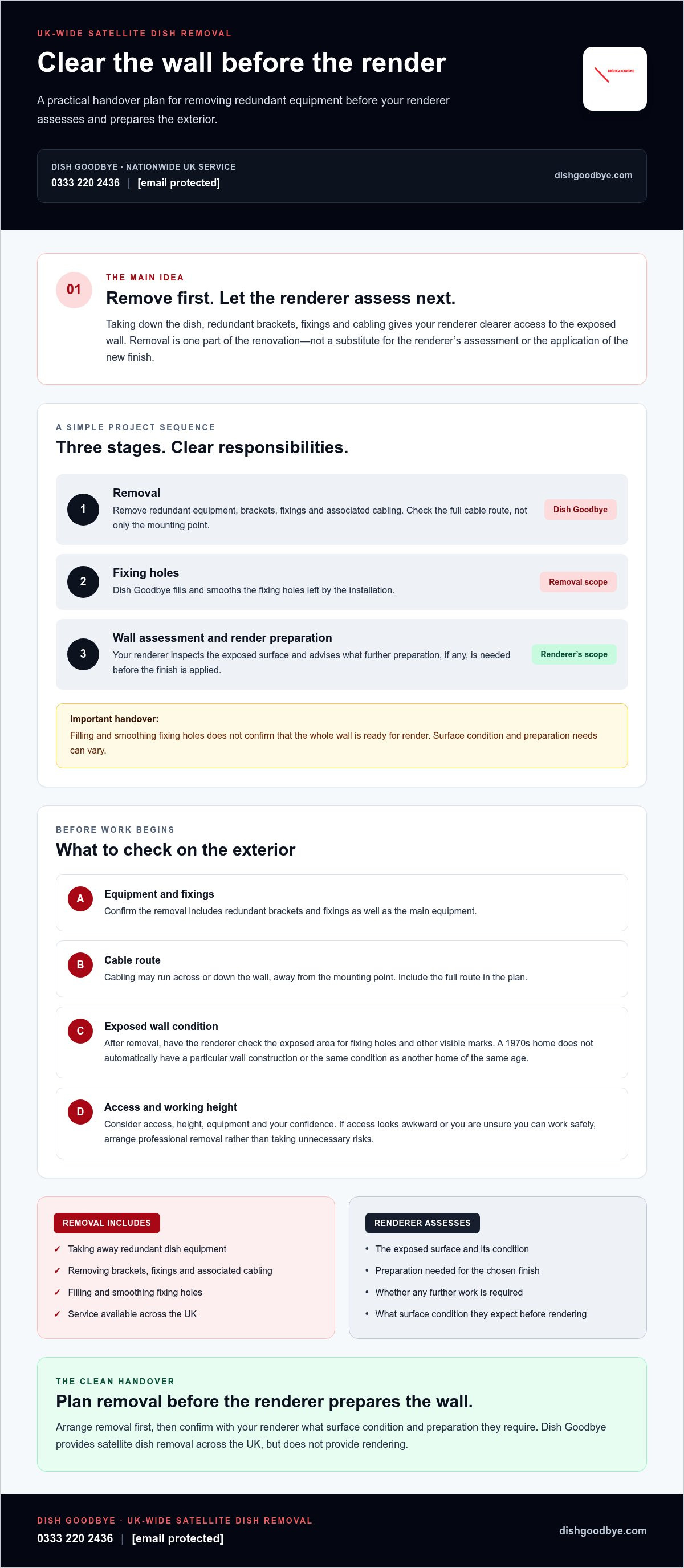
A clear order makes the exterior project easier to manage: identify equipment that’s no longer needed, arrange its removal, inspect the exposed wall, then coordinate preparation with your renderer. Don’t assume every dish or cable is redundant. Check whether any equipment is still in use before booking, and confirm that removal won’t affect a service you rely on.
What should you check before the removal appointment?
Look over the exterior from a safe position. Note visible dishes, brackets and cable runs you believe are no longer needed. You don’t need to inspect anything at height yourself. If you’re unsure where a cable leads or whether it’s still in use, check before arranging removal rather than guessing.
When requesting a service, describe access concerns and mention visible issues with the wall, such as cracks or loose-looking material. This helps clarify the work involved. You can also take a photograph of the area beforehand for your project records. Keep it as a before reference, not as an after image of completed work.
How should you coordinate with the renderer?
Ask your renderer when they need the wall cleared and whether they want to inspect it after removal but before preparation begins. The exposed area may reveal details that weren’t visible around the fittings. Let the renderer decide what further preparation is needed for the chosen finish, rather than assuming removal makes the wall ready for render.
A practical sequence is:
- Confirm which equipment and cables are redundant.
- Arrange removal and share access or wall-condition concerns.
- After removal, have the renderer assess the exposed surface.
- Agree on the preparation needed and coordinate when the wall should be ready for the next stage.
There’s no single schedule that fits every renovation. Coordinate directly with the removal service and renderer, and ask about their requirements rather than assuming a particular gap between tasks. For more context on what to expect, read this guide to professional dish removal.
Thoughtful planning makes removing satellite dish before rendering a straightforward part of the wider refresh. Dish Goodbye provides satellite dish removal across the UK. If redundant equipment is in the way, find out about satellite dish removal before your renderer assesses the wall.
A cleaner start to rendering: arrange nationwide satellite dish removal
Before your renderer plans the next stage, clear away equipment you no longer need and make the wall accessible for assessment. Dish Goodbye provides satellite dish removal across the UK, helping homeowners prepare for an exterior refresh. Once the redundant hardware is gone and the fixing holes have been filled and smoothed, your renderer can inspect the exposed surface and advise what further preparation is needed.
What does a professional removal service cover?
Dish Goodbye’s service covers the removal of redundant satellite dishes, brackets, fixings and associated cabling. It also includes filling and smoothing holes left by previous installations, so the old fixing points are addressed as part of the removal. Removed metal and electronic waste is sent to approved recycling centres.
This clears the old installation, but it isn’t the same as preparing or rendering the wall. Surface condition can vary, so ask your renderer to assess it and confirm any additional preparation needed for your chosen finish. Dish Goodbye doesn’t provide rendering services.
What is the next step for UK homeowners?
If a redundant dish is in the way of your renovation, discuss removal before the renderer begins assessing and preparing the exterior. Confirm which equipment is no longer needed, and share access or wall-condition concerns when arranging the work. Once removal is complete, coordinate with your renderer so they can decide what should happen next.
Planning removing satellite dish before rendering can make the handover between removal and rendering clearer. You’ll know what has been taken away and which professional to ask about the wall’s next steps. For UK-wide satellite dish removal, find out about removal across the UK.
Dish Goodbye handles removal and fills and smooths holes left by previous installations. Rendering isn’t included, so speak with your renderer about assessment and preparation. To discuss satellite dish removal, call 0333 220 2436 or email [email protected].
Make room for a smoother exterior refresh
Plan removing satellite dish before rendering as an early step in your renovation. Clearing redundant equipment lets your renderer assess the exposed wall and advise on any preparation still needed. It also reduces uncertainty about whether brackets, fixings and cable runs have been left behind.
Dish Goodbye provides satellite dish removal across the UK. The service includes removing dishes, brackets, fixings and redundant cabling, then filling and smoothing the fixing holes. Removed metal and electronic waste is processed through approved recycling centres. Rendering and render preparation are not provided, so your renderer remains the right person to assess the surface and complete the finish.
Ready to clear the wall before your exterior work begins? Find out about satellite dish removal across the UK and discuss the redundant equipment with Dish Goodbye. A clear plan lets you hand over the exposed wall to your renderer for assessment.
Call 0333 220 2436 or email [email protected].
Frequently Asked Questions
Should I remove a satellite dish before rendering my house?
Yes, if the dish is redundant, arrange its removal before the renderer assesses and prepares the wall. Brackets, fixings and cable runs can obstruct access, while removing them lets the renderer inspect the previously covered area. The exposed wall may need further preparation, so ask your renderer what they expect for the finish you’ve chosen. Dish removal and rendering are separate tasks, and one doesn’t guarantee the wall is ready for the other.
Can render be applied around an existing satellite dish?
A renderer can advise whether working around an existing dish is suitable for your project, but removing redundant equipment first gives them clearer access to the wall. Leaving it in place may mean parts of the surface remain covered or harder to assess. Don’t assume render can be applied neatly around the dish or that the equipment can be removed later without affecting the finished area. Discuss the options with your renderer before work begins.
What happens to the holes when a satellite dish is removed?
Dish Goodbye fills and smooths the fixing holes left by previous installations as part of its removal service. This addresses the holes, but it doesn’t promise an invisible repair or confirm the wall is ready for render. After removal, ask your renderer to inspect the exposed surface and explain whether the chosen finish needs further preparation. Wall condition can vary, so base the next steps on that assessment.
Can I remove a satellite dish myself before rendering?
You may decide to handle removal yourself if the equipment is safely accessible and you’re confident about the fixings and the work involved. Don’t improvise with a ladder or attempt work at height if access is awkward, your footing is unstable or you’re unsure how the dish is secured. In those situations, arranging professional removal is a practical alternative. A renderer can advise about wall preparation, but dish removal is a separate task.
How do I prepare an older house exterior for rendering?
Start by asking your renderer to assess the exterior and explain what preparation the chosen finish requires. Identify redundant wall-mounted equipment, confirm it’s no longer needed, and arrange removal before the renderer’s assessment if appropriate. Once the area is clear, the renderer can inspect the newly exposed surface and advise on further work. Don’t assume every older house has the same wall construction or needs the same preparation.
Does satellite dish removal include taking away the brackets and cables?
Dish Goodbye’s removal service includes redundant brackets, fixings and associated cabling, as well as the dish. The team also fills and smooths holes left by previous installations. Before arranging removal, confirm which equipment and cable runs are no longer needed. Dish Goodbye processes removed metal and electronic waste through approved recycling centres, helping you clear the installation as part of your exterior renovation plans.