
Could a few old aerial fixings really put a chimney at risk? Is an old aerial a structural risk to chimneys? It can become a stress point if its bracket loosens or damages the brickwork or mortar, but its presence alone doesn’t prove the chimney is unsafe. For Dish Goodbye’s nationwide aerial and dish removal service across the United Kingdom, visit dishgoodbye.com, call 0333 220 2436 or email [email protected].
Cracks, loose-looking fittings or bits of masonry on the ground are understandably concerning. Wind and weather can worsen existing problems around fixings, but an aerial may not be the cause of every visible defect. Don’t climb up or pull at the equipment to investigate.
This guide explains how aerial brackets can affect chimney masonry over time, what you can look for safely from the ground and when to seek professional attention. If an aerial is redundant or its fixings look concerning, professional removal of the aerial, brackets and cabling can clear unused equipment from the chimney area. Visit dishgoodbye.com, call 0333 220 2436 or email [email protected].
Key Takeaways
- An old aerial can be a concern, but it doesn’t automatically mean a chimney is structurally damaged. The risk depends on the fixings, masonry and exposure.
- Movement and weather can put stress on existing brackets and chimney masonry over time, particularly where the masonry is already vulnerable.
- Look for visible changes to the aerial, brackets, mortar or chimney alignment from the ground. Don’t touch the equipment or test its stability.
- If you’re wondering “is an old aerial a structural risk to chimneys”, visible damage needs careful assessment before its cause can be identified.
- If an aerial is redundant, removing the aerial, brackets, fixings and cabling clears unused equipment from the chimney area.
Is an Old Aerial a Structural Risk to a Chimney?
An old aerial can be a concern, but its presence doesn’t automatically mean the chimney is structurally damaged. The risk depends on where it’s fitted, the condition of its brackets and fixings, the masonry around them and how exposed the chimney is to the weather.
It helps to distinguish the equipment from the structure supporting it. The aerial mast and brackets are attached to the chimney stack, the masonry section rising above the roof. A chimney has several parts, including the flue and stack, as outlined in this guide to chimney structure. Damage near an aerial fixing may affect local brickwork or mortar, but it doesn’t by itself show that the entire stack is unstable.
When an aerial may add strain to chimney masonry
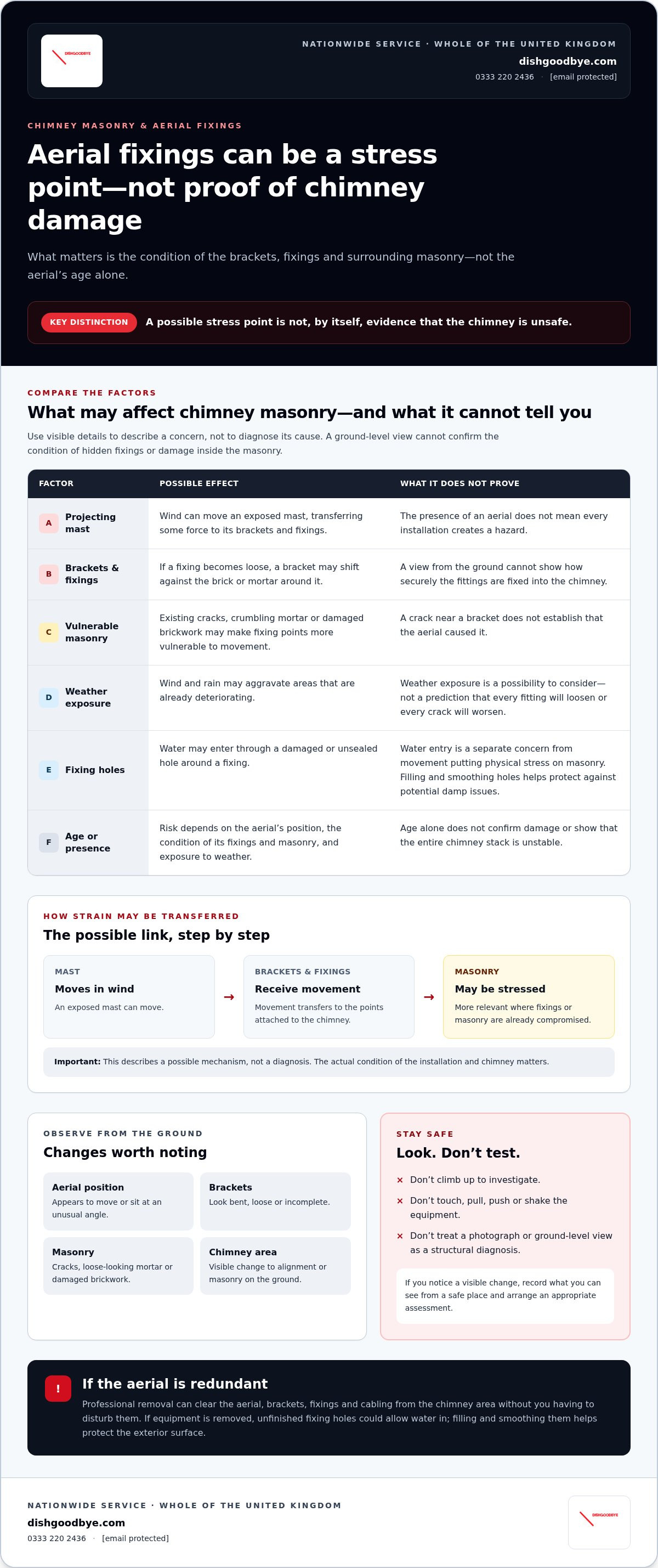
A projecting mast can move in the wind, transferring some force to its brackets and fixings. If the masonry around those points is already cracked, loose or deteriorating, movement could add stress to an area that’s vulnerable. Exposure to the weather makes the condition of both the fittings and the surrounding masonry worth considering.
That doesn’t mean every aerial creates a hazard. If the fixings appear secure and the masonry looks sound, the aerial’s presence alone isn’t evidence of structural damage. Don’t test the brackets by pulling or shaking them. A view from the ground can’t show how securely they’re fixed into the chimney.
Why an aerial does not prove a chimney is unsafe
Cracks, leaning or worn mortar can have more than one possible cause. Age, weathering and other changes to the chimney may be relevant, so don’t automatically blame a visible defect on an aerial. Even a photograph may miss important details, such as the condition of hidden fixings or the extent of damage within the masonry.
An aerial can be a potential stress point, but it isn’t proof of chimney damage. The question “is an old aerial a structural risk to chimneys” can’t be answered reliably from the aerial’s age alone. Its position, the condition of its fixings and the masonry, and its exposure to the weather all matter. If you notice a visible change, record what you can see from a safe place and arrange an appropriate assessment. Don’t try to diagnose the structure from the ground or a photograph.
How Old Aerial Brackets and Weather Exposure Can Affect a Chimney
A chimney-mounted aerial is held in place by brackets, with fixings entering the brickwork or mortar joints. A secure installation on sound masonry may cause no problem, but fixing points can change over time. The concern isn’t simply that an aerial is old, but whether its fittings are loose and the surrounding material is weakened.
What chimney-mounted aerial brackets do to the masonry
Brackets hold the mast against the chimney and transfer movement to the points where their fixings enter the masonry. If a fixing becomes loose, the bracket may shift against the brick or mortar around it. Existing cracks, crumbling mortar or damaged brickwork can make those points more vulnerable, so a fitting that appears displaced deserves attention. Don’t try to test it by pushing or pulling the aerial.
Water entering through a damaged or unsealed hole around a fixing is a separate concern from movement putting physical stress on masonry. If an aerial is removed, leaving holes unfinished could allow water into the exterior surface. Filling and smoothing the fixing holes helps protect the property from potential damp issues.
How weather can expose existing weaknesses
A mast projects into the open, so wind can make it move. Repeated movement may place stress on its brackets and fixings. Rain can reach cracks or gaps, and changing weather may aggravate areas that are already deteriorating. These are possibilities, not a prediction that every fitting will loosen or every crack will worsen.
Consider the possible links separately: an exposed mast moves, movement transfers to its brackets, and loose fixings may disturb vulnerable masonry. Water may also enter through a damaged or unsealed fixing hole. Whether either is happening depends on the actual condition of the installation and chimney, not just the aerial’s age.
Weather and aerial movement can contribute to a problem, but an assessment of the fittings and masonry is needed to help establish the cause. So, is an old aerial a structural risk to chimneys? It may contribute where fixings or masonry are compromised, but age alone doesn’t confirm damage. If you see a cracked mortar joint near a bracket, record it from a safe position rather than treating it as proof that the aerial caused the crack.
If the aerial is redundant, professional removal of the equipment and associated fixings clears the area without you having to disturb it. Learn about redundant aerial removal.
Aerial-Related Warning Signs Versus Other Chimney Defects
A view from the ground can help you notice changes, but it can’t confirm what’s happening inside the fixings or masonry. Look without climbing, touching the aerial or trying to test its stability. Use the table to describe what you see, not to diagnose the cause.
| What you can see | Possible concern | What it doesn’t prove |
|---|---|---|
| Aerial appears to move or sit at an unusual angle | The mast or its fixings may be loose or displaced. | Movement alone doesn’t confirm damage to the chimney. |
| Bracket looks bent, loose or incomplete | A fixing may need closer inspection. | A ground-level view can’t show how securely it enters the masonry. |
| Mortar looks cracked, missing or crumbly near a fixing | The masonry around that point may be deteriorating. | The aerial may not be the cause. |
| Cracks or gaps are visible in the stack | There may be a chimney defect that needs assessment. | Appearance alone can’t establish its cause or severity. |
| Chimney appears to lean or masonry looks displaced | This may indicate a wider concern with the stack. | It shouldn’t be attributed to the aerial without assessment. |
What can you check safely from the ground?
From a safe position, note whether the aerial looks visibly loose, whether parts appear to be missing and whether debris is on the ground. Look for cracks or gaps near brackets, but don’t assume the fixings caused them. If useful, take a photograph from the ground or use binoculars, provided you can do so safely. Don’t climb onto the roof, tug the mast or test brackets by hand.
Damp patches or staining around a fixing may indicate that water is getting through a gap or damaged hole. This is worth noting, but it doesn’t by itself prove structural damage. Record where the mark appears and whether it changes over time.
Which signs point to a wider chimney concern?
Visible leaning, displaced masonry, falling material or extensive mortar deterioration deserve attention even if there’s no aerial nearby. Treat these as chimney concerns in their own right. If you see falling debris or a noticeable change in the stack, keep clear of the area and arrange a prompt, closer assessment.
If you’re wondering is an old aerial a structural risk to chimneys, use visible clues to explain the concern, not to reach a diagnosis. A clear record of what you’ve observed can help an appropriate assessment consider both the aerial fixings and the chimney itself.
What to Do If an Old Aerial or Chimney Looks Unsafe
If an aerial or chimney looks loose or damaged, keep the next step simple and safe. Don’t climb onto the roof, loosen brackets or try to remove the equipment yourself. From a safe position, note what you can see, record any changes and arrange an appropriate closer assessment.
What should you do if fixings look loose?
Stay clear of the roof area and leave the aerial untouched. A mast that appears tilted, a bracket that looks displaced or fresh-looking damage around a fixing are useful details to report, but a view from the ground can’t show how securely the equipment is attached.
Take a photograph from a safe spot if you can do so without entering an area where debris might fall. Note when you first saw the concern and whether it seems to have changed. Then arrange an assessment of the aerial, fixings or masonry as appropriate. Don’t try to tighten a bracket: disturbing it could cause further movement, and working at height carries its own risks.
When should you act promptly?
Falling masonry, a sudden visible change or a chimney that appears to be shifting needs prompt attention. Keep people away from the immediate area, especially if debris has fallen or more material looks loose. Don’t stand beneath the chimney to take a closer look. Arrange professional attention rather than trying to decide from a limited view whether the structure is about to fail.
Keep your observations factual. For example, note that mortar appears to be missing near a bracket rather than concluding that the aerial caused the damage. This helps an appropriate assessment focus on what is visible without treating a possible cause as confirmed.
If the aerial is redundant, professional removal of it and its associated brackets, fixings and cabling clears unused equipment from the chimney area. This is a practical step separate from assessing the chimney’s condition. For professional aerial removal, explore professional aerial removal.
Removing a Redundant Aerial Can Help Clear the Chimney Area Safely
Dish Goodbye provides aerial and dish removal across the United Kingdom. Visit dishgoodbye.com, call 0333 220 2436 or email [email protected].
If an aerial is no longer needed, removing it clears unused equipment and associated fixings from the chimney area. It’s a practical step, but it isn’t a substitute for assessing visible chimney damage. Removal alone doesn’t establish whether the masonry is sound or provide structural repairs.
What complete aerial removal involves
Complete removal addresses more than the mast. It includes the aerial, brackets, fixings and redundant cabling, leaving fewer unused components attached to the exterior. Equipment mounted high on a property can be difficult and risky to reach, so professional removal is safer than climbing onto the roof or attempting DIY dismantling.
That distinction matters if you’re asking, is an old aerial a structural risk to chimneys? Removing redundant equipment clears the area, but it doesn’t confirm that the aerial caused a defect or resolve a separate chimney concern. If damage is visible, keep your observations separate and arrange an appropriate assessment.
Finishing the exterior after removal
After the fittings are removed, holes left by the fixings are filled and smoothed. This helps protect the exterior from potential damp issues by addressing gaps where water could enter. It’s a useful part of clearing redundant equipment, but it shouldn’t be mistaken for a repair to wider masonry damage.
Removed metal and electronic waste is processed through approved recycling centres. To learn more about clearing unused equipment, see TV Aerial Removal: The Essential Guide to Clearing Redundant Equipment.
If your aerial is redundant, arrange professional aerial removal to clear the mast, associated brackets, fixings and cabling. Visit dishgoodbye.com, call 0333 220 2436 or email [email protected].
Take the Safe Next Step for Your Chimney
For aerial and satellite dish removal across the United Kingdom, visit dishgoodbye.com, call 0333 220 2436 or email [email protected].
An old aerial can put stress on vulnerable fixings or masonry, but its presence alone doesn’t prove the chimney is damaged. If you’re asking, is an old aerial a structural risk to chimneys, remember that the answer depends on the condition of the fittings and masonry. Look for visible changes from the ground, keep clear of loose equipment or falling debris, and leave roof checks to a suitable professional.
If an aerial is no longer needed, professional removal clears the mast, brackets, fixings and redundant cabling. Fixing holes are filled and smoothed to help protect the exterior from damp issues. Arrange professional aerial removal and take a practical step towards a tidier, better-maintained exterior.
For help across the United Kingdom, visit dishgoodbye.com, call 0333 220 2436 or email [email protected]. Contact Dish Goodbye to arrange professional removal of a redundant aerial and its associated equipment.
Frequently Asked Questions
Can an old TV aerial damage a chimney?
It can contribute to damage if its brackets or fixings move against vulnerable masonry, but an old aerial doesn’t automatically mean the chimney is damaged. The condition of the fixing points, mortar and brickwork all matters. Cracks near a bracket are worth noticing, but they don’t prove the aerial caused them. Keep clear of the roof and arrange an appropriate assessment if you see deterioration or changes.
How can I tell if an aerial bracket is loose from the ground?
You may notice that the aerial looks tilted, a bracket appears displaced or a component seems to be missing. These are clues to report, not proof that a fixing is loose, because you can’t see from the ground how it enters the masonry. Don’t tug the mast or climb up to check. Note what you can see and take a photograph from a safe position if helpful.
Can wind make an old aerial a risk to a chimney?
Wind can move a projecting aerial, and that movement may put stress on its brackets and fixing points. If mortar or brickwork is already weakened, the area may be more vulnerable. This is a possible pathway to damage, not a certainty: many factors affect the condition of an installation. If the aerial appears to shift or the chimney has visible changes, keep away and arrange an appropriate assessment.
What should I do if I see cracks around an aerial fixing?
Don’t touch the aerial or try to tighten its bracket. From a safe place, note where the cracks are and whether you see missing mortar, damp marks or fallen material. A crack near a fixing may have several possible causes, so don’t assume the aerial is responsible. If the damage appears to be changing or masonry is falling, keep people away from the area and seek prompt professional attention.
Is it safe to remove an aerial from a chimney myself?
DIY removal isn’t a safe choice for equipment mounted high on a chimney. Don’t climb onto the roof, loosen fixings or attempt to dismantle the aerial, particularly if a bracket or masonry looks unstable. Professional removal addresses the aerial along with its brackets, fixings and redundant cabling. If you have concerns about the chimney itself, removal should not replace a separate assessment of its condition.
Can old aerial fixing holes let water into a chimney or wall?
Damaged or unsealed fixing holes may provide a route for water to enter the exterior masonry, potentially contributing to damp issues. Staining or dampness near a fixing can be a clue, but it doesn’t prove water is entering there or indicate structural damage on its own. After aerial removal, fixing holes are filled and smoothed to help protect the exterior. Keep a note of any visible changes.
Does removing an old aerial repair existing chimney damage?
No. Removing an aerial clears the equipment and associated fixings, but it doesn’t repair existing cracks, loose masonry or other chimney defects. Dish Goodbye’s removal service includes filling and smoothing the holes left by fixings, which helps protect the exterior from damp issues. If you’ve noticed damage, arrange an appropriate assessment of the chimney separately. The aerial’s presence alone can’t confirm what caused the defect.