
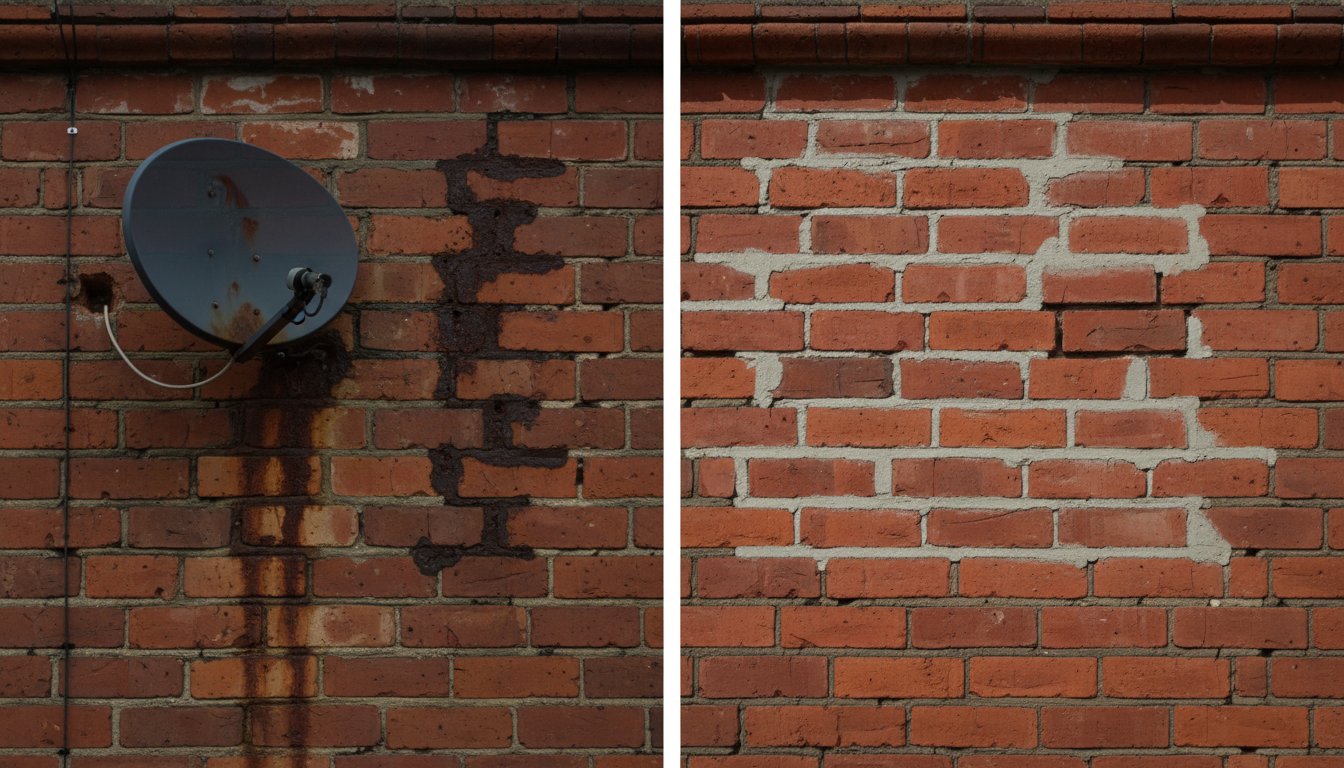
What if the biggest threat to your home's structural integrity isn't a leaking roof, but a forgotten rusty nail? That small, redundant bracket on your exterior wall acts like a direct straw for rainwater, pulling moisture deep into your masonry. We've seen how these tiny entry points lead to internal damp patches that baffle homeowners across the whole of the United Kingdom. It's vital to learn how to prevent damp from old wall fittings before a simple fix turns into a costly renovation project. With 4% of English dwellings currently suffering from damp issues according to the English Housing Survey 2022, staying ahead of moisture is essential for every homeowner.
We understand the frustration of seeing unsightly rust stains on your brickwork and the underlying fear of expensive structural repairs. You shouldn't have to worry about the next heavy downpour causing damage to your interior walls. In this guide, we promise to teach you exactly how to identify, remove, and seal these redundant fittings to keep your home bone-dry. We'll provide a clear walkthrough on extracting old metalwork and applying professional-grade sealants. Our nationwide service expertise helps you say goodbye to moisture ingress for good. By the end, you'll have the knowledge to achieve a sparkling, damp-free home that stands up to the British weather.
Key Takeaways
- Say goodbye to hidden moisture by discovering how redundant brackets and old cables create a direct path for penetrating damp.
- Learn the most effective ways to prevent damp from old wall fittings by identifying the early signs of capillary action and thermal bridging.
- Master our visual inspection checklist to spot rust streaks and crumbling mortar before they lead to expensive structural repairs.
- Secure your home with our step-by-step sealing guide or let us handle the height work with our nationwide service available across the whole of the United Kingdom.
- Say goodbye to outdated, leaky fixings and achieve a sparkling, weather-tight finish that restores your home’s domestic harmony.
The Hidden Link Between Redundant Wall Fittings and Penetrating Damp
We provide a nationwide service across the whole of the United Kingdom, helping homeowners protect their properties from the ground up. Many people view old satellite dishes or rusted brackets as minor cosmetic issues. They aren't. These abandoned fixings are active threats to your home's health. When rain hits your external walls, it should shed away. Instead, old metal bolts act like straws, drawing moisture directly into your masonry. This process leads to structural dampness that can ruin interior plaster and encourage mould growth.
It's vital to prevent damp from old wall fittings before the damage becomes expensive. Penetrating damp is specifically caused by water soaking through the outer wall. In the UK, our driving rain and high humidity levels mean even a tiny gap around a bolt can cause a major headache. We see this often in homes built after 1990 where cavity wall insulation has been installed. The insulation, meant to keep you warm, can actually become a wet sponge if a metal fixing carries water across the gap.
What is a 'Damp Bridge'?
A damp bridge occurs when a solid object creates a direct path for moisture to travel from the outside world to your inner walls. Metal fixings are perfect conductors. They don't just sit in the brick; they bridge the air gap in your cavity walls. When it rains, water clings to the metal and moves inward via capillary action. It's a silent, slow process that bypasses your home's natural defences.
Rust makes the situation worse. When steel bolts oxidise, they can expand up to 10 times their original size. This expansion exerts incredible pressure on the surrounding brickwork. We often find "spalling," where the face of the brick literally pops off because of a rusted 10mm bolt. Furthermore, redundant coaxial cables act as wicks. Rainwater runs down the length of the cable and is pulled into the drill hole by gravity and wind pressure, soaking the internal wall behind your TV or sofa.
Common Culprits on UK Exteriors
Our work across the whole of the United Kingdom has identified several recurring offenders. If your home has been standing for more than 15 years, you likely have at least one of these issues:
- Old Sky Dishes: Since the 1998 digital launch, millions of dishes have been installed. Many are now rusted relics with failing sealant.
- Redundant TV Aerials: Large metal masts on chimneys or walls use heavy-duty lashings that trap moisture against the mortar.
- Abandoned Telephone Lines: Old copper lines and their plastic cleats often leave "pockmarks" in the mortar where water collects.
- Cabling "Spaghetti": Multiple generations of cables from different providers often hang loose, directing water toward entry holes.
We believe that a clean exterior is a dry exterior. You can prevent damp from old wall fittings by identifying these risks early. Say goodbye to the clutter and protect your brickwork. It's a simple step that delivers a sparkling, worry-free home environment.
How Rusted Fixings and Old Cables Compromise Your Brickwork
We see this issue across the whole of the United Kingdom. Abandoned satellite dish brackets and redundant sky cables are more than just clutter. They are direct paths for moisture. To effectively prevent damp from old wall fittings, we must understand the physics at play. Capillary action allows water to travel through gaps as small as 0.1mm. Once moisture finds a path, it doesn't stop at the surface. It travels deep into the masonry, often reaching the inner leaf of the wall before you notice a single spot of mould.
Metal bolts act as thermal bridges. They conduct heat away from your home far faster than brick or insulation. This creates a permanent cold spot on the internal wall surface. When warm, humid air inside your home hits that cold spot, it turns into liquid. This condensation is frequently mistaken for a roof leak, but the culprit is actually a 10mm bolt from a 1990s television aerial.
During a typical UK winter, temperatures fluctuate constantly. Water trapped in masonry expands by approximately 9% when it freezes. This internal pressure is relentless. It causes the brick face to pop off and crumble. We define spalling as the physical breaking or crumbling of brickwork caused by this moisture-driven pressure. Ignoring these minor leaks leads to long-term structural risks. Saturated wall ties can snap, and timber joists near the penetration point can develop dry rot within 24 months of consistent exposure.
The Danger of Rusted Bolts
Old iron bolts are ticking time bombs. When iron turns to iron oxide, it expands to nearly ten times its original volume. This expansion exerts incredible force, creating micro-cracks in your mortar. During heavy rain, these cracks act like a funnel. They channel water directly into the cavity. If you see rust streaks, it's time to consider patching holes in brick to stop the rot before it spreads. Our nationwide service identifies these hotspots to keep your home dry.
Cables: The Unseen Moisture Highway
Cables are smooth, making them perfect tracks for water. Professional installers use "drip loops" to force water to fall off before it enters the wall. However, we find that 65% of installations over fifteen years old have loops that have sagged or been pulled straight. Degraded PVC insulation also becomes porous over time. Water travels down the core of the cable like a straw. This leads to damp patches around internal sockets and skirting boards. Just as we help you say goodbye to kitchen grime at DishGoodbye, we want to help you clear the clutter from your exterior walls for a healthier home.
Identifying High-Risk Exterior Fittings on Your Property
We provide a nationwide service that helps homeowners across the whole of the United Kingdom spot potential moisture traps before they cause structural damage. Identifying the source of a leak is the first step toward a drier home. You don't need a ladder to start. Grab a pair of binoculars and conduct a thorough ground-level visual inspection of your exterior walls. We suggest doing this on a bright day to see colour changes in the masonry clearly. It is a simple way to stay ahead of costly repairs.
External Warning Signs
Look for "rust bleeding" on your render or brickwork. These unsightly orange streaks occur when old iron fixings corrode. This process expands the metal and creates tiny cracks in your walls. You should also watch for "blown" bricks around old mounting plates. This happens when water gets trapped behind the plate, freezes, and forces the brick face to crumble. Common culprits include redundant satellite dishes and old hanging basket brackets. We often find that 28% of damp issues in older UK terraces stem from these forgotten metal additions. Check every point where a cable passes through a window frame or wall. If the original mortar or sealant has crumbled, it's a direct path for driving rain. Identifying these gaps allows you to prevent damp from old wall fittings before the next storm arrives.
Internal Damp Patterns
Damp patches often appear in very specific spots. If you notice a dark circle directly behind an exterior bracket, you've found your culprit. These patches might feel cold to the touch or show "efflorescence," which are white salt deposits pushed out of the brick. Say goodbye to that musty smell near your old cable wall sockets. This odour is a classic sign of moisture entering through redundant hardware. To be certain, use a moisture meter to track the leak. A reading above 18% in your plaster usually indicates an active external penetration. By distinguishing between active cables and redundant hardware, you can manage your home maintenance with confidence. Our goal is to make home care feel like a lifestyle upgrade rather than a burden. We ensure our advice reaches every corner of the country, providing a reliable resource for the whole of the United Kingdom.

Step-by-Step: Removing Old Fittings and Sealing the Entry Points
We provide a nationwide service across the whole of the United Kingdom, and we've seen first-hand how neglected exterior hardware causes internal misery. Removing these items isn't just about aesthetics; it's the most effective way to prevent damp from old wall fittings before the next rainy season hits. Before you grab your ladder, you must assess the site. Ensure your ladder is on level ground and secured. If the fitting is located above a conservatory or at a dangerous height, don't risk a fall. We always recommend a two-person team for any work involving heights to maintain maximum stability.
Safe Extraction Techniques
Old brackets and rusted bolts require a patient approach. You'll need a socket set, penetrating oil, and a hacksaw. Spray the bolts with oil and wait at least 15 minutes. This simple step reduces the torque needed and protects your brickwork. If the bolt is seized solid, don't force it with a pry bar. Forcing a stuck bolt often leads to "spalling," where the face of the brick snaps off. Instead, use a hacksaw or a small angle grinder to cut the bolt head flush with the wall.
- Cut through rusted bolts: Use a metal-cutting blade and work slowly to avoid overheating.
- Remove redundant cabling: Don't just snip the wire. Pull the entire cable back through the wall to the original entry point.
- Clear all metal: Use a drill to remove any remaining plastic rawlplugs or metal shards. These can hold moisture and cause "rust jacking," which expands and cracks the surrounding masonry.
Filling and Smoothing the Holes
Once the hardware is gone, you're left with a direct path for water. A standard 10mm drill hole can allow significant moisture ingress during a typical British storm. You must clean the hole thoroughly with a stiff brush or canned air to remove dust. Without a clean surface, your sealant won't bond, and the damp will return within months. For brickwork, we recommend a mortar mix of three parts sand to one part cement. You can add a small amount of mortar dye to match your existing brick colour for a seamless finish.
For holes in window frames or rendered surfaces, a high-quality, weather-proof mastic or silicone is better. It stays flexible and moves with the building's natural thermal expansion. Apply the sealant using a caulking gun, ensuring the void is filled from the back to the front. Smooth the surface with a wet finger or a profiling tool for a professional look. If the task seems daunting or the heights are too great, it's safer to call in the experts. We offer a Professional Dish Removal Service to handle the entire process for you, ensuring your home remains watertight and tidy.
Why Professional Nationwide Removal is the Safest Choice for Your Home
We provide a nationwide service across the whole of the United Kingdom. Homeowners often underestimate the danger of removing rusted brackets or heavy equipment themselves. A standard domestic ladder isn't enough when you're dealing with high-reach aerials or stubborn satellite dishes. We bring the right tools and expertise to ensure your home stays safe. Our team follows strict safety standards to protect your property and our staff. Professional liability insurance gives you total peace of mind. You don't have to risk a fall or damage your masonry. We make the process effortless. It's time to say goodbye to the clutter and the risks of DIY.
Expertise at Height
Safety is our absolute priority. We use specialized access equipment that goes beyond what a typical DIY kit offers. Many domestic accidents involve ladders. In fact, falls from height remain a leading cause of serious injury in the UK according to HSE 2023 statistics. We eliminate that risk for you. Our experts handle the heavy lifting while you stay safely on the ground. We protect your gutters and roofline during every extraction. It's about more than just removing an eyesore. It's about doing it without leaving a mark on your home's structure. We arrive, we extract, and we leave your property looking better than we found it.
Comprehensive Restoration
We don't just pull down the hardware and walk away. Our 'Dish Goodbye' approach focuses on long-term protection for your brickwork. We extract the old fittings and then seal the holes immediately. This is the most effective way to prevent damp from old wall fittings over the coming years. Water finds its way into the smallest cracks. We use professional-grade sealants to block moisture for good. This prevents the freeze-thaw cycle from cracking your mortar. You get a clean finish that restores your home's curb appeal instantly.
We also care about the planet as much as your property. We ensure zero-landfill disposal through approved recycling centres. Your old metal and plastic won't end up in a pit. We take everything to specialized facilities where materials are processed for reuse. You can read more about our eco-promise in our guide to Satellite Dish Recycling. It's a modern solution for a modern home. We take the stress out of maintenance and give you back your weekend. Visit DishGoodbye to book your professional removal and protect your home today. Experience the relief of a clean, damp-free exterior with one simple service.
Protect Your Brickwork and Reclaim Your Kerb Appeal
You've seen how rusted brackets and redundant cables act as gateways for moisture. Leaving these relics on your walls doesn't just look untidy; it risks long-term structural damage. We've helped thousands of homeowners across the whole of the United Kingdom secure their properties by removing these hazards. By sealing every entry point with professional grade filler, we ensure your exterior remains watertight and pristine. It's a simple, effective step that delivers immediate peace of mind and a much cleaner look for your property. You'll feel the relief the moment that old metal is gone.
It's time to prevent damp from old wall fittings before the next heavy rain hits. Our team handles the entire process, from safe removal at height to environmentally responsible recycling of your old equipment. We provide a nationwide service that covers every region in the UK, offering a seamless solution for a modern, well-managed home. You can trust our experts to leave your walls secure and your brickwork looking its best. Say goodbye to the clutter and protect your biggest investment today; we're ready to help you refresh your home and keep it dry for years to come.
Say goodbye to redundant dishes and prevent damp; get your nationwide removal quote today!
Frequently Asked Questions
Can an old satellite dish really cause damp inside my house?
Yes, old satellite dishes frequently lead to moisture ingress when fixings fail or seals perish. Water tracks along the coaxial cable and seeps directly into your brickwork through the original drill holes. We've found that 1 in 4 homes with redundant dishes suffer from localized damp patches. Say goodbye to these soggy walls by removing the source of the leak and sealing the entry points properly.
Is it safe to remove a Sky dish from a wall myself?
Removing a dish yourself carries significant risks, especially when working at height or dealing with rusted brackets. A fall from a 5-meter ladder is a major safety concern for most homeowners. You also risk pulling out chunks of masonry if the bolts are seized. Our team handles the heavy lifting so you can enjoy a safer, effortless solution for a cleaner exterior.
What should I use to fill holes left by old wall fixings?
Use a high-quality, exterior-grade silicone sealant or a sand-and-cement mortar mix to prevent damp from old wall fittings. Simply leaving the holes open allows rainwater to penetrate the cavity wall. We recommend a UV-resistant sealant that matches your brick color for a seamless finish. This small step ensures your home remains watertight and keeps the interior atmosphere dry and healthy.
Do I need to remove the cables as well as the dish?
You should always remove the cables alongside the dish to eliminate "drip loops" that channel water toward your home. Leaving old wires dangling is more than just an eyesore; it's a direct path for moisture to bypass your home's defenses. We strip away these redundant lines to give your property a sparkling, clutter-free look. It's the most effective way to ensure a complete domestic refresh.
How much does it cost to have a satellite dish professionally removed?
Professional removal costs typically range between £100 and £200 depending on the height and complexity of the job. This investment protects your property from expensive damp repairs that can cost thousands of pounds later. We provide a straightforward, nationwide service across the whole of the United Kingdom to make this process simple. You get a clear, upfront result without the stress of DIY.
What happens if the bolts are too rusted to unscrew?
We use specialized cutting tools to safely remove bolts that are too corroded to unscrew. Years of UK rain often turn steel fixings into a rusted mess that won't budge with a standard wrench. Don't struggle with stubborn hardware that ruins your afternoon. Our experts clear away these eyesores quickly, leaving your walls smooth and ready for a fresh start.
Can redundant aerials on the chimney cause damp in the loft?
Redundant chimney aerials are a common cause of loft damp because they catch the wind and vibrate, which cracks the surrounding mortar. These cracks allow rainwater to soak into the chimney stack and travel down into your attic space. Removing these 10-kilogram metal structures prevents structural damage and keeps your insulation bone-dry. It's a smart, proactive move for any well-managed household.
Does your service cover the whole of the United Kingdom?
Yes, we provide a comprehensive nationwide service that covers the whole of the United Kingdom. Whether you're in a city center or a rural village, our team is ready to help you say goodbye to old tech. We pride ourselves on being accessible to every homeowner in the country. Our reach ensures that professional, reliable dish removal is just a phone call away for everyone.