
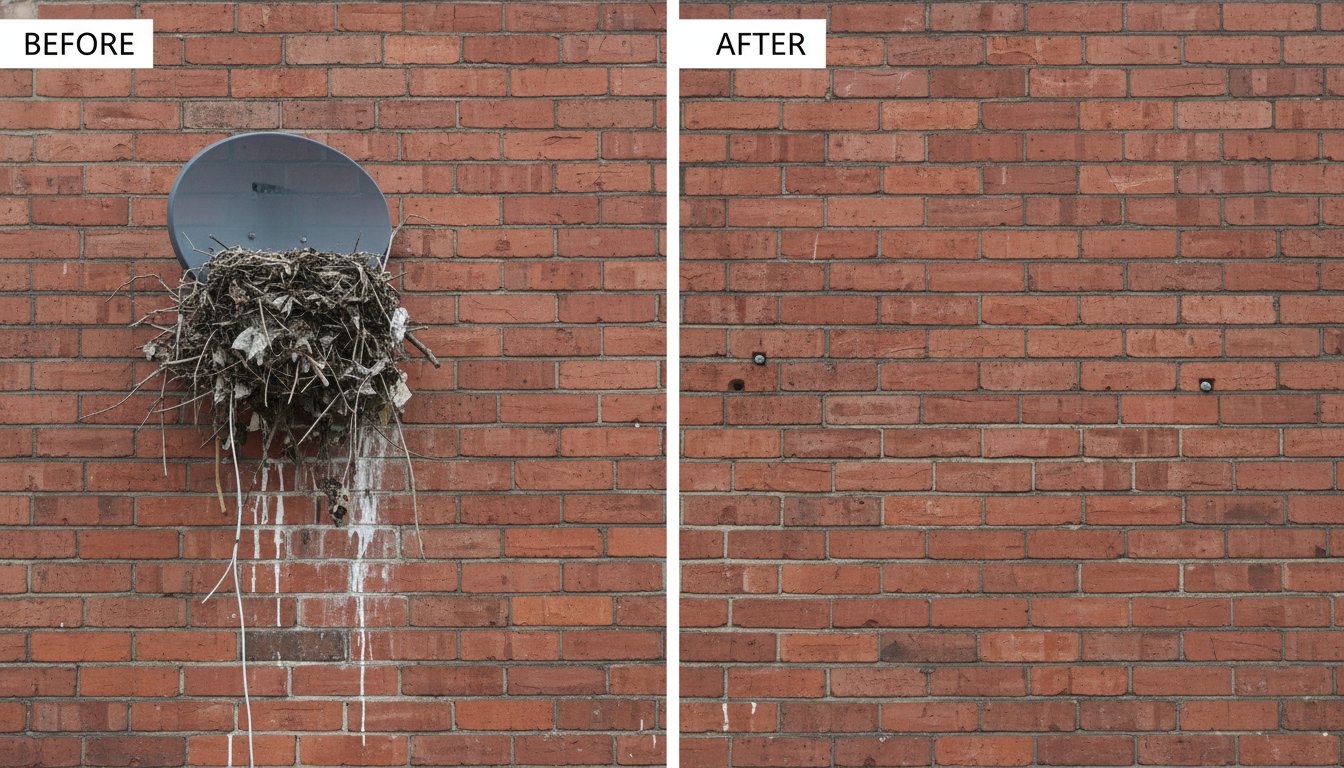
Last Tuesday, a homeowner in Manchester woke up at 5:15 AM to a persistent scratching sound vibrating through their bedroom wall. They soon realized that birds nesting in old satellite dish equipment had turned a piece of redundant tech into a noisy, unhygienic nursery. It's a frustrating reality for many households, especially since bird droppings can damage stone surfaces and parasites like bird mites often migrate indoors. We understand the stress of dealing with unsightly guano on your patio or the worry of structural damp caused by debris blocking your gutters.
We agree that your house looks better and stays healthier without rusty, bird-infested equipment clinging to the masonry. Our team is here to help you say goodbye to these eyesores effortlessly. This guide explains why birds choose your dish, the specific property risks they create, and how we provide a nationwide service to remove them safely. We operate across the whole of the United Kingdom to ensure you stay on the right side of UK wildlife laws. You'll gain a clear understanding of when you can legally remove redundant tech to achieve a clean, bird-free home today.
Key Takeaways
- Understand why the high elevation and heat-absorbing metal of your dish create a perfect "high-rise" haven for local wildlife.
- Discover how nesting material acts as a "damp trap," holding moisture against your brickwork and causing long-term structural damage to your home.
- Navigate the Wildlife and Countryside Act 1981 to ensure you handle birds nesting in old satellite dish setups legally and ethically.
- Learn why we provide a nationwide service across the whole of the United Kingdom to help you safely remove redundant tech and reclaim your walls.
- Say goodbye to the mess and the risks of working at height by choosing a professional solution that prioritises your property’s hygiene and safety.
Why Birds Choose Your Old Satellite Dish for Their Home
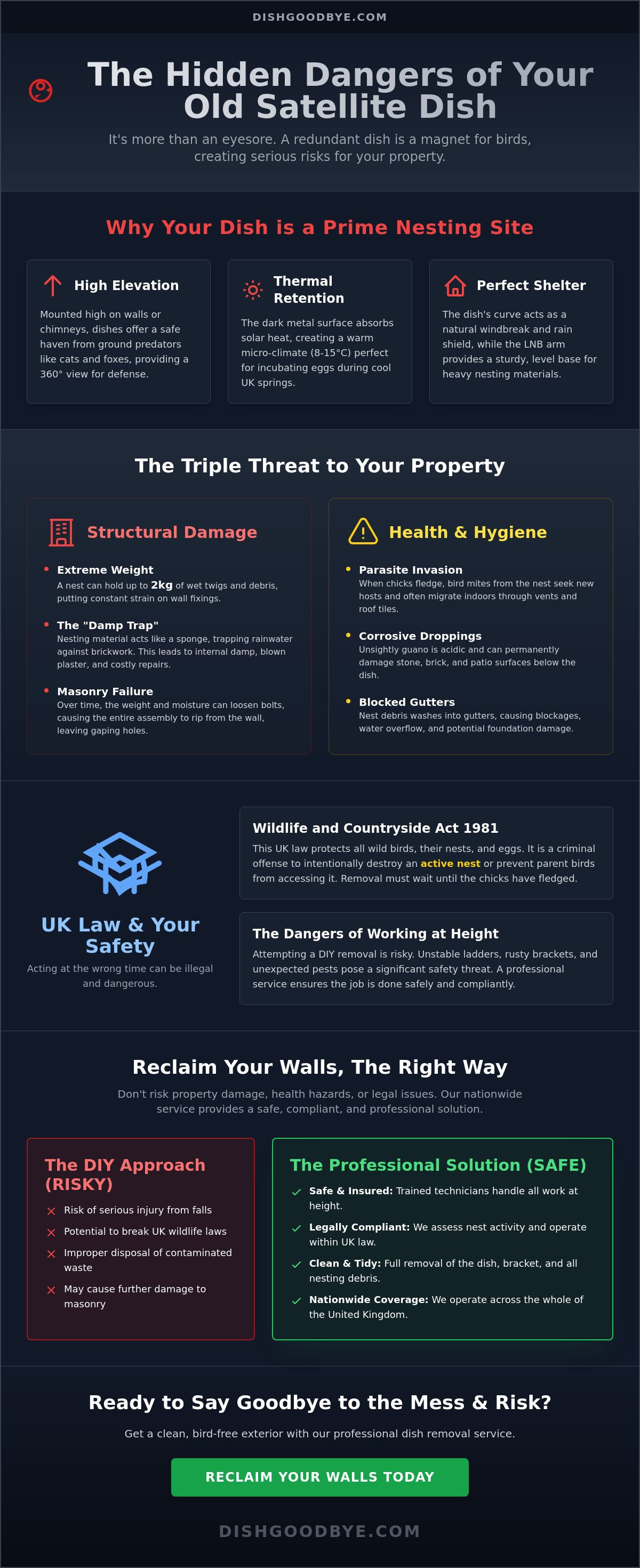
We provide a nationwide service across the whole of the United Kingdom, helping homeowners reclaim their eaves from unwanted guests. Seeing birds nesting in old satellite dish setups is a common sight from Cornwall to Caithness. These metal structures aren't just eyesores; they are biological magnets. Birds seek out elevation to avoid ground predators like domestic cats or foxes. A dish mounted high on a chimney stack provides a 360-degree view of the garden, making it an ideal defensive position for a growing family.
Thermal retention plays a huge role in why these sites are selected. In the UK, spring temperatures often fluctuate between 8°C and 15°C. Dark metal dishes absorb solar radiation throughout the day. This creates a warm micro-climate that helps incubate eggs more efficiently than a standard twig nest in a tree. Redundant dishes are particularly attractive to local wildlife. Without the slight vibration or heat generated by an active LNB, these silent structures offer a stable, undisturbed environment. Common UK species like starlings, house sparrows, and the occasional pied wagtail are the most frequent squatters we encounter when addressing the problem of birds nesting in old satellite dish equipment.
You must be aware of the Wildlife and Countryside Act 1981 before you take any action. This law protects active nests, meaning you cannot move or destroy them until the chicks have fledged. We always recommend a professional assessment to ensure your home remains compliant while you plan your cleanup. It's about finding a balance between domestic harmony and local wildlife protection.
The Anatomy of a Perfect Nesting Site
The design of a satellite dish is accidentally perfect for avian architecture. The LNB arm acts as a sturdy strut, providing a level base for heavy nesting materials. Behind the curve of the dish, birds find a natural windbreak that shields them from the harsh UK rain and gale-force winds. Most dishes are located near the roofline, giving birds easy access to loft insulation or dry moss for lining their homes. It's an ergonomic solution for a bird, but a tough problem for your masonry.
Signs You Have an Avian Resident
Identifying an occupied dish is simple if you know what to look for. Watch for these specific indicators:
- Debris: Look for twigs, dried grass, or bits of plastic protruding from the gap between the dish and the wall.
- Noise: Listen for scratching or high-pitched chirping at sunrise, usually around 5:00 AM during the spring months.
- Droppings: Check the ground directly below the mounting bracket. Concentrated white patches on the patio or driveway are a clear sign of a busy nest.
Say goodbye to the mess and the noise. We make the transition to a clean, bird-free exterior effortless and satisfying. By understanding why these creatures choose your home, you can take the first step toward a sparkling, maintenance-free roofline.
The Hidden Risks of Nesting Birds to Your UK Property
Birds nesting in old satellite dish setups isn't just a nature show on your roof. It's a genuine structural hazard. We provide nationwide service across the whole of the United Kingdom, and we've seen how these redundant fixtures become magnets for trouble. Old brackets weren't designed to support 2kg of wet twigs, mud, and debris. Over time, this constant weight pulls at the fixings. It loosens the bolts. Eventually, a heavy gust of British wind can rip the entire assembly from your wall, leaving behind gaping holes in your masonry.
The "Damp Trap" is another silent killer for UK homes. Nesting materials act like a sponge. They trap rainwater against your home's exterior. In our climate, where humidity levels often exceed 80%, this creates a permanent moisture reservoir. This water eventually seeps into the brickwork. It causes internal damp patches and blown plaster that are expensive to repair. You can find excellent RSPB advice on nesting birds to understand why they choose these sheltered spots, but for a homeowner, the result is often a structural headache.
Health and hygiene risks are equally pressing. Bird mites are tiny parasites that live in nests. When the chicks fledge, these mites look for new hosts. They often crawl through window vents or under roof tiles to enter your bedrooms. Debris also poses a threat to your drainage. A single nest can dump liters of moss and twigs into your gutters during a downpour. This leads to blockages, overflowing water, and foundation damage. Say goodbye to these messy complications by opting for a clean, professional removal.
Brickwork Erosion and Acidic Guano
Bird droppings are more than just an eyesore. They contain high levels of uric acid that eat through building materials. Bird droppings typically have a pH level ranging from 3.5 to 4.5, which causes a chemical reaction that dissolves limestone and weakens mortar joints. This leads to permanent staining and "spalling," where the brick surface begins to flake off. Concentrated guano buildup around an old dish creates a corrosive environment that compromises your home's weatherproofing.
Cable Damage and Secondary Issues
Birds often peck at the soft outer casing of coaxial cables. They use the plastic strips for nesting material or simply peck out of curiosity. Once the protective layer is gone, water tracks down the cable. It flows directly into your interior walls through the original entry hole. This also attracts larger scavengers like magpies or squirrels to your roofline. Protect your home and enjoy an effortless removal service that clears the clutter before the damage starts.
Dealing with an Active Nest: UK Law and Timing
We understand the frustration of waking up to scratching sounds and chirping above your window. However, the Wildlife and Countryside Act 1981 is clear. Every homeowner in the UK must follow these strict regulations. You cannot move, block, or destroy a nest while birds are building it or using it. This legal protection applies to every property across the whole of the United Kingdom. Breaking this law leads to unlimited fines or even a six-month prison sentence per offence. We provide a nationwide service to help you plan the perfect exit strategy for your unwanted guests without breaking the law.
If the noise is becoming unbearable, you must still wait. There are no "nuisance" exemptions for birds nesting in old satellite dish setups under current UK legislation. While it's tempting to take matters into your own hands, the legal risks far outweigh the temporary relief. We suggest using white noise machines or earplugs as a short-term fix. Most chicks fledge within 2 to 3 weeks. Once they leave, the path is clear for a permanent solution.
Understanding the Legal Removal Window
The official nesting season usually runs from March 1st to August 31st. We recommend scheduling your removal between September and February. This is our "Safe Zone" for clearing birds nesting in old satellite dish equipment. Before we start any work, we must verify the nest is truly abandoned. Watch the dish for a solid 30-minute window during daylight hours. If there's no movement and no chirping, the birds have likely fledged. Taking action during these colder months protects you from legal trouble and ensures local wildlife remains undisturbed. Our team operates across the entire United Kingdom, ensuring you stay compliant with local environmental standards.
Proactive vs. Reactive Maintenance
Birds are creatures of habit. Pigeons and starlings often return to the same spot year after year. They see your old dish as a sturdy, elevated penthouse. Waiting for the chicks to leave is the best time to plan your proactive maintenance. Once the nest is empty, we can step in and remove the hardware entirely. This breaks the nesting cycle for good. Removing the metal platform means there's nothing for them to build on next spring.
It's the ultimate way to say goodbye to the mess, the noise, and the lice. Our nationwide service covers every corner of the country, making it easy to reclaim your roofline. We transform a cluttered exterior into a clean, bird-free zone with minimal effort on your part. Visit DishGoodbye to see how we simplify your home maintenance routine and help you move on from outdated technology.
How to Safely Reclaim Your Walls: The Removal Process
We provide a nationwide service across the whole of the United Kingdom to help you say goodbye to rusted metal and unsightly cables. Standard DIY tools often fall short when you're working at height. A basic spanner might work in the garden, but it's useless against a seized, rusted bolt 5 metres up a ladder. We use professional impact drivers and industrial-grade lubricants to ensure the dish comes down without cracking your masonry.
The process starts with a clear plan. If you've discovered birds nesting in old satellite dish hardware, we ensure the area is clear and safe before we begin. We follow a strict four-step dismantling routine to protect your property:
- Isolation: We trace the coaxial cable and ensure it's disconnected from all internal power sources.
- Dismantling: We remove the dish from the bracket first to reduce weight and wind resistance.
- Bracket Removal: We extract the heavy-duty coach bolts that anchor the system to your brickwork.
- Cable Extraction: We pull the "umbilical cord" through the wall, ensuring no internal plaster is blown during the process.
Restoring the facade is the most vital step in our nationwide service. Leaving a 10mm hole in your mortar is an open invitation for moisture. Over a single UK winter, freeze-thaw cycles can cause significant damage. We use high-performance masonry filler to seal every entry point, preventing damp issues that could cost £2,500 or more in future repairs. It's about achieving a sparkling, seamless finish that makes it look like the dish was never there.
The Challenges of Working at Height
Safety is our absolute priority. According to the Health and Safety Executive (HSE) 2023 data, falls from height remain a leading cause of injury in the UK. Most accidents happen when people over-reach while trying to balance a 5kg metal dish. We use professional-grade stabilizers and safety harnesses on every job. This allows us to manage the weight of the equipment safely while keeping both hands free for the task. We don't take risks with your safety or ours.
Proper Disposal and Recycling
Don't just throw your old tech in the general waste bin. Electronic waste contains metals that shouldn't end up in a landfill. We ensure every component is handled under WEEE (Waste Electrical and Electronic Equipment) regulations. You can find your nearest compliant centre by checking our guide on satellite dish recycling. It's a convenient way to stay environmentally friendly while clearing your clutter.
Say Goodbye to the Mess with Nationwide Professional Removal
Dealing with birds nesting in old satellite dish equipment is a headache you don't need. It is messy, noisy, and can eventually lead to structural damage. We make the transition to a cleaner, bird-free home completely effortless. Our team handles the heavy lifting and the high-altitude work so you can reclaim your roofline without the stress of a risky DIY attempt. We focus on delivering a sparkling result that leaves your property looking its best.
A Nationwide Solution for Every Home
We provide a nationwide service across the whole of the United Kingdom. Whether you live in a remote coastal cottage or a busy city terrace, we reach every corner of the country. Our coverage is total, ensuring that professional help is never out of reach. We bring all the necessary equipment to handle heights and awkward angles safely. Every job we undertake is backed by comprehensive public liability insurance up to £5 million. This gives you total peace of mind while we work on your property. You won't have to worry about the legal complexities of disturbing nests or the physical dangers of ladders. You can learn more about how we work by visiting our professional dish removal service page.
The Dish Goodbye Difference
We don't just pull the dish off the wall and leave. That is the old, inefficient way of doing things. The DishGoodbye way involves a complete and methodical extraction of the dish, the heavy steel brackets, and every meter of redundant cabling. We understand that an old dish is often a magnet for debris. Our team clears away the remnants of nests and guano, restoring the hygiene of your exterior walls. We pay close attention to the integrity of your masonry. When we remove the old fixings, we fill and smooth the holes with weather-resistant sealant to prevent future damp issues. This small step saves you from expensive repair bills down the road.
Our commitment to the environment is just as strong as our commitment to your home. We operate under a strict zero-landfill promise. Every bracket, dish, and cable we remove is sent to specialized e-waste recycling centers. We ensure that 100% of the metal and plastic is repurposed according to UK WEEE regulations. This sustainable approach means you're cleaning up your home and the planet at the same time. We've simplified the entire process to save you time and energy. It's the modern, savvy way to manage your property maintenance. Ready to reclaim your home? Get a quote for nationwide removal today and experience a cleaner, quieter home tomorrow.
- Full Extraction: We remove all brackets, bolts, and trailing wires.
- Property Protection: We seal all fixing holes to prevent water ingress and damp.
- Eco-Friendly: 100% of removed materials are recycled, never sent to landfill.
- Total Coverage: Our professional teams operate across the whole of the United Kingdom.
Take Back Your Walls and Protect Your Property
Your home deserves to be free from clutter and the messy risks associated with unwanted wildlife. Dealing with birds nesting in old satellite dish equipment doesn't have to be a stressful chore. We've seen how these rusty eyesores cause structural damp and attract pests to properties across the UK. Our team ensures every removal strictly follows the Wildlife and Countryside Act 1981, protecting local biodiversity while cleaning up your exterior. We provide 100% WEEE-compliant recycling for all metal and electronic waste. We also use professional-grade fillers for every drill hole to prevent expensive moisture damage. We offer a nationwide service across the whole of the United Kingdom, ensuring help is available whether you're in a city flat or a rural cottage. It's time to stop worrying about falling debris or blocked gutters. Say goodbye to the manual cleaning and the eyesores of the past. We make the transition to a cleaner home effortless and satisfying. Reclaim your home with our nationwide dish removal service and enjoy the peace of mind that comes with a professionally maintained exterior. You'll love the look of your clean, bird-free walls.
Frequently Asked Questions
Is it illegal to remove a satellite dish with birds nesting in it?
Yes, it's illegal to disturb or destroy an active nest under the Wildlife and Countryside Act 1981. You must wait until the chicks have fledged and the nest is completely abandoned before we can remove the hardware. Violating this law can result in unlimited fines or up to 6 months in prison. We provide a nationwide service and always prioritize legal, ethical removals to keep your home compliant with UK regulations.
When is the best time of year to remove an old satellite dish in the UK?
The best time to schedule a removal is between September and February. This period falls outside the main UK bird nesting season, which typically runs from March 1st to August 31st. We operate across the whole of the United Kingdom during these months to ensure your property stays tidy without risking any bird habitats. It's the most efficient way to say goodbye to unwanted clutter while respecting local wildlife cycles.
Can bird nests in satellite dishes cause damp inside my house?
Nests can definitely cause damp by trapping moisture against your external walls or blocking your guttering system. A single nest often contains 400g of organic material like mud and grass that stays wet for days after it rains. This prevents your brickwork from drying properly and can lead to internal patches of mould. We offer a nationwide service to clear these hazards, helping you maintain a dry and healthy home environment effortlessly.
What should I do if a bird nest is blocking my satellite signal?
You must leave the nest alone until the birds have naturally finished their breeding cycle. If birds nesting in old satellite dish equipment are ruining your picture quality, the law still protects the nest from being moved or blocked. We help customers throughout the whole of the United Kingdom switch to modern streaming services so they can enjoy 4K entertainment without relying on bird-prone outdoor equipment. It's a simple, modern upgrade for your living room.
How do I know if a bird nest is abandoned and safe to remove?
A nest is generally considered abandoned if there's no activity for 30 consecutive days during the late summer or autumn. Look for a total lack of parent birds visiting the dish and an absence of noise from hungry chicks. We provide a nationwide service where our experts confirm the nest is empty before starting any work. This careful approach ensures you say goodbye to the mess without harming any local sparrow or starling populations.
Do birds return to the same satellite dish every year?
Many common UK species like starlings are extremely loyal to their nesting sites and will return to the same dish for 5 years or more. They remember successful locations and will start rebuilding as early as February. We help homeowners across the whole of the United Kingdom break this cycle by removing the dish entirely. Getting rid of the hardware is the only way to stop the annual return of noise and bird droppings.
Can I just put spikes on my old dish instead of removing it?
You can install spikes, but total removal is a much more effective and permanent solution for your home. Spikes often collect leaves and twigs, which can actually create a more stable foundation for a new nest over time. We recommend our nationwide service for full removal because it eliminates the problem at the source. Say goodbye to the eyesore on your roof and enjoy a clean, maintenance-free exterior without any half-measures.
How much does it cost to have a satellite dish professionally removed?
Professional removal costs in the UK generally range from £40 to £120 depending on the height of the building. According to 2024 industry price data, a standard removal on a two-storey house usually sits in the middle of that range. We offer a nationwide service with clear, upfront pricing across the whole of the United Kingdom. This small investment saves you from potential roof repairs and keeps your property looking its absolute best.