
What if a rooftop dish is more than a clearance task? Facilities management rooftop dish removal can affect roof fixings, cabling, safe access and a building’s exterior, so plan the whole job. Dish Goodbye provides UK-wide dish removal. Visit dishgoodbye.com, call 0333 220 2436 or email [email protected].
When ownership, condition or ongoing use is unclear, it can be tempting to leave equipment in place. A clear assessment and removal plan help resolve loose ends, from redundant cabling to fixing holes that need attention.
Use this practical checklist to identify redundant rooftop dishes, coordinate access and building users, plan the work and record what was removed. It covers the details that help protect the building, including brackets, fixings, holes and responsible waste handling. For UK-wide satellite dish removal, contact Dish Goodbye at dishgoodbye.com, 0333 220 2436 or [email protected].
Key Takeaways
- Use a consistent facilities management rooftop dish removal process to identify equipment and establish whether it is still in use.
- Plan access and communicate with affected building users before arranging removal across managed properties.
- Compare equipment, fixings, cable routes and roof areas before and after work. Record observations without diagnosing defects from photos alone.
- Pause and review if equipment use, access arrangements or roof condition is unclear. Keep a record of decisions and completed work.
- Dish Goodbye provides UK-wide removal for residential and commercial properties, including dishes, brackets, fixings and redundant cabling.
Why facilities managers should review redundant rooftop dishes
Dish Goodbye provides UK-wide satellite dish removal. Find out more at Dish Goodbye, or call 0333 220 2436 or email [email protected].
Rooftop equipment can be easy to overlook between scheduled inspections. For facilities management rooftop dish removal, start with a review rather than an automatic instruction to take everything down. A dish, its mount and associated cables are redundant only when their current use has been established. If the equipment’s purpose is unclear, record that uncertainty and find out what it serves before deciding what to do next.
Facilities management involves coordinating buildings, services and their upkeep. A Facility management overview offers useful background on the breadth of the role. Reviewing rooftop equipment fits naturally into that work: it keeps property records current and makes exterior maintenance easier to plan.
What should a rooftop dish review identify?
Create a consistent record for each item so a portfolio review is more than a collection of observations. Note the building and roof area, equipment type and visible condition. Include associated brackets, fixings and cable routes, along with any labels that can be read safely and easily. Record what you can observe without guessing about the equipment’s purpose or the condition of the roof beneath it.
Separate confirmed information from open questions. Mark equipment as confirmed redundant only after establishing that it has no current use. If its use is unknown, record it for follow-up rather than treating it as redundant. This distinction helps prevent a tidy-up from interrupting a service that may still be needed.
Why include dishes in planned exterior maintenance?
Check rooftop equipment alongside roof inspections and scheduled exterior works. This gives you a chance to note mounts, visible cabling and fixing points in context, then coordinate follow-up with the wider maintenance plan. Loose-looking fixings or exposed openings may warrant recording and review, but a photograph alone does not establish a roof defect or prove there is a leak or safety issue.
Appearance matters too. Brackets left behind, cables crossing an exterior surface or visible holes can make completed maintenance look unfinished. A documented review helps you decide whether equipment should remain, needs further investigation or is suitable for planned removal. It turns an overlooked detail into a manageable facilities task with a clear reason for the next action.
For UK-wide satellite dish removal, contact Dish Goodbye at dishgoodbye.com, 0333 220 2436 or [email protected].
How to plan rooftop dish removal across managed properties
A repeatable process makes facilities management rooftop dish removal easier to coordinate across a portfolio. Use the same core steps at each site, while recording local access arrangements and conditions instead of assuming every roof is the same.
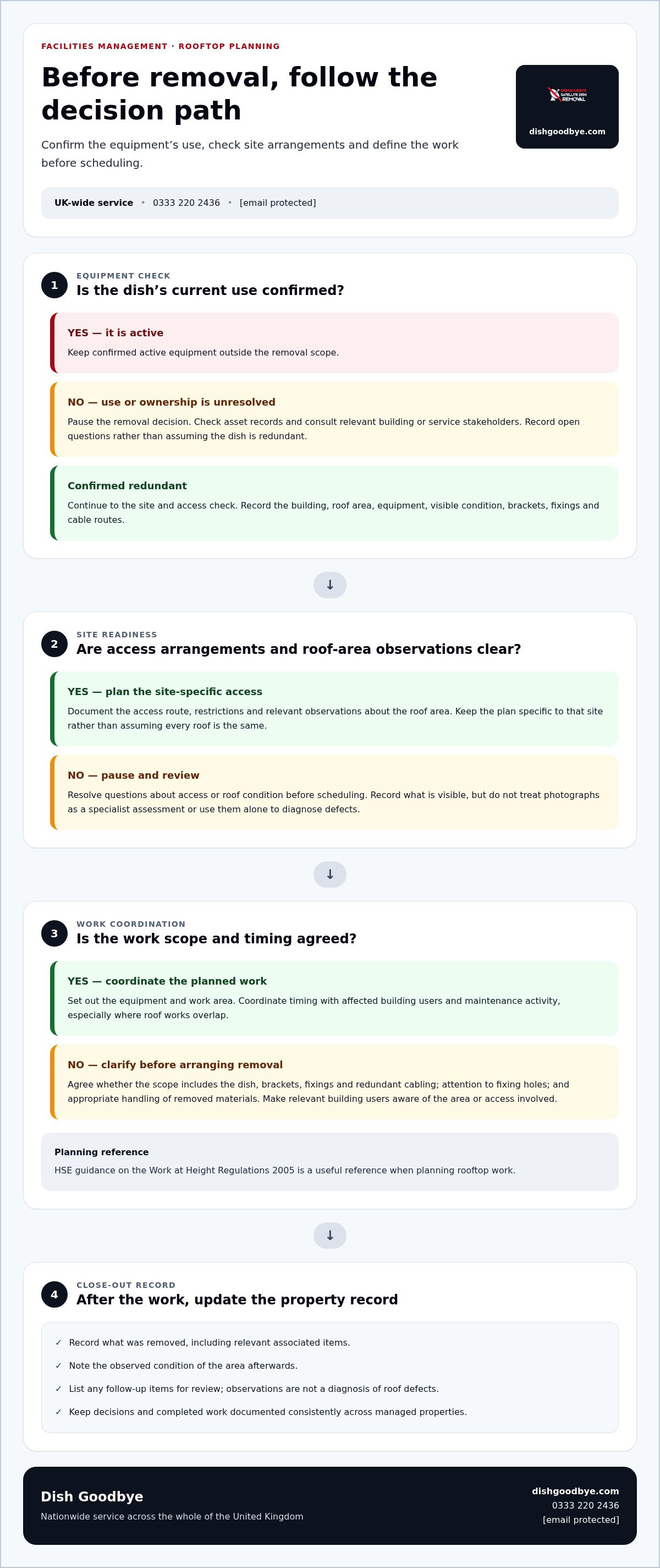
- Identify equipment. Record each dish, mount, visible fixing and associated cable route against its building and roof area.
- Verify use. Check asset records and consult relevant building stakeholders. Keep confirmed active equipment outside the removal scope, and record unresolved questions about ownership or use before authorising work.
- Plan access. Note the site-specific access route, any restrictions and relevant observations about the roof area. If access or roof condition is unclear, pause and review the plan rather than making assumptions.
- Arrange the work. Set out the agreed work area and equipment to be removed. Coordinate timing with affected building users and maintenance activity, especially where roof works overlap.
- Record completion. Update the property record with what was removed, the condition of the area afterwards and any follow-up items.
How should facilities teams confirm a dish is redundant?
Start with asset records, then consult stakeholders who may know what the equipment serves, such as relevant building or service teams. A dish that looks unused is not proof that it has no current purpose. Keep confirmed redundant equipment distinct from items whose use or ownership is unresolved. Do not authorise removal of equipment confirmed as active.
What belongs in the job plan?
Keep the plan practical and specific to the site. Document the work area, access arrangements, equipment, brackets, fixings and associated cabling. Include visible roof-condition observations, but do not treat photographs as a specialist assessment or use them to diagnose defects. Resolve questions about access or condition before scheduling the work.
Coordinate timing with roof maintenance if the work scopes overlap, and let affected building users know which area or access may be involved. Agree what the job covers: removal of the dish and associated items, attention to fixing holes, and appropriate handling of removed materials. HSE guidance on the Work at Height Regulations 2005 is a useful reference when planning rooftop work.
For service-scope context, see Dish Goodbye’s professional satellite dish removal, which covers dishes, brackets, fixings and redundant cabling.
What to assess before and after rooftop dish removal
A consistent before-and-after record helps facilities teams see what changed, track work across sites and flag anything needing separate attention. Compare the same roof area in each record and describe only what you can observe. Photos support the record, but they do not replace a specialist roof assessment.
Which roof and exterior details should be recorded?
Before work, note the equipment, brackets and visible cabling, then photograph the work area. Record existing visible damage separately so it is not confused with a change made during removal. After work, photograph the cleared area with no dish or aerial in frame. Note whether fixings were removed and whether fixing holes were filled and smoothed as part of the work.
Use a simple comparison for each site:
| Record item | Before removal | After removal |
|---|---|---|
| Equipment | Dish type and visible condition | What was removed; note any equipment left in place |
| Fixings | Brackets and visible fixings | Removal status and whether holes were filled and smoothed |
| Cable route | Visible route and associated cabling | What redundant cabling was removed and any remaining route |
| Roof area | Location and visible condition | Cleared area and visible condition after work |
| Record | Date and reference details | Completion details and outstanding follow-up |
Keep observations factual. A photograph may show a mark or opening, but cannot establish its cause or diagnose a roof defect. Record concerns for appropriate follow-up rather than presenting an assumption as a finding. For planning context, consult the Planning Portal’s satellite dish planning information.
How should facilities teams close out the work?
Update the property record with the completion date, building and roof location, equipment removed and work completed. Confirm that the recorded scope accounts for associated brackets, fixings and redundant cabling. If an inspection or repair is still needed, list it as follow-up, not completed work.
Also record how removed materials were handled. Dish Goodbye processes removed metal and electronic waste through approved recycling centres. Keep disposal details with the job record, and use the satellite dish recycling guide for further end-of-life handling context. This creates a clear close-out trail without confusing removal, observation and any separate assessment.
A practical facilities checklist for rooftop dish removal
For UK-wide satellite dish removal,
Use this checklist to keep decisions, work scope and close-out records together across managed properties. It supports facilities planning, but it is not legal advice or a technical method statement. Site arrangements differ, so record what applies at each building rather than treating one access plan as suitable everywhere.
- Identify: Log the building, roof area, dish or other equipment, associated brackets and fixings, cable route, visible condition and any relevant asset details.
- Verify: Check available records and consult relevant stakeholders about equipment use. Keep confirmed active equipment out of scope.
- Plan: Document the work area, access arrangements and relevant site observations. Coordinate with affected building users and other planned maintenance, especially if roof work overlaps.
- Remove: Use the agreed scope to track the dish, brackets, fixings and redundant cabling addressed during the work.
- Inspect: Compare the cleared area with the pre-work record. Note visible condition and whether fixing holes were filled and smoothed, without treating a visual check as a specialist assessment.
- Record: Update the property file with completion details, waste handling and any outstanding follow-up.
Before work: confirm scope and readiness
Before scheduling, make sure stakeholders have reviewed equipment use and that the removal scope identifies the correct asset and location. Record known condition concerns as observations, not diagnoses. Capture access arrangements and coordination with other maintenance in the job record, giving the team a clear, site-specific plan.
Stop and review if equipment use is unresolved, access arrangements are unclear or the roof condition raises questions. Record what needs clarification before proceeding. Do not assume the dish is redundant or that the area is ready for work.
After work: verify the exterior and records
Check the completed work against the agreed scope. Record whether the specified dish, brackets, fixings and redundant cables have been addressed, and note the visible condition of the roof area. If further inspection or repair appears necessary, list it as follow-up rather than completed work. Any after-work photographs should show the cleared area with no satellite dish or aerial visible.
For detail on removal scope, including dishes, fixings and cabling, arrange UK-wide satellite dish removal with Dish Goodbye.
Dish Goodbye is nationwide across the United Kingdom.
Arrange nationwide rooftop dish removal with Dish Goodbye
Dish Goodbye provides UK-wide satellite dish removal for residential and commercial properties.
Once your review confirms that rooftop equipment is redundant, arrange removal as a complete piece of exterior maintenance, not just a way to clear the visible dish. For facilities management rooftop dish removal, a defined scope helps your team track the dish, its associated components and the finish left behind. It also gives you a clear basis for updating property records across managed buildings.
What does a complete removal address?
The work includes the dish, its brackets and fixings, plus associated redundant cabling. Including these items in the agreed scope helps avoid leaving mounts or loose cable routes behind after the main equipment is gone. Where an installation has left fixing holes, Dish Goodbye fills and smooths them to help protect the exterior and leave a neater finish.
Removed metal and electronic waste is processed through approved recycling centres. This completes the physical work: equipment is taken down, associated redundant items are addressed, and materials are handled through an appropriate recycling route. Your facilities record can then reflect both what was removed and how the waste was managed.
How can facilities teams get started?
Prepare a simple overview of the property or properties involved, where the equipment is located, and which dishes are confirmed redundant. Include associated brackets, fixings or cabling you want covered, along with relevant access arrangements and planned maintenance that could affect scheduling. Clear details make it easier to define the work and coordinate it with building operations.
Dish Goodbye serves property portfolios across the United Kingdom as well as individual residential and commercial properties. The removal scope includes associated fixings and redundant cabling, with holes filled and smoothed and removed metal and electronic waste sent to approved recycling centres. Share the property and equipment details to get the removal process moving.
Arrange UK-wide satellite dish removal with Dish Goodbye.
Make rooftop maintenance easier to manage
A clear facilities management rooftop dish removal process starts by confirming which equipment is genuinely redundant, then planning access and recording the work from start to finish. Keep visual observations separate from specialist assessments, and list any follow-up rather than marking it as completed.
Dish Goodbye provides UK-wide removal for residential and commercial properties. The service covers dishes, brackets, fixings and redundant cabling, with fixing holes filled and smoothed. Removed metal and electronic waste is processed through approved recycling centres, helping leave a tidier exterior and a clearer record.
Ready to plan removal for your property or portfolio? Arrange nationwide satellite dish removal with Dish Goodbye and make the next step straightforward.
A well-documented job helps keep your buildings organised and ready for planned maintenance.
Frequently Asked Questions
For UK-wide satellite dish removal,
What should a facilities manager check before removing a rooftop satellite dish?
First, establish whether the dish is genuinely redundant. Check property or asset records and consult relevant building stakeholders before agreeing the scope. Record the building and roof location, visible condition, brackets, fixings and cable routes. Note any uncertainty about ownership or use, and keep equipment confirmed as active out of the removal plan. A clear facilities management rooftop dish removal record helps prevent assumptions from driving the decision.
Can redundant rooftop dishes cause problems for a managed building?
They can leave practical maintenance and appearance concerns to review, such as redundant cabling, loose-looking fixings or visible holes from previous installations. These observations do not prove a roof defect, leak or safety issue. Record what is visible and arrange appropriate further assessment if the site condition raises questions. Reviewing dishes as part of planned exterior maintenance helps facilities teams identify work to consider without assuming every redundant item has caused damage.
How should facilities teams coordinate dish removal with roof maintenance?
Compare the proposed removal scope with planned roof or exterior work before setting access dates. Coordinate with affected building users and the teams responsible for overlapping maintenance, then record the work area, access arrangements and site-specific constraints. If dish removal and roof work concern the same area, agree how they fit together in the schedule. This helps avoid duplicated access arrangements and gives everyone a shared view of the planned work.
What should be included in a rooftop dish removal record?
Record the building, roof location and completion date, then describe the equipment and work completed. Include brackets, fixings and cabling in the scope, and note visible condition before and after removal. Record whether fixing holes were filled and smoothed, how removed materials were handled, and any follow-up inspection or repair still outstanding. Keep observations distinct from specialist assessments, and do not mark proposed follow-up as completed work.
Does removing a satellite dish include its brackets and cables?
Dish Goodbye’s removal service includes the dish, associated brackets and fixings, and redundant cabling. Including these items gives facilities teams a clearer view of what the job covers than recording the dish alone. Before work is arranged, identify the equipment and cable routes in the property record, then compare the completed work against that scope. Fixing holes left by previous installations are filled and smoothed as part of the service.
What happens to satellite dishes and electronic waste after removal?
Dish Goodbye processes removed metal and electronic waste through approved recycling centres. The removal record can note how materials were handled, giving facilities teams a useful close-out trail alongside the equipment removed and work completed. Keep this information with the relevant property record, particularly when managing more than one site. Responsible handling is part of completing the job, not an afterthought once the visible equipment has been taken down.
Should facilities staff remove a satellite dish from a roof themselves?
Rooftop removal should not be treated as a routine do-it-yourself task. Access, roof condition and the work involved vary by site, so plan the job for people competent to carry out work at height and use appropriate arrangements. Facilities teams can manage the asset review, coordinate building users and document the scope without undertaking the removal themselves. If equipment use, access or roof condition is unclear, pause and review before proceeding.
For UK-wide residential and commercial satellite dish removal,