
A calmer-looking exterior doesn’t mean stripping your walls bare. Old dishes, brackets and cables can make a façade feel busy, but decluttering exterior house walls is about removing what’s redundant and caring for the surface left behind. For help removing an unwanted satellite or Sky dish, visit dishgoodbye.com, call 0333 220 2436 or email [email protected].
It can be hard to tell which fixtures still serve a purpose and what will happen to the holes and marks once they’re gone. A considered approach makes the choices simpler: keep what’s useful, remove what isn’t, and plan a neat finish.
In this guide, you’ll learn how to assess exterior wall clutter, decide what can go and leave the façade looking clean and intentional. We’ll also explain how professional dish removal includes associated brackets, fixings and cabling, as well as filling and smoothing fixing holes and responsibly recycling removed materials. The aim is a simpler exterior that still feels cared for. Dish Goodbye serves homes across the UK. Find out more at dishgoodbye.com, call 0333 220 2436 or email [email protected].
Key Takeaways
- Start with one wall: photograph it, note what’s attached and assess its condition from the ground.
- Sort each feature into keep, clean, remove or repair so useful details stay while unnecessary clutter is addressed.
- Make decluttering exterior house walls manageable by prioritising the most visually prominent items first.
- Plan how the wall should look afterwards, including how to leave fixing points neat and the surface cared for.
- Professional dish and aerial removal can simplify your façade, including the associated fixings and cabling.
Why Decluttering Exterior House Walls Makes a Home Feel More Minimalist
Decluttering exterior house walls means removing objects that no longer serve a purpose while keeping useful fittings and looking after the wall itself. It’s not a call to strip a home bare. The aim is a façade that feels calmer because each remaining feature has a clear role.
A satellite dish, an unused aerial, brackets and loose cabling can draw the eye away from the shape of a window or the character of a doorway. Individually, these items may seem minor, but together they can make a wall feel busy. The principles behind Minimalism in architecture offer a useful way to think about simplicity: give visual space to the elements that matter instead of keeping details without a purpose.
Separate objects from the condition of the surface. Dirt may need cleaning, weathering can be part of a wall’s natural appearance, and cracks or damaged areas need a different response from redundant hardware. Cleaning can brighten a façade, but it won’t remove an old bracket or tidy surplus cables. Identifying the difference helps you choose the right kind of work rather than treating every mark as clutter.
What makes an exterior wall look cluttered?
Look for redundant equipment, exposed cabling, unused fixings and attachments that don’t suit the rest of the façade. Several small distractions can compete with doors, windows and architectural details, making it harder to appreciate the overall shape of the home. Start by viewing the wall from the ground, where you can assess its overall balance. Don’t climb to reach a better view.
Minimalist does not mean removing every feature
Keep fittings that are still useful and details that contribute to your home’s character. A clean, intentional wall should look cared for, not empty or unfinished. Before deciding whether an item stays, note what it does and whether it’s still needed. This helps distinguish purposeful features from leftovers and keeps decluttering focused on appearance, function and a neat finish.
Take it one decision at a time. Identify what’s useful, what’s simply dirty and what’s genuinely redundant. That’s the practical starting point for decluttering exterior house walls: remove visual distractions thoughtfully, then consider how to leave the surface tidy and cared for.
How to Assess Exterior Walls Before Removing Anything
A quick assessment helps you avoid removing something useful or overlooking the work needed afterwards. Keep the process simple: photograph the wall, identify each item, check the surface, prioritise what looks redundant, then plan how to leave the area tidy. Take photos from the ground so you can compare the wall before and after without putting yourself at risk.
Make a keep, remove, or investigate list
Record what’s attached to the wall and what you think each item does. A dish or aerial may still be in use, and a cable may serve equipment elsewhere in the home. Don’t treat anything as redundant until its purpose is clear. If you’re unsure, mark it for investigation rather than including it in a removal plan.
- Keep: fittings and cables you know are still needed.
- Remove: items confirmed as redundant, such as an unused dish, aerial, bracket or associated cabling.
- Investigate: attachments with an unclear purpose or connection.
This list breaks decluttering exterior house walls into manageable decisions. It also helps you focus first on confirmed redundant items that are most prominent, rather than taking on every wall at once.
Check brickwork, render, and existing fixing holes
Look for visible cracks, loose material, staining and holes around old fixings. Note where they are, but don’t assume every mark has the same cause: weathering, dirt and damage need different attention. Don’t probe the wall or reach for equipment during this visual check. If an area looks unstable or its condition is unclear, leave it undisturbed until it can be assessed safely.
Include fixing holes and exposed cable routes in your plan. Once redundant equipment is removed, holes can be filled and smoothed to help protect the wall from potential damp issues. The right finish depends on the wall’s material and condition, so don’t assume a repair will blend perfectly with older or weathered brickwork or render.
Before work begins, note what should be removed and what the finished area needs. Dish Goodbye’s professional dish removal covers redundant dishes, aerials, brackets, fixings and cabling, and includes filling and smoothing fixing holes for a neater finish.
Cleaning, Keeping, or Removing: Choose the Right Way to Simplify a Wall
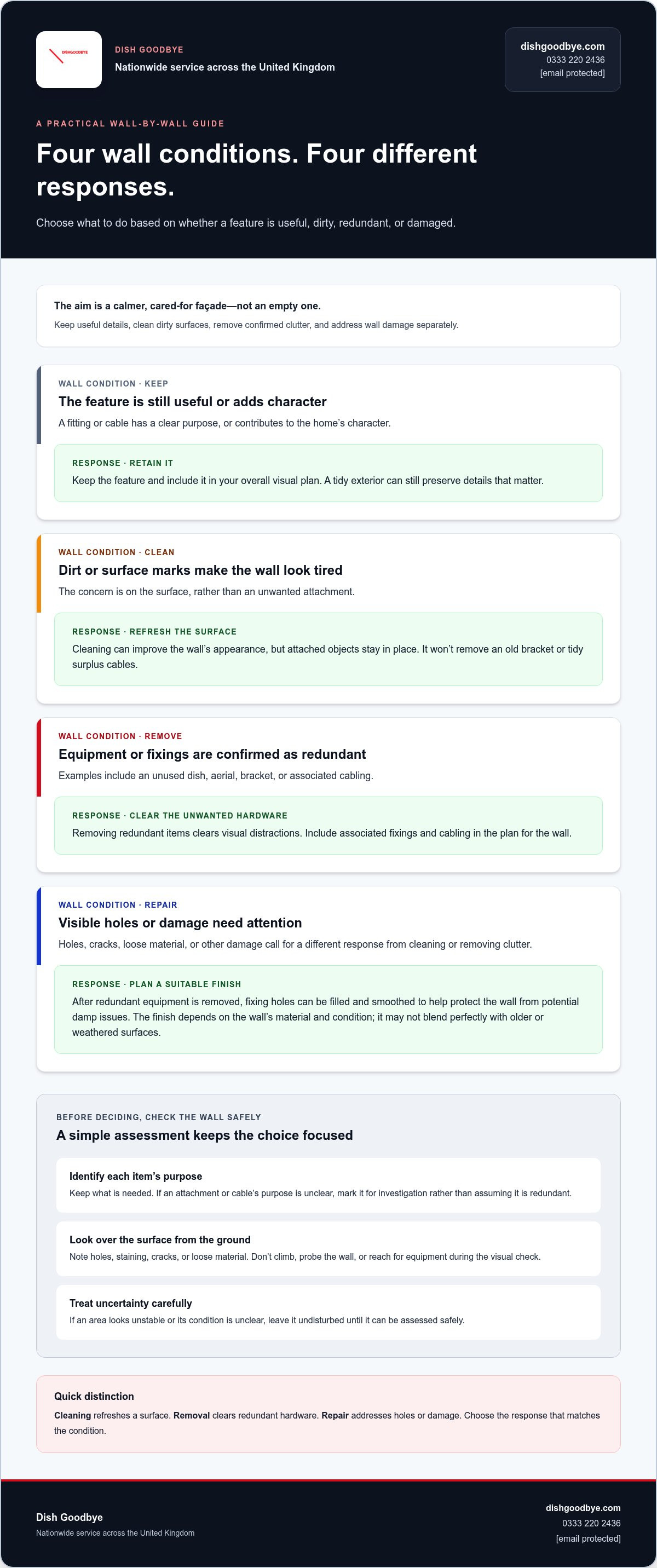
A wall can look untidy for different reasons, and each calls for a different response. Cleaning may refresh a dirty surface, while a redundant dish or bracket needs to be removed to clear visual clutter. Use this comparison to decide what action makes sense for each feature.
| Choice | Use it when | What it does |
|---|---|---|
| Keep | The fitting is useful or adds character. | Retains the feature and includes it in your overall visual plan. |
| Clean | Dirt or surface marks make the wall look tired. | Improves the surface’s appearance but leaves attached objects in place. |
| Remove | Equipment or fixings are confirmed as redundant. | Clears unwanted hardware and associated visual distractions. |
| Repair | The wall has visible holes or damage that needs attention. | Addresses the surface itself, with the right approach depending on its material and condition. |
When cleaning is enough, and when it is not
Dirt, staining and weathering affect how a surface looks; they’re not the same as an object attached to it. Choose surface care that suits the wall material, and don’t assume one cleaning method or product works for every finish. A clean wall may look brighter, but an unused bracket will still interrupt the surface. For wider curb appeal improvement ideas, consider the whole façade as well as the patch you’re treating.
When redundant fixtures need more than a tidy-up
Old dishes, aerials, brackets and cabling can remain visually prominent even after the surrounding wall is cleaned. If the equipment is confirmed as redundant, removing it is a more direct way to simplify the façade. Associated fixings can leave holes, so plan for those too: filling and smoothing them helps create a neater finish and can help protect the wall from potential damp issues. The result depends on the wall’s material and condition.
Useful fittings don’t need to disappear. Keep them and consider their position and appearance as part of the wall’s design. Decluttering exterior house walls is about choosing the right action, not stripping away every detail. Removed dish materials can also be handled through responsible satellite dish recycling.
A Practical Step-by-Step Plan for Decluttering Exterior House Walls
Keep the job focused: choose one wall, make a clear plan, then review the result before moving on. A few redundant fixtures don’t need to become a whole-house renovation. Start with the items that stand out most, such as an unused dish, loose cabling or brackets that break up an otherwise simple façade.
Plan the wall edit before work begins
Take a before photograph from the ground. It gives you a reference and helps you judge whether the finished wall feels more balanced. Then list what you intend to retain, remove or investigate. Don’t disturb a fixture if you’re unsure what it connects to or whether it’s still in use.
Decide how you want the wall to look once the unnecessary items are gone. A tidy finish should suit the existing brickwork, render or other surface, rather than draw attention to a patch that doesn’t fit. Note existing marks or damage separately so you can distinguish them from changes made during removal.
Remove clutter safely and finish the surface
Don’t climb or dismantle equipment from an unsafe position to reach a dish, aerial or high cable. If removal involves working at height or handling attached equipment, leave it to a professional. A planned removal can include redundant cabling, brackets and fixings, not just the most visible item.
After removal, check the wall for fixing holes and exposed cable routes that need attention. Filling and smoothing holes can help protect the surface from potential damp issues, though the right finish depends on the wall’s material and condition. When planning the finish, consider how untreated openings can affect the wall over time.
Finish with a calm, ground-level review. Compare the wall with your photograph, check that remaining cables are tidy and confirm that retained fittings still have a purpose. If redundant satellite or Sky equipment is the main source of clutter, arrange professional dish removal as part of your plan for decluttering exterior house walls.
Complete Your Minimalist Exterior with Professional Dish and Aerial Removal
Once you’ve identified equipment that’s genuinely redundant, professional removal can take the awkward and potentially unsafe part of the job off your hands. There’s no need to climb up or attempt to dismantle a dish yourself. A complete wall edit can include removing the equipment and its associated fixings, then addressing the marks left behind.
What a complete dish or aerial removal involves
Dish Goodbye removes redundant satellite and Sky dishes, aerials, brackets, fixings and associated cabling from homes and commercial properties across the UK. Removing the dish alone may leave a bracket or loose cable behind, so dealing with associated fittings helps create a more complete, considered result. The service also includes filling and smoothing fixing holes, leaving the surface neater after the equipment is gone.
Make the final step simple
Equipment can be high up or awkwardly positioned, making professional removal a practical option if you want to avoid working at height or handling attached hardware. Removed metal and electronic waste is processed through approved recycling centres, so the materials have a responsible next step as well as the façade becoming clearer.
For the finishing review, look from the ground again. Check that redundant equipment and cabling have been cleared, useful fittings remain, and the wall has been left tidy. Decluttering exterior house walls doesn’t mean removing every feature; it means making deliberate choices and giving the surface proper attention after removal.
Ready to clear a redundant dish or aerial from your exterior? Arrange professional dish removal across the UK. For enquiries, call 0333 220 2436 or email [email protected].
Make Your Exterior Feel Clearer, One Wall at a Time
A minimalist façade isn’t about removing every feature. It’s about keeping what’s useful, clearing what’s redundant and giving the wall a neat, considered finish. A simple assessment helps you decide whether an item needs cleaning, repair or removal, while a focused plan keeps the task manageable.
For unwanted dishes and aerials, professional removal includes associated brackets, fixings and redundant cabling. Fixing holes are filled and smoothed, and removed metal and electronic waste is processed through approved recycling centres. Dish Goodbye provides this service across the United Kingdom, helping homeowners create a cleaner-looking exterior without climbing up to dismantle equipment themselves.
Ready to clear redundant exterior equipment? Arrange professional dish removal with Dish Goodbye. For enquiries, call 0333 220 2436 or email [email protected]. Take the first step towards decluttering exterior house walls and enjoy a façade that feels simpler, tidier and cared for.
Frequently Asked Questions
How do I declutter the exterior walls of my house?
Start by photographing the wall from the ground. Identify each fitting and note whether it’s useful, redundant or uncertain. Prioritise visible clutter, then plan safe removal and how you’ll address fixing holes and the surface afterwards. Decluttering exterior house walls means editing unnecessary items, not stripping away every feature. Don’t climb or dismantle equipment from an unsafe position; professional removal is a practical option for redundant dishes or aerials.
What should I remove from the outside walls of my house?
Consider removing a satellite dish, aerial, bracket, unused fixing or cable only after establishing whether it’s still needed. These items can interrupt an otherwise tidy façade, but useful fittings should stay. Separate attached hardware from dirt, staining or weathering, since surface marks call for different attention. Make a keep, remove or investigate list before planning work, and leave uncertain equipment in place until its purpose is clear.
Can removing a satellite dish damage a wall?
Removing a satellite dish can leave fixing holes or reveal existing surface issues; the result depends on the wall’s material and condition. Dish Goodbye’s removal service includes filling and smoothing holes left by previous installations, helping leave the exterior neater. This doesn’t mean every wall will match its original appearance exactly. Avoid risky ladder access or dismantling; professional removal is a practical option for equipment that’s high or awkwardly positioned.
How do I make a brick wall look more minimalist?
Make a brick wall feel more minimalist by reducing unnecessary attachments while keeping useful features. First distinguish dirt or surface marks from objects fixed to the brickwork: cleaning can change the appearance, but it won’t remove hardware. If a bracket or cable is redundant, plan its removal and decide how fixing holes will be filled and smoothed. Choose care suited to the wall’s condition, without assuming a coating or alteration is appropriate.
Should I remove an old TV aerial from my house?
Remove an old TV aerial only if you’ve established it’s no longer useful. Consider how much it contributes to visible clutter, but don’t mistake its age for proof it’s redundant. If it can be removed, professional dismantling can include associated brackets and cabling, with fixing holes addressed afterwards. Avoid ladders or roof access for DIY removal. If its purpose is unclear, identify that before planning any work.
What happens to the holes after a satellite dish is removed?
After a satellite dish is removed, the fixing holes can be filled and smoothed to leave the wall neater. Include them in your plans for the exterior’s finish, particularly if the wall needs to be left protected. Dish Goodbye’s removal service includes filling and smoothing holes left by previous installations. The final appearance depends on the wall’s material and condition, so an exact colour match or identical finish shouldn’t be assumed.
Find out more at dishgoodbye.com, call 0333 220 2436 or email [email protected].