

Contact us at 0333 220 2436 or [email protected] to learn how to seal redundant drill holes and prevent costly penetrating damp issues in your UK home.
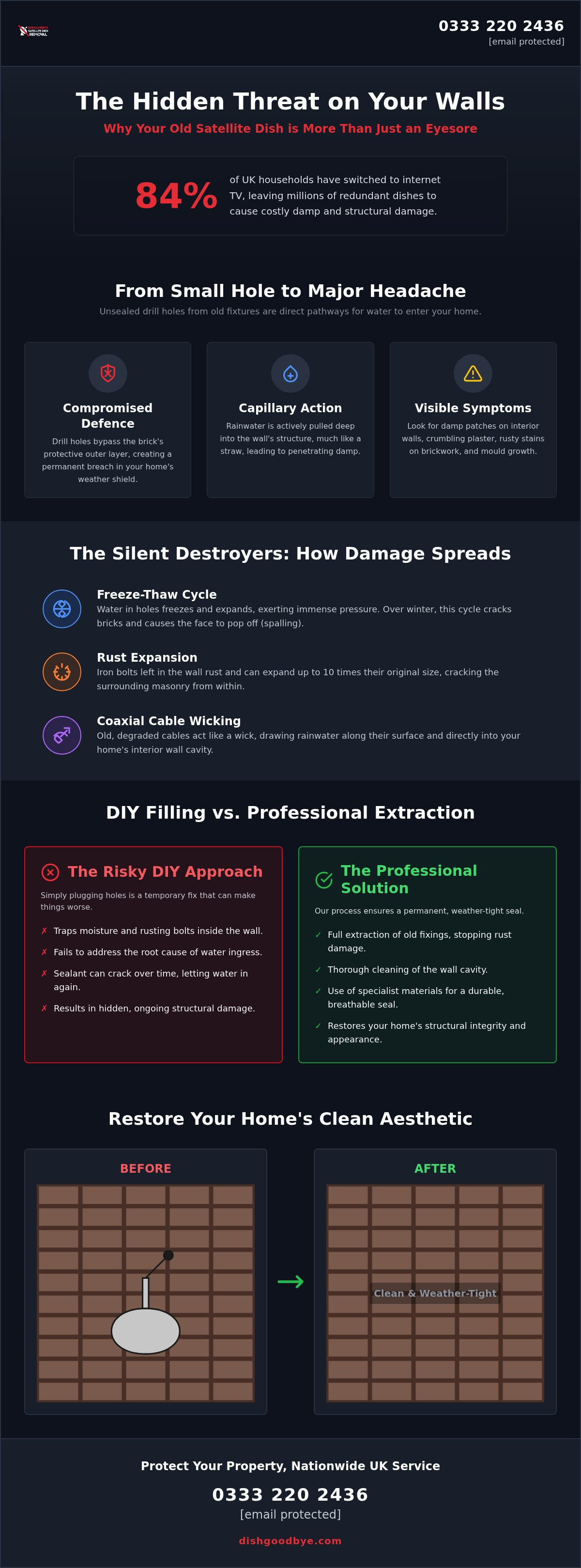
Did you know that 84% of UK households now use internet-connected TVs, leaving millions of redundant satellite dishes to rust away on exterior walls? It is a common sight across the UK, but those abandoned brackets are more than just an eyesore. You might already be spotting the warning signs like mysterious damp patches on your interior wallpaper or rusty stains ruining your brickwork. Taking action now is the best way of avoiding damp penetration from drill holes before the winter weather turns a small leak into an expensive repair.
We understand the frustration of trying to maintain a clean, modern home while battling legacy tech. This article will show you how to protect your property by sealing those vulnerabilities for good, in line with modern UK Building Regulations regarding wall penetrations. You will learn why proper extraction of old fixings is vital for your home's health and how a professional finish can instantly boost your curb appeal. It is time to say a definitive dish goodbye to outdated equipment and welcome a sleek, weather-tight exterior that gives you total peace of mind.
Key Takeaways
- Learn how capillary action pulls rainwater into your walls through small defects, turning minor holes into major damp issues.
- Discover why redundant brackets act as funnels for moisture and how rusting bolts can cause your brickwork to crack or spall.
- Get the facts on avoiding damp penetration from drill holes by choosing full extraction over risky DIY plugs that trap moisture.
- See our professional process for cleaning and sealing wall cavities to restore your home's exterior to a clean, weather-tight finish.
- Find out how Dish Goodbye provides nationwide expertise to remove old tech and protect your UK property's structural integrity.
Understanding the Link Between Drill Holes and Penetrating Damp
Your home's exterior is its first line of defence against the unpredictable UK weather. While solid brickwork is remarkably resilient, it isn't invincible. Every time a technician drills into your masonry to install a satellite dish or aerial, they create a permanent breach in that shield. Understanding the science behind this vulnerability is the first step in avoiding damp penetration from drill holes. These tiny openings might look harmless, but they act as direct conduits for moisture to bypass your home's protective outer layer.
What is Penetrating Damp?
Penetrating damp is defined as water ingress through horizontal entry points like holes or cracks in a building's exterior. Unlike rising damp which travels up from the ground, or condensation caused by poor ventilation, this issue is directly linked to the physical condition of your external walls. You will likely notice damp patches that darken significantly after heavy rain, crumbling interior plaster, or white salt staining on your bricks. These are clear signals that your home's envelope is leaking and requires immediate attention to restore domestic harmony.
How Drill Holes Compromise Masonry Integrity
A healthy brick has a hard outer face designed to shed water efficiently. However, a standard 10mm drill hole left by an old bracket acts like a straw, bypassing this protective layer entirely. Through a process called capillary action, rainwater doesn't just sit in the hole; it's actively pulled deep into the wall structure. If you have a cavity wall, this moisture can bridge the gap and soak your internal plaster. For timber-framed homes, the risk is even higher. Water reaching the wooden structure can lead to rot and long-term structural issues that are far more expensive to fix than a simple hole.
The danger intensifies during the winter months due to the freeze-thaw cycle. When water enters these small holes and the temperature drops, it freezes and expands. This physical expansion puts immense pressure on the surrounding masonry from the inside out. Over time, this cycle causes the brick face to pop off, a process known as spalling, or creates larger cracks that invite even more water. Avoiding damp penetration from drill holes isn't just about aesthetics; it's about stopping structural erosion before it starts. By ensuring these entry points are professionally sealed, you maintain a dry, healthy home that stands up to the elements.
The Hidden Danger of Redundant Satellite Dish Brackets
Think of an old satellite dish bracket as a permanent funnel for rainwater. These metal fixtures don't just sit on your wall; they actively direct water toward the very points where your masonry is most vulnerable. Over years of exposure to the UK's wet climate, these brackets become a primary source of moisture ingress. One often overlooked issue is thermal bridging. The metal fixings act as a cold bridge, chilling the internal wall at the entry point. This creates a cold spot where warm indoor air condenses, causing mould growth that looks like a leak but is actually a temperature-driven damp issue. Avoiding damp penetration from drill holes requires looking beyond the visible dish and addressing the hardware hidden beneath.
Taking proactive steps now is the most effective way of avoiding damp penetration from drill holes before the winter rains begin. A clean, sealed exterior doesn't just look better; it functions better as a thermal and moisture barrier.
The Wicking Effect of Coaxial Cables
Old coaxial cables are another silent culprit. Without a proper drip loop, gravity pulls water along the cable's surface and straight into your home's interior. Decades of UV exposure degrade the outer insulation, making it porous and brittle. This allows the cable to act as a wick, drawing moisture through the wall cavity via gravity. Simply cutting the wire at the surface is a common mistake that leaves your property at risk. The remaining stub still provides a clear path for water to enter. Learning how to seal holes outside effectively means removing these cables entirely to break the moisture chain for good.
Rust and Structural Erosion
Inside the brick, a slow but destructive chemical reaction is often taking place. When iron fixings rust within alkaline mortar, they can expand up to ten times their original volume. This internal pressure is immense and eventually forces the brick face to pop off, a damaging process known as spalling. High winds also cause redundant brackets to vibrate like a tuning fork. This constant movement gradually widens the drill holes and breaks any existing seals. This is why a Professional Dish Removal Service is so important for long-term property health. We ensure every fixing is extracted before it can compromise your home's structural integrity. If you're ready for a cleaner look, our team can help you with expert satellite dish removal today.
Evaluating Your Options: DIY Filling vs. Professional Extraction
When you see a hole in your exterior wall, the instinct is often to grab a tube of sealant and fill it. It feels like a quick win. However, avoiding damp penetration from drill holes isn't just about covering the opening; it is about creating a structural seal that lasts. Many homeowners underestimate the complexity of this task, especially when dealing with high-reaching satellite dish fixings that have been exposed to the elements for years. A superficial patch might hide the problem, but it rarely solves the underlying risk of water ingress.
The Limits of Off-the-Shelf Sealants
Don't reach for standard bathroom silicone. While it works wonders around a tub, it is a poor choice for masonry. Silicone is non-porous and doesn't bond well with brick or mortar over time. As the weather changes, silicone shrinks and pulls away from the edges of the hole. This creates a microscopic gap that actually traps moisture against the brick. This trapped water cannot evaporate, leading to internal rot or frost damage. Standard DIY fillers also lack the long-term weather resistance of professional compounds. If you simply patch over a rusting screw head, that rust will eventually bleed through your new filler, ruining your home's aesthetic and requiring a total redo.
Why Complete Extraction Matters
A proper repair starts with total removal, not just covering up the hardware. If you leave a plastic wall plug inside the hole, you are leaving a hollow channel that allows water to travel deep into your wall cavity. Avoiding damp penetration from drill holes requires the complete extraction of the bracket, the screw, and the internal plug. At Dish Goodbye, our nationwide team specializes in this deep extraction process. We clear the cavity entirely before using weather-resistant masonry filler that matches your home's original look. This creates a seamless, flush finish that protects your property from the inside out. You can learn more about How Unfilled Holes from Fixtures Can Cause Damp and why professional intervention is the safest bet for your curb appeal.
Working at height adds another layer of risk to any DIY attempt. Balancing on a ladder with a drill and filler is a recipe for an accident. Our professionals are equipped with the right tools and training to handle these high-level removals safely across the UK. By choosing a professional service, you get the assurance that the job is done right the first time. You get a dry home, clean walls, and the relief of knowing you didn't have to risk a fall to get there. It is a simple lifestyle upgrade that prioritizes your comfort and your time.
Best Practices for Sealing Exterior Walls After Fixture Removal
Achieving a dry, secure home starts with a methodical approach to sealing. You've already learned why old brackets are a risk; now let's focus on the solution. Avoiding damp penetration from drill holes requires more than a quick dab of filler. It is a four-step process designed to restore your wall's natural defences. First, you must extract everything. This means removing the metal screw and the plastic wall plug hidden inside. If that plug stays, it acts as a permanent channel for moisture to bypass your brickwork and enter the cavity.
Next, clean the cavity. Use a small brush or a burst of compressed air to remove brick dust and crumbling mortar. If the hole is dirty, your filler won't bond properly, and water will eventually find its way behind the seal. Once clean, apply a high-quality, weather-resistant masonry filler. This isn't your standard indoor plaster; it needs to be a professional-grade compound that can handle the UK's freeze-thaw cycles. Finally, smooth the finish. A flush surface ensures water runs straight down the wall instead of pooling in a small crater or ledge.
Preparing the Hole for Sealing
Timing is everything in the UK. Always wait for a dry day to perform this task. If you seal moisture into the hole, you're essentially trapping a damp problem inside your wall. This is a vital part of avoiding damp penetration from drill holes during stormy weather. If your masonry feels crumbly or 'friable', you might need to prime the hole first to ensure the filler sticks. Don't just plug the surface; push the filler deep into the hole to create a solid, waterproof barrier from back to front.
Achieving a Clean Aesthetic
A successful repair should be invisible. We don't just want a sealed hole; we want a house that looks like the dish was never there. This involves matching the filler to your mortar colour or brick texture. By paying attention to these small details, you reclaim your home's curb appeal and eliminate the cluttered look of redundant tech. Our team at Dish Goodbye is committed to this clean aesthetic, ensuring every job leaves your exterior looking fresh and unblemished. If you're ready to protect your property and restore its beauty, book your professional satellite dish removal today and see the difference a clean wall makes.
How Dish Goodbye Protects Your Property Across the UK
Property maintenance shouldn't be a headache. Whether you live in a coastal cottage in Cornwall or a townhouse in Glasgow, our nationwide service is designed to give you a clean, worry-free home. We specialize in the complete removal of redundant tech, ensuring that your walls are restored to their original, weather-tight state. Our technicians are more than just removal experts; they are specialists in property protection. They understand the nuances of different masonry types and the critical importance of avoiding damp penetration from drill holes. We bring the solution straight to your doorstep, anywhere in the UK.
When you choose our team, you're choosing a lifestyle upgrade. You get to reclaim your time and energy while we handle the dirty work at height. No more staring at rusty brackets or worrying about the next heavy downpour. We provide the satisfying, low-effort experience you deserve. By the time we leave, your home's exterior will be clean, sleek, and fully protected against the elements. It is a definitive break from old-fashioned, inefficient DIY methods that often do more harm than good.
The Dish Goodbye Difference
We believe in a modern approach to home maintenance that respects the environment. Our zero-landfill promise means that every satellite dish and aerial we remove is handled responsibly. We manage the complete extraction and sorting of all metal and e-waste, ensuring nothing ends up in a landfill. This commitment to sustainability is part of why homeowners across the UK trust us to clear their clutter. You can read more about our eco-friendly process in our guide to Satellite Dish Recycling.
This service is about more than just aesthetics; it's about preventative care. By avoiding damp penetration from drill holes through professional extraction, you're saving yourself from the high costs of future structural repairs. We use weather-resistant masonry filler that bonds perfectly with your walls, leaving a finish that looks like the hardware was never there. It's the secret to a well-managed home where tasks are no longer a burden.
Book Your Removal Today
Ready to transform your home's exterior? Getting a quote is simple and fast. Contact our friendly team at 0333 220 2436 or send an email to [email protected]. We operate across the entire United Kingdom, bringing professional property protection to your doorstep. Our teams are organized, forward-thinking, and ready to help you achieve domestic harmony. Don't let redundant tech compromise your property's integrity for another season. Take the savvy step toward a cleaner, drier home. Clear the clutter and block the damp today.
Contact us at 0333 220 2436 or [email protected] to learn how to seal redundant drill holes and prevent costly penetrating damp issues in your UK home.
Protect Your Property and Reclaim Your View
Your property's exterior shouldn't be a source of stress. We've explored how redundant satellite brackets act as funnels for rainwater and how old fixings can cause destructive brick spalling. By prioritizing professional extraction over temporary DIY patches, you're making a smart investment in your home's longevity. Avoiding damp penetration from drill holes is a vital step in maintaining a healthy building envelope and ensuring your interior walls stay dry and mould-free for years to come.
It's time to reclaim your home's aesthetic and your own peace of mind. Our nationwide team is ready to help you transition to a cleaner, more efficient property with our zero-landfill recycling policy and expert hole-filling service. Book your professional UK dish removal and damp prevention service today to experience the relief of a well-managed home. Let's clear the clutter and protect your walls together.
Contact us at 0333 220 2436 or [email protected] to learn how to seal redundant drill holes and prevent costly penetrating damp issues in your UK home.
Frequently Asked Questions
Can a single drill hole really cause damp inside my house?
Yes, even a single 10mm drill hole can lead to significant moisture ingress. Rainwater is pulled deep into the masonry through capillary action; once inside, it can bridge the wall cavity and cause damp patches on your interior wallpaper. Over time, this leads to mould growth and crumbling plaster. Professional extraction is the most reliable method for avoiding damp penetration from drill holes and protecting your home's internal structure.
Is it safe to remove an old Sky dish myself?
DIY removal is often risky due to the height of the installation and the specialized tools required for full extraction. If you simply pull the dish off, you'll likely leave rusted bolts or plastic plugs behind, which continue to funnel water into your bricks. Our experts use professional equipment to ensure the hardware is removed safely and the holes are sealed correctly, saving you from a potential fall or structural damage.
What is the best material to fill holes in brickwork?
You should always use a high-quality, weather-resistant masonry filler rather than standard silicone sealants. Silicone often shrinks and pulls away from the brick over time, creating new gaps for water. A professional-grade compound expands and contracts with the temperature, providing a permanent, waterproof seal. We select fillers that match your existing mortar or brickwork for a clean, invisible finish that keeps the damp out for good and restores domestic harmony.
How much does it cost to have a satellite dish professionally removed in the UK?
The cost of professional satellite dish removal depends on several factors, including the height of the dish and the complexity of the installation. At Dish Goodbye, we provide bespoke quotes based on photographs of your property. This ensures you get a fair price for a complete service that includes hardware extraction, cable removal, and professional hole filling. Contact our team for a remote quote to safeguard your home today.
Do you remove the cables as well as the dish?
Yes, we provide complete extraction of all cabling along with the dish and brackets. Leaving old coaxial cables can lead to a 'wicking' effect, where water travels along the wire and into your home. We remove the cable entirely and seal the entry point to ensure your property is fully protected. This thorough approach is essential for avoiding damp penetration from drill holes and achieving a satisfying, clutter-free exterior.
Will the repair be visible once the hole is filled?
Our goal is always a clean, near-invisible repair that restores your home's curb appeal. We use masonry fillers that are carefully matched to your existing brick or mortar colour. While the texture of new filler may vary slightly from aged brick, the result is a flush, professional finish that looks significantly better than a rusty bracket. You'll enjoy a sleek, modern exterior without the legacy tech ruining your home's aesthetic.
What happens if I leave the old bracket on the wall?
Leaving a redundant bracket allows it to act as a funnel, directing rainwater straight into the fixing points. Over time, the metal fixings will rust and expand, which puts pressure on the masonry and causes the brick face to pop off, known as spalling. This doesn't just ruin your curb appeal; it creates larger openings for water to penetrate your walls and cause internal damp issues that are expensive to repair.
Does Dish Goodbye offer services outside of Manchester?
Yes, we provide nationwide coverage across the entire United Kingdom. Whether you are in London, Edinburgh, Cardiff, or a rural village, our professional teams are available to help you clear the clutter. We are committed to helping homeowners across the UK protect their properties from penetrating damp. Simply call us at 0333 220 2436 to find a technician in your local area and start your journey toward a drier, cleaner home.