
dishgoodbye.com | Professional Satellite Removal Services UK
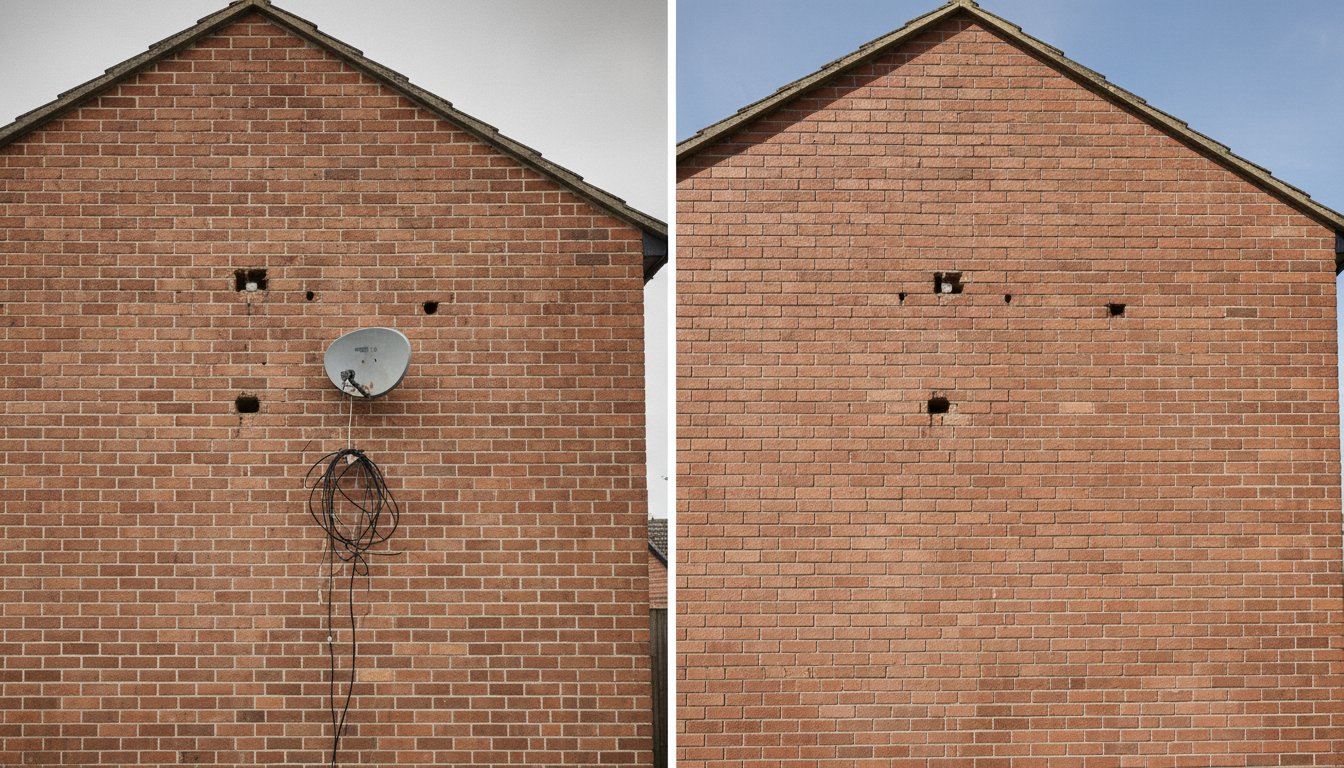
A tiny hole in your brickwork is more than just an eyesore; it's an open invitation for the British weather to move into your home. You've made the smart move to join the millions of households ditching traditional pay-TV, but now you're left wondering what to do with holes after removing sky dish brackets. It's a common worry for homeowners across the UK who want to protect their property's value. We know that seeing those jagged scars on your masonry is frustrating, especially when you're worried about water ingress or damp creeping into your walls.
You shouldn't have to choose between a modern home and a weatherproof one. We'll show you exactly how to professionally seal and repair exterior wall holes to prevent damp and restore your home's curb appeal. This guide covers the best materials for every brick type and explains how a quick maintenance task today prevents a massive repair bill tomorrow. Let's get your home's exterior looking clean, clear, and completely protected.
dishgoodbye.com | Professional Satellite Removal Services UK
Key Takeaways
- Understand how tiny 10mm fixing holes can lead to serious damp and brick spalling through freeze-thaw damage.
- Discover why specialist masonry fillers often outperform standard silicone for a long-lasting, weatherproof finish.
- Learn exactly what to do with holes after removing sky dish brackets to ensure your home remains watertight and visually appealing.
- Evaluate the safety risks and hidden costs of DIY high-reach repairs compared to a professional removal service.
- Master the restoration process by properly removing old wall plugs and prepping the surface for a flawless, clean exterior.
dishgoodbye.com | Professional Satellite Removal Services UK
Understanding the Risks of Unfilled Holes After Sky Dish Removal
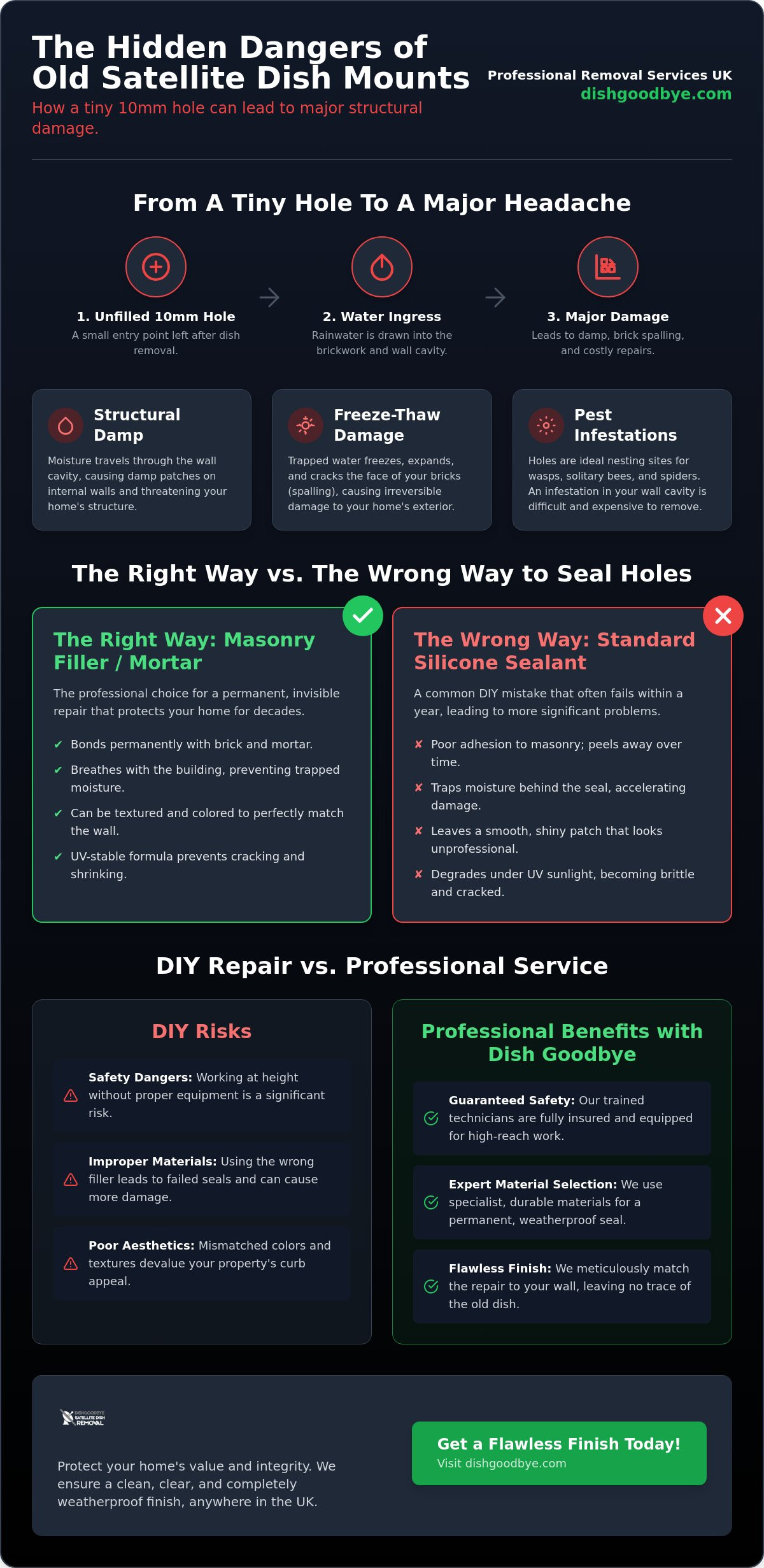
Leftover bolt holes might look small, but they are a direct path into your home's structure. A standard satellite bracket typically uses 10mm fixings. That is a significant gap when you consider the volume of driving rain we face across the UK. Leaving these gaps open is a risk you don't need to take. When you're deciding what to do with holes after removing sky dish equipment, understanding the science of water damage is the first step toward a proper fix. We see many homeowners ignore these "scars," only to deal with expensive damp issues a few winters later.
The Threat of Water Ingress and Structural Damp
Rain doesn't just hit your wall; it searches for weaknesses. Through capillary action, moisture is pulled deep into the masonry and can even travel across the cavity into your internal walls. This leads to those tell-tale damp patches on your wallpaper or paint that seem to appear out of nowhere. The real danger happens during the colder months. Water trapped inside the brick expands as it freezes, exerting massive internal pressure. This "freeze-thaw" cycle eventually forces the face of the brick to crack or drop off entirely. Spalling is the crumbling of brick faces due to trapped moisture. By weatherproofing the exterior correctly, you stop this destructive cycle before it starts and keep your home's skeleton dry.
Pests and Aesthetics: More Than Just a Visual Issue
It's not just water that finds these holes. Small gaps are perfect nesting sites for common UK garden pests like solitary bees, wasps, or spiders. Once they've established a nest inside your wall cavity, removal becomes much more complicated and expensive. There's also the issue of "rust bleeding." If old, low-quality bolts are left to rot in the wall, rainwater washes iron oxide down your brickwork. This leaves permanent, ugly orange streaks that are incredibly difficult to clean without professional chemicals; to effectively restore your property's facade, you can explore Brick cleaning to remove these stubborn stains safely.
When a surveyor visits for a future sale, they'll spot these redundant holes immediately. Unfilled gaps suggest a lack of general maintenance, which can raise red flags about the overall condition of the property. Knowing what to do with holes after removing sky dish brackets is about more than just looks; it's about preserving your home's value and structural integrity. We help homeowners across the country avoid these pitfalls every day. You can find more information on how we handle these removals at dishgoodbye.com.
dishgoodbye.com | Professional Satellite Removal Services UK
dishgoodbye.com | Professional Satellite Removal Services UK
Choosing the Right Materials for Sealing Exterior Walls
Once your old hardware is gone, the real work of property protection begins. Choosing the right filler is vital for long-term protection. If you're stuck on what to do with holes after removing sky dish brackets, don't just grab the first tube of sealant you see at the local DIY shop. The wrong choice can peel, crack, or leave a permanent "scab" on your wall that ruins your home's aesthetic. We always recommend using materials that mimic the original building fabric to ensure a seamless and durable finish.
Silicone Sealant vs. Masonry Mortar
Silicone is a popular choice because it's flexible and waterproof. However, standard bathroom silicone is a mistake for exterior brickwork. It doesn't bond well to masonry and will eventually pull away as the building settles. Instead, look for "frame sealant" or high-modulus exterior silicone. These are specifically designed to stick to porous surfaces like brick and stone. If you want to permanently, traditional sand and cement mortar is often the superior choice. It breathes with the building, matches the texture of your mortar joints, and can last for decades without needing a touch-up.
For south-facing walls, UV stability is a non-negotiable feature. The UK sun might be unpredictable, but its rays can turn cheap fillers brittle within a single summer. We use specialist masonry fillers that contain UV inhibitors to ensure the repair stays flexible and watertight. This prevents the filler from shrinking and creating new micro-gaps where moisture could creep back in.
Matching the Finish: Brick, Stone, and Render
Making a repair invisible takes a bit of artistry. For red or yellow UK brickwork, we often mix a tiny amount of brick dust into the filler. This creates a tactile, matte finish that blends perfectly with the surrounding area. If your home has a pebbledash or rendered finish, a smooth blob of silicone will stand out like a sore thumb. You'll need a textured masonry repair cream or a mortar mix that you can stipple with a stiff brush to match the existing pattern. This attention to detail is what separates a messy DIY job from a professional restoration.
Achieving a flawless result on aged stone or decorative render is notoriously tricky. If you aren't confident in your colour-matching skills, our team can handle the satellite dish removal and repair for you, ensuring a clean finish that restores your home's curb appeal instantly. We believe that a job isn't finished until the "scars" from the old technology are completely gone.
dishgoodbye.com | Professional Satellite Removal Services UK
dishgoodbye.com | Professional Satellite Removal Services UK
Professional vs. DIY Hole Repair: Which Is Right for Your Property?
After the dish is gone, you're left with a choice: grab a ladder yourself or call in the experts. Deciding what to do with holes after removing sky dish brackets often comes down to a balance of safety, cost, and the quality of the final look. While a DIY approach might seem cheaper at first glance, the hidden risks and expenses often tip the scales toward a professional solution. We focus on delivering a result that makes it look like the dish was never there in the first place.
The Safety Factor: Working at Heights
Working on a ladder is the most dangerous part of any exterior home repair. According to the Health and Safety Executive (HSE) in the UK, falls from height remain one of the most common causes of domestic injury, with thousands of hospital admissions reported annually. Balancing a heavy filler gun and a scraper while perched two storeys up is a recipe for disaster. It's a two-handed job that requires focus, which is hard to maintain when you're also trying to keep your balance. We use specialist reach equipment and follow strict safety protocols to handle these high-reach repairs without putting anyone at risk.
Long-Term Value and Warranty
A professional repair is about more than just filling a gap. It's about property integrity. When you're using a suitable exterior masonry filler, the application technique matters as much as the product. Experts ensure the hole is deep-cleaned and the filler is packed tightly to prevent future air pockets. This level of detail ensures the repair lasts for the life of the building, rather than popping out after the first frost. A botched DIY patch can shrink and crack, leaving you right back where you started with a damp risk.
Choosing a professional dish removal service provides a complete, hassle-free experience. We don't just fill the holes; we remove the hardware, seal the wall, and recycle the old tech responsibly. This all-in-one approach saves you the cost of buying tools you'll only use once and gives you the peace of mind that your home's exterior is fully protected. When you consider the cost of a high-quality ladder and premium sealants, the professional route often proves to be the most efficient way to handle what to do with holes after removing sky dish equipment.
dishgoodbye.com | Professional Satellite Removal Services UK
dishgoodbye.com | Professional Satellite Removal Services UK
A Step-by-Step Guide to Filling Fixing Holes in Brickwork
You have successfully taken down the hardware, but the job isn't finished yet. When you are deciding what to do with holes after removing sky dish fixings, the secret to success lies in the preparation. Many people make the mistake of squirting filler directly over dust and debris. This creates a weak bond that will eventually fail. We believe in doing the job once and doing it right. A clean, deep seal is the only way to ensure your home stays watertight for years to come.
Preparing the Hole for a Permanent Seal
Dust is the enemy of adhesion. If you leave grit inside the cavity, your filler will eventually pull away from the brick. Start by cleaning out each 10mm hole thoroughly. A small bottle brush works wonders, but even a simple straw can be used to blow out the loose masonry dust. Next, you must address the old plastic wall plugs. These "rawls" often sit flush with the surface, but leaving them in prevents a deep, structural seal. Use the "screw method" for stubborn plugs. Drive a screw halfway into the plastic, then use pliers to yank the whole unit out. This leaves a clean, empty tunnel ready for your repair material. Always ensure the area is bone dry before you begin; trapped moisture is a recipe for future cracks.
Application and Smoothing Techniques
Once the hole is prepped, it's time to apply your chosen filler. Don't just smear it on the surface. Use a caulking gun to force the material deep into the masonry. This technique eliminates air pockets that could otherwise trap moisture and lead to freeze-thaw damage. We recommend overfilling the hole slightly. This allows for the natural shrinkage that occurs as the material cures. For a perfectly flat finish on standard bricks, wait for the filler to dry and then sand it back flush with the wall.
If your home has a specific texture, you'll need to match it before the filler sets. A damp sponge is a fantastic tool for stippling the surface, helping the repair blend into the surrounding brickwork or render. It's time to say dish goodbye to those unsightly scars on your home and reclaim your curb appeal. If you would rather avoid the mess and the ladder work, book our professional sky dish removal service today. We handle the entire process from removal to restoration, ensuring a flawless finish for every property across the UK.
dishgoodbye.com | Professional Satellite Removal Services UK
dishgoodbye.com | Professional Satellite Removal Services UK
Say 'Dish Goodbye' for a Flawless Exterior Finish
We believe your home should look its best without the clutter of yesterday's technology. If you've been researching what to do with holes after removing sky dish brackets, you now understand the technical steps required for a safe, weatherproof repair. But why spend your weekend on a ladder when we can handle the entire transformation for you? Our approach is simple: we don't just remove the hardware; we restore the wall to its original state. It's the ultimate shortcut from a cluttered exterior to a state of domestic harmony.
Our National UK Service: Quality You Can Trust
We operate across the entire United Kingdom, bringing professional satellite removal right to your doorstep. Our technicians use premium, weather-resistant masonry fillers that are specifically selected for the UK's damp climate. These materials provide a long-lasting, flexible seal that standard DIY products often fail to achieve. By focusing on property integrity, we help you in improving curb appeal and maintaining the value of your home. You deserve a property that looks organized, modern, and completely well-managed.
The Environmental Benefit of Professional Removal
Choosing a professional service is a smart move for your house and the planet. We maintain a strict zero-landfill promise for every removal we perform. When we take down a dish and its associated cabling, we ensure 100% of the metal and e-waste is processed through the correct industrial recycling channels. This is far more effective and responsible than a trip to the local tip. For more details on our disposal process, check out our satellite dish recycling guide. It is the cleanest way to clear out the old and make room for the new.
Ready for a cleaner exterior? Stop worrying about what to do with holes after removing sky dish fixings and let the experts handle it. Get a free, no-obligation quote from us today and see how easy it is to reclaim your home's appearance. We take care of the heights, the holes, and the hardware while you enjoy the satisfying result of a flawless, hole-free exterior. Visit dishgoodbye.com to start your property restoration now.
dishgoodbye.com | Professional Satellite Removal Services UK
dishgoodbye.com | Professional Satellite Removal Services UK
Reclaim Your Home’s Flawless Exterior
Protecting your property starts with addressing the small details that others might miss. You now know that knowing what to do with holes after removing sky dish brackets is the final, essential step in weatherproofing your home against the UK’s unpredictable elements. Just as specialized facilities require sports equipment safety inspections to prevent accidents, regular home maintenance prevents long-term damage. By choosing high-quality, UV-stable fillers and ensuring a deep, clean seal, you prevent structural damp and preserve your brickwork for decades.
Ready to reclaim your home's exterior? Contact Dish Goodbye for professional removal and hole-filling services today. We provide complete extraction of brackets, fixings, and redundant cabling. Our team handles the specialist filling and smoothing of all fixing holes to ensure a perfect match. We also ensure 100% of waste is processed through approved recycling centres, so you can enjoy a guilt-free restoration.
It’s time to move on from old technology and enjoy a cleaner, more organized home. Let’s get your exterior looking brand new again.
dishgoodbye.com | Professional Satellite Removal Services UK
dishgoodbye.com | Professional Satellite Removal Services UK
Frequently Asked Questions
Can I leave the holes from a Sky dish unfilled?
Leaving these holes open is a significant risk to your home's structural integrity. Open 10mm gaps allow driving rain to enter the masonry, which leads to internal damp patches and destructive freeze-thaw damage. Over time, this moisture causes the brick face to crumble and fall away. Sealing them immediately is a simple way to avoid expensive repair bills later on.
What is the best filler for holes in exterior brickwork?
A high-quality, UV-stable masonry filler or a traditional sand and cement mortar mix is the best choice. These materials bond effectively with porous brick surfaces and are designed to withstand the UK’s wet climate. Avoid using standard interior fillers or cheap silicone; these products shrink and crack within months, leaving your property vulnerable to water ingress once again.
How do I remove the plastic plugs left in the wall?
Use the screw method to pull old wall plugs out cleanly without damaging the surrounding brick. Partially drive a screw into the plastic plug, then use the claw of a hammer or a pair of pliers to pull the entire unit out. This ensures you have a deep, clean cavity that can be packed tightly with filler for a permanent, watertight result.
Will filling the holes stop damp from coming into my house?
Sealing these entry points is a critical step in preventing moisture from crossing your wall cavity. When you are deciding what to do with holes after removing sky dish fixings, filling them correctly stops capillary action from pulling rainwater into your internal walls. It's an effective way to protect your wallpaper and paint from unsightly damp spots and mould growth.
How much does it cost to have a Sky dish professionally removed and the holes filled?
Professional removal costs are typically determined by the height of the dish and the accessibility of your walls. Factors like the number of storeys and the type of brickwork can influence the final price. We offer competitive rates for property owners across the UK who want a guaranteed, weatherproof result without the safety risks or hassle of a DIY project.
Can I use interior filler to plug holes in an outside wall?
Never use interior filler for any exterior repair task. Interior products are not formulated to handle moisture, frost, or temperature fluctuations. They will absorb rainwater, expand, and eventually fall out of the wall. This leaves your masonry exposed. Always stick to weather-resistant masonry products or specialist exterior sealants to ensure your home remains dry and protected throughout the year.
How do I match the colour of the filler to my bricks?
Mix a small amount of brick dust from a spare brick into your mortar or filler to create a natural tint. This technique ensures the repair matches the aged texture and shade of your property. If you don't have a spare brick, you can buy pre-coloured masonry repair creams designed to match common UK brick shades like red, buff, or blue for an invisible finish.
Is it safe to use a ladder to fill holes on the second storey?
Working at height is inherently dangerous and should be handled with extreme caution. It is very difficult to maintain three points of contact while using both hands to prep and fill a hole. If you aren't comfortable on a ladder or don't have the correct safety equipment, it's much safer to hire a professional team with specialist reach equipment.
dishgoodbye.com | Professional Satellite Removal Services UK