
Contact us at dishgoodbye.com to secure your home today.
That old, rusted satellite dish is doing more than just gathering dust; it's acting as a direct funnel for rain to enter your home's structure. Many homeowners overlook weathered bolts, but water damage from satellite dish fixings is a leading cause of unexplained damp patches and ruined interior plaster. You might think a few small holes are harmless, yet they can bypass your primary defenses and soak your cavity wall insulation. With general water damage restoration costs reaching up to £4,500 by late 2025, ignoring these entry points is a gamble you don't need to take.
We understand the frustration of seeing rust stains on your brickwork or feeling the chill of a damp internal wall. You deserve a home that feels dry, safe, and sparkling. We'll show you exactly how redundant fixings cause hidden damage and how our nationwide service protects your property from the elements. This guide covers everything from identifying ingress to ensuring your walls are sealed to a professional standard. Whether you're in London or Leeds, we're ready to help you say a final goodbye to domestic damp and reclaim your home's efficiency.
Visit dishgoodbye.com for expert removal and sealing services across the UK.
Key Takeaways
- Spot early warning signs like orange rust streaks and crumbling mortar to stop damp before it ruins your interior walls.
- Understand how water damage from satellite dish fixings occurs when old brackets create leverage that lets wind-driven rain track into your brickwork.
- Learn why redundant cables act as hidden funnels for moisture and how a failing drip loop can compromise your cavity wall insulation.
- Discover why we always remove the entire bolt rather than just grinding off the head to ensure a professional, watertight seal.
- See how our nationwide service provides a safe, effortless way to say goodbye to unsightly dishes and protect your home across the entire UK.
Contact us at dishgoodbye.com for expert nationwide service.
How Satellite Dish Fixings Lead to Water Ingress
Heavy metal brackets are designed to stay put, but they aren't static. Every gust of wind turns a satellite dish into a powerful lever that exerts constant pressure on your brickwork. Over several years, this mechanical stress slightly widens the bolt holes, creating tiny gaps that gravity and wind-driven rain are quick to exploit. We see this frequently across the UK; what starts as a small installation becomes a highway for moisture. This hidden water damage from satellite dish fixings often goes unnoticed until a dark patch appears on your internal wallpaper.
Rain doesn't just fall; it tracks along surfaces. When water hits the metal arm of a dish, it follows the path of least resistance directly toward the wall. If the original sealant has perished, the water flows straight into the masonry. Understanding the basic principles of waterproofing is essential here, as any penetration in the building's envelope is a potential failure point that compromises your home's integrity.
The Mechanics of a Leaky Fixing
A vibrating dish in a storm behaves like a slow-motion drill. As the dish catches the wind, it loosens the bond between the steel bolt and the mortar. Water ingress in the context of satellite fixings is the primary cause of cavity damp, acting as a slow leak that bypasses your home's external defenses. Older masonry is particularly vulnerable because the lime-based mortars used in many pre-1930s homes are softer and more prone to micro-cracking under this constant physical stress.
Thermal expansion also plays a sneaky role. Metal bolts and brickwork expand and contract at different rates during temperature shifts. In the UK's fluctuating climate, this movement creates microscopic voids around the fixing. These gaps might look small, but they're large enough for capillary action to pull water deep into the stone, leading to localized damp that can be difficult to trace without professional help.
Cavity Wall Risks
The real danger lies behind the brick. Once water enters the hole, it doesn't just stay in the outer leaf. It can saturate your cavity wall insulation, turning a dry thermal barrier into a soggy sponge. This creates a "wet bridge" that allows cold and moisture to travel directly from the outside to your inner walls. Once your insulation is compromised, your home's energy efficiency drops and the risk of internal mould growth skyrockets.
Don't expect your insurer to foot the bill. Most standard home insurance policies exclude damage caused by "gradual" ingress or lack of maintenance. Since water damage from satellite dish fixings usually develops over months or years, it's often classified as a maintenance issue rather than a sudden event. Fixing a minor leak early might cost £200, but ignoring it until the insulation is ruined can push restoration costs toward £4,500, based on May 2026 industry averages.
Secure your home today at dishgoodbye.com.
Contact us at dishgoodbye.com for expert nationwide service.
Identifying the Signs of Damage from Old Brackets
Spotting the early warning signs of water damage from satellite dish fixings can save you thousands in structural repairs. You don't need to be a surveyor to identify a problem; you just need to know where to look. While a dish might look secure from the ground, the masonry surrounding it often tells a different story of erosion and neglect. We provide professional removals across the UK to stop these issues before they migrate from your brickwork into your living room.
External Warning Signs
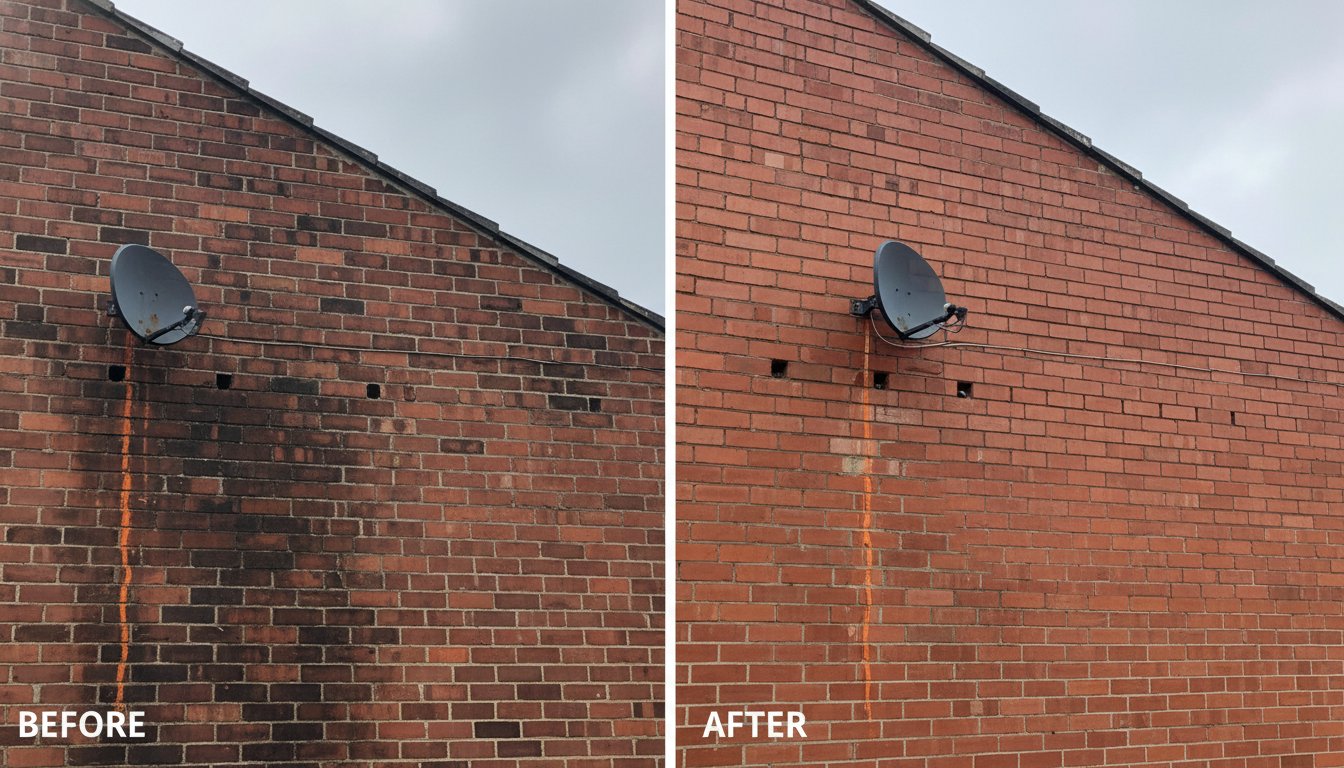
Look for "rust bleed" first. These are the telltale red or orange streaks that run down your brickwork from the metal bracket. This isn't just an eyesore; it's a sign that the protective coating on the fixings has failed, allowing oxidized metal to leach into the porous brick. Once these stains set, they're notoriously difficult to remove without heavy-duty chemicals. You should also check for "mortar rot," where the joints around the bolts appear darker, crumbly, or soft to the touch. This happens when the fixing holds onto moisture, preventing the mortar from drying out.
Spalling is a more severe symptom. This occurs when water gets trapped inside the bolt hole and freezes during a typical UK winter. As the ice expands, it puts immense pressure on the brick, causing the outer face to flake or pop off entirely. To reduce the potential for damage, homeowners should inspect these mount points annually for any signs of cracking. If the mortar joints are visibly "blown" or detached from the bolt, the seal is gone, and water is actively entering your cavity.
Internal Symptoms
The damage often reveals itself inside your home long after the external signs appear. Check the walls directly opposite where the dish is mounted. Are there dark, damp patches or is the wallpaper starting to peel? These are classic signs of ingress. In some cases, you might notice a persistent musty smell in upstairs bedrooms. This often leads back to an eaves-mounted dish where water has tracked along the fixings and soaked into the timber or plasterboard.
We recommend using a simple moisture meter to track the spread of damp. If the readings are highest near the cable entry point or the mounting bolts, you've found your culprit. Look for "tide marks" on your ceiling or walls; these yellowish stains indicate where water has pooled and dried repeatedly. If you notice any of these symptoms, it's time to book a professional removal to prevent further decay. Our team operates nationwide, ensuring your home stays dry and protected regardless of your location.
Secure your home today at dishgoodbye.com.
Contact us at dishgoodbye.com for expert nationwide service.
The Capillary Effect: Why Cables are a Hidden Flood Risk
Most homeowners focus on the rusted dish itself, but the black coaxial cable trailing across your wall is often the real culprit. It acts like a literal highway for rain. Without a proper "drip loop" (a simple U-shaped bend in the wire), water tracks down the exterior of the plastic sheath and funnels directly into the entry hole. This is a major contributor to water damage from satellite dish fixings that we see in homes from Cornwall to the Highlands. When gravity is on the side of the rain, your wall doesn't stand a chance.
Inside the cable, a more sinister process occurs. Capillary action draws moisture through the braided copper shield, pulling water along the inside of the wire like a wick. You might spot a strange "green gunk" oozing from your wall sockets or the end of the cable. This is oxidized copper, a definitive warning that moisture is deep within your system. It's a messy, acidic substance that ruins your decor and signals that your water damage from satellite dish fixings has moved from a structural issue to an internal one.
How Water Travels Inside a Wire
Physics doesn't stop just because you've unplugged your satellite box. Water is pulled through the microscopic spaces between the metal braids of the coaxial cable. Simply cutting the wire at the wall doesn't solve the problem; the moisture trapped inside the remaining segment continues to rot your plasterboard from the inside out. We've seen cases where water travels several meters along a cable run, eventually dripping into electrical sockets. This creates a genuine risk of short circuits that many people ignore until the power trips.
The Problem with Old Drill Holes
The silicone sealant used by original installers typically has a lifespan of 5 to 10 years. After a decade of UK winters, this material becomes brittle and cracks, leaving the drill hole completely exposed. Cables also tend to "sag" over time as their plastic clips loosen or perish. This change in angle destroys the original drip loop, turning the wire into a direct slide for wind-driven rain to enter your masonry.
When we perform a removal, we don't just snip the ends. We recommend complete cable extraction. Leaving a redundant, water-logged cable in your wall is like leaving a wet sponge in a wooden box. It will never dry out properly. By removing the entire run and sealing the void with professional-grade materials, we ensure your home stays dry and sparkling. Our nationwide team handles this process efficiently, giving you total peace of mind.
Secure your home today at dishgoodbye.com.
Contact us at dishgoodbye.com for expert nationwide service.

How to Properly Fix and Seal Holes from Redundant Fixings
Fixing the source of moisture is about more than just aesthetics; it's about structural preservation. Many people make the mistake of simply grinding off the bolt heads and painting over the remains. This is a temporary fix that leads to long-term failure. Leaving the rusted shank of a bolt inside your masonry allows the oxidation process to continue, which eventually cracks the surrounding brick. To stop water damage from satellite dish fixings, we ensure every piece of metal is extracted from the wall, leaving a clean void ready for restoration.
Preparation is the stage where most DIY attempts fail. Before any sealant is applied, we meticulously clean the hole to remove dust, rust flakes, and degraded mortar. If you skip this step, the filler won't bond to the masonry, and a new leak will form within months. We don't use standard bathroom silicone. Silicone is non-breathable and often pulls away from porous brickwork over time. Instead, we use high-grade, weather-resistant masonry fillers that expand and contract alongside your home's natural movements. This professional approach is why our customers across the UK trust us to protect their properties permanently.
The Professional Removal Process
Our nationwide team follows a strict three-step protocol to ensure a watertight result. First, we safely dismantle the dish and bracketry using specialized equipment for working at height. Second, we extract the original fixings entirely. This reveals the true extent of the hole and any hidden "blown" mortar. Finally, we inject high-grade masonry filler deep into the cavity to create a solid, weather-proof plug. This method eliminates the air pockets where moisture usually gathers, providing a definitive end to water damage from satellite dish fixings.
Restoring Curb Appeal and Integrity
A repair shouldn't look like a patch. We take the time to colour-match the filler to your specific brick or render. By smoothing and texturing the material to match the surrounding wall, we make the old mount point virtually invisible. This "Goodbye" touch ensures that your home returns to its original, sparkling condition. You can read more about how we help homeowners in our guide on Professional Dish Removal Service: Protecting Your Property.
Don't let an old bracket devalue your home or ruin your interior decor. Whether you're dealing with a single redundant dish or a complex array of old cables, we provide a consistent, high-quality service from the South Coast to the Scottish Highlands. Book our nationwide dish removal service today and enjoy the relief of a professionally sealed, maintenance-free home.
Secure your home today at dishgoodbye.com.
Contact us at dishgoodbye.com for expert nationwide service.
Professional Removal: Why "Goodbye" is the Best Protection
DIY might seem tempting to save a few pounds. However, the risks of working at height are significant. Statistics from the Health and Safety Executive consistently highlight falls from ladders as a primary cause of domestic injury. Beyond personal safety, an amateur attempt to pry a bracket loose often results in cracked bricks or "blown" mortar. We use professional-grade extraction tools that remove the fixing without stressing the surrounding masonry. This precision is the only way to effectively stop water damage from satellite dish fixings before it starts. It’s about doing the job once and doing it right.
We believe in a clean break from the past. That's why our service includes a full environmental commitment. We don't just leave your old dish in the bin or let it clutter your garden. Every piece of aluminium, steel, and copper cabling we remove is taken to a specialist recycling facility. This ensures your home looks sparkling and your conscience stays clear. Professional removal gives you the peace of mind that your home’s exterior is not just empty, but fully restored and weather-proofed against the next storm. It’s a lifestyle upgrade that prioritizes your comfort and your time.
Nationwide Expertise
We operate across the entire UK, bringing professional tools and years of experience to every doorstep. From the coastal winds of Brighton to the rainy streets of Manchester, we understand how local weather patterns impact your home's exterior. Thousands of UK homeowners have already trusted us to declutter their walls. If you have more than just a dish, check out our TV Aerial Removal: The Essential Guide for advice on clearing all your redundant tech at once.
Booking Your Removal
Our booking process is designed to be as effortless as the result. Whether you manage a large commercial block or just want to spruce up your own home, we handle all the logistics. A professional removal typically costs between £50 and £100 according to August 2023 industry benchmarks. This is a small investment when you consider that water damage restoration can cost up to £4,500 for moderate flooding repairs as of early 2026. You’ll see an immediate boost in curb appeal and feel the long-term benefit of a dry, healthy home. It’s time to say goodbye to the rust and hello to a better-managed household.
Contact Dish Goodbye to protect your home today.
Secure your home today at dishgoodbye.com.
Contact us at dishgoodbye.com for expert nationwide service.
Secure Your Home and Reclaim Your Curb Appeal
Old brackets and cables aren't just unsightly; they are structural liabilities. We've explored how vibrating dishes widen bolt holes and how capillary action turns cables into siphons. Preventing water damage from satellite dish fixings requires more than a quick snip of a wire. It demands professional extraction and specialized masonry repair to ensure your walls stay dry and your insulation remains intact. We've helped homeowners across the UK avoid the £4,500 cost of water damage restoration by acting before a small leak becomes a flood.
We provide a reliable, UK-wide professional service that takes the hassle out of property maintenance. Our team includes full hole-filling and smoothing as standard, so your home looks as good as new. Plus, we recycle 100% of the metal and e-waste we collect, making it a win for both your home and the environment. Say goodbye to redundant tech and protect your home; book your professional removal today. It's time to enjoy the relief of a maintenance-free exterior and a sparkling, well-managed home.
Secure your home today at dishgoodbye.com.
Contact us at dishgoodbye.com for expert nationwide service.
Frequently Asked Questions
Can water really get through the small holes left by a satellite dish?
Yes, water penetrates even tiny gaps with ease. In the UK, wind-driven rain hits walls at high speeds and tracks along the metal bracket directly into the masonry. This creates water damage from satellite dish fixings that often stays hidden until internal plaster starts to bubble or peel. We seal these holes professionally across the entire UK to keep your home dry and sparkling.
What is the green liquid coming out of my satellite cable?
That green ooze is oxidized copper, which is a certain sign that moisture is inside your cabling. Water tracks down the wire and reacts with the metal braid, creating an acidic liquid that can ruin your wallpaper and electrical sockets. It's a clear signal to say goodbye to that old equipment before the damage spreads further into your home's internal structure.
Will removing an old satellite dish stop the damp in my wall?
Removing the dish is the essential first step toward a dry home. By extracting the old bolts and sealing the entry points, you eliminate the primary route for water ingress. This simple action can prevent your restoration costs from climbing toward £4,500, which was the average for moderate water damage repairs recorded in January 2026. Stopping the source is the only way to ensure a permanent fix.
How do you seal a hole in a brick wall after removing a dish?
We don't just plug the hole; we restore the wall's integrity. First, we remove the entire bolt rather than just grinding the head off. Then, we clean the void and inject weather-proof masonry filler that matches your brick or render. This professional seal is designed to last for decades, unlike standard silicone which often fails after 5 years of exposure to the elements.
Is it safe to remove a satellite dish myself to save money?
DIY removal is risky and often leads to masonry damage. Ladder accidents remain a leading cause of domestic injury according to the Health and Safety Executive. Amateur attempts also tend to crack bricks or leave "weeping" holes that continue to leak. Our nationwide service handles the heights and the heavy lifting, giving you an effortless way to protect your property safely.
Does home insurance cover water damage from old satellite fixings?
Most standard UK policies don't cover this type of repair. Insurers generally view water damage from satellite dish fixings as a result of "gradual ingress" or lack of maintenance. Because the damage develops over several years, it's often excluded from claims. It's far more cost-effective to book a professional removal now than to face an uninsured repair bill later.
How long does it take to professionally remove a dish and seal the holes?
A professional removal usually takes between 45 and 90 minutes. Our team works efficiently to dismantle the dish, extract the cabling, and seal every hole to a professional standard. We provide this service across the entire UK, ensuring your home is protected and looks its best with minimal disruption to your daily routine or kitchen efficiency.
What happens to the old dish and cables after you remove them?
We take full responsibility for the waste. Every dish, bracket, and cable we remove is taken to a specialist facility where 100% of the metal and e-waste is recycled. You get a clean, decluttered exterior, and the environment stays protected. It's the most responsible way to say goodbye to your redundant tech while maintaining a modern, well-managed home.
Secure your home today at dishgoodbye.com.