
Contact dishgoodbye.com for professional satellite dish and cable removal services across the UK.
Did you know that 50% of all serious electric shocks in UK homes are caused by DIY errors? It's a sobering thought when you're standing on a ladder staring at a tangled "nest" of old wires. We understand the frustration of seeing your home's curb appeal ruined by redundant cables. Whether it's an old telephone line or a leftover lead, these eyesores do more than just look messy. They can lead to damp issues or even safety risks if you accidentally cut into a live main. We're here to help you master the process of removing unused cables from outside wall surfaces safely and effectively.
We believe every homeowner deserves a clean, maintenance-free exterior. In this guide, we'll show you how to identify redundant lines and say goodbye to the clutter without risking your safety or your Wi-Fi. You'll learn the best ways to seal drill holes to comply with building regulations and prevent water ingress. We'll also cover the latest BS 7671 Amendment 4 (A4:2026) standards to ensure your work stays up to code. From identifying live services to professional "making good" techniques, we're providing the roadmap to a sparkling, wire-free home across the entire United Kingdom.
Contact dishgoodbye.com for professional satellite dish and cable removal services across the UK.
Key Takeaways
- Master the art of identifying redundant coaxial and twisted pair wires so you never accidentally cut an active service.
- Stay safe by learning how to spot the difference between harmless signal leads and dangerous 230V mains electricity before removing unused cables from outside wall surfaces.
- Protect your home from damp by discovering the best way to seal old drill holes against the unpredictable UK weather.
- Follow our simple step-by-step guide to extract old wiring without leaving behind an ugly mess or damaged masonry.
- Say goodbye to exterior clutter for good by seeing how our nationwide service provides an effortless, professional finish for homes across the UK.
Contact us at dishgoodbye.com or call our UK-wide team for assistance.
Identifying Redundant vs. Active Exterior Cables
We see it all the time across the UK. Beautiful homes draped in tangled black and grey wires that serve no modern purpose. Before you start removing unused cables from outside wall surfaces, you must know exactly what is live and what is dead. Cutting the wrong line could instantly knock out your high-speed internet or your home security system. We operate nationwide, and our teams are experts at spotting the difference between a redundant Sky lead and a critical fibre connection. We're here to help you navigate this clutter with confidence.
Common UK Cable Types Explained
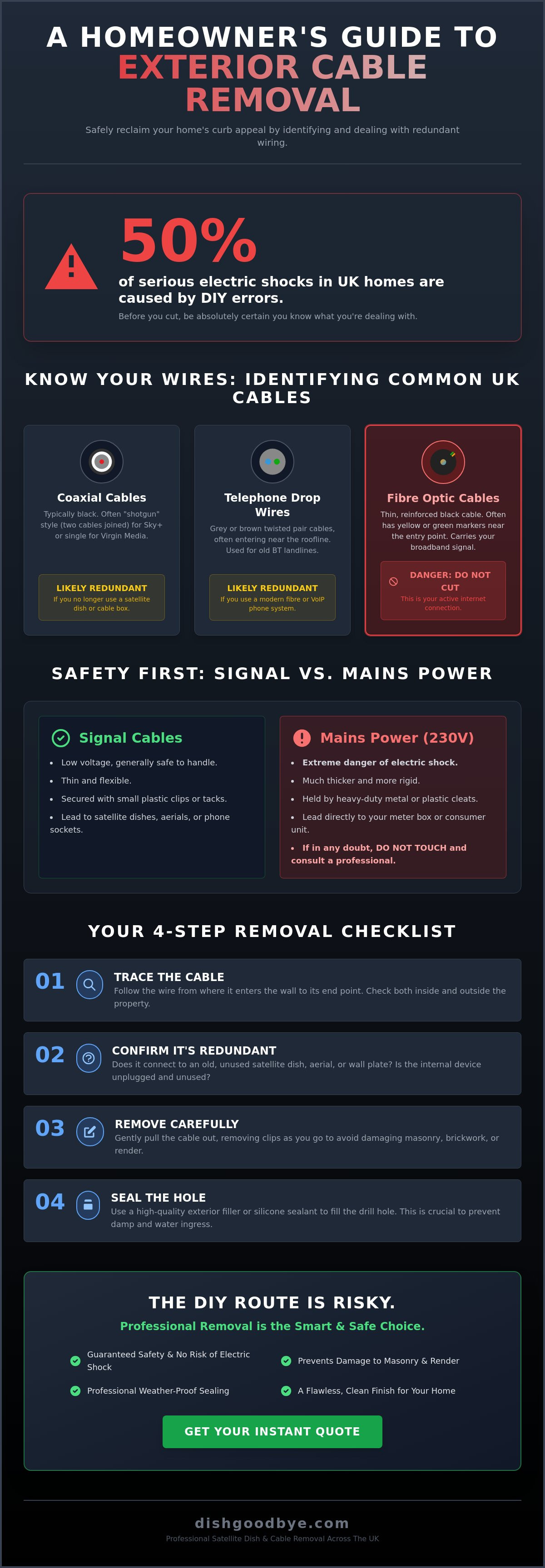
Most redundant wires in Britain fall into three distinct categories. Black coaxial cables are the most frequent offenders. These are often "shotgun" cables, which look like two wires joined together, used for older Sky+ HD setups. You might also see single black leads from Virgin Media installations. If you've switched to a streaming-only service, these are likely candidates for the bin. Grey or brown "drop wires" usually belong to BT. These often enter the house near the roofline and lead to an old master socket. Modern structured cabling systems have replaced many of these old analogue lines. Finally, watch out for thin, reinforced fibre optic cables. These are usually black with yellow or green markers near the entry point. Never cut these; they provide your current broadband.
How to Trace Cables Safely
We recommend a simple tracing method before you pick up the cutters. Follow the wire from the exterior entry point through the wall to see where it ends up inside. Does it plug into a router that's currently blinking? Does it lead to a set-top box you still use every evening? If the cable leads to an empty wall plate or simply ends in a messy pile of wires behind the TV, it's probably redundant. If ivy or cladding hides the path, a basic cable tracer from a DIY shop can help you follow the signal without stripping back your masonry or damaging your home's exterior.
The ultimate "dead end" test involves looking up at your roofline or chimney. If the cable leads directly to a rusted satellite dish or an old-fashioned TV aerial that you no longer use, it's a safe bet that the wire is dead. We specialise in full extractions, ensuring that when we say goodbye to the cable, we also remove the redundant hardware. This approach guarantees a clean finish and restores your home's original character. We provide this professional service across the entire UK, giving you total peace of mind.
Contact us at dishgoodbye.com or call our UK-wide team for assistance.
Contact dishgoodbye.com for professional satellite dish and cable removal services across the UK.
Safety First: Avoiding Electrical Hazards and Property Damage
We take safety seriously. While a coaxial cable might seem harmless, the environment around it can be unpredictable. According to verified data from 2025, approximately 50% of serious electric shocks in UK homes stem from DIY errors. This makes it vital to approach the task of removing unused cables from outside wall areas with a clear plan. It isn't just about aesthetics; it's about protecting your home and yourself from hidden dangers.
Signal vs. Power: Know the Difference
Mains electrical cables are usually much thicker than standard TV or phone wires. They typically lead directly to your meter box or consumer unit and are secured with heavy-duty clips rather than small plastic tacks. In contrast, low-voltage signal cables lead to satellite dishes or aerials. However, you must be aware of "induction." If a signal cable runs parallel to a power line for a long distance, it can carry a residual charge even if it isn't plugged in. Following UK electrical safety regulations is the best way to ensure you don't cross into dangerous territory. If you are ever unsure about a specific wire, you must consult a professional before making a cut.
Working at Height Safely
Ladders are often the biggest hazard during exterior maintenance. UK gardens are rarely perfectly level, which makes ladder stability a constant challenge. We always recommend having a second person to "foot" the ladder while you work. This prevents the base from slipping and provides an extra set of eyes on the cables above. We use specialist equipment and rigorous safety protocols to handle these tasks across the entire UK. If the thought of climbing a ladder makes you uneasy, we can take that burden off your hands.
Never yank a cable out of the wall. This "pull damage" can rip out chunks of masonry or damage the internal plasterboard. It's much safer to cut the cable close to the wall and extract it gently. We've seen many cases where a simple DIY job turned into an expensive repair because a cable was pulled too hard. Our teams focus on complete extraction without compromising your home's structural integrity. If you'd rather have the experts handle the heights, you can book a professional removal with our nationwide team to ensure a clean result.
Contact dishgoodbye.com for professional satellite dish and cable removal services across the UK.
Contact dishgoodbye.com for professional satellite dish and cable removal services across the UK.
Step-by-Step: Removing Unused Cables from Your Wall
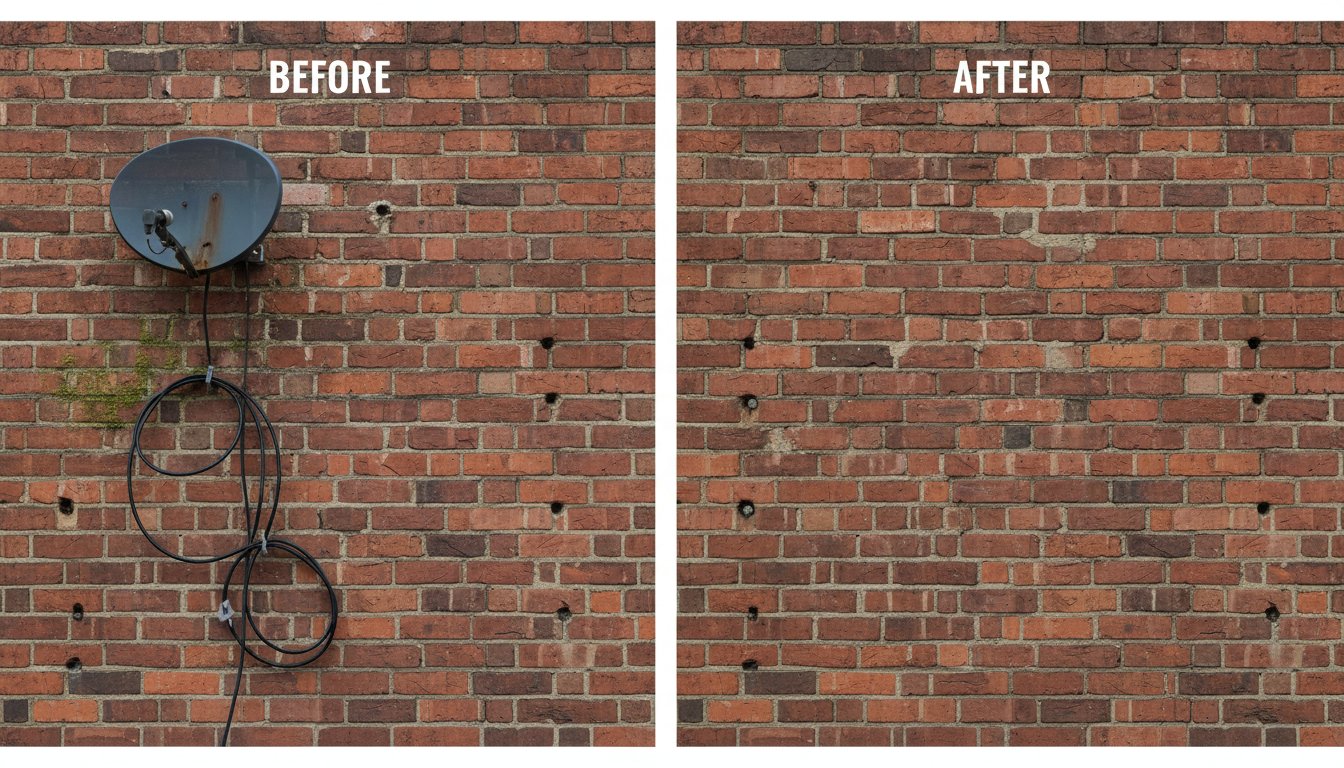
We believe that removing unused cables from outside wall surfaces should be a satisfying experience, not a headache. To get that sparkling, professional finish, you'll need a few tough, ergonomic tools. We recommend having side cutters, pliers, a flat-head screwdriver, and a quality masonry filler ready. Start by snipping the cable at the lowest point. This simple step de-tensions the wire, making it much easier to handle as you work your way up the ladder. It's the first step in saying goodbye to that unsightly clutter.
When you reach the entry point, don't cut the wire flush against the brickwork yet. Instead, leave a small "tail" of about 10 centimetres. This "stub" gives you something to grip with your pliers when it's time for the final extraction. Removing the cable clips requires a gentle touch to avoid chipping your render or leaving ugly scars on your brickwork. We recommend using the screwdriver to pry the clip away from the wall slowly. We handle these delicate tasks nationwide, ensuring your home's integrity remains intact from Land's End to John o' Groats.
Once the clips are gone, gather the old wire. Waste cable is valuable scrap metal. Under UK waste regulations, recovered copper and plastic should be set aside for proper recycling. We're committed to domestic harmony, and that includes keeping your garden free of debris. If you're dealing with a large amount of cabling, remember that storing more than 50 tonnes of waste cable requires a specific T9 exemption, though most domestic jobs won't come close to this limit.
The Clean Cut Technique
Working up the wall prevents "zipper" damage. This happens when a falling cable rips several clips out at once, potentially taking chunks of masonry with it. This is especially important on older UK properties with lime mortar or pebble-dash. These surfaces are brittle and prone to cracking. By removing each clip individually, we ensure the wall stays smooth and undamaged. It's a low-effort way to maintain your curb appeal and protect your home's exterior.
Internal vs. External Extraction
Now for the extraction. We usually prefer to pull the cable out from the exterior. This method minimises the risk of blowing out the internal plasterboard, which is much harder to repair than a small hole in the brick. If the cable is snagged, a gentle push from the inside can help. Once the wire is out, you'll be left with a clean hole ready for sealing. We provide this complete, effortless service across the entire UK, transforming your home's exterior in one quick visit.
Contact dishgoodbye.com for professional satellite dish and cable removal services across the UK.
Contact dishgoodbye.com for professional satellite dish and cable removal services across the UK.
Preventing Damp: Sealing and Filling Fixing Holes
We know that removing unused cables from outside wall surfaces is only half the task. Every clip and cable entry point leaves behind a small puncture in your home's protective shell. In the UK's wet climate, these holes act like tiny straws. They suck rainwater directly into your cavity wall or internal plasterwork. This moisture can quickly lead to damp patches, peeling paint, and a musty smell inside your living room. We're here to help you seal those gaps for good to ensure your home stays dry and comfortable.
Leaving redundant brackets or open holes is a recipe for long-term structural trouble. During the cold winter months, water trapped inside these gaps freezes and expands. This process, known as spalling, can cause the face of your bricks to crack or pop off entirely. It's a costly problem to fix, but it's entirely avoidable with the right care and the right materials. Beyond aesthetics, building regulations in England and Wales require that any penetration through an external wall is properly sealed to maintain the building's integrity and fire separation.
Choosing Your Sealing Material
For small cable entry points, we recommend using high-quality silicone. You can choose a clear version or a colour-matched option that blends seamlessly with your brickwork. It's flexible, tough, and creates an instant watertight seal that moves with your house. However, if you've removed a heavy satellite dish bracket, you'll need something more substantial. Sand and cement mortar is the best choice for larger holes. It provides a structural repair that matches the strength of your masonry. You can learn more about how unfilled holes from fixtures can cause damp to understand the full impact on your property.
Professional Restoration Tips
Achieving a sparkling, invisible finish is an art. We always apply filler in layers, starting from the back of the hole to ensure there are no air pockets left behind. To match the texture of your wall, use a small brush or a sponge to stipple the surface of the filler while it's still wet. This is particularly effective for render or pebble-dash. We include this professional hole-filling as a standard part of our nationwide service because we believe a job isn't finished until your wall looks brand new. If you're ready for a clean exterior without the DIY stress, book our expert removal team today for a professional finish anywhere in the UK.
Contact dishgoodbye.com for professional satellite dish and cable removal services across the UK.
Contact dishgoodbye.com for professional satellite dish and cable removal services across the UK.
Why Professional Cable Removal Beats the DIY Approach
We've explored the technical side of removing unused cables from outside wall surfaces. Now, let's talk about the easiest way to get the job done. DIY forums often suggest this is a simple weekend task. However, they rarely mention the frustration of wobbly ladders or the cost of buying specialist masonry sealants you'll only use once. We offer a definitive break from these past frustrations. Our nationwide team transforms a messy chore into a satisfying, low-effort experience for homeowners across the UK. We bring the tools, the expertise, and the ladders so you don't have to.
The "Dish Goodbye way" is about more than just snipping a wire. It's about a complete lifestyle upgrade for your home's exterior. We focus on total extraction, meticulous restoration of your brickwork, and responsible recycling. This solution-oriented approach ensures that once the tech-clutter is gone, it stays gone. We operate with a professional and reliable national presence, ensuring that every customer receives the same high standard of service from Cornwall to the Highlands.
The True Cost of DIY
DIY isn't always the bargain it seems. Once you factor in the price of high-quality side cutters, professional-grade fillers, and the sheer value of your time, the professional route becomes the savvy choice. We use two-person teams to ensure maximum safety at height. This is a critical consideration that many online guides downplay. Working on a ladder while trying to extract stubborn clips is a recipe for a fall or property damage. Our experts handle the extraction and the restoration in one swift, energetic visit. You can read more about how a Professional Dish Removal Service: Protecting Your Property ensures a clean, damage-free result every time.
Our Environmental Commitment
We are deeply committed to domestic harmony and environmental health. We never "just bin" old wiring. Old coaxial and copper leads are valuable materials that belong in specialized recycling streams, not landfills. We ensure 100% of the metal and plastic we remove is processed correctly through our zero-landfill promise. This is a key part of our Satellite Dish Recycling: The Complete UK Guide. By choosing us, you're opting for an eco-friendly resolution to your home maintenance needs.
Reclaiming your curb appeal has never been more convenient. Say goodbye to tech-clutter and hello to a sparkling, wire-free home today. We serve every corner of the United Kingdom with professional, organized teams. Get your free quote at dishgoodbye.com or contact us for UK-wide service to start your home's transformation.
Contact dishgoodbye.com for professional satellite dish and cable removal services across the UK.
Contact dishgoodbye.com for professional satellite dish and cable removal services across the UK.
Reclaim Your Home’s Sparkling Exterior Today
We’ve explored the essential steps for identifying redundant wires and the vital techniques for sealing drill holes against the unpredictable British weather. You now understand that removing unused cables from outside wall surfaces is about more than just aesthetics; it’s a critical maintenance task that prevents damp and protects your home’s structural integrity. While the DIY route is possible, the complexities of modern wiring and the risks of working at height make professional intervention the savvy choice for most homeowners.
We provide a safe nationwide service at any height, ensuring every redundant lead is handled with care. Our process includes approved E-waste recycling for all cables and full masonry restoration as standard. We take the stress out of home maintenance, leaving you with a clean, wire-free exterior that restores your property’s original character. It’s time to stop letting "tech-clutter" ruin your curb appeal and embrace a more organized, efficient home.
Say goodbye to ugly cables; book your professional UK-wide removal today at dishgoodbye.com. We’re ready to help you achieve that perfect, maintenance-free finish anywhere in the United Kingdom.
Contact dishgoodbye.com for professional satellite dish and cable removal services across the UK.
Contact dishgoodbye.com for professional satellite dish and cable removal services across the UK.
Frequently Asked Questions
Is it safe to cut black cables on the outside of my house?
It is generally safe to cut black coaxial cables used for satellite or cable TV, provided you've confirmed they aren't live mains power lines. These signal wires carry very low voltage that won't give you a shock. However, you must trace the wire first to ensure it isn't your current fibre optic internet connection. We recommend using insulated side cutters and checking the entry point inside your home for active equipment before snipping.
Can removing old cables cause damp in my walls?
Removing unused cables from outside wall areas won't cause damp, but the empty holes left behind certainly can. These drill paths act as direct channels for rainwater to enter your cavity walls or internal plaster. To prevent moisture ingress, you must seal every hole with high-quality silicone or masonry filler. We include this essential sealing as a standard part of our professional removal service to keep your home dry and protected.
Do I need permission from Sky or Virgin to remove their old cables?
You don't usually need permission from providers to remove redundant external cabling from your own property. Once the service contract ends, the wiring is typically considered the homeowner's responsibility. Most UK providers won't return to remove old leads, leaving you free to reclaim your curb appeal. We help homeowners across the UK say goodbye to this unsightly tech-clutter with our efficient, nationwide removal teams.
What tools do I need to remove cable clips without damaging bricks?
You'll need a flat-head screwdriver and a pair of pliers to remove clips safely. Gently pry the clip away from the masonry rather than yanking the wire, which can cause the brick face to "pop" or chip. This is especially important on brittle UK pebble-dash or lime mortar. A patient, steady approach ensures your walls remain sparkling and undamaged. If the clips are rusted solid, we have the professional tools to extract them cleanly.
How do I fill the holes left behind after removing a cable?
Fill small holes with clear or colour-matched silicone sealant for a flexible, watertight finish. For larger gaps left by old brackets, use a sand and cement mortar mix to provide a structural repair. Apply your chosen filler in layers to ensure there are no air pockets where water could settle. We provide this meticulous restoration as part of our UK-wide service, matching the texture of your wall for a professional, invisible result.
What should I do if the cable is too high for my ladder?
You should stop and call a professional team if you can't reach the cable safely while keeping three points of contact on your ladder. Working at height on uneven UK garden terrain is the leading cause of DIY accidents. We use specialist high-reach equipment and two-person safety protocols to handle these difficult areas. We serve every corner of the United Kingdom, so you don't have to risk a fall to get a clean exterior.
Are old telephone wires still live with electricity?
Old BT telephone lines carry a constant 48V DC current, which can jump to around 75V when the "phone" rings. While this isn't usually dangerous to healthy adults, it can produce a surprising tingle if you're touching the copper cores. Treat every wire with respect and use insulated tools to avoid any minor shocks. We're experts at identifying these legacy lines and can safely extract them while ensuring your home's modern connections stay active.
Can I recycle old coaxial cables at home?
You shouldn't put old coaxial cables in your standard domestic recycling bin as they contain a complex mix of copper, steel, and plastic. These materials require specialist E-waste processing to be recycled responsibly according to UK regulations. We operate a zero-landfill policy and ensure 100% of the cabling we remove is sent to approved recycling centres. It's a convenient way to clear your clutter while doing your bit for the environment.
Contact dishgoodbye.com for professional satellite dish and cable removal services across the UK.