dishgoodbye.com | National UK Service
A single rusted screw left behind on your flat roof is a ticking time bomb for your home's interior. While most homeowners focus on the unsightly clutter of an old metal arm, the real danger lies beneath the surface in the delicate waterproof membrane. If you are considering removing a dish from a flat roof, you know that one wrong move can turn a simple cleanup into a costly repair job. We understand the anxiety of potentially puncturing bitumen or EPDM layers, especially when the UK weather is so notoriously unpredictable.
We believe that clearing your roofline should bring a sense of relief, not a leak. In this guide, we promise to show you the safest professional methods to reclaim your home's silhouette while ensuring a 100% watertight finish on every fixing point. You will discover which sealants actually bond to your specific roof type and how to handle old hardware responsibly. It is time to say a permanent goodbye to redundant tech and enjoy a cleaner, safer, and more efficient property today.
dishgoodbye.com | Professional Satellite Dish Removal
Key Takeaways
- Protect your property from hidden leaks by understanding how capillary action draws water into old screw holes on flat surfaces.
- Identify whether your equipment uses a bolted membrane mount or a non-penetrating sled system before beginning the extraction.
- Master the professional sequence for removing a dish from a flat roof to ensure your home remains 100% watertight and secure.
- Stop the cycle of damage by removing redundant brackets that can widen existing holes through seasonal thermal expansion.
- Achieve a pristine, clutter-free roofline while ensuring your old hardware is handled through responsible UK recycling centres.
dishgoodbye.com | National UK Service
Why Flat Roof Dish Removal Requires a Specialized Approach
Flat roofs are efficient, modern, and provide a sleek profile for your property. However, they are also high-maintenance zones where gravity doesn't always work in your favour. When you're removing a dish from a flat roof, you're not just taking down a piece of metal; you're managing a potential breach in your home's armour. Unlike pitched roofs that shed water instantly, flat surfaces allow moisture to linger around any obstacle. This creates a unique set of challenges that require a professional touch to ensure your property stays dry and secure.
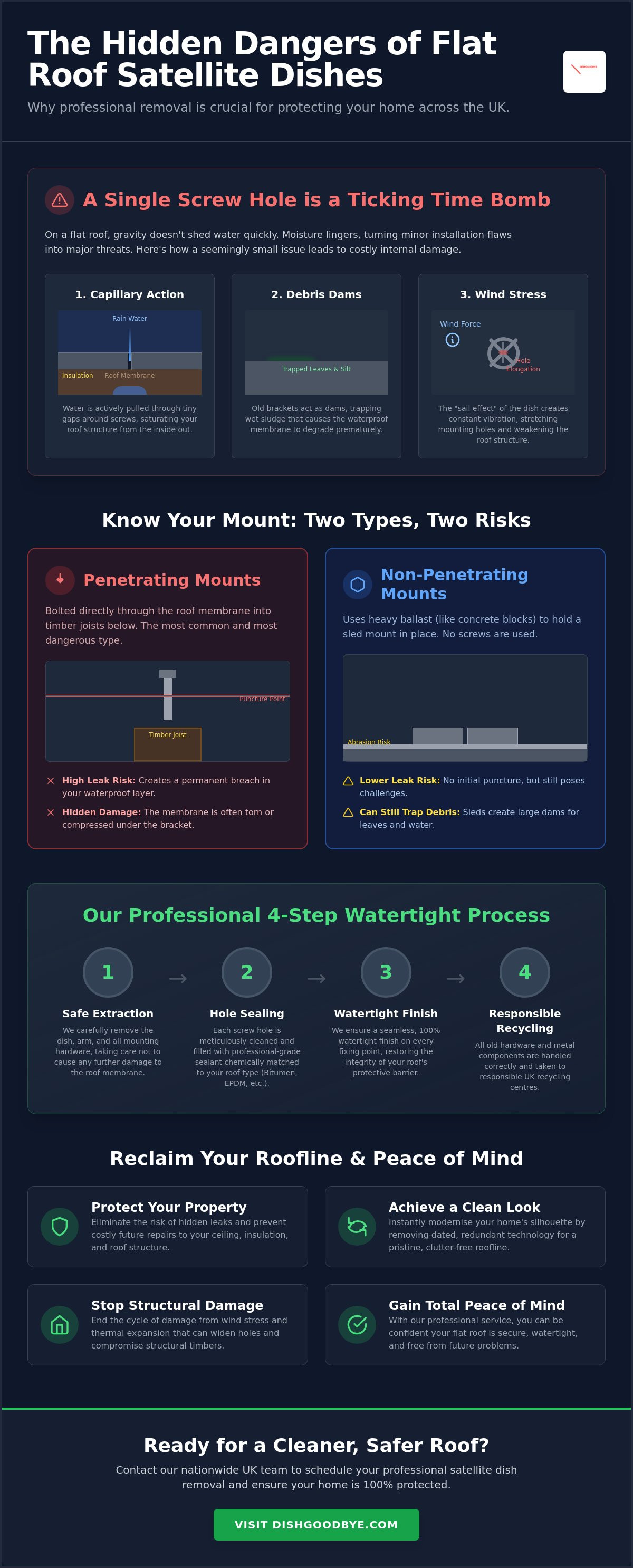
When water pools around an old bracket, a phenomenon known as capillary action begins. This process allows water to be sucked through tiny, microscopic gaps around screw fixings. It acts like a straw, pulling moisture deep into your roof's structure even when there isn't a visible flood. Removing a dish from a flat roof is the only way to restore the seamless, protective barrier your home deserves. It stops the silent infiltration of water before it reaches your ceiling.
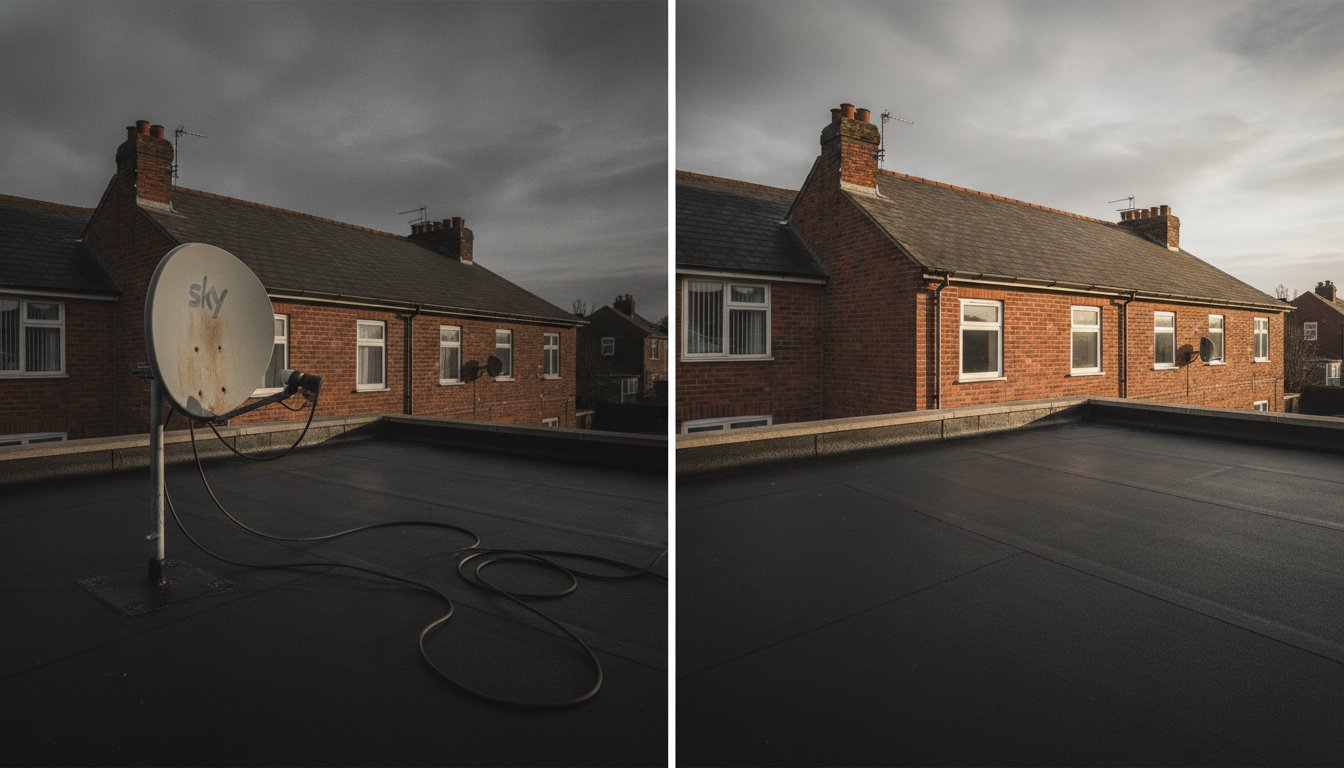
Beyond the technical risks, there's the undeniable boost to your home's curb appeal. A cluttered roofline looks dated and neglected. By choosing to say goodbye to old tech, you instantly modernise your property's silhouette. We specialise in creating that pristine, "after" look where the only thing people notice is your clean, crisp roofline. It's a simple lifestyle upgrade that prioritises both your home's health and its visual harmony.
The Problem with Standing Water
Traditional mounts often act as unintended dams on flat surfaces. These "dams" trap leaves, silt, and organic debris that would otherwise wash away. Over time, this wet sludge causes the waterproof membrane to degrade prematurely. If the membrane fails, water doesn't just drip; it saturates large areas of your roof insulation. This trapped moisture ruins thermal efficiency and can lead to expensive internal repairs. We see this often across the UK, where a small blockage leads to a large-scale renovation project.
Wind Stress and Mechanical Wear
The various satellite dish components, such as the reflector and the arm, act like a sail in the wind. On a flat roof, this "sail effect" creates constant, rhythmic vibration. This movement puts immense pressure on the fixings, leading to "hole elongation" where the mounting holes slowly stretch in softer materials like EPDM or bitumen. Removing the dish early prevents this mechanical wear from reaching the structural timbers, effectively stopping rot before it starts. It's the smartest way to protect the bones of your building.
dishgoodbye.com | Professional Satellite Dish Removal
dishgoodbye.com | National UK Service
Identifying Your Flat Roof Mount: Lagged vs. Non-Penetrating
Before you touch a single bolt, you need to know exactly what is holding that hardware in place. Identifying the mount type is the first step in removing a dish from a flat roof safely. Not all installations are the same. Some are intrusive, piercing through your home's protective layers, while others rely on pure weight. The complexity of your project depends entirely on how the original installer decided to fight the wind.
Common fixing hardware includes lag bolts, coach screws, and toggle bolts. Each one leaves a different footprint. Knowing what you are looking at helps you prepare the right tools and sealants for the job. If you misidentify the mount, you might miss a hidden puncture point that leads to a slow, silent leak later in the year. We believe in getting it right the first time to give you total peace of mind.
Penetrating Mounts (Lagged)
Lagged mounts are the most common and, unfortunately, the most intrusive. You can spot these by the heavy-duty bolts or coach screws that go directly through the membrane and into the timber joists below. While this makes the dish incredibly stable, it creates a permanent breach in your waterproof layer. This is why council regulations on satellite dishes often restrict or prohibit fixing hardware to flat roofs. The risk of internal damp is simply too high for many local authorities to permit.
The specific danger here is the hidden puncture. Beneath the mounting plate, the membrane is often compressed or slightly torn. When you pull the bolts out, you're left with an open channel for water. These holes require professional-grade sealing that matches your roof's chemistry. Simple DIY fillers from a local hardware shop often fail to bond correctly to bitumen or EPDM, leading to a false sense of security.
Ballasted or Sled Mounts
Ballasted mounts, also known as sled mounts, are non-penetrating systems. Instead of bolts, they use heavy concrete blocks or paving slabs to keep the equipment grounded. You'll see the metal frame sitting on top of the roof, held down by the sheer mass of the ballast. While there are no holes to worry about, these mounts carry a different risk: surface scuffing. Over years of wind vibration, the heavy frame can rub against the membrane, thinning it out.
Moving these heavy blocks is a delicate task. Dropping a concrete slab can crack a GRP roof or puncture a felt surface instantly. It's about managing the weight without compromising the surface beneath. If you want to avoid the heavy lifting and ensure a pristine finish, we can handle the entire satellite dish removal for you. It's a quick, effortless way to reclaim your roofline without the physical strain.
dishgoodbye.com | Professional Satellite Dish Removal
dishgoodbye.com | National UK Service
The Step-by-Step Process for Safe Dish Extraction
Removing a dish from a flat roof is a methodical process that rewards patience. If you rush, you risk tearing the delicate membrane that protects your home. We follow a strict sequence to ensure every extraction leaves the roof in better condition than we found it. Start by securing your access point. Flat roofs can be slippery, especially with morning dew or moss growth. Clear the work area of any loose debris before you begin. This prevents grit from being ground into the surface as you move around.
Focus on the hardware once your area is clear. Use high-quality socket wrenches to loosen the bolts. Don't use excessive force; if a bolt is rusted, use a penetrating oil rather than yanking it. Pulling too hard can cause the mounting plate to bite into the roofing material, creating a larger tear than necessary. After the bracket is clear, you must clean the area immediately. Dust, grit, and old sealant will prevent your new patch from bonding correctly. A clean surface is the foundation of a watertight repair.
Handling Redundant Cabling
Many people think they can just snip the wires and walk away. Cutting cables flush is a mistake that leads to internal damp. These cables act as a conduit for water. If you leave a stump, moisture can travel down the outer sheath and into your walls. They must be fully extracted from the entry point. At Dish Goodbye, we provide a full extraction promise. We remove the entire coaxial trail and seal the entry hole with professional-grade grommets or weather-shielding mastic. This ensures no hidden pathways for rain are left behind.
Material-Specific Sealing Techniques
Your seal must match your roof material perfectly. A universal filler is rarely the permanent answer. For traditional felt or bitumen, we use cold-applied liquid membranes or reinforced bitumen patches that fuse with the existing surface. EPDM rubber roofs are different. They require rubber-to-rubber primers and specific adhesive patches to create a lasting chemical bond. If you have a GRP fibreglass roof, you will need resin and matting to achieve a seamless finish. Each material has its own rules for a 100% watertight result. This attention to detail is essential when removing a dish from a flat roof to prevent future headaches. It's why our customers enjoy a stress-free transition to a cleaner, clutter-free home.
dishgoodbye.com | Professional Satellite Dish Removal
dishgoodbye.com | National UK Service
The Hidden Risks of Leaving Redundant Brackets Behind
A common misconception suggests that leaving an old bracket in place prevents leaks. This couldn't be further from the truth. In reality, a "dead" bracket is a liability that grows more dangerous with every passing season. When you consider removing a dish from a flat roof, you must commit to removing the entire assembly. Leaving the baseplate behind doesn't just look messy; it actively compromises your roof's lifespan. It is a shortcut that often leads to a long-term repair bill.
One major issue often ignored is the "cable trail." Redundant wires left snaking across a flat surface act as miniature dams. They trap silt, moss, and autumn leaves, creating a permanent patch of damp sludge. This moisture sits against your membrane, slowly eating away at the protective coating. We also see significant "rust tracking" where oxidising metal stains the roof surface. These orange streaks aren't just ugly; the chemical reaction can actually weaken certain roof finishes over time. Additionally, low-profile brackets on accessible flat roofs or balconies pose a genuine trip hazard for your family.
Thermal Expansion and Contraction
Metal behaves differently than roofing materials. It heats up rapidly in the summer sun and cools fast at night. This constant cycle causes the metal to expand and contract at a much faster rate than your bitumen, GRP, or EPDM. It creates a subtle but relentless "tugging" effect on the seals around the original bolts. Over time, this movement widens the holes and breaks the bond of old sealants. It turns a once-tight fixing into a direct channel for rainwater. A bracket without a dish is a ticking time bomb for your roof's integrity.
Restoring Home Curb Appeal
The visual transformation of a clear roofline is remarkable. Clutter-free surfaces reflect a well-maintained, modern home that is ready for the future. You can learn more about improving curb appeal in our nationwide guide. Remember, your "after" result should show a completely clear surface with no metal stumps or wires left behind. It's about achieving that satisfying sense of domestic harmony and efficiency. A clean roof is a happy roof.
Don't wait for a leak to tell you that an old bracket has failed. We can handle your Sky dish removal today to ensure your roof remains pristine and protected. It is the easiest way to reclaim your time and protect your property investment.
dishgoodbye.com | Professional Satellite Dish Removal
dishgoodbye.com | National UK Service
Professional Flat Roof Dish Removal with Dish Goodbye
Homeowners across the UK trust us to handle the high-stakes task of clearing redundant hardware. We offer a seamless, nationwide service that takes the stress out of property maintenance. When you're removing a dish from a flat roof, you aren't just hiring a handyman. You're partnering with a specialist who understands the specific vulnerabilities of your home's waterproof membrane. Our process is designed to be quick, clean, and completely final. We turn a frustrating chore into a satisfying, low-effort experience for you.
We don't just pull bolts and leave. Our "Fill and Smooth" guarantee is a core part of our commitment to your property's integrity. We ensure every fixing point is treated with material-specific sealants that bond perfectly to your roof type, whether it's bitumen, EPDM, or GRP. This keeps your home 100% watertight and preserves your structural health. Getting started is easy and transparent. We provide fast, fixed-price quotes so you know exactly what to expect. No hidden fees, just professional results.
Safety and Insurance
Safety is our top priority. Our technicians are fully trained for working at heights and familiar with the unique challenges of different flat roof surfaces. Choosing a professional dish removal service ensures your existing roof warranty remains intact. DIY attempts or unskilled contractors can often void these protections through improper sealing or surface damage. We handle the risks and the technical details so you can enjoy a pristine result without the worry. It's a total lifestyle upgrade for your home.
Eco-Friendly Disposal
We take our environmental responsibility seriously. Our "Zero-Landfill" commitment means that every piece of metal and electronic waste is processed through specialised satellite dish recycling centres. We never "just bin" your old hardware. Instead, we ensure it's repurposed or recycled correctly, contributing to a cleaner future for the UK. When we finish, your roof is clear, your home is watertight, and the old tech is gone for good. Ready for a cleaner roofline? Contact Dish Goodbye today at dishgoodbye.com. We're ready to help you reclaim your home's modern silhouette.
dishgoodbye.com | Professional Satellite Dish Removal
dishgoodbye.com | National UK Service
Reclaim Your Cleanest Roofline Today
Your flat roof is more than just a structural surface; it is a vital shield for your home. By choosing to address redundant hardware now, you are preventing the silent damage caused by thermal expansion and moisture traps. We believe every UK homeowner deserves the relief of a clutter-free, watertight property. Removing a dish from a flat roof doesn't have to be a high-stakes gamble with your waterproof membrane when you have a professional team by your side.
Ready to clear your roofline? Book your professional dish removal with Dish Goodbye today. We provide complete extraction of all brackets and cabling as standard. You can rest easy knowing we use weather-tight hole filling to protect your interior and ensure 100% of metal and e-waste is recycled responsibly. It is time to say a definitive goodbye to old tech and enjoy the domestic harmony of a modern, well-managed home.
dishgoodbye.com | Professional Satellite Dish Removal
dishgoodbye.com | National UK Service
Frequently Asked Questions
Can I remove a satellite dish from a flat roof without a ladder?
You almost always need a ladder or scaffolding for safe access unless your property has a dedicated roof hatch. Even with a hatch, reaching the dish often requires a step ladder to clear the parapet walls safely. We never recommend leaning out of windows or using unsecured furniture to reach the hardware. Professional access ensures you don't damage the roof edge during the climb.
Will removing the dish from my flat roof void my warranty?
Improper DIY removal can void your roof warranty if it leads to leaks or membrane damage. Most roofing guarantees require repairs to be carried out by qualified professionals using approved materials. By choosing an expert service, you ensure the seal matches the original installation standards. This protects your long-term investment and keeps your home's insurance valid.
What is the best sealant for holes in a flat rubber (EPDM) roof?
The best solution for EPDM is a dedicated rubber-to-rubber adhesive patch combined with a specific primer. Silicone or household mastics don't bond permanently to rubber and will peel away after a few seasons. When removing a dish from a flat roof, using the correct chemical bond is the only way to guarantee a 100% watertight result. It's a small detail that prevents a major leak.
Do I need to remove the cables as well as the dish?
Yes, you should always remove the cables to prevent them from trapping wet debris against the membrane. Redundant wires create "dams" that lead to standing water and moss growth. We perform a full extraction of the coaxial trail and seal the entry points professionally. This leaves your roofline clean and prevents water from traveling down the cable into your walls.
Can I leave the mounting bracket on the roof and just take the dish?
No, leaving the bracket is a mistake that leads to rust tracking and thermal expansion leaks. Metal brackets heat up and cool down faster than your roof; this pulls at the seals and widens the bolt holes over time. A clean "after" result should show a completely clear surface. Removing the entire assembly is the only way to ensure total property integrity.
How much does professional flat roof dish removal cost in the UK?
Professional removal costs vary across the UK based on the height of your property and the type of mount used. Some systems are bolted through the membrane while others use heavy ballast, which changes the time required for a safe extraction. We recommend getting a fixed-price quote to ensure you have a clear understanding of the service before work begins.
What happens if the bolts are rusted into the flat roof joists?
Rusted bolts require penetrating oil and specialized extraction tools to avoid snapping the hardware inside the timber joists. If a bolt breaks, it leaves a metal fragment that can continue to rust and expand, causing further damage to the roof structure. We use professional techniques to remove stubborn fixings without yanking or tearing the surrounding membrane. This keeps the repair area small and manageable.
Is it safe to walk on my flat roof to remove the dish myself?
Walking on a flat roof is often dangerous due to hidden structural weaknesses or slippery moss. Many membranes, especially older felt or GRP, can become brittle and crack under concentrated foot pressure. If you aren't certain about the load-bearing capacity of your roof, it's best to stay off it. Professional technicians use specialized boards to distribute weight safely during the removal.
dishgoodbye.com | Professional Satellite Dish Removal