
A landlord isn’t automatically responsible when a previous tenant leaves a satellite dish in a UK rental. The tenancy agreement may make the tenant responsible for removing it and repairing damage caused by installation. If it says nothing about this, responsibility may need to be clarified with the landlord or managing agent. Before arranging removal, check whether the dish serves only the flat or is part of a communal system, and ask the landlord or managing agent for permission.
An unwanted dish, bracket or cable can make a home feel unfinished, but removing shared equipment could affect other residents. First establish who owns or manages the dish and what the tenancy agreement says.
This guide explains how to establish responsibility, identify a possible communal system, and consider the bracket and the cable entry point. These steps can help you resolve the issue safely and plan how to restore a tidy exterior.
Key Takeaways
- Start with the tenancy agreement: it may set out who must remove the dish and repair any installation damage.
- Before arranging removal, get the landlord or managing agent’s agreement, especially if the dish could serve other residents.
- Look for signs of a communal system and establish who has authority over shared equipment before anything is taken down.
- Consider the bracket and cable route separately; removing the dish does not always mean every fitting or cable should go.
- Plan to leave the wall entry point weather-sealed and the fixing holes made good, while recognising that wider masonry or finish repairs may be separate work.
Who is Responsible for the Satellite Dish Removal?
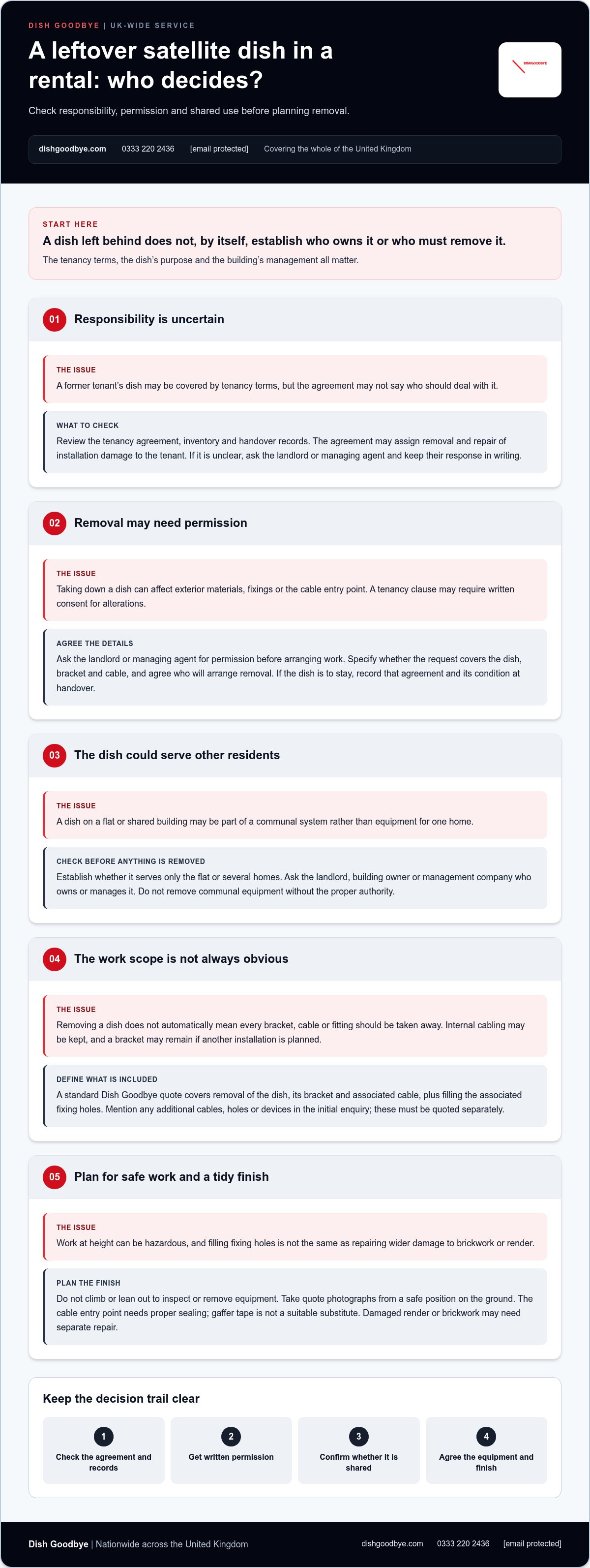
Responsibility depends on the tenancy agreement, the dish’s purpose and who manages the building. If a previous tenant has left a satellite dish in a UK rental, check the paperwork and get the landlord’s or managing agent’s permission before arranging removal.
Landlord Restrictions on Satellite Dishes
Landlords may set reasonable restrictions on where and how tenants install satellite dishes. A dish fixed to an exterior wall or placed in a shared area can affect the whole building, not just one household.
A landlord may prohibit dishes in an apartment block’s common areas and can have the final say over placement and installation as a reasonable restriction. Planning permission is rarely required for a satellite dish, but that does not remove tenancy or building restrictions. According to the UK Government, planning limits include no more than two antennas on a property overall.
Responsibility for a Former Tenant’s Dish
Start with the tenancy agreement to establish responsibility when a former tenant leaves a dish behind. If it says who must remove the equipment and repair installation damage, those terms guide the next steps.
If the agreement doesn’t specify who must remove the dish or repair any damage, check with the landlord or managing agent before arranging work. That doesn’t mean a new tenant should remove it independently. Tell the landlord or managing agent what remains, including any visible bracket, cable or wall damage, and keep their reply.
Consent for Dish Alterations or Removal
A tenancy clause may require written landlord consent before a tenant makes alterations or adds equipment. This can matter for removal too: taking down a dish may disturb fixings, exterior materials or the cable entry point.
Read the clauses about alterations, damage and satellite dishes before acting. If you rent, ask the landlord or managing agent for written permission and describe exactly what you propose to remove. Clarify whether the request covers just the dish or also its bracket and cable. A written agreement helps prevent later disagreement about the authorised work and the wall’s condition.
Ownership and Use of a Leftover Dish
A dish left at the property doesn’t, by itself, establish who owns it. Check the tenancy inventory, agreement and any written handover record, then ask the landlord or managing agent to clarify its status.
A new tenant may be able to use the dish if it is theirs to use and the landlord permits it, but its presence does not prove it works. Ask before connecting equipment or changing the installation. If the landlord says it should be removed, agree who will arrange that work before anything is detached. This keeps ownership, permission and responsibility clear.
Responsibility for removing a satellite dish after a tenant moves out
The tenancy agreement should clarify who must remove a dish and repair installation damage. Before arranging work, agree what should happen to the dish, bracket, cable and wall entry point.
Tenant Responsibility When Moving Out
A tenant may be responsible for removing their dish and repairing damage caused by its installation when they leave. Check the tenancy agreement for clauses about alterations, satellite equipment and the property’s condition. If the landlord or letting agent requests removal, keep the request and your reply in writing. If they won’t deal with the dish, report the issue clearly, ask for their decision and retain the response with your move-out records.
Removing the Dish, Bracket and Cables
Removal may involve taking down just the dish or also dealing with its bracket and associated cable. Clarify the agreed scope before work starts. A bracket might remain if another satellite installation is planned, while internal cabling may be kept to avoid disturbing decoration without practical benefit. Record which parts remain so the next occupant and landlord can distinguish an agreed choice from unfinished work.
Safe Removal and Sealing Fixing Holes
Avoid removal that requires climbing, leaning out or handling a corroded assembly without a proper work-at-height assessment. Take any quote photographs from a safe position on the ground, not from a ladder or roof. After removal, the fixing holes need filling, and the cable entry point needs sealing. Don’t use gaffer tape as a substitute for a suitable seal.
How do you safely remove a satellite dish and seal the fixing holes? Arrange removal without climbing or leaning out, then ensure the entry point is properly sealed and the fixing holes are filled. Damaged render or brickwork may need separate repair, so distinguish that work from filling the fixing holes.
Leaving a Dish in Place
A dish can remain when a tenant moves out if the agreement and landlord’s instructions allow it. Don’t assume the next tenant can use it or that the landlord has accepted responsibility just because it stays on the wall. Get written agreement about the dish, bracket and cable before handover, then note their condition in the check-out record.
Can a satellite dish be left in place when moving out of a UK rental? Yes, if the landlord agrees and the tenancy terms allow it. If the landlord or agent doesn’t respond, send a dated written request and keep a copy rather than removing equipment without permission. For an authorised removal, request a quote from Dish Goodbye.
Checking whether the dish belongs to a communal system
Before anyone removes a dish from a flat or shared building, establish whether it serves one home or several. Don’t remove a dish connected to a communal system without proper authority from the building owner or management company.
Look for signs of shared equipment
Note where the dish is located and where its visible cable appears to go. A dish fixed to a block’s exterior, rather than a private garden wall, could be part of a shared installation, though its location alone doesn’t prove its purpose. Don’t climb, lean out or enter restricted areas to investigate.
Look for other dishes on the building and ask whether your flat has a communal satellite connection. In a block of flats, the landlord may need to establish whether a shared dish can provide a connection to your home. An apparently unused dish may still serve another resident.
Ask the building’s responsible contact
For a rented flat, contact the landlord or managing agent and describe where the dish is. Ask whether it serves a communal system and who can approve removal. In a managed block, the building owner or management company may control shared exterior equipment, even if the dish is close to one flat.
Give a clear description, such as, “The dish is fixed to the rear wall outside my flat, with a cable entering the living room.” If useful, include a photograph taken from a safe position on the ground. Keep the reply with your tenancy records so the agreed next step is clear.
Wait for clear authority before removal
If the landlord or managing agent says the dish is communal, don’t arrange its removal yourself. Ask them to explain the building’s decision and identify who can authorise work on shared equipment. This helps prevent one resident’s request from disrupting a connection used elsewhere in the building.
If they say it serves only your flat, ask them to confirm that removal is permitted before booking work. If they’re unsure, leave the dish in place while the responsible contact investigates. Its age, condition or position above one home doesn’t establish that it is private equipment.
Keep the decision easy to follow
Record the contact’s name, the date of their answer and any conditions they give. For example, note whether approval covers the dish alone or also its bracket and cable. Check the residents’ handbook or tenancy documents for rules about shared walls and external equipment before agreeing to work.
Once authority is clear, pass the decision and agreed scope to whoever arranges removal. If the building owner or management company hasn’t approved removal of a potentially shared dish, pause rather than treating silence as permission. This helps protect the building’s equipment and residents’ connections.
Sealing the wall entry point
Removing a dish can leave two different openings: small fixing holes and a larger hole where the cable enters the building. Treat them separately. The fixing holes need filling, while the cable entry needs a suitable seal. An exposed cable opening can let water and cold air into the property, and insects may enter depending on its location.
First, identify the cable route from a safe position inside the home. Note whether the cable still serves equipment or passes through a shared wall. Don’t pull it out just because the dish has gone. If it remains in use, the entry point needs to be sealed around the cable with a suitable cable gland.
If the cable has been removed, the entry hole still needs a weather-resistant closure. A suitable cable gland or colour-matched mastic plug can seal the opening. Gaffer tape isn’t a lasting substitute. Choose a closure that fits the opening and wall surface, rather than covering the hole loosely and leaving gaps around the edges.
Next, distinguish the cable opening from the smaller holes left by the bracket fixings. These fixing holes need filling after removal. Check each one rather than assuming the visible holes are the only damage. A bracket may have covered marks or openings, and the wall entry may be separate from the dish fixings.
Look closely at the surrounding finish before deciding what repair is needed. A clean hole in sound masonry is different from cracked render or damaged brickwork. Filling fixing holes doesn’t necessarily repair wider surface damage, and a paint-ready finish may not be possible. For example, broken render may need separate work beyond filling the bracket holes.
Keep the repair scope clear. If a landlord or managing agent arranged removal, record whether the agreed work covers the cable entry, fixing holes or wider damage. A written note helps distinguish a sealed opening from a complete wall finish. Take photographs from a safe position before and after the work to document the entry point and surrounding surface.
After sealing, check the area from ground level and inside the room. Look for a visible gap around the cable, an open fixing hole or an uncovered wall entry. Don’t climb or lean out to inspect an exterior seal. If the opening is high or difficult to reach, leave the inspection and repair to someone who can assess access safely.
The aim is to close the cable route and fill the associated fixing holes, not to assume every mark has disappeared. Mention any additional holes, old cables or damaged masonry separately when describing the work. This gives the landlord or repairer a clear picture of what remains and needs attention.
Can a landlord require a tenant to remove a satellite dish in the UK?
A landlord may require removal if the tenancy agreement makes the tenant responsible for satellite equipment or alterations. Check the exact wording and any written instructions before deciding who should arrange the work.
Check what the agreement requires
Look for clauses covering satellite dishes, alterations, damage and the property’s condition at move-out. A clause may require written consent before installation or make the tenant responsible for removing equipment and repairing installation damage. Those details matter more than assuming every dish must stay or go.
Compare the clause with the installation record. For example, if the inventory shows no dish at check-in and the tenant installed one later, that may help clarify its history. Keep the agreement, inventory and relevant messages together. If the wording doesn’t address removal, ask the landlord to set out their position in writing.
Separate removal from leaving the dish
A landlord’s request to remove a dish is different from requiring a tenant to leave it behind. A tenant who paid for the equipment shouldn’t assume the landlord can insist they leave it. Agree in writing whether the tenant will remove it, whether it may remain, and what should happen to the bracket and cable.
For example, a tenant moving out may offer to remove their dish but leave a bracket for a planned replacement installation. The landlord can respond with the outcome required under the agreement. Record any accepted arrangement before the tenancy ends rather than relying on a handover conversation.
Respond to a removal request clearly
If a landlord or letting agent requests removal, reply in writing and ask which agreement clause applies. Confirm whether the request covers the dish, bracket, cable and fixing holes. This gives both sides a clear scope and avoids confusion about whether taking down the dish alone satisfies the request.
If the request concerns an unauthorised installation, keep evidence of the original condition and any damage. A landlord may seek compensation from a deposit for damage, so dated photographs and the check-out record can help document the wall’s condition. A deposit deduction isn’t automatic; the agreement and evidence are relevant.
Agree the work and handover
Before removal, establish who will arrange it and when access can be provided. If a tenant is expected to organise the work, get the landlord’s approval for the proposed scope. If the landlord will arrange it, ask them to confirm the handover plan and how the property should be left.
Once removal is agreed, contact Dish Goodbye to arrange dish removal. Keep the written agreement and completion details with the tenancy records, especially if the dish was installed without prior consent.
Dish Goodbye: Satellite Dish Removal
Dish Goodbye provides Satellite Dish Removal and Sky Dish Removal for redundant dishes left on homes and commercial properties. Once the landlord or building manager has authorised removal and the scope is clear, you can request a free, no-obligation quote.
The standard quote covers removal of the dish, its bracket and associated cable, plus filling the fixing holes created by that installation. Mention any additional cables, holes or devices in your initial enquiry, as these must be quoted separately. Masonry repairs, rendering and painting aren’t included in the standard scope.
Access, height and property conditions are assessed for each quote. Share clear details about the dish and any extra items to help define the work. To arrange a quote for an authorised removal, contact Dish Goodbye or visit the Dish Goodbye service website.
Make the next step a simple one
If a previous tenant has left a satellite dish at your UK home, use what you’ve established to plan the next step. Get the agreed scope in writing, note any extra cables or wall damage, and keep the relevant details together. A clear plan makes it easier to arrange the work and avoid confusion at handover.
Dish Goodbye offers Satellite Dish Removal and Sky Dish Removal. Share the property details and describe what needs removing, including any additional items beyond the dish, bracket, associated cable and fixing holes. These additional items must be mentioned in your initial enquiry and quoted separately.
Ready to clear the exterior and move on? Contact Dish Goodbye about dish removal. One clear next step can make the whole task feel more manageable.
Dish Goodbye contact details: 0333 220 2436 | [email protected] | dishgoodbye.com.
Frequently Asked Questions
Can I keep the bracket in case I want a dish again?
A bracket can be left in place if you plan to reuse it, but agree this before removal. Check that it’s secure and suitable for the future installation rather than assuming it can be reused. The standard quote includes bracket removal, so tell Dish Goodbye if you want a different outcome and agree the work clearly before proceeding.
Do you also remove the internal Sky wiring?
Dish Goodbye’s standard quote covers the dish’s associated cable, not every cable inside the property. Internal wiring may run behind walls or through decorated rooms, so identify the cable you mean before arranging work. Mention internal Sky wiring in your initial enquiry; additional cables must be quoted separately. Don’t pull out a cable that may still connect to equipment or serve another part of the property.
Do you dispose of the old dish?
Ask about collection, recycling and disposal arrangements when requesting your quote. This helps establish what will happen to the dish and any removed parts before work is agreed. If you’re arranging removal through a landlord or managing agent, confirm who will take responsibility for the equipment afterwards. Don’t assume collection or a particular recycling outcome is included without discussing the arrangements.
Do you seal the wall after removing the dish?
Dish Goodbye’s standard quote includes filling the fixing holes created by removing the dish and bracket. A cable entry opening or damage beyond those fixing holes may need separate attention, so describe it in your initial enquiry. For example, note whether the cable passes through brick, render or an interior wall. This helps clarify the required finish before arranging the work.
Who is responsible for repairing or removing a dish attached to a rented property?
Check the tenancy agreement first: it may make the tenant responsible for removal and installation damage. If it doesn’t specify who must remove the dish and repair the damage, responsibility falls to the property owner. A tenant should ask the landlord or managing agent before removal, particularly in a flat where the equipment could serve other homes. Keep the request and agreed plan in writing.