

Start with a calm, direct conversation when a satellite dish is loose. If my neighbour’s dish is hanging off, I can explain what concerns me and ask them to arrange its removal. If it is attached to my property or projects into my space, it may also raise a property dispute.
It’s understandable to worry about damage, safety or a difficult conversation. Keep your first approach clear and polite: describe what you’ve noticed, explain what you’d like to happen and give your neighbour a chance to respond. Don’t try to move the dish yourself.
This guide explains how to raise the issue, what to do if the dish encroaches on your property and how to proceed if a conversation doesn’t resolve the problem. You’ll also learn how a formal written request can keep the discussion focused, and when professional satellite dish removal may be the practical next step.
Key Takeaways
- Start with a calm, clear request describing the loose dish and asking your neighbour to arrange its removal or repositioning.
- If the dish appears unstable, keep people away from the area beneath it and explain the immediate concern when you contact the neighbour.
- Work out whether the dish is attached to your property, crosses a boundary or is fixed to a shared part of a building before deciding how to raise the issue.
- If a conversation doesn’t resolve the problem, a formal written request can set out what you want and a reasonable timeframe.
- If your neighbour is a tenant, their landlord may be a useful point of contact; the right next step depends on the property and the circumstances.
Requesting removal of an encroaching item
If a neighbour’s satellite dish is attached to your property or projects into your airspace, treat the issue as a property dispute. First identify exactly where the dish, bracket and cables sit. A dish fixed to your wall raises a different concern from one attached to your neighbour’s wall but hanging over your boundary. Focus your request on the part that affects your property.
Speak to your neighbour before escalating the disagreement. Explain what you’ve observed, where the dish encroaches and what outcome you want. For example, ask them to arrange removal or discuss moving it to a less intrusive position. If you own a flat, discuss any proposed new position with your neighbour and landlord, as both should find it acceptable.
A landlord may request removal if permission for the dish was never granted or its position breaches the neighbour’s lease. Don’t assume a council can require removal simply because a dish is loose. The appropriate route depends on the property arrangements and the specific concern.
Make your first request practical and specific. Include the location, how it affects your property and the action you’re asking for. You could follow these steps:
- Describe the exact point of encroachment, such as a bracket fixed to your wall.
- Explain the concern, such as the dish obstructing access or extending over your boundary.
- Ask your neighbour to remove it or discuss a mutually acceptable alternative position.
- Keep a copy of any written message and note the response.
If your neighbour is a tenant, contact their landlord about the dish and explain the property issue. In a block of flats in England, an outside wall is likely to be a common part owned by the freeholder, rather than part of an individual flat. Attaching a dish there is also likely to require the freeholder’s consent. In a rented or shared building, raise the concern with the landlord, managing agent or freeholder, rather than treating the wall as solely your neighbour’s responsibility.
If direct discussion doesn’t resolve the dispute, send a formal letter requesting removal within a reasonable timeframe. A solicitor can help prepare or send it. Keep the wording factual: identify the dish, explain how it affects your property and state the outcome you want. Don’t remove or alter the dish yourself, as that could lead to further disagreement about the property or cause damage.
A MoneySavingExpert Forum commenter advised giving the neighbour 7 days to move the dish before removing it and charging for the removal; treat this as forum advice, not authority to act.
What should I do if my neighbour's satellite dish is hanging loose?
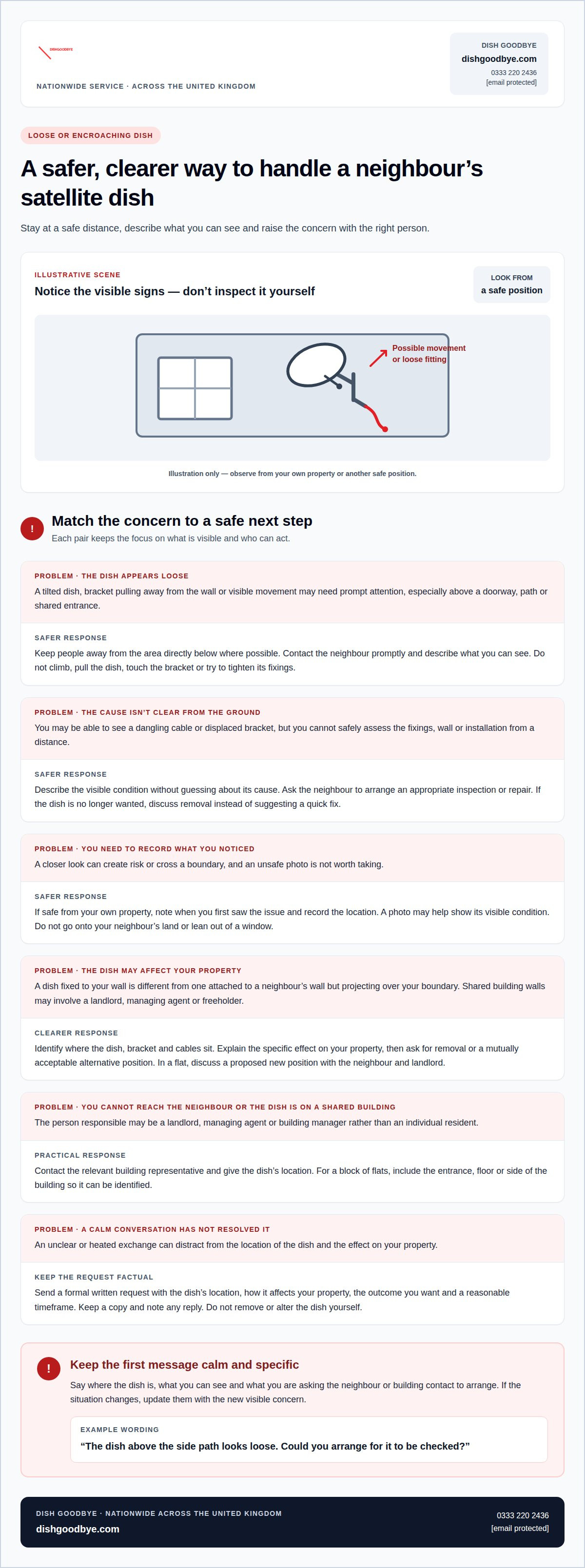
If my neighbour’s dish is hanging off, keep clear of the area beneath it and contact the neighbour promptly. Don’t climb, pull the dish, touch its bracket or try to tighten its fixings. A loose assembly can shift unexpectedly, and an attempted repair could make the situation worse.
Describe what you can see instead of guessing about the cause. For example, say that the dish is tilted, its bracket appears to have pulled away, or a cable is hanging down. Tell your neighbour where it is and why you’re concerned. A clear description helps them understand the issue and decide what action to arrange.
If you can do so safely from your own property, note when you first noticed the problem. A photo taken from a safe position can show the dish’s location and visible condition. Don’t go onto your neighbour’s land or lean out of a window for a closer view. The aim is to record what you can observe without approaching the dish.
Ask your neighbour to arrange an appropriate inspection or repair. Don’t suggest a quick fix when you can’t assess the bracket, wall or fixings from the ground. If the dish is no longer wanted, discuss removal instead. Keep your request calm and specific, for example: “The dish above the side path looks loose. Could you arrange for it to be checked?”
- Keep people away from the area directly below the dish where possible.
- Tell your neighbour about visible movement, a displaced bracket or dangling cable.
- Record the location and what you observed, without approaching the installation.
- Ask for a clear update on the action they plan to take.
If you can’t reach your neighbour, or the dish is fixed to a shared building, contact the relevant landlord, managing agent or building manager. Give them the dish’s location and describe what concerns you. For a block of flats, include the entrance, floor or side of the building so the right person can identify it.
If your neighbour says the dish is secure but it still appears displaced, explain what you can see and ask them to arrange a closer assessment. Don’t touch it to test whether it moves. If the situation changes, such as the bracket pulling farther from the wall or the dish shifting, update your neighbour or the building contact.
Keep a brief record of your contact and any reply. If your neighbour agrees to act, ask when they expect to arrange an assessment, then follow up if the visible problem remains. A factual, measured exchange keeps attention on the loose dish rather than turning the concern into a personal argument.
Could a loose satellite dish fall and injure someone or damage property?
Yes. A dish with loose fixings can fall, striking someone below or damaging a car, window, roof or garden structure. The risk depends on its position and what appears to be holding it. A bracket pulling away from a wall, a tilted dish or visible movement deserves prompt attention, especially above a doorway, path or shared entrance.
Assess the situation from a safe position on the ground. Look for clear changes, such as a gap between the bracket and wall, hanging cables or a dish sitting at an unusual angle. Don’t touch the dish, test its movement or climb closer for a better view. A photo taken from your own property can show its location and visible condition.
Where practical, keep people away from the area directly beneath the dish. If it hangs over a pavement, shared entrance or parking space, tell your neighbour and the building manager where the concern is. Ask them to arrange an assessment promptly. Don’t stand underneath the installation while waiting for a reply.
- Describe the exact location, such as above the front path or beside a bedroom window.
- Report visible signs, including a pulled-away bracket or dangling cable.
- Keep children, visitors and parked vehicles clear of the area where possible.
- Update the neighbour or building contact if the dish shifts or its condition changes.
A loose dish can also damage the building it is fixed to. A bracket moving against brickwork may worsen existing damage, while a falling dish could strike a roof, conservatory or window. Don’t assume the installation is safe just because it has remained in place so far. Report what you can see instead of predicting when it might fall.
If your neighbour lives in a flat, contact the landlord, managing agent or building manager when the dish is above a shared entrance or communal space. Give them the building location and explain who could pass beneath it. This helps them understand why the issue needs attention and identify who is responsible for arranging an assessment.
If the dish falls, keep clear of it, the bracket and any dangling cable. Tell the neighbour or property contact what happened and where the parts landed. If anything has been damaged, record it from a safe place and don’t move the equipment. Don’t attempt a repair or removal yourself. A trained professional can assess access, height and the condition of the fixing points before work is arranged.
Can a neighbour's satellite dish overhang or project onto my property?
A neighbour’s dish may raise a property dispute if it is attached to your property or projects into your airspace or onto your land. In the UK, the key question is where the dish, bracket and fixings sit. A dish mounted on your wall differs from one fixed to your neighbour’s wall but extending across the boundary. Identify what affects your property before asking for a particular remedy.
For example, a downstairs neighbour’s Sky dish might be fixed to an outside wall beside your bedroom. Its location alone doesn’t show who owns or controls the wall. In a block of flats in England, an outside wall is likely to be a common part owned by the freeholder, rather than an individual flat owner. The building’s lease and ownership arrangements can therefore affect who should deal with the installation.
If a neighbour installs an item on a property boundary without permission, the affected owner generally has rights to address the situation. That doesn’t mean you should remove the dish yourself. First establish whether it is fixed to your wall, crosses the boundary or sits on a shared part. Each situation points to a different person to contact and a different way to resolve the problem.
Take a practical, evidence-led approach:
- Describe whether the dish or bracket is attached to your wall or extends over your land.
- Record its position from a safe place, without entering your neighbour’s property.
- Ask your neighbour to discuss removal or a less intrusive position.
- If it is on a shared wall, raise the issue with the freeholder or building manager.
If you live in a flat, check the lease arrangements or ask the landlord, managing agent or freeholder who controls the outside wall. Attaching a dish to an outside wall in a block of flats is likely to require the freeholder’s consent. Some residential leases also prohibit dishes on buildings. If consent was never granted, or the location breaches the neighbour’s lease, the landlord could request removal.
Keep your request focused on the encroachment, not assumptions about your neighbour’s intentions. You could say, “The dish bracket appears to be fixed to my wall. Can we discuss having it removed or moved?” If direct discussion fails, a formal letter can request removal within a reasonable timeframe. A solicitor can help prepare that letter. Clear records of the location, your request and the response make the next conversation more precise.
Who should I contact about a dangerous satellite dish in England, Scotland, Wales or Northern Ireland
Start with the person responsible for the property where the dish is fixed. If your neighbour owns the property, tell them what looks unsafe and where the dish is positioned. If they rent, contact their landlord as well. The Information Commissioner's Office says a neighbour’s landlord may be a point of contact when the neighbour is a tenant.
For a flat or shared building, contact the managing agent, building manager or freeholder if the dish is attached to an outside wall or hangs above a communal area. Include the building entrance, floor and side where the dish is visible. This helps the recipient identify the installation and understand whether residents, visitors or passers-by use the space below.
The same practical contact route applies across England, Scotland, Wales and Northern Ireland: notify the neighbour or property contact, then escalate to the person managing the building if needed. Don’t assume a council is automatically responsible for a dish fixed to private property. Describe the location and risk clearly before asking which team, if any, can deal with it.
Make your first message specific. For example: “The dish above the shared entrance is tilted, and its bracket appears loose. Please arrange for it to be assessed.” Add a photo taken safely from ground level if you have one. Don’t climb, touch the dish or enter someone else’s property to gather evidence.
Give the person you contact enough detail to act. Include:
- The property address and exact location of the dish.
- Visible signs, such as a bracket pulling away or a dish changing position.
- Whether the dish is above a path, entrance, parking space or private garden.
- Your name and a way for the property contact to reply.
If the first person doesn’t respond, forward your original message to the landlord or building manager. Keep a record of when you reported the concern and any reply. If the dish shifts further, send an update describing what has changed. A clear timeline helps the responsible property contact understand that the problem is ongoing.
If the dish hangs above a public pavement or shared access route, explain that people pass beneath it. Contact the property owner or building manager promptly and ask them to arrange an assessment. Where practical, keep people clear of the area. Don’t try to secure, lower or remove the equipment yourself.
If you can’t identify a property contact, explain the situation when seeking advice from the relevant local council. Provide the address, location and visible condition rather than assuming the council can order removal. The right next step depends on who owns or manages the wall and where the dish projects.
Dish Goodbye
Once the property owner or responsible person has authorised the work, Dish Goodbye can professionally remove an unwanted or damaged satellite dish. Sky Dish Removal includes the dish, its bracket and associated cable, plus filling the fixing holes. Mention any additional cables, holes or devices in your initial enquiry, as these are quoted separately.
Access, height and property conditions affect how removal is carried out, so share the dish’s location and relevant details when requesting a no-obligation quote. If the neighbour’s dish is still their property, resolve permission with them or the responsible person for the building before arranging removal.
For a practical next step, contact Dish Goodbye about the removal.
Take the next step towards a clear resolution
If my neighbour’s dish is hanging off, focus the next step on agreement and clear responsibility. Before arranging any work, make sure the neighbour, landlord or building manager responsible for the installation understands what you’re asking for. This avoids confusion about who has authorised removal and what should happen to the dish.
Once permission is clear, decide whether removal is the right outcome for the property. A written agreement can help everyone understand what work is planned and which part of the installation it covers. Keep the conversation practical, especially if the dish is on a shared building or near a boundary. Calm communication makes it easier to move from concern to action.
If professional removal is the agreed next step, contact Dish Goodbye for help with the job. Share the property location and the dish’s position so the enquiry has useful context. A straightforward, agreed plan can help bring the dispute to a more settled end.
Call 0333 220 2436 or email [email protected].
Frequently Asked Questions
Who is responsible for repairing or removing a satellite dish in the UK?
Responsibility depends on who owns the dish and who controls the wall or roof supporting it. When buying a property, ask your conveyancing solicitor to raise enquiries about an existing dish; leasehold property enquiries may clarify whether installation consent was given. If the dish belongs to a tenant, their landlord may also be a useful contact. Establishing ownership and consent can help identify who should decide the next step.
How should I safely report a dangerous dish to my neighbour?
Send a short, factual message describing what you can see and where the dish is. For example, say that its bracket appears displaced above a shared entrance. Keep the message neutral and ask the neighbour to arrange an assessment. Don’t approach or touch the dish to gather evidence. Save your message and any reply so you can give the landlord or building manager a clear account if you need to escalate.
What are the UK rules for satellite dish planning permission and installation?
A dish attached to someone else’s property or projecting into their airspace or onto their land may become a property dispute. In a block of flats in England, an outside wall is likely to be a common part, and attaching a dish there is likely to require the freeholder’s consent. A landlord may request removal if consent was not granted or the position breaches the lease.