Could those rusty eyesores on your building's exterior be a ticking legal and structural time bomb? While a few old dishes might seem like a minor cosmetic issue, they're actually active liabilities that threaten your property's health. When it comes to housing association satellite dish removal, ignoring the problem often leads to expensive damp repairs and messy legal disputes with local councils. You've likely noticed how quickly a single redundant dish turns into a cluster of clutter, trapping moisture and inviting water ingress through unsealed cable entries.
It's frustrating to watch your well-maintained blocks look neglected because of hardware that hasn't been used in years. This guide promises to simplify your maintenance routine by showing you how to manage redundant hardware, protect your masonry from damp, and ensure total legal compliance across your UK portfolio. We'll explore the 2026 safety standards, explain tenant liability, and provide a clear roadmap for achieving a clean, professional exterior that keeps your residents happy and your buildings bone-dry.
Key Takeaways
- Identify why redundant hardware is a structural liability and how to stop water ingress before it causes internal damp.
- Master the legalities of housing association satellite dish removal by clarifying equipment ownership and reviewing standard tenancy "Alterations" clauses.
- Protect your staff and residents from the safety risks of falling debris by strictly adhering to current Work at Height Regulations.
- Discover how a professional extraction process removes every trace of old brackets, leaving your masonry clean and uniform.
- Streamline maintenance across your entire UK portfolio to boost property value and restore your building's visual appeal instantly.
Why Redundant Satellite Dishes Are a Liability for UK Housing Associations
Redundant satellite hardware is more than just a collection of old metal. We define these items as any dishes, aerials, or mounting brackets no longer in active use by your residents. Satellite dish technology has evolved rapidly, but the physical remnants of 1990s and 2000s tech often remain bolted to your brickwork. In 2026, the shift toward high-speed streaming services like Sky Glass and internet-based delivery has made physical dishes largely obsolete for the modern tenant. For landlords, housing association satellite dish removal is a necessary step to transition your properties into the digital age while stripping away unnecessary physical risk.
Leaving these items in place creates a "dish forest" effect that devalues your assets. When multiple rusty dishes crowd a single elevation, it creates a sense of neglect. These metal eyesores don't just sit there; they actively degrade. Rust streaks from deteriorating brackets can permanently stain render and masonry, requiring expensive cleaning or repainting. Proactive housing association satellite dish removal eliminates these visual and structural threats before they require a major capital expenditure project to fix.
Curb Appeal and Portfolio Value
Cluttered exteriors send a clear, negative signal to prospective tenants and inspectors. A building covered in redundant hardware suggests a reactive management style where details are overlooked. High-quality residents seek out well-managed, clean environments where they feel their comfort is a priority. A crisp, uniform building exterior allows your property to stand out in a competitive rental market. Removing visual clutter from your building's facade directly increases its marketability and long-term asset value.
The Threat of Water Ingress and Damp
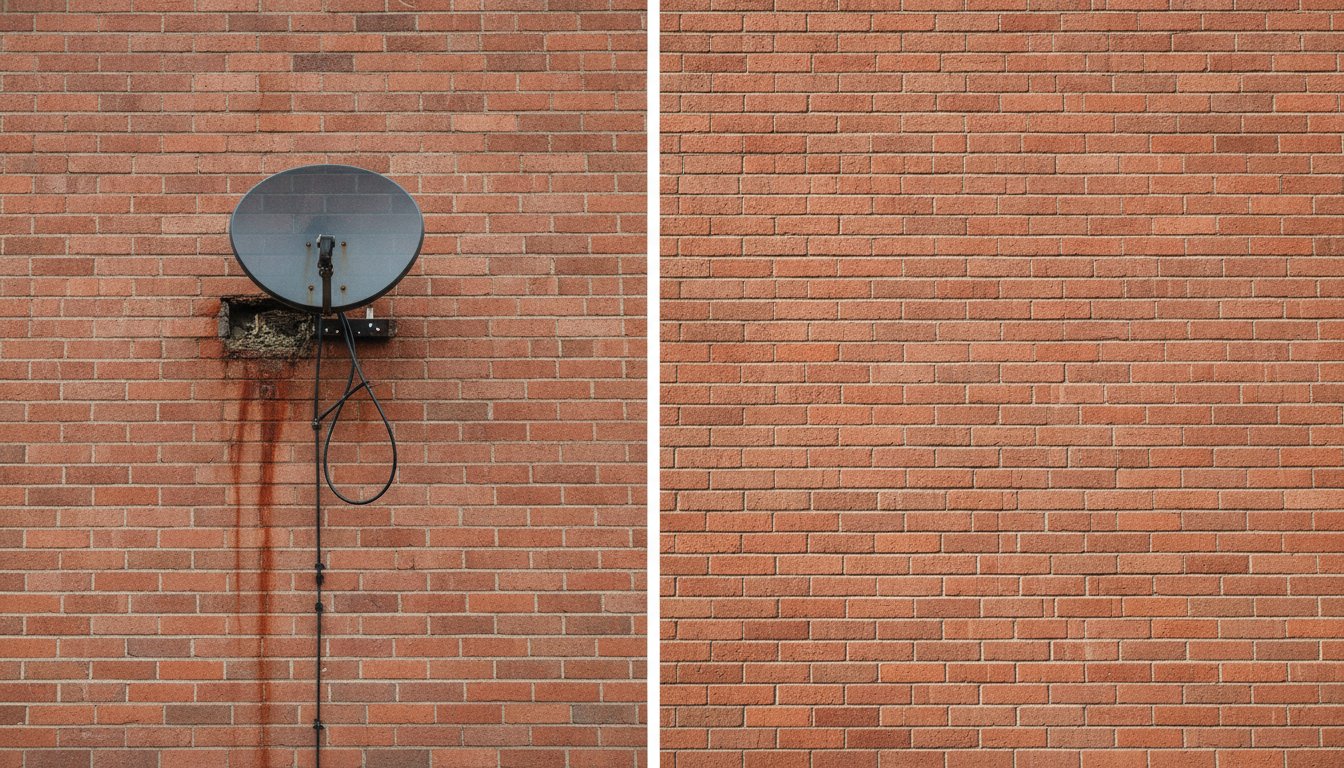
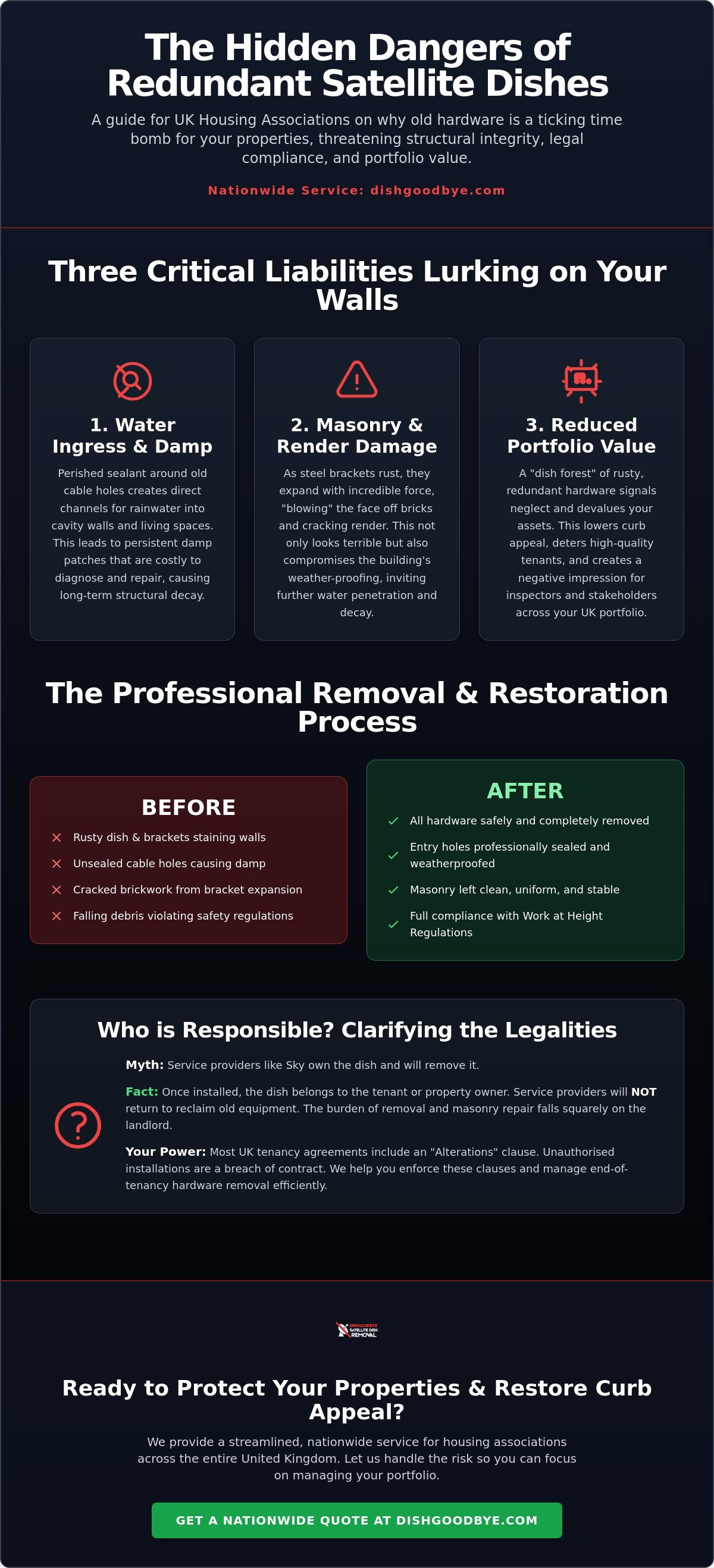
The most significant danger from old hardware is often the one you can't see from the ground. Over time, the sealant around cable entry points perishes. These holes then act as direct conduits, funneling rainwater straight into the cavity wall or the internal living space. This is a primary cause of localized damp patches that are notoriously difficult to diagnose. Rusted brackets present another mechanical risk to the building's fabric. As steel oxidises, it expands with surprising force. This expansion often "blows" the face off bricks or cracks the surrounding mortar, leading to further water penetration. Choosing a Professional Dish Removal Service: Protecting Your Property from Redundant Tech ensures that every mounting point is safely extracted and every entry hole is professionally sealed. Efficient housing association satellite dish removal stops these structural headaches before they turn into costly insurance claims.
Navigating Tenancy Agreements and Removal Responsibilities in 2026
Who actually owns that rusty metal on the wall? A common misconception among property managers is that service providers like Sky retain ownership of the hardware. In reality, once the installation is complete, the dish belongs to the person who paid for the service or the property owner. This makes housing association satellite dish removal your responsibility to manage once a tenant moves out. Service providers will not return to reclaim old dishes, leaving the burden of disposal and masonry repair squarely on the landlord's shoulders.
Most standard UK housing association tenancy agreements include a strict "Alterations" clause. This typically states that tenants must obtain written permission before fixing anything to the building's exterior. If a dish appears without your consent, it is a breach of contract. Referencing UK planning regulations for satellite dishes helps clarify these boundaries. In 2026, you can generally deduct the professional cost of removal from a security deposit if the hardware was installed without permission or left behind as waste. However, your Check-Out report must be meticulous to support these claims during a dispute.
End-of-Tenancy Exterior Audits
Look up during your final property inspections. It is easy to focus on the boiler or the carpets while completely missing a redundant bracket or a loose cable flapping against the brickwork. These small oversights lead to long-term damp issues. Integrate dish and cable checks into your standard Landlord Property Maintenance: A Nationwide Guide for Manchester and the UK. Identifying these issues before the next tenant moves in prevents the cycle of neglect from continuing.
Managing Abandoned Hardware on Communal Blocks
Managing inherited dishes on newly purchased portfolios is a common headache for housing managers. When dealing with communal blocks, the legal steps for removing hardware left by former tenants require clear communication. Send out a formal notice to all residents in the block, giving them a specific timeframe to identify active dishes. This protects you from accidentally removing live equipment while allowing you to clear the "dish forest" from the facade. Use simple, direct templates for these notifications to keep tenant relations positive. If you are ready to reclaim your building's aesthetics, you can book a professional Sky dish removal to handle the entire block in one seamless visit.
Professional Removal vs. DIY: Safety and Liability Risks for Managers
It is tempting to view a redundant dish as a five minute job for your on-site maintenance team. However, the reality of housing association satellite dish removal involves significant legal and physical risks that far outweigh the perceived savings of a DIY approach. When your staff step onto a ladder, they fall under the strict jurisdiction of the Working at Height Regulations (WAHR). If an untrained employee suffers an injury or causes property damage while working at height, the housing association faces heavy fines and potential prosecution. Don't let a simple cleanup task turn into a health and safety nightmare.
The danger isn't limited to the person on the ladder. Falling hardware is a major concern in high-traffic residential areas. A heavy metal dish or a rusted bracket dropped from the second storey can easily smash a tenant's car windscreen or cause serious injury to a passerby. Most standard landlord liability insurance policies require work to be carried out by "competent persons." If an accident occurs during an informal DIY removal, your insurer may void your coverage, leaving the association to foot the bill for damages and legal fees. Professional housing association satellite dish removal shifts this liability to insured experts who use the correct safety tethering and exclusion zones.
Public Liability and Contractor Standards
When selecting a removal specialist, look for more than just a ladder and a spanner. A professional service provides peace of mind through high-level public liability insurance and a clear recycling policy for the recovered metal. "Handyman" removals often skip the most important step: the restoration. They might pull the dish down but leave the rusted bolts in the wall or, worse, leave gaping holes in the masonry. This leads to the "snagging" problem where water enters the building fabric, causing the very damp issues you were trying to prevent. Always demand a professional certificate of removal to keep your property maintenance records audit-ready.
The Specialist Toolset Required
Years of exposure to British weather turn standard mounting bolts into seized, crumbling lumps of rust. Removing these without damaging the brickwork requires specialist extraction tools and high-torque equipment. It isn't just about the exterior, either. Safe cable management is vital to prevent internal damage. Snapping a cable and pulling it through a wall can tear wallpaper or crack internal plaster if not handled with care. If you are also dealing with old antennas, check out our TV Aerial Removal: The Essential Guide to Clearing Redundant Equipment. Using the right tools ensures the job is done once, done right, and leaves no trace of the old tech behind.
The Professional Removal and Restoration Process: A Step-by-Step Guide
Executing a successful housing association satellite dish removal project requires more than just taking the hardware down. It is about restoring the building to its original state while ensuring the safety of everyone on site. A systematic approach prevents damage to the masonry and ensures a clean, professional finish that lasts for years. Follow this proven five step process to reclaim your building facade.
- Step 1: Safe Access Setup. Technicians establish a secure work area using exclusion zones to protect residents. All access equipment follows national Work at Height safety standards to eliminate the risk of falls.
- Step 2: Systematic Dismantling. The dish, LNB, and support arm are dismantled piece by piece. This controlled breakdown prevents the hardware from putting unnecessary leverage or stress on the brickwork during the extraction.
- Step 3: Complete Extraction. Every mounting bracket and rusted fixing is removed from the wall. We don't just cut the heads off bolts; we extract the entire fixing to prevent future rust bleeds.
- Step 4: Cable Removal. Technicians trace and remove all redundant coaxial lines from the facade. This clears the vertical clutter that often traps debris and moisture against the building.
- Step 5: Professional Restoration. The final step involves filling the remaining holes with specialist materials. This seals the building envelope and leaves the surface smooth and weather-tight.
Restoring the Building Envelope
The "make good" phase is where many DIY attempts fail. We use the science of colour-matching mortar to ensure an invisible repair that blends perfectly with your existing brickwork. Silicone is not a permanent solution for exterior holes because it shrinks and perishes over time, eventually letting water back in. Properly filling these voids prevents water from entering the brickwork, where it can freeze, expand, and cause significant freeze-thaw masonry damage. This attention to detail keeps your property structurally sound and visually uniform.
Redundant Cable Management
Cluttered facades often hide a maze of "dead" coaxial lines that serve no modern purpose. Removing these lines is a quick way to improve curb appeal across your entire portfolio. Once the cables are gone, we ensure that internal entry points are capped and sealed correctly to prevent draughts or moisture transfer. This holistic approach to housing association satellite dish removal transforms a messy exterior into a clean, well-managed asset. Ready to clear the clutter? You can get a professional satellite dish removal quote today and start your building's transformation.
Dish Goodbye: Streamlining Exterior Maintenance for National Portfolios
Managing a sprawling UK portfolio is hard enough without tracking every rusted bracket on every block. We've built our service specifically to take that burden off your desk and put it into the hands of experts. Whether you manage a dozen local units or thousands of commercial properties across the country, our nationwide coverage ensures consistent quality from Cornwall to Cumbria. Our "Clean Exterior" promise means we leave your buildings looking fresh, well-tended, and modern. We provide high-resolution after photos for every job, allowing you to verify the result without ever leaving your office. It is the ultimate solution for housing association satellite dish removal at scale.
We understand that budget transparency and efficiency are vital for housing managers in 2026. Our pricing is straightforward and designed for the needs of multi-property landlords. There are no hidden fees or surprise "extra" charges for basic restoration work. We treat your property as if it were our own, delivering a satisfying result that transforms a mundane maintenance chore into a seamless experience. Choosing a specialist service is a definitive break from the frustration of unreliable local contractors.
Our Zero-Landfill Commitment
Old dishes aren't just scrap metal; they are complex assemblies that often contain electronic components requiring careful handling. We take our environmental responsibility seriously by ensuring 100% recycling of all metal and electronic waste (WEEE). It is vital to keep these materials out of general household bins where they can leak toxins into the soil. We process every extracted item through approved recycling centres to minimize our environmental footprint. You can learn more about the specifics of this process in our Satellite Dish Recycling: The Complete UK Guide to Responsible Disposal. By choosing us, you ensure your housing association remains compliant with modern environmental standards.
Get Started with Dish Goodbye
Reclaiming your property's aesthetics shouldn't be a struggle. We've simplified the booking process for national portfolio managers to ensure a low-effort experience from start to finish. Simply provide your property list, and we'll handle the logistics of the rollout. Streamlining your housing association satellite dish removal has never been easier. Our "after" photo guarantee provides the visual proof you need for your maintenance logs, showing a clean wall with no dishes, aerials, or messy cables in sight. It is time to dismiss old-fashioned, cluttered exteriors and embrace a cleaner look. Contact us today at dishgoodbye.com for a cleaner, safer, and more valuable property portfolio.
Reclaim Your Building's Visual Harmony Today
Managing a housing association property in 2026 requires a proactive approach to maintenance. Redundant hardware isn't just a visual nuisance; it's a structural threat that invites damp and decay into your brickwork. By prioritizing housing association satellite dish removal, you eliminate these liabilities while instantly boosting the curb appeal of your assets. It's a simple, high-impact change that delivers immediate relief for both you and your residents.
We've made the transition to a clutter-free exterior satisfyingly simple. Our nationwide UK service coverage ensures consistent quality across your entire portfolio, while our zero-landfill recycling policy keeps your environmental record spotless. We even include specialist masonry restoration to ensure every repair is invisible and weather-tight. It's time to dismiss the old ways of managing exterior clutter and embrace a more efficient, modern standard of care. Your buildings deserve to look their best, and your schedule deserves the break.
Ready to declutter your property? Book your professional dish removal today at Dish Goodbye
Frequently Asked Questions
Can I legally remove a satellite dish left by a former tenant?
Yes, you can legally remove hardware once a tenancy has ended and the property has been vacated. Most tenancy agreements classify abandoned dishes as waste or unauthorised alterations. For active housing association satellite dish removal projects, it is best practice to include a clause in your notice period that requires tenants to remove their own equipment or face a recharge for professional removal costs.
How much does it cost for a landlord to remove a satellite dish in the UK?
The average cost for professional satellite dish removal in the UK is approximately £130. Depending on the complexity of the job and the height of the building, you might see prices ranging from £90 to £150 per unit as of mid-2026. These costs typically cover the safe extraction of the hardware and the initial sealing of any holes left in the masonry.
Will removing an old Sky dish leave a permanent mark on my property?
Professional removal does not leave permanent eyesores. While the brackets leave small holes in the brickwork, these are easily filled with colour-matched mortar or specialist masonry sealant. When the job is done correctly, the repair becomes virtually invisible from the ground. This restoration process is essential to maintain the building's aesthetic and prevent future structural issues.
Do I need my tenant’s permission to remove a dish they aren’t using?
You should check the specific terms of your tenancy agreement first. If the dish is redundant and the tenant has no active subscription, you can usually request its removal to protect the property's fabric. For communal blocks, sending a formal 30 day notice to all residents allows you to identify active equipment before beginning a wider housing association satellite dish removal programme.
What happens to the old satellite dish once it is removed?
Old dishes are processed as electronic waste under UK WEEE regulations. They are taken to approved recycling centres where the metal and plastic components are separated and repurposed. This ensures that zero hardware ends up in a landfill. It is a clean, responsible way to handle the transition from old-fashioned hardware to modern streaming services.
Can old satellite cables cause damp inside a rental property?
Yes, old cables are a primary source of localized dampness. Rainwater runs down the cable and is funnelled directly into the property through perished sealant at the entry point. Over time, this moisture bypasses the cavity and soaks into the internal plasterwork. Removing these "dead" lines and capping the holes is the only way to stop this cycle of water ingress.
Is a landlord responsible if an old aerial falls and causes damage?
Landlords and housing associations have a legal duty of care to keep their buildings in a safe condition. If a rusted bracket fails and a dish falls onto a vehicle or a pedestrian, the property owner is generally held liable for the damages. Proactive maintenance is much cheaper than the legal fees and insurance hikes that follow a falling hardware accident.
How long does a professional dish removal take for a standard property?
A standard removal usually takes between 30 and 60 minutes per property. This includes the time needed to set up safe access, dismantle the hardware, and restore the masonry surface. For larger housing association blocks with multiple dishes, the process is even more efficient as technicians can work through the entire facade in a single session.