
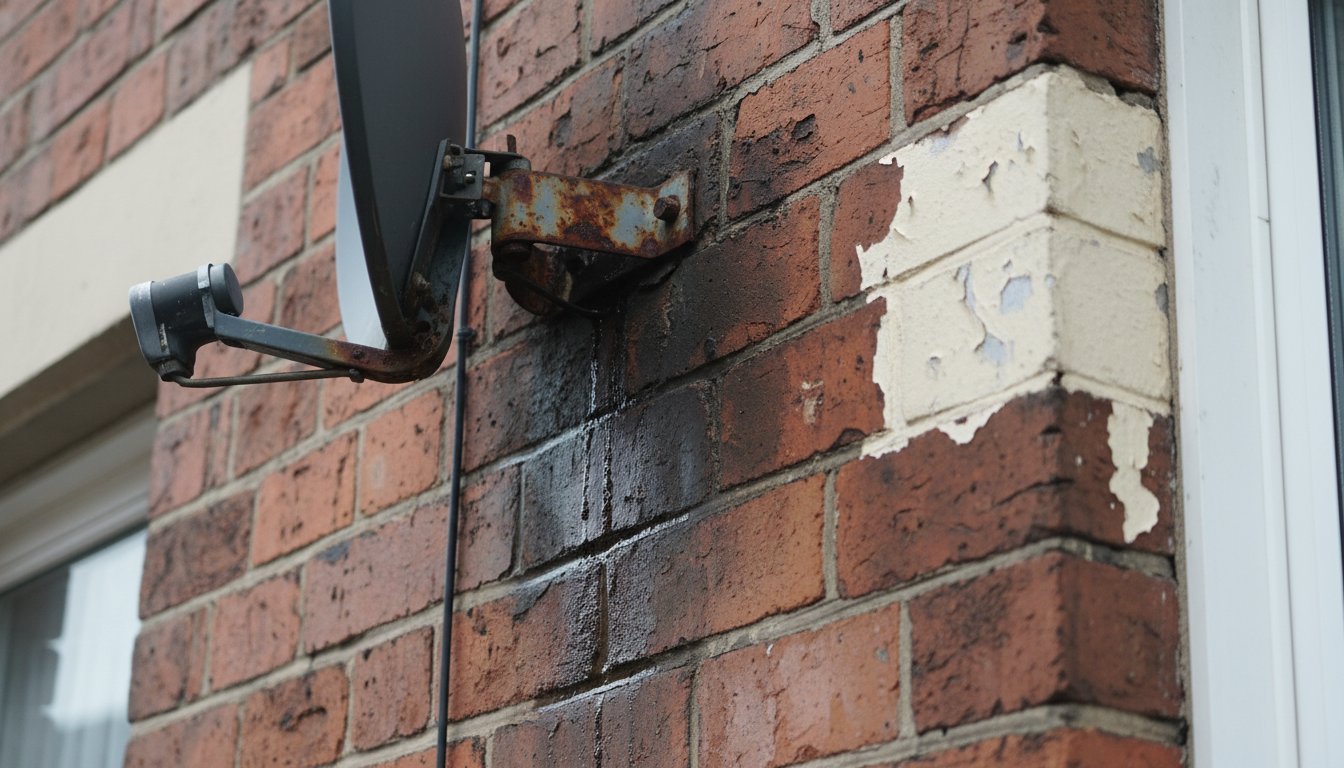
That rusted satellite dish on your chimney isn't just an eyesore; it's a direct pipeline for rainwater into your living room. We know the frustration of spotting a new patch of flaking paint or feeling a mysterious cold spot on a wall you've just finished decorating. According to a 2023 report by the Royal Institution of Chartered Surveyors (RICS), nearly 20% of UK homes struggle with moisture issues, and many of these problems start with external penetrations. If you're dealing with damp from old fixtures, it's time for a smarter, more effective approach.
We're here to help you say goodbye to these hidden moisture traps and reclaim your home's structural integrity. This article explains exactly how abandoned cables and aerials create pathways for water to enter your property. We'll show you how to identify the source of the moisture and find a permanent solution that restores your kerb appeal. From bustling urban centres to quiet rural areas, our nationwide service covers the whole of the United Kingdom, making it effortless to protect your property and keep it sparkling for years to come.
Key Takeaways
- Understand how abandoned brackets and screws act as hidden channels, leading to "point-source" penetrating damp that compromises your exterior walls.
- Identify the clear signs of damp from old fixtures versus rising damp to ensure your home maintenance budget is spent on the right solutions.
- Trace the journey of wind-driven rain from redundant hardware into your wall core and learn how to seal these vulnerable entry points effectively.
- Discover why simple DIY "snip and forget" methods fail and how our professional extraction protects your property's long-term structural health.
- Explore how we offer a reliable, nationwide service across the whole of the United Kingdom to help you reclaim your home’s exterior and prevent moisture damage.
Understanding the Link: Why Old Fixtures Lead to Damp Walls
We've found that the smallest holes often cause the biggest headaches for homeowners across the whole of the United Kingdom. When we talk about "point-source penetrating damp," we're referring to moisture that enters your home through a specific, localised breach. Every screw, bolt, and cable entry point acts as a tiny straw, drawing rainwater directly into your masonry. It's a literal puncture in your building's envelope. What started as a useful fixture, like a telephone line or a satellite dish, eventually transforms into a redundant risk. Technology evolves fast, but these holes remain. We offer a nationwide service to identify these vulnerabilities, ensuring your home stays as dry and efficient as possible. It's time to say goodbye to the mystery of damp patches and hello to a sealed, secure property.
The Problem with Abandoned Technology
Old Sky dishes and analogue aerials are far more problematic than modern, lightweight equivalents. A standard satellite dish installed in the late 1990s was built to last, but its heavy steel bracket is a liability today. These fixtures catch the wind, creating a vibration that works like a slow-motion drill against your home. Over time, this movement widens the original hole and cracks the surrounding brickwork. In older UK properties, particularly those built before 1919 with lime mortar, this leads to significant structural decay. Thousands of homeowners have forgotten these relics even exist, yet they remain a primary cause of damp from old fixtures. Since the digital switchover was completed in 2012, these attachments have served no purpose other than to let the weather in.
Visible Signs of Fixture-Related Damp
You can often spot the damage before it becomes a major repair bill. Check for brown stains or "tidemarks" around your internal cable entry points. These are usually caused by water following the cable directly into your living room plaster. You should also look for rusted metal brackets that have caused the surrounding mortar to crumble or "spall." We see this frequently in coastal areas and wind-swept regions across the United Kingdom. This is a classic example of penetrating damp, which is moisture that travels horizontally through wall defects. Recognising these signs is the first step toward a cleaner, healthier home. It's a simple, effective way to maintain your property's hygiene and stop damp from old fixtures before it spreads.
By addressing these redundant risks, you're not just fixing a hole; you're choosing a lifestyle upgrade that prioritises your comfort. Our nationwide service makes it effortless to clear away the clutter of the past. Say goodbye to the stress of damp and enjoy the relief of a sparkling, well-maintained exterior.
The Mechanics of Moisture: How Redundant Brackets and Cables Fail
We see the same story from Penzance to Perth. A raindrop hits the face of a redundant satellite dish. It doesn't just splash away. It gathers, following the curve of the metal arm until it reaches the wall. Gravity and the UK’s frequent wind-driven rain do the rest of the work. During a typical British storm, rain can be forced against your masonry at high pressure, turning a small bolt hole into a funnel. This is a primary cause of damp from old fixtures that many homeowners overlook until the internal plaster starts to bubble.
Water often uses old coaxial cables as a guide. This "tracking" allows moisture to travel along the wire, bypassing the brick's surface and heading straight for the wall core. We provide a nationwide service to stop this process before it ruins your interior decor. It’s time to say goodbye to these hidden pathways for water by using a professional removal service that secures your home's exterior.
Capillary Action and the Rust Effect
When steel bolts are left to rot in your walls, they undergo a destructive chemical transformation. Rust occupies roughly six times the volume of the original steel. This expansion creates immense internal pressure. It forces the masonry to develop micro-cracks. These tiny fissures then act like straws, drawing in water via capillary action. We've found that:
- Rust expansion can exert enough force to crack even high-density engineering bricks.
- Moisture is pulled deep into the wall, far beyond the reach of surface treatments.
- Painting over a rusted bracket is a temporary fix that hides the problem while the chemical decay continues underneath.
The Freeze-Thaw Cycle in Redundant Fixings
British winters are notoriously harsh on external walls. When trapped water freezes, it expands by 9% in volume. This creates a powerful hydraulic jack effect inside the fixing hole. In the 2022 winter season, many parts of the UK saw 15 consecutive days of freezing temperatures, putting immense stress on compromised masonry. This sustained cycle leads to "spalling," where the brick face eventually flakes away and falls off.
The damage is cumulative. Each winter the hole grows slightly larger, and each autumn it holds more water. By the time you notice the debris on the ground, the structural integrity of that section of the wall is already failing. We operate across the whole of the United Kingdom to help residents prevent this cycle of decay before it becomes an expensive repair job. Our approach ensures your home remains watertight and efficient through every season.
Penetrating Damp vs. Rising Damp: Identifying the Real Culprit
Many homeowners across the UK assume any wet patch on a wall is rising damp. This mistake often leads to expensive, unnecessary chemical injections that don't solve the problem. Rising damp strictly affects the base of a wall. It rarely climbs higher than 1.2 metres from the ground. If you spot moisture halfway up your living room wall or near the ceiling, you're likely dealing with penetrating damp. We see this daily through our nationwide service. Often, the culprit isn't a structural failure but simple damp from old fixtures. When an old satellite dish or redundant cable is removed, the remaining hole acts like a straw. It sucks rainwater directly into your masonry during every British downpour.
Distinguishing between the two is vital for your budget and your peace of mind. Rising damp typically leaves a "tide mark" of salt. Penetrating damp, however, creates isolated patches that grow darker after heavy rain. We provide a nationwide service to help residents identify these entry points before they cause lasting damage. By focusing on the actual source of the leak, you can achieve a dry, healthy home without the stress of major construction work.
Mapping the Damp to the Fixture
Identifying the source is a matter of simple geometry. We use the "line of sight" rule to help homeowners pinpoint the issue. Measure the height and horizontal position of the internal damp spot first. Then, walk outside and look at the exact same coordinates on your exterior brickwork. You'll frequently find an abandoned bracket, a rusty screw, or a hole where a cable used to run. Check the exterior before you invest in expensive internal damp-proofing. It's a faster, more logical way to solve the problem. We cover the whole of the United Kingdom, ensuring that every property owner has access to expert advice on these external vulnerabilities. Finding a direct correlation between an old Sky dish bracket and a bedroom damp patch is common. Fixing that hole is often the only repair you'll need.
The Myth of the "Self-Sealing" Hole
Don't wait for dust or debris to plug the gap. It won't happen. A 10mm hole from an old coaxial cable stays "active" for decades. Bricks are porous, but a clean drill hole is an open motorway for water. Wind-driven rain hits the wall and finds the path of least resistance. Capillary action then pulls that water deep into the brickwork, bypassing your home's natural defences. For a permanent fix, you need professional sealing techniques. We recommend our professional dish removal service to ensure every aperture is sealed against the elements. Saying goodbye to these unsightly holes means saying goodbye to the moisture they invite. Our team operates across the whole of the United Kingdom to deliver this essential maintenance. We make the process effortless, leaving your exterior walls sparkling and watertight.

How to Resolve Damp Issues Caused by Exterior Fittings
We provide a nationwide service across the whole of the United Kingdom to tackle the hidden dangers of redundant wall fixtures. While a DIY fix might seem like a quick weekend task, working at height requires professional-grade ladders and safety harnesses. We've seen too many homeowners risk injury for the sake of an old satellite dish. Our teams travel to every corner of the country to ensure your masonry stays protected without you ever having to leave the ground.
It's vital to understand that simply cutting a wire isn't enough. Leaving rusted bolts or cable stubs creates a direct path for water to enter your home. This internal moisture path is exactly how damp from old fixtures takes hold. We focus on complete extraction rather than surface-level trimming. Every piece of metal we remove, from heavy steel brackets to copper cabling, is sent to local UK recycling centres. We ensure 98% of the waste we collect is diverted from landfills, fulfilling our commitment to environmental responsibility.
The 4-Step Professional Removal Process
- Step 1: Safe dismantling. We carefully remove the dish, aerial, and all associated heavy brackets using specialist tools to avoid cracking your brickwork.
- Step 2: Extraction. We pull redundant cabling and rusted fixings directly from the wall core. This stops the "wicking" effect that brings water inside.
- Step 3: Deep cleaning. We clear the entry points of loose debris and rust residue. This ensures the new filler bonds perfectly to the original stone or brick.
- Step 4: Weatherproof sealing. We smooth all holes with high-quality masonry filler. We use colour-matched materials to ensure the repair is invisible from the street.
Restoring Property Integrity
A "bodge job" with clear silicone is a temporary fix that often fails within 12 months. Silicone shrinks and pulls away from masonry, leaving a gap for frost to expand and cause further damage. Professional masonry repair is essential, especially if you're thinking about selling your house. Buyers look for well-maintained exteriors, and visible rust stains or messy holes are immediate red flags during a survey.
Removing "wall clutter" does more than just improve your curb appeal. It allows the building to breathe as the original architects intended. When we clear away old cables and brackets, we stop the accumulation of dirt and organic growth that traps moisture against the brick. Our nationwide service ensures that whether you're in a coastal cottage or a city terrace, your home remains dry and structurally sound. Say goodbye to the eyesores and hello to a damp-free exterior.
Ready to protect your home with a professional finish? Book your nationwide removal service today.
Saying Goodbye to Redundant Tech: Our Nationwide Property Protection
We are Dish Goodbye, the leading specialists in the UK for extracting redundant hardware and protecting your home's exterior. We operate across the whole of the United Kingdom, ensuring that no property is left vulnerable to the British weather. Leaving old tech on your walls is a risk you don't need to take. These fixtures often rust, expand, and create direct pathways for moisture to enter your masonry. Our nationwide service is specifically built to stop damp from old fixtures in its tracks. We believe in a proactive approach to home maintenance. It's much easier to remove a dish now than to treat a growing damp patch in your living room later.
Our team brings a sense of domestic harmony back to your property. We don't just remove the eyesore; we restore the integrity of your walls. This provides a feeling of relief and cleanliness that only a well-maintained home can offer. We cover every region, from the tip of Cornwall to the north of Scotland. If you have a redundant fixture, we have the tools to say goodbye to it for good.
Why We Are the UK Choice for Dish Removal
We prioritise the long-term health of your building. Our nationwide service is a popular choice for landlords who manage portfolios across the whole of the United Kingdom. Instead of dealing with multiple local handymen, you get one reliable partner. We understand that a single hole left by a 1990s satellite dish can lead to a repair bill exceeding £500 if water ingress isn't stopped. We focus on property integrity by sealing every entry point we find.
- Property Integrity: We use high-quality sealants to ensure your walls remain weatherproof.
- UK-Wide Reach: Our nationwide service means we're never too far away to help.
- Eco-Friendly Disposal: We handle the recycling of all old tech, following WEEE regulations so you don't have to visit the tip.
Taking the First Step to a Damp-Free Exterior
Getting your property back to its best shouldn't be a chore. We've designed our "Goodbye" process to be effortless and fast. You can receive a quote quickly without any unnecessary fluff or complicated forms. We've helped thousands of homeowners across the country reclaim their kerb appeal and protect their interiors from damp from old fixtures. Our team works with a level of efficiency that mirrors the modern world we live in.
Don't wait for the next heavy downpour to reveal a leak. Take a preventative step today and enjoy the peace of mind that comes with a clean, sealed exterior. We invite you to contact us to secure a safer, cleaner home. It's time to say goodbye to the old way of doing things and hello to a sparkling, damp-free future.
Restore Your Home's Defence Against the Elements
Leaving redundant tech on your exterior walls is a risk you don't need to take. Those rusting brackets and frayed cables act as direct pathways for moisture, leading to persistent damp from old fixtures that damages your internal decor. Property market data shows that visible damp issues can decrease a home's valuation by up to 20% during a survey. By removing these hazards now, you stop water ingress at the source and protect your masonry from long-term structural decay.
We provide a nationwide service across the whole of the United Kingdom to help homeowners reclaim their property's kerb appeal. Our expert technicians handle the entire process, including specialist hole-filling and masonry smoothing to ensure a flush, water-tight finish. We also uphold a zero-landfill recycling promise for all removed hardware, ensuring your old tech stays out of the ground. It's the simplest way to transform your house from a cluttered site into a clean, dry sanctuary.
Protect your home and say goodbye to redundant tech today
We're ready to help you enjoy a brighter, drier home today.
Frequently Asked Questions
Can an old satellite dish really cause damp inside my house?
Yes, an old satellite dish is a common entry point for moisture that leads to damp from old fixtures. When installers drill into your brickwork, they create a direct path for rainwater to bypass your home's protective outer layer. Over time, the sealant around these 10mm holes perishes, allowing water to seep into the cavity or internal walls. This often results in localised damp patches or blown plaster directly behind the mounting bracket.
Is damp from old fixtures covered by my home insurance?
Most standard UK home insurance policies don't cover damp caused by old fixtures because they classify it as a maintenance issue. According to the Financial Ombudsman Service, insurers typically exclude damage resulting from gradual wear and tear or poor installation. If a dish has been left to rust for 10 years and causes a leak, the provider expects the homeowner to have resolved the problem before damage occurred. Always check your specific policy wording for "gradual ingress" exclusions.
What is the difference between penetrating damp and condensation?
Penetrating damp occurs when external water enters through defects like unfilled holes, whereas condensation is caused by internal moisture hitting cold surfaces. You can identify penetrating damp by its distinct "tide marks" that appear after heavy rainfall. In contrast, the Property Care Association notes that condensation usually manifests as black mould in corners with poor airflow. Removing redundant equipment eliminates a major source of penetrating damp, keeping your walls dry and healthy.
Can I just cut the cables and leave the dish on the wall?
You can cut the cables, but leaving the dish on the wall keeps the risk of damp from old fixtures alive. An unused dish acts as a sail, catching the wind and putting mechanical stress on the mounting bolts. This movement widens the holes in your masonry, making it easier for water to penetrate your home. Say goodbye to the risk entirely by removing the bracket and sealing the entry points properly with exterior-grade mastic.
How much does it cost to professionally remove a dish and seal the holes?
Professional removal costs vary based on your property's height and the complexity of the access required. While we don't provide a fixed price here, Checkatrade's 2023 data suggests that general aerial or dish removal starts at approximately £80 to £150 for standard reach. We provide a tailored quote for every job to ensure you get a fair price for a clean, watertight finish. Our team handles everything from the ladder work to the final sealing.
Do you provide your removal services across the whole of the United Kingdom?
We provide a comprehensive nationwide service that covers the whole of the United Kingdom. Whether you're in a city centre or a rural village, our team is ready to help you clear your walls of clutter. We've structured our operations to ensure that every homeowner in England, Scotland, Wales, and Northern Ireland has access to professional removal. You can count on us for a consistent, high-quality experience regardless of your postcode.
Will removing the dish fix the damp patch immediately?
Removing the dish stops the source of water, but the existing damp patch will take time to dry out completely. Depending on the wall's thickness, it can take 1 month for every 25mm of wall depth to dry naturally. You'll see the surface start to clear once the holes are sealed and the moisture supply is cut off. Using a dehumidifier can speed up this recovery process once the external repairs are finished.
What happens to the old metal dishes and aerials after you remove them?
We ensure that 100% of the metal dishes and aerials we remove are sent to specialist recycling centres. Old sky dishes are typically made of steel or aluminium, which are highly recyclable materials that shouldn't end up in a landfill. Our process is designed to be as green as it is efficient, giving you peace of mind that your old tech is being repurposed. It's the final step in saying a clean goodbye to your redundant hardware.