Contact: dishgoodbye.com
An outdated satellite dish isn't just an eyesore; it could be a legal liability that carries an unlimited fine. We understand the frustration of trying to balance modern technology with the strict conservation area aerial restrictions that protect our nation's historic architecture. You want a home that looks its best, yet redundant brackets and tangled wires often scar beautiful stone and brickwork across the UK. It's time to say goodbye to that clutter and reclaim your property's character.
We provide nationwide satellite dish removal to help you achieve a clean, compliant exterior without the headache of planning jargon. In this guide, we explain the latest UK regulations, including the 10-year enforcement window for planning breaches. You will learn exactly how to navigate Article 4 directions and why removing old tech is the simplest way to enhance your home's special character. We make property maintenance feel like a satisfying win instead of a chore. Let's simplify your home care and restore that period charm today.
Contact: dishgoodbye.com
Key Takeaways
- Understand how the Planning Act 1990 impacts conservation area aerial restrictions so you can protect your property's value and stay compliant.
- Master the specific size and placement rules for antennas to ensure your home meets UK permitted development standards without the need for a full planning application.
- Identify how redundant tech creates visual clutter and causes long-term damage to historic masonry through rust and old wiring.
- Learn why professional satellite dish removal is essential to prevent water ingress and protect your home's exterior from freeze-thaw damage.
- Discover how we provide specialist removal services across the entire UK to help you restore your property's character quickly and efficiently.
Contact: dishgoodbye.com
Navigating Conservation Area Aerial Restrictions in the UK
A Conservation area (United Kingdom) is designated under the Planning (Listed Buildings and Conservation Areas) Act 1990 as a place of "special architectural or historic interest." We know that owning a piece of British history is rewarding, but it comes with specific rules. Local councils strictly monitor the external appearance of these properties to preserve their unique character. This means that everyday hardware can suddenly become a legal hurdle. Common equipment affected includes:
- Satellite dishes (including obsolete Sky dishes)
- Digital and analogue TV aerials
- Radio and microwave antennas
We offer nationwide support for homeowners who need to navigate these strict conservation area aerial restrictions. Our goal is to help you restore the clean, authentic look of your property while ensuring you stay on the right side of the law. We operate across the entire UK, bringing professional removal solutions to your doorstep. Whether you live in a coastal village or a historic city center, we help you reclaim your home's original beauty.
What Makes Conservation Area Rules Different?
In standard residential zones, "Permitted Development" rights often allow for minor changes without formal permission. In conservation zones, these rights are frequently restricted or removed entirely through "Article 4 Directions." This shift gives local authorities the power to manage even the smallest changes to a building's facade. Planning officers are deeply concerned with "visual clutter." They want to see the original masonry and architectural details, not a web of rusted brackets and sagging cables. Removing this redundant tech creates an immediate sense of relief. Your home's exterior feels lighter, cleaner, and more intentional. We specialize in this "enhancement" by clearing away the obsolete hardware that drags down the street scene. It's a simple change that makes a massive tactile and visual difference to your stone or brickwork.
The Role of Local Planning Authorities (LPAs)
National laws provide the framework, but your Local Planning Authority (LPA) handles the daily enforcement. Each council has a specific conservation strategy tailored to its local history. This is why rules can feel different from one town to the next. Some councils are very strict about anything visible from the road, while others focus on specific materials. We recommend checking your local council's planning portal to see if an Article 4 Direction applies to your street. We work nationwide to help residents meet these local standards. By removing old satellite dishes and aerials, we help you achieve a compliant, beautiful exterior that honors the heritage of your neighborhood. We make the process of cleaning up your property's facade quick and effortless.
Contact: dishgoodbye.com
Contact: dishgoodbye.com
Understanding Permitted Development for Satellite Dishes and Antennas
Most homeowners enjoy "Permitted Development" rights, which allow for minor improvements without a full planning application. Under Class H of the 2015 General Permitted Development Order, you can typically install up to two antennas on your property. However, conservation area aerial restrictions significantly tighten these rules. The goal is to keep modern tech from clashing with historic aesthetics. If you're installing a single dish, it cannot exceed 100cm in any linear dimension. If you have two, one must be 60cm or smaller. Any equipment fitted to a chimney stack is strictly capped at 60cm to prevent it from dominating the skyline.
The law also includes a "least visible" requirement. This means you must place equipment where it has the minimal impact on the area's character. Tucking a dish behind a parapet or on a rear roof slope isn't just a suggestion; it's often a legal necessity. You can find more detail on these specific placements in the official guide to Permitted Development for Satellite Dishes. Crucially, the law states that any redundant equipment must be removed as soon as it's no longer required. Leaving an old, rusted bracket on your wall is technically a breach of these conditions. We help homeowners across the UK stay compliant by clearing away this obsolete hardware quickly and safely.
Restrictions on Chimneys and Front Elevations
Planning departments almost always prohibit dishes on walls, chimneys, or roof slopes that face a highway. If your dish is visible from the road, it likely violates the "street scene" protections that define a conservation area. Councils prefer alternative mounting options, such as ground poles in the rear garden or hidden spots on back extensions. If you've inherited a dish on a front-facing chimney, it's a good idea to consider professional satellite dish removal to restore your home's historic profile and avoid potential enforcement action.
When Planning Permission is Mandatory
You must apply for formal consent if your property is a listed building, as "Listed Building Consent" is nearly always required for any telecommunications equipment. Standard planning permission is also mandatory if you live in an area with an Article 4 Direction that specifically removes your antenna rights. Don't assume a "like-for-like" replacement is okay. Just because an old aerial was there for decades doesn't mean a new, larger satellite dish is permitted. We operate nationwide, serving residential and commercial clients from the Highlands to the South Coast, ensuring your property remains a clean, clutter-free asset.
Contact: dishgoodbye.com
Contact: dishgoodbye.com
Why Redundant Aerials and Dishes Damage Conservation Area Character
Visual clutter is a silent thief of property value. While we often focus on what we add to a home, what we leave behind can be just as damaging. Redundant brackets and old dishes aren't just eyesores; they actively degrade the historic fabric of your building. We help you understand how conservation area aerial restrictions apply to your specific street, ensuring your home stays both beautiful and compliant. By removing these modern intrusions, we allow the original architectural vision of your property to shine through once again.
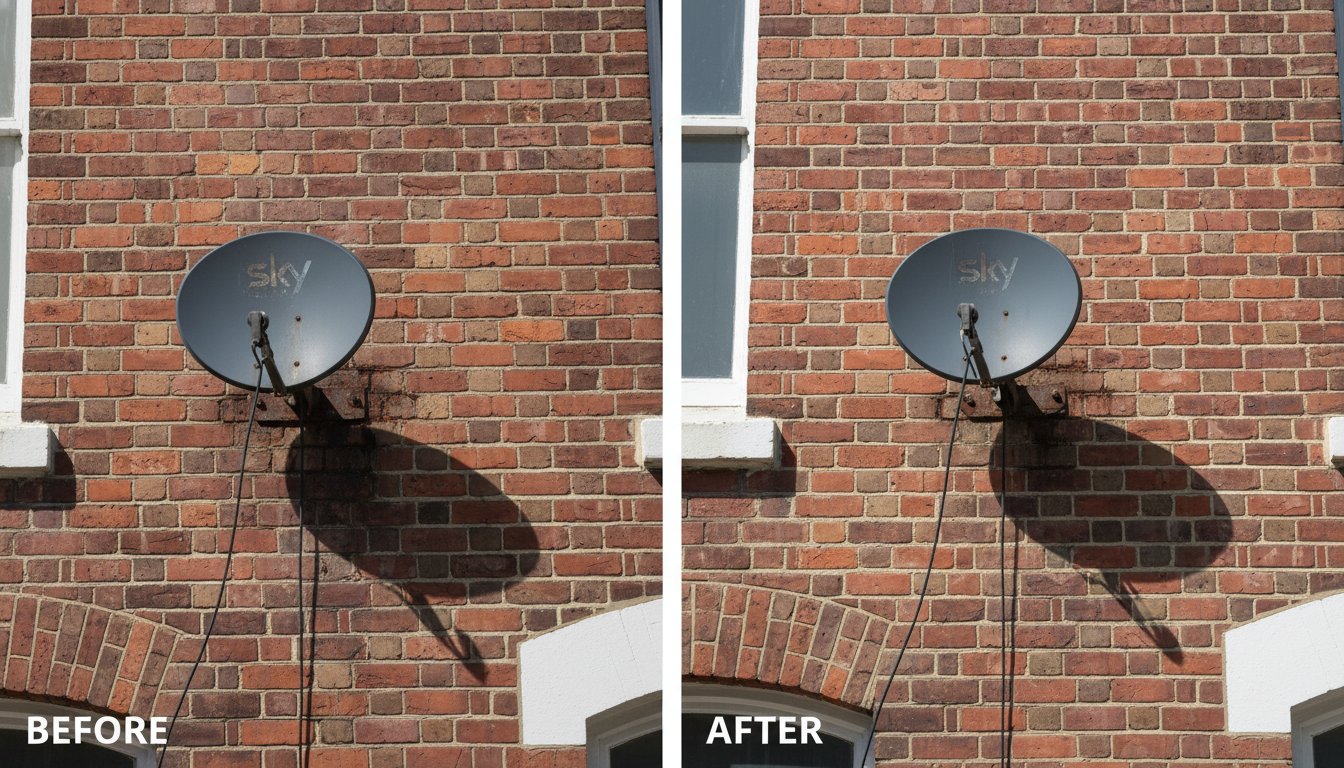
Old iron brackets are a particular problem for historic masonry. Over time, they rust and expand. This process can crack delicate stone or blow the faces off soft heritage bricks. The resulting orange streaks are incredibly difficult to clean and can cause permanent staining. We see this across the UK, from London townhouses to Cotswold cottages. By choosing our nationwide service for your Sky dish removal, you stop this damage before it becomes a costly repair bill. It's a simple step that provides an immediate sense of relief and physical cleanliness to your facade.
The "broken window theory" of property maintenance suggests that visible neglect invites more of the same. One rusted dish hanging from a chimney sends a signal that the exterior isn't being managed. Soon, cables begin to sag and paint starts to peel. Removing obsolete tech is a direct "enhancement" of the conservation area's character. It shows you value the heritage of your neighborhood and take pride in your home's appearance. We act as your expert partner in this restoration, providing a seamless solution for homeowners from coast to coast.
The Aesthetic Impact of Obsolete Technology
Traditional building materials like lime render, flint, or timber frames don't pair well with modern grey plastic. These items were never designed to be permanent fixtures. When a satellite dish is no longer in use, it becomes "visual pollution." Redundant cabling is often the worst offender, snaking across ornate cornices and hiding the very features that make your home special. Clearing these obstacles is the fastest way to comply with conservation area aerial restrictions while boosting your curb appeal. In heritage zones, a clean facade translates directly to higher buyer interest and better property valuations.
Legal Obligations for Redundant Equipment
Many homeowners are surprised to learn that they have a legal duty to clean up. Specific UK Planning Rules for Conservation Areas often include a clause requiring antennas to be taken down once they are no longer required for telecommunications. Leaving them in place can technically be a breach of your original planning consent. We provide a "clean slate" approach for property owners and landlords alike. Our team covers every corner of the UK, making it easier than ever to say goodbye to your old dish and hello to a cleaner, more efficient home.
Contact: dishgoodbye.com
Contact: dishgoodbye.com

Preserving Property Integrity During Redundant Tech Removal
Removing a satellite dish is only half the battle. Meeting conservation area aerial restrictions often starts with removing eyesores, but it shouldn't end with leaving scars on your masonry. Improper removal is a frequent cause of lasting damage to historic UK homes. When a bracket is ripped out carelessly, it often takes the face of the brick or a chunk of original stone with it. These "blown" brick faces are more than just ugly; they expose the soft, porous interior of the material to the elements. We see this damage across the country, and it's a frustration that's entirely avoidable with the right approach.
The danger of unfilled holes is the most overlooked risk of a DIY job. Every bolt left behind or open hole serves as a direct path for water to enter your walls. In the UK's climate, this leads to the destructive freeze-thaw cycle. Water enters the hole, freezes, expands, and cracks the surrounding masonry from the inside out. Over time, this creates damp spots inside your home, often appearing right behind where the old bracket used to be. Our nationwide service focuses on physical cleanliness and structural relief, ensuring your property remains watertight and beautiful.
Masonry Protection and Hole Filling
We believe that a professional removal should leave no trace. This requires more than a generic tube of caulk. Historic brickwork and lime render require specific fillers that mimic the breathability and texture of the original substrate. We match the color and consistency of your existing walls to ensure a seamless finish. This attention to detail is what restores your home's domestic harmony. By smoothing over these old entry points, we prevent water ingress and stop the "orange streak" staining caused by rusting internal fixings. It's a satisfying, low-effort upgrade for you that provides long-term protection for your home.
Safe Extraction of Redundant Cabling
Simply cutting a wire at the wall is a shortcut that leads to trouble. Leftover coaxial cables eventually perish, crack, and allow water to track along the wire and into your window frames or mortar joints. We pull redundant cabling carefully, ensuring we don't disturb delicate architectural features or historic woodwork. Once the wire is gone, we seal the entry point properly. We also take our environmental responsibilities seriously. We recycle all removed metal brackets and electronic waste, ensuring your property cleanup is as green as it is thorough. If you're ready to clear the clutter, book your professional satellite dish removal today and experience the relief of a clean, compliant exterior.
Contact: dishgoodbye.com
Contact: dishgoodbye.com
Professional Removal Services for Conservation Area Properties Nationwide
We believe your home's historic charm should be the first thing people notice, not a rusted bracket from the 1990s. As the UK's leading specialist for redundant aerial and dish extraction, we help you navigate the complexities of conservation area aerial restrictions with ease. We transform a frustrating maintenance headache into a satisfying, low-effort experience. Our team operates from coast to coast, bringing professional solutions to residential streets and commercial centers alike. We don't just remove hardware; we restore the domestic harmony and visual cleanliness of your property.
Our commitment to property integrity is at the heart of everything we do. We understand that heritage buildings require a delicate touch and a savvy problem-solver's mindset. Whether you're dealing with a single Sky dish or a complex web of old cabling, we provide a definitive break from past frustrations. We serve the entire United Kingdom, ensuring that no matter where your property is located, you have access to a reliable authority in redundant tech removal. It's time to reclaim your home's exterior and enjoy the relief of a job well done.
Our Nationwide Service Promise
We handle properties of all ages and architectural styles, including those in high-restriction zones where Article 4 Directions are in place. These areas demand a high level of care to ensure every action aligns with local planning expectations. Don't risk a fine or a dangerous fall by attempting a DIY removal. We arrive with the right ladders, safety equipment, and expertise to handle even the most awkward chimney-mounted hardware. Landlords managing portfolios in heritage zones find our service particularly valuable. We take the logistics off your plate, providing a consistent and professional result across multiple sites. We make property management feel modern, organized, and entirely stress-free.
Ready to Restore Your Property's Curb Appeal?
Restoring the heritage beauty of your home is just a click away. We invite you to get a quote for professional satellite dish removal and see how quickly your facade can be transformed. Our process is designed for maximum efficiency and minimum exertion on your part. We also stand by our zero-landfill recycling promise. Every piece of metal and electronic waste we remove is processed responsibly, ensuring your property's "clean slate" is also an environmentally friendly one. Stop letting obsolete tech dictate your home's appearance. Say a final goodbye to redundant clutter and embrace the crisp, clean look your historic property deserves. We are ready to help you meet conservation area aerial restrictions today.
Contact: dishgoodbye.com
Contact: dishgoodbye.com
Restore Your Home's Historic Profile Today
Reclaiming your property's character is a major win for any homeowner. We've seen how clearing away redundant tech prevents masonry damage and ensures you meet all conservation area aerial restrictions. It's a simple step that delivers immediate visual relief and long-term structural protection. Our team provides professional hole-filling to prevent damp, ensuring your stone or brickwork remains watertight and beautiful. We operate across all property types with a consistent UK-wide reach, from city townhouses to rural cottages.
We also handle the cleanup responsibly through our zero-landfill recycling policy. You don't have to tolerate the visual pollution of the past anymore. You can finally stop worrying about planning violations and start enjoying a cleaner, more authentic facade. Start your property restoration today with a quote from Dish Goodbye. It's time to let your home's original features do the talking and embrace a clutter-free future.
Contact: dishgoodbye.com
Contact: dishgoodbye.com
Frequently Asked Questions
Do I need planning permission to remove a satellite dish in a conservation area?
No, you don't need planning permission to remove a satellite dish. Removal is actually encouraged by councils because it enhances the special character of the neighborhood. UK law often requires you to take down antennas as soon as they're no longer in use. We provide professional removal services nationwide to help you clear this redundant tech without any legal stress or messy paperwork.
What is an Article 4 Direction and how does it affect my TV aerial?
An Article 4 Direction is a specific order that removes your normal permitted development rights. It means even minor changes, like adding a TV aerial to a chimney or front wall, may require a formal planning application. Councils use these directions to prevent visual clutter in historic streets. We help you stay compliant by extracting obsolete hardware that may have been installed before these stricter rules were introduced.
Can I be fined for having a satellite dish in a conservation area?
Yes, local authorities can issue enforcement notices that lead to unlimited fines if you ignore a planning breach. As of April 2024, the previous maximum fine of £2,500 was removed in England. Councils can now take action on unauthorized dishes for up to 10 years after installation. We help you avoid these risks by clearing away non-compliant equipment across the entire United Kingdom.
Is it my responsibility to remove an old dish left by a previous tenant?
Yes, the legal responsibility for any planning violations rests with the current property owner or landlord. Even if a previous tenant or owner installed the dish, you are liable for its presence. If it violates conservation area aerial restrictions, the council can order its removal at your expense. We offer a fast and reliable solution to help you wipe the slate clean and protect your investment.
How do I fill holes in brickwork after removing a satellite bracket?
You should use a high-quality masonry filler that matches the color and texture of your existing stone or brickwork. For older buildings, we recommend a breathable lime-based mortar to avoid trapping moisture. Simply squirted silicone is not a permanent solution and often looks messy. We specialize in professional hole-filling that seals out water and blends perfectly with your facade, preventing damp and freeze-thaw damage.
Does removing an old aerial improve my home's curb appeal?
Yes, removing a sagging, rusted aerial is one of the fastest ways to boost your home's curb appeal. It replaces industrial clutter with a clean, well-managed look that buyers love. In heritage zones, a tidy exterior suggests a home that's been cared for with attention to detail. We make this transformation effortless for you, providing a satisfying result that restores your property's charm while meeting conservation area aerial restrictions.
What happens to the old satellite dish once it's removed?
We recycle every component of the old dish through our strict zero-landfill policy. Satellite dishes are made from metals and plastics that can be repurposed rather than sitting in a landfill. Our nationwide team handles the entire disposal process, so you don't have to worry about e-waste or heavy scrap metal. It's a clean, green, and professional way to say goodbye to your old tech for good.
Are there restrictions on the size of a satellite dish I can install?
Yes, standard UK rules limit a single satellite dish to 100cm in any linear dimension. If you have two antennas, one must be 60cm or smaller. These size limits are even more critical in conservation areas where visual impact is strictly monitored. If your equipment is too large or poorly placed, it may attract unwanted attention from planning officers. We help you stay safe by removing oversized, redundant hardware.
Contact: dishgoodbye.com