
A redundant dish on a shared rooftop is more than a piece of equipment to take down. Communal satellite dish removal needs a clear plan for access, resident communication and the building exterior, so the work is complete rather than simply out of sight. Dish Goodbye removes satellite dishes across the UK. Call 0333 220 2436 or email [email protected].
It’s understandable to wonder who should organise the work, how rooftop access will be managed and what happens to old cables and fixings. A little coordination helps residents understand what to expect and reduces the chance of leaving equipment or untidy marks behind.
This guide explains how to plan a communal removal, coordinate access and updates, and check that the agreed work is complete. That means clearing the dish, associated brackets, fixings and redundant cabling, filling and smoothing installation holes, and sending removed metal and electronic waste to approved recycling centres. The result is a cleaner building exterior and a straightforward route from planning to responsible clearance.
Dish Goodbye provides satellite dish removal for residential and commercial properties across the UK. Call 0333 220 2436 or email [email protected].
Key Takeaways
- Plan communal satellite dish removal as a whole-building clearance so shared equipment and associated components aren’t missed.
- Start with a ground-level inventory of dishes, brackets, fixings and visible redundant cables to clarify the work needed.
- Shared rooftop access and multiple components make communal removal different from a household DIY task. Avoid risky roof work and dismantling.
- Give affected residents clear information about the planned work and access arrangements, then review the completed scope.
- A complete removal can include clearing equipment and cables, smoothing fixing holes, and responsibly recycling removed materials through Dish Goodbye’s UK-wide service.
Why plan communal satellite dish removal as a whole-building project?
A tidy exterior starts with a clear plan. Communal satellite dish removal means coordinating the clearance of shared rooftop equipment and its associated components, rather than treating each dish as an isolated job. A whole-building view helps the organiser account for equipment in different locations and define what needs to be removed.
Without a shared inventory, it’s easy to focus on the most visible dish and overlook a bracket on another elevation, old fixings or coaxial cable running along a wall. One project plan gives everyone a single scope to work from. It also makes it easier to organise building access and resident updates around the work, instead of arranging each item separately.
The coordinator might be a property manager, landlord, building owner or residents’ representative. Choose someone who can bring together information about the property, access and communication with affected residents. For residential and commercial properties, Dish Goodbye provides satellite dish removal across the UK, including associated brackets, fixings and redundant cabling.
What counts as communal rooftop communications equipment?
Start by identifying shared satellite dishes and the parts connected to them: support brackets, wall or roof fixings, and visible coaxial cabling. These components form the practical scope of removal. A shared system is distinct from a dish serving an individual dwelling, but ownership isn’t always clear from appearance alone. Record what you can see and establish which equipment is included in the project.
Some buildings use an Integrated Reception System (IRS), a communal reception arrangement serving multiple dwellings. Identifying whether equipment is shared helps clarify the removal scope. This guide focuses on clearing redundant equipment, not installing a replacement system.
What should the organiser establish before planning removal?
Make a simple ground-level record before arranging rooftop work. Note visible dish locations, the building elevations they’re on, and areas that may need access. Include visible brackets, fixings and cable runs. This first look won’t replace an assessment of rooftop conditions, but it gives the organiser a useful starting point without asking residents to climb or inspect the roof.
Next, identify who manages the property and who will coordinate resident communication. Agree how affected residents will receive information about the planned scope and access arrangements. Keep the plan focused: which equipment and building areas are included, and how the finished exterior will be reviewed. A clear starting record makes it easier to spot omissions and keep the project orderly.
How to assess communal dishes, brackets, and redundant cables
Build a useful picture of the equipment before arranging rooftop work, but keep the inspection firmly on the ground. A clear visual inventory helps the removal team understand what’s visible and where further assessment may be needed. It isn’t a substitute for checking roof-level conditions, and nobody needs to climb or take equipment apart to prepare the list.
How to create a practical equipment inventory
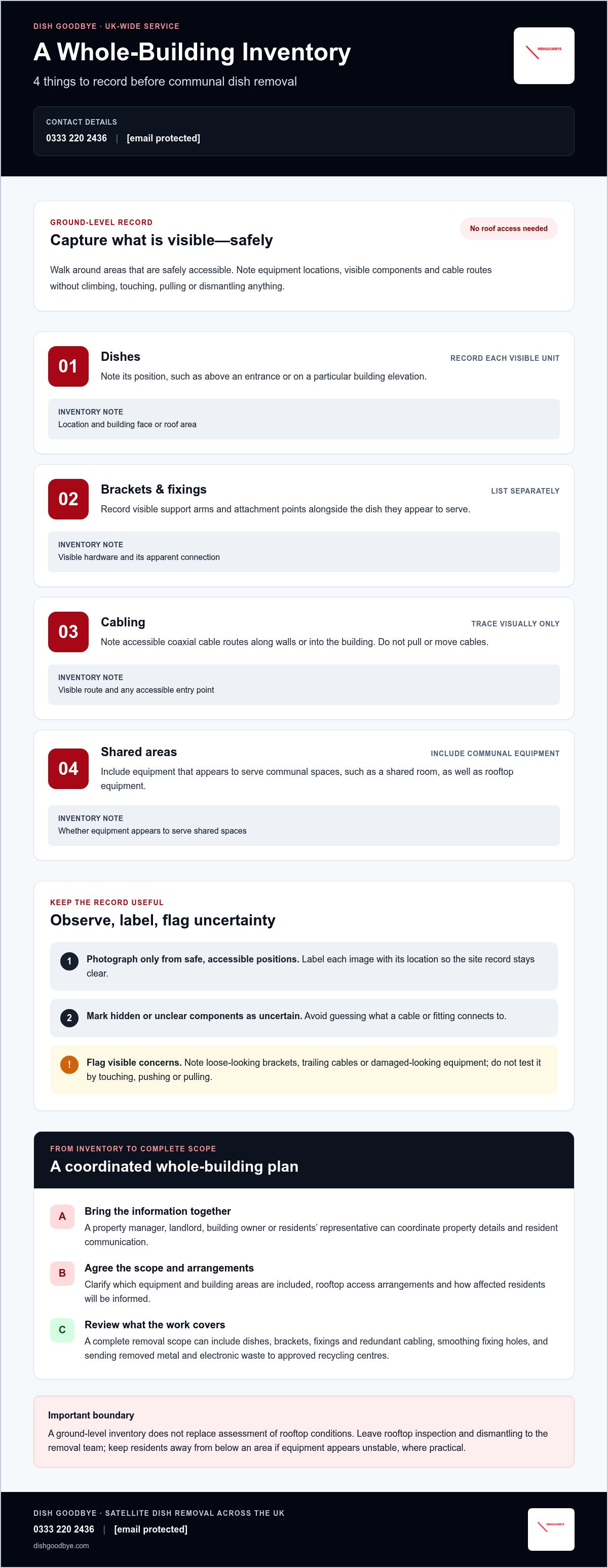
Walk around areas that are safely accessible and note each visible dish, its apparent location and the building face or roof area it sits on. Record the related parts separately too. A dish can be easy to spot while its cable route or mounting hardware is less obvious.
- Dishes: Note each visible unit and its position, such as above an entrance or on a particular elevation.
- Brackets and fixings: Record visible support arms and attachment points alongside the dish they appear to serve.
- Cabling: Trace accessible coaxial cable visually, noting where it runs along walls or enters the building. Don’t pull or move it.
- Shared areas: Include equipment that appears to serve communal spaces, such as a shared room, as well as rooftop equipment.
Photographs can make the record easier to follow. Take them only from safe, accessible positions, and label each with its location so the site plan stays clear. If a component is partly hidden, mark it as uncertain rather than guessing what it connects to.
What to look for without accessing the roof
From ground level, look for signs that a component may need particular attention, such as a visibly loose bracket, a trailing cable, or a damaged-looking dish or support. Record what you can see and where. Don’t test whether anything is secure by touching, pulling or pushing it.
If something appears unstable, keep residents away from the area below where practical and include it in the site notes. Leave rooftop inspection and dismantling to the removal team. Working at height and taking down attached equipment can pose risks that a ground-level inventory can’t assess.
A removal team can assess access and the work scope on site, using your notes as a starting point. This turns a basic visual record into a practical plan for communal satellite dish removal, including the dishes, brackets, fixings and redundant cabling that need attention. For an overview of UK satellite dish removal, see Dish Goodbye’s service information.
DIY or professional communal satellite dish removal: what changes?
A single dish on a low, easily reached wall can look like a straightforward household task. A shared rooftop project is different. It may involve equipment in several locations, access to shared building areas and residents who need to know what work is planned. The visible dish is only one part of the job, so treating communal satellite dish removal as a quick dismantle can leave the building only partly cleared.
Roof access and dismantling also bring practical risks. A ground-level view won’t show every issue with a fixing or cable, and working at height can put people and property at risk. Don’t climb onto the roof or try to remove components yourself. Use your visual notes to explain what’s apparent, then leave rooftop assessment and removal to a professional team.
Why shared rooftop removal is different from a single dish
Communal work needs a joined-up scope. One dish may sit above an entrance, another on a different elevation, with brackets and cable routes connecting each installation to the building. Shared access and resident communication add coordination that a single-household job may not require. If the plan only names the most obvious dish, less visible equipment can be missed.
There’s also the finish to consider. Taking down a dish but leaving its bracket, wall fixings or redundant cable can make the exterior look unfinished. A complete plan defines what should be cleared across the building, so the organiser can review the result against the agreed scope rather than assume the job is done once the dish is gone.
What a complete professional removal can cover
Professional removal can cover redundant satellite dishes, antennas and aerials from residential or commercial properties, along with associated brackets, fixings and cabling. This broader scope matters on shared buildings, where cables and mounting hardware may be spread across different parts of the exterior. Dish Goodbye provides removal across the UK.
After equipment and fixings are removed, holes left by previous installations can affect the appearance of the wall or roof area. Dish Goodbye fills and smooths these holes to help leave a neater exterior. The aim is a properly cleared building face, not a dish removed with leftover parts still in view. Include these finishing details in the project scope and completion review.
Organising communal dish removal: inventory to sign-off
A simple sequence keeps a shared-building project clear from the first site notes to the final review. For communal satellite dish removal, make sure the planned scope, resident communication and completion checks all line up.
- Inventory: Record visible dishes, their locations, associated brackets and fixings, and accessible cable routes.
- Coordinate: Choose one organiser to bring the information together and communicate practical arrangements to affected residents.
- Plan the work: Identify access points and shared areas that may be affected. Share the intended scope and access arrangements in advance.
- Remove and finish: Have the agreed equipment and redundant components cleared, with installation holes filled and smoothed.
- Review and sign off: Compare the finished work with the inventory and confirm how removed materials are handled.
Coordinate the building and prepare the work area
One point of contact helps prevent mixed messages and keeps the equipment record in one place. Use the inventory to identify where the team may need access and which shared areas could be affected. Let residents know what parts of the building are included and what access arrangements to expect.
Keep the scope precise. A cable that looks unused from the ground may still connect to equipment elsewhere, so don’t label every visible cable as redundant by appearance alone. Include confirmed redundant cabling in the work plan, and note anything uncertain for assessment as part of the removal work.
Review the finished work and material handling
At completion, compare the agreed scope with what’s been cleared. Check that the listed dishes, associated brackets and fixings, and redundant cables have been removed. Review the exterior for the finishing work too: Dish Goodbye fills and smooths holes left by previous installations, helping the building look neater once equipment is gone.
Responsible handling is part of a complete clearance. Removed metal and electronic waste is processed through approved recycling centres. Include material handling in the project sign-off, alongside checks that the agreed equipment and components have been removed.
For a coordinated removal across residential and commercial properties throughout the UK, explore the UK-wide removal service.
Choose a complete communal removal service for a cleaner building exterior
A completed communal removal should leave more than an empty spot where a dish used to be. The agreed equipment should be gone, along with its associated brackets, fixings and redundant cabling. A clear scope helps property managers review the whole exterior and spot anything that may have been overlooked.
What a finished communal removal should address
Check that the removed dishes and aerials are gone from the building and that the listed brackets, fixings and redundant cables have also been cleared. Fixing holes left by previous installations should be filled and smoothed to help create a neater appearance.
Material handling matters too. Dish Goodbye processes removed metal and electronic waste through approved recycling centres. Together, equipment clearance, exterior finishing and responsible recycling make communal satellite dish removal a more complete way to refresh a shared building exterior.
How to take the next step with Dish Goodbye
Dish Goodbye provides satellite dish removal for residential and commercial properties across the UK. Share your building’s removal needs and arrange a plan that covers the equipment and associated components included in the work.
Arrange communal dish removal across the UK, or call 0333 220 2436 or email [email protected] to get started. A clear plan helps turn a cluttered exterior into a cleaner, more orderly finish.
Make shared-building removal a clean finish
A well-planned communal satellite dish removal is a whole-building job: record the equipment, coordinate residents and access, then review the finished work against the agreed scope. Looking beyond the visible dish helps ensure associated brackets, fixings and redundant cabling are included, while filling and smoothing fixing holes leaves a neater exterior.
Dish Goodbye removes redundant satellite equipment from residential and commercial properties across the UK. Removed metal and electronic waste is processed through approved recycling centres, so the project can finish with a clear exterior and responsible material handling.
Ready to take the next step? Arrange communal dish removal across the UK and make a clear plan for your property.
Frequently Asked Questions
How do you remove a communal satellite dish from a block of flats?
Start with an inventory of visible equipment and a plan for access and resident communication. A removal team can then assess the site and clear the agreed redundant dishes, brackets, fixings and cabling. Communal satellite dish removal should also account for holes left by previous fixings and the responsible handling of removed materials. Review the completed work against the inventory so overlooked components don’t remain on the building.
Who should organise communal satellite dish removal?
A property manager, landlord, building owner or residents’ representative can coordinate the project. Choose one organiser to gather equipment locations, identify shared areas that may need access and pass practical information to affected residents. The organiser should keep the work scope together and make sure the planned removal covers confirmed redundant equipment and its associated components. A single point of contact helps keep arrangements clear from initial inventory through to completion review.
Can a communal satellite dish be removed without removing its brackets and cables?
It’s physically possible to take down a dish and leave its brackets or cables, but that may leave the exterior looking unfinished and the clearance incomplete. A thorough removal scope includes the dish, associated brackets and fixings, and cabling confirmed as redundant. Don’t assume every visible cable is unused. Record uncertain cable routes for assessment rather than asking residents to pull, cut or disconnect them.
What happens to the holes left after a satellite dish is removed?
Fixing holes left by previous installations can be filled and smoothed as part of the removal work, helping leave a neater exterior. Include this finishing step in the agreed scope, then review the relevant wall or roof areas once the equipment and fixings are cleared.
Is it safe for residents to remove a rooftop satellite dish themselves?
Residents shouldn’t climb onto the roof or dismantle rooftop equipment themselves. Working at height and handling attached dishes, brackets and cables can create practical risks that aren’t easy to judge from the ground. Keep any initial inventory to safe, accessible viewpoints. If equipment looks loose or damaged, note its location and keep people away from the area below where practical. Leave rooftop assessment and removal to a removal team.
What happens to removed communal satellite dishes and electronic waste?
Removed metal and electronic waste from the service is processed through approved recycling centres. This provides a responsible route for materials cleared during the job, rather than leaving them on site or treating them as ordinary household rubbish. As part of the project review, the organiser can include material handling alongside checks that the agreed dishes, brackets, fixings and redundant cabling have been removed.
Does Dish Goodbye remove communal satellite dishes across the UK?
Yes. Dish Goodbye provides satellite dish removal across the UK for residential and commercial properties. The removal service covers redundant dishes, antennas and aerials, with associated brackets, fixings and redundant cabling. It also includes filling and smoothing holes left by previous installations, while removed metal and electronic waste is processed through approved recycling centres. This gives property managers a way to plan a more complete building clearance nationwide.
Call Dish Goodbye on 0333 220 2436 or email [email protected] to arrange removal across the UK.