
What if the best time to remove an old aerial is before the exterior work begins? If you’re removing old aerials during house renovation, planning the job in sequence can help prevent redundant brackets and cables from getting in the way of repairs, painting or other finishing work. Dish Goodbye provides nationwide removal across the UK. Find contact details at dishgoodbye.com, [email protected] or 0333 220 2436.
It’s easy to leave an unused aerial until the end of the renovation. But sorting it earlier can make exterior work simpler and help avoid a freshly finished wall being marked or disturbed later. The key is knowing when removal fits your plans, who will handle the equipment at roof level, and what should happen to the fixing holes afterwards.
This guide explains how to build aerial removal into your renovation schedule, protect the exterior and leave the property looking tidy. You’ll also learn how complete removal can include brackets, fixings and cabling, with holes filled and smoothed for a neat finish. For nationwide service details, visit dishgoodbye.com, email [email protected] or call 0333 220 2436.
Key Takeaways
- Plan removing old aerials during house renovation alongside roofline, masonry or exterior finishing work. Find nationwide service details at dishgoodbye.com.
- Check whether the aerial is still in use before deciding to keep it, remove it or revisit the decision later.
- Note where equipment and cabling run, and consider how they may affect planned renovation tasks.
- Avoid unsafe roof access; suitable competence and safe working arrangements matter when removal involves working at height.
- Review the exterior after removal to ensure brackets, fixings and cables are cleared and fixing holes are filled and smoothed. Contact Dish Goodbye at [email protected] or 0333 220 2436.
Why Include Old Aerial Removal in Your House Renovation Plan?
Removing old aerials during house renovation can be a practical way to clear unused equipment before exterior work is finished. A redundant setup may include the aerial itself, metal brackets, fixings attached to the wall or roofline, and cabling that’s no longer needed. Clearing these parts can leave a cleaner surface for planned repairs, painting or other improvements.
A television aerial receives broadcast signals. If you’re unsure what type is fixed to your property, this overview of the television aerial explains the basics. The renovation question is whether the equipment still serves a purpose and whether it affects the work you’re planning.
“Aerial removal clears redundant equipment; it isn’t a repair, replacement or installation job.” That distinction helps set expectations. Removal can leave holes where fixings were attached, so include filling and smoothing them in your plans for a tidy finish.
Which renovation projects make aerial removal worth planning?
Consider it if roof work, masonry repairs, façade improvements or an exterior refresh will involve the same area as an unused aerial, its brackets or cables. For example, equipment fixed to a wall you plan to repaint may interrupt the finish, while roofline work may be easier to coordinate once redundant fittings are cleared. Not every renovation needs aerial removal. Base the decision on whether the equipment is used and what your project will affect.
Thinking about removal before the finishing stage can also help you avoid returning to a newly completed area to deal with overlooked cables or fixings. Coordinate the task with the relevant roofline, masonry or exterior work in your renovation plan.
What counts as a complete aerial removal?
A complete removal clears the aerial, its brackets and fixings, plus associated cabling that’s redundant. Simply taking down the visible aerial while leaving unused cables or fittings behind may not give the exterior the clean finish you’re aiming for. Dish Goodbye’s aerial removal service includes removal of redundant equipment and filling and smoothing fixing holes.
Removal is different from repairing existing equipment or fitting something new. If the aerial is still useful, keeping it may make more sense; if you’re unsure, decide how it fits your viewing needs before scheduling exterior work. For more detail on clearing redundant equipment, read the TV aerial removal guide.
How to Coordinate Aerial Removal with Renovation Work
Give aerial removal a place in your renovation sequence rather than leaving it until the exterior is complete. The right timing depends on what else is happening around the equipment, how accessible it is and the condition of its fixings. There’s no universal schedule, but planning ahead helps everyone understand which areas need to be clear before finishing work begins.
“Plan aerial removal before final exterior finishing, so redundant equipment and fixings don’t become a reason to revisit completed work.”
When should removal happen relative to roof or exterior work?
Arrange removal before planned work needs clear access to the affected roofline, wall or façade. For example, consider the aerial’s position when sequencing roof repairs, masonry work or exterior painting. Removal and surface preparation can happen earlier; decorating and final finishing can follow once the area is ready. Fit the steps around your actual renovation plan rather than relying on a fixed timetable.
What should homeowners communicate when planning the work?
Share where the aerial is located and what remains attached, including visible brackets and associated cabling. Flag nearby roof, wall or exterior work so the removal can be coordinated with the right stage of the project. Dish Goodbye provides aerial removal nationwide across the UK. Access and the installation’s condition can affect the approach, so avoid assuming every job follows the same process or takes a set amount of time.
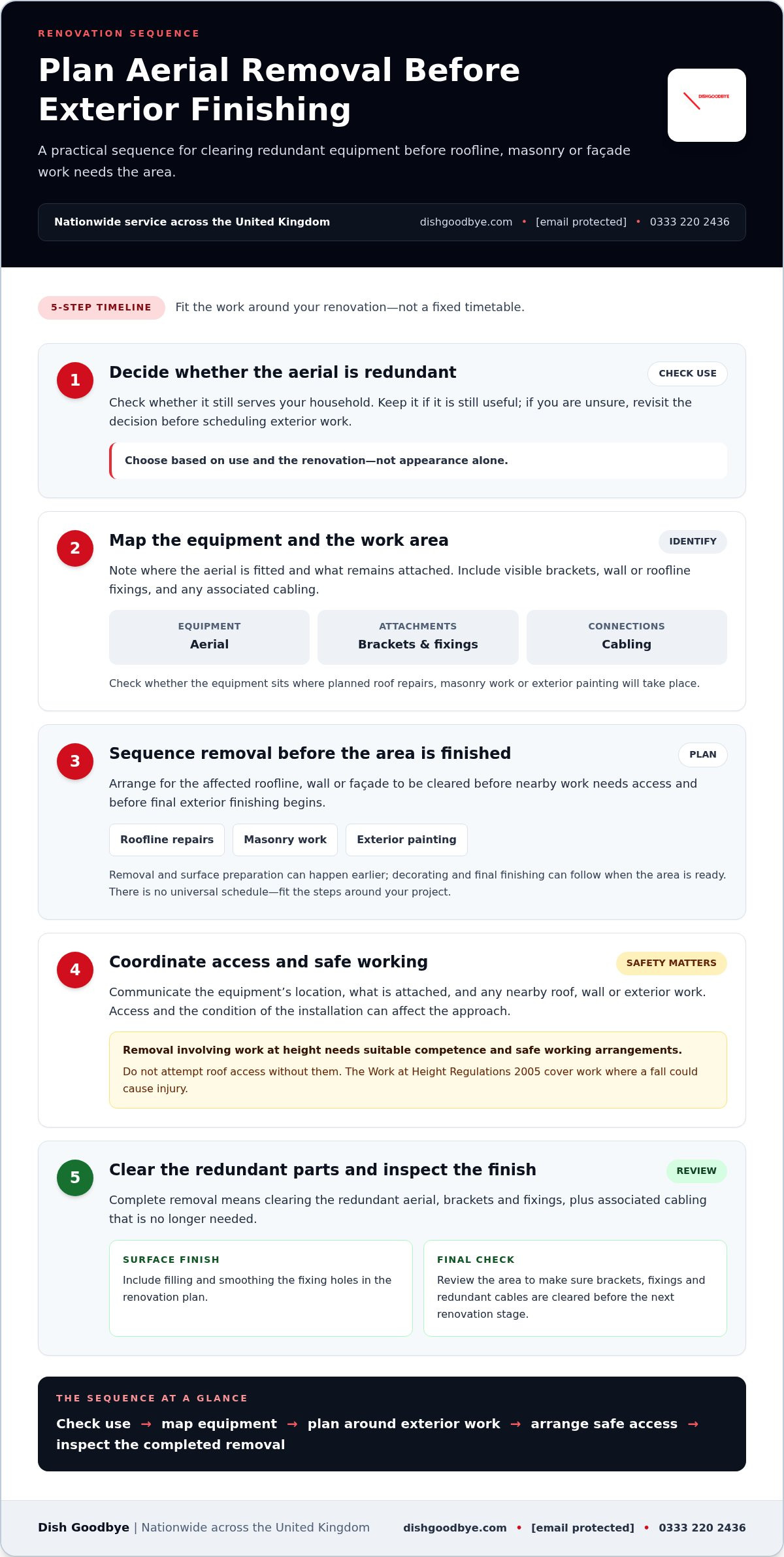
Use this simple sequence to keep the project organised:
- Identify: Note which aerials appear redundant and where they’re fitted.
- Plan: Map removal against roofline, masonry and exterior finishing tasks.
- Arrange: Schedule removal before the surrounding work needs a clear area.
- Inspect: Review the area afterwards and make sure the finish suits the next renovation stage.
Roof access needs careful handling. The Work at Height Regulations 2005 cover work where a fall could cause injury, including appropriate planning and competent people. Avoid attempting removal from a roof without suitable competence and safe working arrangements.
For a lower-effort way to coordinate redundant aerial removal with your project, visit Dish Goodbye’s aerial removal service. Contact Dish Goodbye at dishgoodbye.com, [email protected] or 0333 220 2436.
Keep, Remove, or Delay? Choosing the Right Renovation Option
An aerial doesn’t have to be visibly damaged to be worth considering during renovation. If it’s unused, its brackets or cabling may still interrupt planned exterior work or the finished look. But if it still serves your household, it may not be redundant. Decide based on its use and your renovation plans, not appearance alone.
| Situation | Practical option | Renovation consideration |
|---|---|---|
| The aerial is still used | Keep it for now | Don’t add removal simply because other exterior work is planned. Consider how the work can proceed around equipment that remains useful. |
| The aerial is unused and in an area scheduled for exterior work | Coordinate removal | Clearing the aerial, brackets, fixings and redundant cabling can help prepare the area for a tidier finish. |
| You’re unsure whether it’s still needed | Delay the decision | Work out whether it serves your household before deciding. Avoid scheduling removal until you know what you want to keep. |
When does keeping an aerial make sense?
If someone in the household still relies on it, it may not be redundant, even if it looks dated. Factor its use into renovation planning before arranging removal. The choice is yours: renovation work doesn’t automatically mean every aerial should come down, and this guide isn’t a recommendation to remove equipment that still has a purpose.
When is removal better coordinated with renovation?
If the aerial is unused and fixed to a wall or roofline already due for work, coordinating removal can help avoid leaving brackets or cables in the area you want to refresh. Complete removal also includes the fixings and associated redundant cabling, with fixing holes filled and smoothed. For further exterior improvement ideas, consider how a clear, well-finished façade contributes to the overall look of your home.
Removal is not repair or replacement. It clears redundant equipment; it doesn’t mean a new aerial is being installed or an existing one repaired. Removing old aerials during house renovation is most useful when the equipment is no longer needed and its position affects the work or finish you have planned.
What to Check Before and After Aerial Removal
A quick check before removal helps keep the task aligned with the renovation and makes it easier to review the finish afterwards. Note what’s present and which nearby work depends on access to the same part of the roof or exterior wall. You don’t need to dismantle anything yourself to gather this information.
What should you note before the removal visit?
Make a short note of the aerial’s position and any visible brackets or associated cabling. Then flag nearby renovation tasks, such as roofline work, masonry repairs or exterior finishing, so the sequence is clear.
- Location: Record where the aerial and its brackets are fitted.
- Cabling: Note whether any associated cables remain along the wall or roofline.
- Renovation plans: Identify work that needs access to the same area.
Keep your check at ground level. Don’t attempt to reach the roof or dismantle equipment at height without suitable competence and safe working arrangements. If access is needed, professional removal avoids turning a renovation task into a risky DIY job.
What should the finished exterior look like?
After removal, review the area for the equipment and redundant fixings, and check that the work suits the next stage of your renovation. Dish Goodbye’s removal service includes filling and smoothing holes left by fixings. This helps create a neater surface, but the final appearance can depend on the existing material and finish, so don’t assume every repair will match perfectly or be invisible.
Removed metal and electronic waste is sent to approved recycling centres. If you’re using an after photo to document the renovation, show the cleared exterior without a satellite dish or aerial.
Use your notes to check that the relevant equipment and redundant cabling have been dealt with, the fixing holes have been filled and smoothed, and the area is ready for the surrounding work. This final review is a helpful handover point before decorating or other exterior finishing continues.
Planning removing old aerials during house renovation? Arrange nationwide aerial removal as part of your project plan.
Finish Your Renovation with a Clearer, Tidier Exterior
A well-planned renovation has a clear finish: the work is complete, leftover clutter is gone, and the exterior looks considered from roofline to wall. If an aerial is no longer used, include it in that final plan rather than leaving its brackets or cables as an afterthought.
How does professional removal simplify renovation planning?
Keep the sequence straightforward: decide whether the equipment is redundant, coordinate removal with nearby work, arrange the removal, then review the exterior before the renovation is signed off. Complete removal covers the aerial, its brackets and fixings, and associated redundant cabling. Fixing holes are filled and smoothed, while removed metal and electronic waste is sent to approved recycling centres.
Professional removal also means you don’t need to climb onto the roof to handle the task yourself. Dish Goodbye provides removal across the UK, helping homeowners clear one exterior job from the renovation plan. For more on professional removal and protecting your property, read the professional dish removal service guide.
Before you consider the exterior finished, review the area where the equipment was fixed. Check that the redundant fittings and cabling have been removed, and that the fixing holes have been filled and smoothed. This creates a neater starting point for any surrounding finishing work, without assuming the repaired surface will match every existing material or colour exactly.
What is the next step for homeowners?
If the aerial is redundant and removal fits your renovation plans, add it to the project sequence before the surrounding exterior work is complete. That small planning step can help you avoid leaving unused equipment in place or revisiting an area after it has been finished.
For removing old aerials during house renovation, arrange nationwide removal with Dish Goodbye at Arrange professional aerial removal. For enquiries, visit dishgoodbye.com, email [email protected] or call 0333 220 2436.
Make Your Renovation Finish Feel Complete
Keep the decision practical: if an aerial still serves your household, it may belong in your plans. If it’s redundant, coordinate its removal with nearby roofline, masonry or exterior work. Removing old aerials during house renovation can help clear the way for a neater finish, especially when the aerial, brackets, fixings and associated cabling are dealt with together.
Dish Goodbye provides removal across the United Kingdom. Fixing holes are filled and smoothed, and removed metal and electronic waste is processed through approved recycling centres. That means one less exterior task to manage yourself, including roof access.
If redundant equipment is part of your renovation plan, arrange professional aerial removal. For help, visit dishgoodbye.com, email [email protected] or call 0333 220 2436. Plan it into the project, then enjoy a clearer, tidier exterior as your renovation comes together.
Frequently Asked Questions
When should I remove an old aerial during a house renovation?
Plan removal around any work that needs access to the same roofline or exterior wall. If roof repairs, masonry work or decorating are planned nearby, coordinate removal before the area is finished. There’s no single sequence for every property, so consider the aerial’s location and your renovation plan. Removing old aerials during house renovation should account for the aerial, its brackets, fixings and any redundant associated cabling.
Is it safe to remove a roof aerial myself?
Removing a roof aerial yourself can be hazardous if it means working at height. Don’t climb onto a roof or dismantle equipment without appropriate competence and safe working arrangements. A professional removal service can handle the aerial, brackets, fixings and associated cabling, helping you avoid adding a risky task to an already busy renovation. Keep your preparation to noting where the equipment is and what nearby work is planned.
Can an aerial be removed before roof repairs or exterior decorating?
Yes, removal can be coordinated with work that needs access to the same roofline or wall. Plan the sequence around your property and renovation tasks rather than assuming one order suits every project. After removal, fixing holes can be filled and smoothed. You can then plan decorating or other surface finishing to suit the condition and requirements of the exterior.
What happens to the holes left by old aerial fixings?
Removing old brackets and fixings can leave holes in the exterior surface. Dish Goodbye fills and smooths holes left by previous installations as part of its removal service. This helps leave the area tidier, but the repair isn’t guaranteed to be invisible or identical to the surrounding surface. Include any further decorating or exterior finishing in your renovation plans.
Are old TV aerials and their cables recycled after removal?
Dish Goodbye sends removed metal and electronic waste to approved recycling centres. The removal service also covers associated brackets, fixings and redundant cabling, not just the aerial itself. This supports responsible handling of the materials removed from the property. No specific recycling rate or outcome for individual materials is promised, so plan around the confirmed service: removal and processing through approved centres.
Should I remove an aerial that I still use?
Not necessarily. First consider whether the aerial still serves a purpose for your household. If it remains useful, removal may not suit your needs, even if renovation work is planned. If it’s redundant or conflicts with work on the exterior, include it in the renovation discussion. Removal is distinct from repairing existing equipment or replacing it, so base the decision on whether you still want the aerial.