
Could an old satellite dish make your home look less ready for viewings? If you’re considering removing satellite dish before selling house, the finish matters as much as taking the dish down. Dish Goodbye provides satellite dish removal nationwide across the UK. Visit dishgoodbye.com, call 0333 220 2436 or email [email protected].
An unused dish, loose brackets and dangling cables can make an exterior look neglected. Removal needs care: consider how the dish is fixed, where its cables enter the property and what the wall may need afterwards. Working at height can also make a seemingly simple job unsafe.
This checklist explains what to inspect before removal, when to leave the work to a professional and how to plan for a tidy finish. Dish Goodbye removes dishes, brackets, fixings and redundant cabling, and fills and smooths the fixing holes left by previous installations. Removed metal and electronic waste is processed through approved recycling centres. For nationwide UK satellite dish removal, visit dishgoodbye.com, call 0333 220 2436 or email [email protected].
Key Takeaways
- Removing satellite dish before selling house can help create a tidier exterior. Consider whether the dish is redundant and how it affects the home’s appearance.
- Look at the brackets, cable route and wall entry point before planning removal. Don’t assume a loose-looking cable is unused.
- Think carefully about access. Roof work and ladder use can be hazardous, particularly when equipment is difficult to reach.
- Plan for a neat finish by addressing fixing holes and considering cable entry points. Exposed openings can leave a wall vulnerable to moisture.
- Dish Goodbye provides satellite dish removal nationwide across the UK, including redundant brackets, fixings and cabling. Fixing holes are filled and smoothed.
Why remove a satellite dish before selling your house?
Dish Goodbye: dishgoodbye.com | Call: 0333 220 2436 | Email: [email protected]
Before photographs and viewings, sellers often want the exterior to look tidy and well cared for. An unused dish can make a wall or roofline feel unfinished, especially alongside loose cables or weathered fixings. Removing it may give the exterior a cleaner appearance, but it is a presentation choice, not a universal requirement. It cannot guarantee a quicker sale or a higher offer.
When deciding about removing satellite dish before selling house, assess the whole exterior. Consider whether the dish is the main distraction or one item among other jobs, such as clearing clutter or tidying the entrance. For a brief overview of the equipment, see What is a satellite dish.
Does an old satellite dish make a house look neglected?
It can contribute to that impression, but context matters. A clean, securely fixed dish may be less noticeable than a damaged bracket, trailing cable or rust mark. Step back and look at the front and sides of the property as a buyer might. Do the fittings stand out, and do they look out of place beside the rest of the exterior?
Assess the overall finish, not the dish in isolation. A neat frontage, clean windows and maintained boundaries all contribute to how cared for a home appears. Removal is one possible improvement, not a guarantee of a particular response from buyers.
Should you leave the dish for the next owner?
First consider whether the dish appears redundant and whether its cables may still be in use. Don’t assume that a loose or disconnected-looking cable serves no purpose, or that a buyer will want the equipment. If its use is unclear, avoid guessing. Weigh the dish’s possible usefulness against its appearance and condition.
For more ideas to help prepare the rest of the property’s exterior, see our pre-sale exterior improvements guide. If you decide to remove the dish, Dish Goodbye provides nationwide satellite dish removal across the UK, including brackets, fixings and redundant cabling. The fixing holes are filled and smoothed for a tidier finish.
What to check before removing a satellite dish from your home
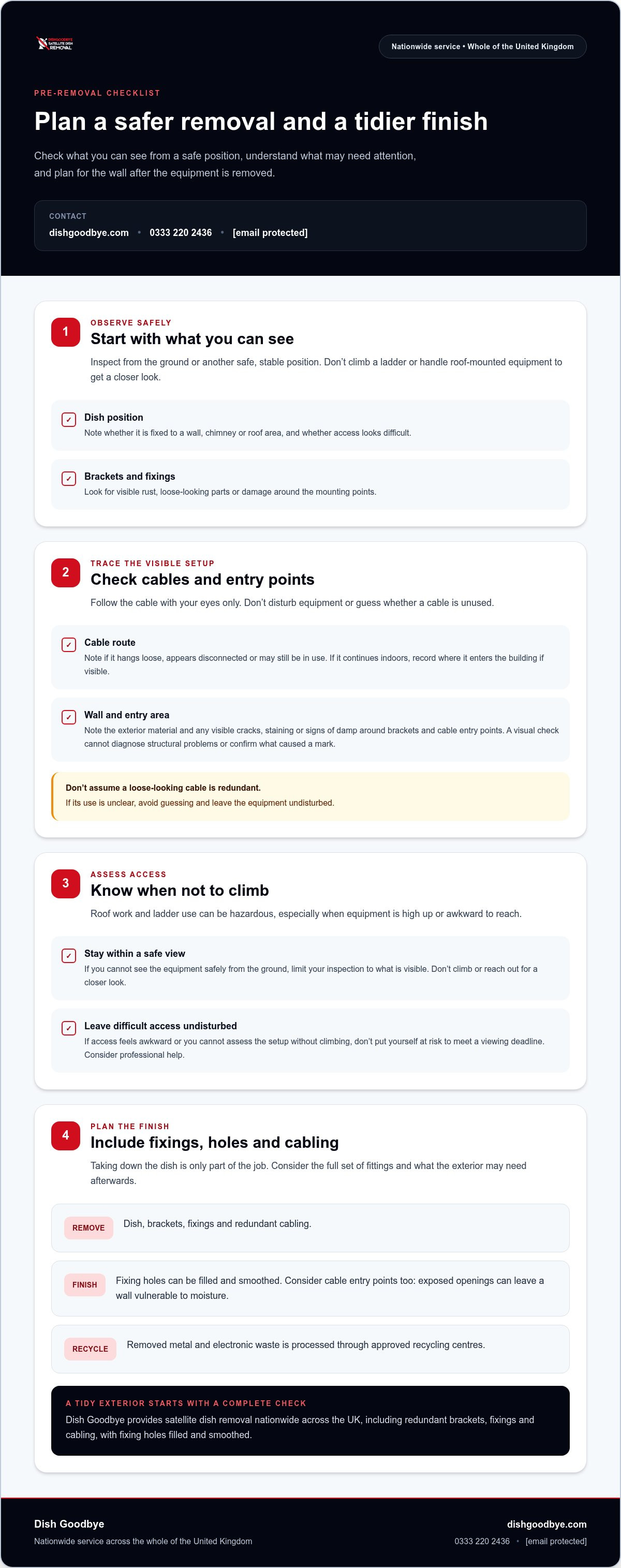
A visual check can help you understand what’s involved and plan removal with fewer surprises. Inspect from the ground or another safe, stable position. Don’t climb a ladder or handle roof-mounted equipment to get a closer look.
- Dish and position: Note where the dish is fixed, such as a wall, chimney or roof area, and whether access looks difficult.
- Brackets and fixings: Look for visible rust, loose-looking parts or damage around the mounting points.
- Cable route: Follow the visible cable with your eyes. Note whether it hangs loose, appears disconnected or may still be in use. Don’t guess what it connects to.
- Entry points: Record where the cable enters the property and whether you can see an interior entry point that may need attention.
A fixing hole is left where mounting hardware was attached to a wall or another surface. Include these holes in your assessment of the finish needed after removal.
How to inspect the dish, brackets and cables
From a safe position, look for dangling cable, rust, visible damage or fixings that appear loose. Follow the cable visually from the dish towards the point where it enters the building. If it continues indoors, note where it emerges, if that is visible. These observations help you describe the setup without disturbing the equipment.
Some dishes are mounted high up or positioned where access is awkward. Don’t climb or reach out to get a closer look. The Health and Safety Executive explains the requirements for work at height in its Work at Height Regulations guidance. If the equipment is difficult to see safely, limit your inspection to what you can observe from the ground.
Which wall and weatherproofing details matter?
Note the visible surface beneath the dish. It may be brick, rendered masonry or another exterior material. Look for existing cracks, staining or signs of damp around the brackets and cable entry. This gives you a record of the wall’s visible condition before work begins.
A visual check can’t diagnose structural problems or confirm what caused a mark. Record what you can see rather than assuming a stain means water has entered or a crack is related to the dish. This is a useful starting point when planning removing satellite dish before selling house.
Dish Goodbye removes redundant dishes, brackets, fixings and cabling, and fills and smooths the resulting fixing holes. For a tidier exterior, explore satellite dish removal.
DIY removal or professional help: what is safer before a sale?
Choosing between DIY and professional removal involves more than deciding whether the dish looks easy to take down. Consider its mounting position, how safely it can be reached, the condition of the fixings and the work needed for a tidy finish. You can prepare without dismantling anything: note the dish’s position, visible cable route and any damage you can see from a safe place.
Roof work and ladder use can be hazardous. If the dish is high up or access feels awkward, don’t put yourself at risk to meet a viewing deadline. Keep your inspection to what you can see safely from the ground, and leave the equipment undisturbed if you can’t assess it without climbing.
When is DIY dish removal a poor choice?
Roof-mounted equipment, difficult access and fixings whose condition you can’t assess are all reasons to avoid a DIY attempt. A dish that looks straightforward from the ground may be harder to reach or more firmly attached than expected. Don’t climb up to investigate or start dismantling it.
Careless removal can damage masonry, leave loose cables or result in unfinished holes. That can turn a small presentation job into extra work before photographs or viewings. Instead, note what you can see safely and leave the equipment and fixings undisturbed if you’re unsure how they’re secured.
What does professional removal include?
A complete removal addresses the dish, brackets, fixings and redundant cabling. Dish Goodbye also fills and smooths holes left by previous installations, helping leave the exterior neater after the equipment is gone. Removing only the visible dish can leave brackets, cable or fixing points behind, so consider the whole installation when planning the job.
When comparing the options, look at the full scope of work, not just the dish itself. Professional removal can include the equipment, associated fittings and fixing holes in one planned task. A DIY approach may leave you handling those stages separately. Read more about what a professional dish removal involves before deciding what suits your property and access.
For removing satellite dish before selling house, a safe visual assessment is a useful first step. If the dish is difficult to reach or you want its fittings and fixing holes dealt with as part of the same job, Dish Goodbye provides satellite dish removal nationwide across the UK.
How to finish the exterior after satellite dish removal
Taking down the dish is only part of the job. A sale-ready finish means checking what remains on the wall and around the cable route, then reviewing the area as a whole. Use this sequence:
- Remove redundant equipment: Clear away the dish and associated fittings.
- Address fixing holes: Have holes left by the brackets filled and smoothed.
- Review cable entry points: Look at where the cable passes through the exterior wall and consider what attention the opening needs.
- Review the finish: Check the repaired area in daylight from the approach a buyer is likely to take.
Exposed holes should be properly addressed to help protect the wall from moisture. Don’t treat small bracket holes and a cable entry as the same thing. Fixing holes are left where mounting hardware was attached, while a cable entry can be a larger opening through the wall. Consider both as part of the exterior finish. Leaving an opening exposed in case a future owner wants to use it can leave the wall looking unfinished.
What should happen to fixing holes and cable entry points?
Filling and smoothing fixing holes helps leave a cleaner surface after the brackets are removed. Cable entry points also need consideration because they pass through the exterior wall rather than simply marking where a fixing sat. The right approach depends on the opening and the existing surface, so don’t assume one quick treatment suits every property.
A neat repair may require suitable materials and careful attention to the wall’s existing texture and appearance. The aim is a tidy, well-addressed area, not a promise that the repair will be invisible. For more detail, read our guide to repairing wall holes after dish removal.
How can the finished area look consistent before viewings?
Once the work is complete, inspect the wall in daylight from the usual viewing approach. Look for obvious colour or texture differences, leftover cable or fittings, and any opening that still appears exposed. The repair may look different close up than it does from the pavement, so check it from both distances.
If you’re preparing property photographs, show the cleared exterior without a satellite dish or aerial in the after image. Dish Goodbye’s nationwide UK removal service includes brackets, fixings and redundant cabling, with fixing holes filled and smoothed. Arrange satellite dish removal for a more complete finish before viewings.
Your final pre-sale satellite dish checklist and next steps
Before listing photographs or viewings, take a final look at the dish area and the wider exterior. A simple review can help you spot unfinished details while there’s still time to address them. Use this checklist:
- Equipment: Confirm the redundant dish, brackets and fixings are included in the removal plan.
- Cables: Make sure the cable route has been considered and no loose or redundant cabling remains.
- Wall finish: Look for visible fixing holes and cable entry points that still need attention.
- Access: Make sure the removal plan accounts for the equipment’s position and whether it can be reached safely.
- Final appearance: Review the exterior in person and in photographs for a clean, consistent presentation.
A quick checklist before listing photographs
Stand back and view the property as a prospective buyer might. Check that no brackets or cable ends have been overlooked and that holes left by the dish have been addressed. Compare the area with the surrounding wall. A repair doesn’t have to be invisible to look considered, but obvious unfinished work can distract from the overall presentation.
Allow time to arrange removal and review the finish before the photographer or first viewing arrives. This makes it easier to spot anything that needs another look instead of rushing through the final exterior checks.
How to arrange help without adding hassle
Dish Goodbye provides satellite dish removal nationwide across the United Kingdom. The service includes removing redundant dishes, brackets, fixings and cabling, then filling and smoothing fixing holes. Recovered metal and electronic waste is sent to approved recycling centres, so the job includes both a tidier exterior and responsible handling of removed materials.
If you’re removing satellite dish before selling house, planning removal as one task can help you deal with the equipment and its leftover fixings together. Arrange it early enough to review the wall and cable entry points before photographs, then take a final look in daylight. These checks can help the exterior feel more orderly and ready to show.
Arrange nationwide satellite dish removal
dishgoodbye.com | Telephone: 0333 220 2436 | Email: [email protected]
Get your exterior ready for its next chapter
Removing satellite dish before selling house is an opportunity to clear redundant equipment and leave the exterior looking more considered. First, check the dish’s position, visible cables and wall entry points from a safe place. Then make sure the plan covers the brackets, fixings and holes, not just the dish itself.
Dish Goodbye provides satellite dish removal nationwide across the United Kingdom. The service includes removing brackets, fixings and redundant cabling, filling and smoothing fixing holes, and sending recovered metal and electronic waste to approved recycling centres. Arrange removal in good time to review the finish before photographs or viewings.
Arrange nationwide satellite dish removal and take one more task off your pre-sale list. A tidier exterior is a practical step towards presenting your home with confidence.
dishgoodbye.com | 0333 220 2436 | [email protected]
Frequently Asked Questions
Should I remove a satellite dish before selling my house?
Removal is optional, but it may be worthwhile if the dish is redundant, weathered or surrounded by loose cables and visible fixings. Consider how it looks alongside the rest of the exterior and whether any cables may still be in use. If you decide to remove it, include the brackets and cabling in the plan, and address the fixing holes so the wall looks tidy before photographs or viewings.
Can I leave a satellite dish behind when I sell my house?
You can choose to leave a dish in place, but don’t assume the next owner will want it. Consider whether it appears redundant, its condition and whether the cables may still be connected or in use. A dish that looks sound may be less distracting than one with loose fittings or trailing cable. If you’re unsure about the cabling, don’t guess. Take it into account when assessing the installation.
Will removing a satellite dish damage the brickwork?
Removal can affect the wall if fixings are disturbed carelessly, though the result depends on the existing surface and the condition of the installation. Bracket removal can leave fixing holes, and older or weathered areas may need particular care. A visual check can help you note cracks or staining beforehand, but it can’t diagnose the wall. Professional removal includes filling and smoothing holes left by previous installations.
What should I do with the holes after removing a satellite dish?
Have the fixing holes filled and smoothed, and consider the cable entry point through the wall separately. These are different openings, so don’t overlook the cable route while focusing on bracket marks. Exposed holes should be addressed to help protect the wall from moisture. Dish Goodbye includes filling and smoothing fixing holes as part of its satellite dish removal service.
Can I remove a satellite dish myself before selling?
You can assess the equipment from a safe position, but roof work and ladder use can be hazardous. Don’t climb up or start dismantling a dish if access is awkward, the fixings are uncertain or you can’t work safely. Unplanned removal can leave damaged masonry, loose cables or unfinished holes. Dish Goodbye provides nationwide satellite dish removal, including associated brackets, fixings and redundant cabling.
Should satellite dish cables be removed before a house sale?
Consider removing redundant cabling as part of the exterior tidy-up, especially if it hangs loose or looks damaged. First, note its route and where it enters the property. Don’t assume a cable is unused just because it appears disconnected; its purpose may not be clear from a quick look. Dish Goodbye’s removal service includes redundant cabling, helping leave the exterior clearer once the dish and associated fittings are removed.
Does removing a satellite dish help improve a house’s appearance for sale?
It can make the exterior look more orderly if the dish is redundant or visibly worn, particularly when loose cable and old brackets also stand out. The result depends on the property and the rest of its presentation, so removal can’t guarantee a higher offer or quicker sale. Check the finished wall in daylight and in photographs. A neat repair and cleared exterior can help the home look more cared for.