

What if the quickest-looking fix is the one that lets water into your wall? When removing a rusted satellite dish goes wrong, bolts can snap, brackets can pull masonry loose and fixing holes can widen. Dish Goodbye provides nationwide removal of redundant dishes across the UK. Visit dishgoodbye.com, call 0333 220 2436 or email [email protected].
It’s tempting to cover the damage and move on, but first check what’s happening beneath the surface. Loose bricks, crumbling mortar or cracks around the fixings need more than a cosmetic patch. A surface repair may not keep moisture out if the wall is still compromised.
This guide explains how to assess the damage, decide what needs attention and follow a sensible repair sequence without making things worse. You’ll also learn when to stop and get expert help. Dish Goodbye removes dishes, brackets and fixings, and includes filling and smoothing the holes left behind. For nationwide satellite dish removal, visit dishgoodbye.com, call 0333 220 2436 or email [email protected].
Key Takeaways
- A stuck, rusty dish doesn’t automatically mean the wall needs rebuilding, but damage around the fixings deserves a careful look.
- Check for loose bricks, deep cracks or movement around fixing points before treating marks as a simple surface repair.
- When removing a rusted satellite dish, stop rather than force seized fixings or continue from an unsafe ladder.
- A safer repair sequence starts by securing the area and assessing the damage before completing removal and addressing wall openings.
- Dish Goodbye removes redundant dishes, brackets, fixings and cabling across the UK, and includes filling and smoothing fixing holes.
Rusted Satellite Dish Removal: What Can Go Wrong With the Wall?
A stuck, rusty satellite dish doesn’t mean the whole wall needs rebuilding. First work out whether you’re seeing surface staining, open fixing holes or damage to the masonry itself. A removal attempt has gone wrong if the dish or its fixings resist removal, or if taking them off damages the surrounding wall.
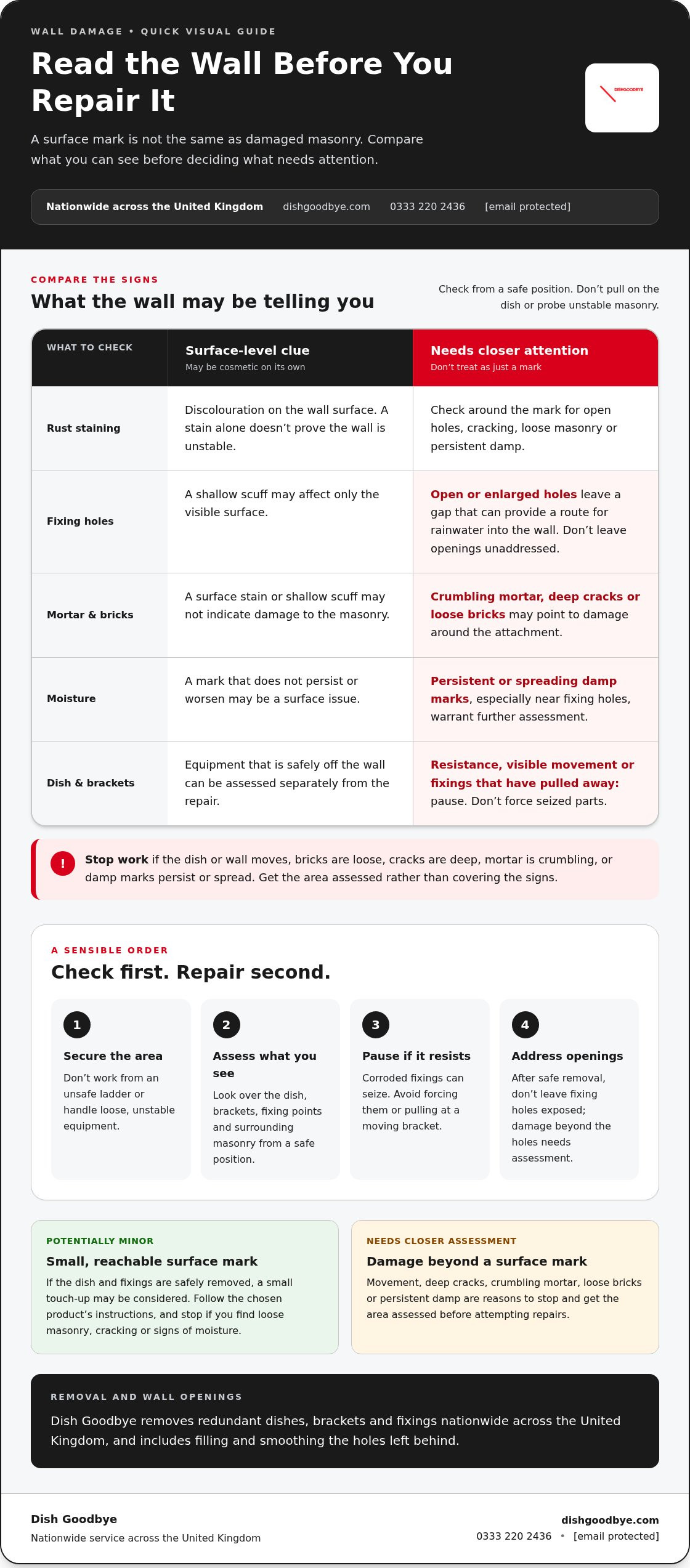
These signs aren’t interchangeable. A rust mark may affect appearance without showing that the wall is unstable. An open hole is a gap left by a fixing, while cracked mortar or loose brickwork points to possible damage around the attachment. Don’t leave exposed holes unaddressed: they can provide a route for rainwater to enter the wall.
Why do satellite dish fixings rust and seize?
Brackets and fixings exposed to the elements can corrode over time. Rust forms through a reaction between iron or steel, oxygen and moisture; what causes rust helps explain why unprotected metal can deteriorate outdoors. As corrosion develops, bolt threads may become difficult to turn, and parts that once came apart cleanly can seize against one another or the wall. That resistance is a reason to pause, not apply more force.
Which wall warning signs need closer attention?
From a safe position, look at the dish, its brackets and the wall around each fixing. Check for cracked or missing mortar, loose masonry, holes that look larger than the original fixing, and damp marks that persist. A stain alone doesn’t prove structural damage, but looseness or movement needs more attention than a cosmetic mark.
Keep these differences in mind:
- Rust staining: Discolouration on the wall surface. It may be cosmetic, but check the area around it for other signs of damage.
- Open or enlarged holes: Gaps where fixings have come away or disturbed the surrounding material. These need attention so the wall opening isn’t left exposed.
- Cracked mortar or loose bricks: Signs the masonry may have been disturbed, rather than simply stained.
- Persistent damp marks: A reason to investigate further, especially if they’re close to fixing holes.
If the dish or wall shifts unexpectedly, stop work. Don’t keep pulling at the bracket or testing the masonry. When removing a rusted satellite dish, distinguishing a surface mark from movement around the fixings can help prevent a small problem from becoming a bigger repair.
Assess Satellite Dish Wall Damage Before Attempting a Repair
Before deciding how to fix the wall, make a visual check from a safe position. Don’t climb or lean out to inspect a dish, and don’t pull on it to see whether it’s secure. Look over the equipment and wall in order, then decide whether the issue appears limited to the surface or may involve the masonry.
- Check the dish and brackets: Look for visible movement, bent parts or fixings that appear to have pulled away. Don’t handle loose or unstable equipment.
- Look at each fixing point: Note open or enlarged holes, missing material and any cracking around the fixings.
- Scan the wall surface: Rust staining and shallow scuffs may be surface marks. Crumbling mortar, deep cracks or loose bricks suggest more substantial damage.
- Check the surrounding masonry: Look beyond the immediate holes for cracks, shifting or signs that the damage spreads across the wall.
A photo taken from a safe position can help you record what you’ve noticed and compare changes over time. It can’t show the full condition of hidden fixings or confirm whether masonry is stable, so it isn’t a substitute for a close professional assessment.
How can you tell a surface mark from damaged masonry?
Rust-coloured staining or a shallow scuff may affect only the visible surface. Cracks through mortar, crumbling joints and bricks that appear loose are different concerns. Don’t probe unstable brickwork or tug the dish to test it. If damage reaches beyond the fixing holes, or you can see movement, stop and get the area assessed before attempting repairs.
Could a failed removal leave a route for damp?
An exposed fixing hole can leave a gap in the wall’s outer surface, giving rainwater a possible path into the material behind it. That doesn’t mean every open hole will cause damp, but leaving it unaddressed can make the wall more vulnerable to water entry. Watch for moisture that persists or marks that worsen around the fixings. If you see these signs, get a closer assessment instead of simply covering them.
Stop work if the dish or wall moves, bricks are loose, cracks are deep, mortar is crumbling, or damp marks persist or spread. If corroded fixings are holding the equipment in place, avoid forcing them and worsening the damage. Satellite dish removal from Dish Goodbye includes removing associated brackets and fixings, then filling and smoothing the holes left behind.
DIY Wall Repair or Professional Help After a Dish Removal?
The right next step depends on the condition of the wall and whether the dish and fixings are already safely off. A small, reachable scuff is very different from a bracket that won’t release or masonry that moves. Don’t let a quick cosmetic fix distract you from a problem that needs closer attention.
Condition: Minor surface mark, with the dish and fixings safely removed.
Sensible next step: Consider a small touch-up, following the chosen product’s instructions.
Reason to stop: Stop if you find loose masonry, cracking or signs of moisture.
Condition: Seized bolts or a bracket still attached to the wall.
Sensible next step: Leave the fixings in place and arrange safe removal.
Reason to stop: Forcing corroded hardware can damage the wall further.
Condition: Loose dish, work required at height, or crumbling masonry.
Sensible next step: Keep clear of the equipment and get professional help.
Reason to stop: Unstable equipment and unsafe access can put people and property at risk.
Dish Goodbye provides nationwide removal of redundant dishes, brackets, fixings and cabling, and includes filling and smoothing the fixing holes. If the hardware is seized or the dish feels unstable, professional satellite dish removal can help avoid wrestling with the fixings yourself.
When might a small wall touch-up be manageable?
A minor, accessible blemish may be suitable for a simple touch-up once the dish and fixings have been safely removed and the wall is sound. Choose materials appropriate for the surface, follow the manufacturer’s instructions and allow them to cure as directed. Cosmetic filling won’t stabilise loose masonry or resolve water getting into the wall.
When should you stop and get professional help?
Stop if bolts are seized, the dish or bracket is loose, access means working at height, or mortar and masonry are crumbling. Don’t use extra force to make a fixing turn, and don’t continue from an unsafe ladder. Removing a rusted satellite dish can involve more than loosening a bolt. Dish Goodbye’s removal service covers the equipment and associated fixings, helping avoid damage from forcing corroded parts.
How to Repair the Wall After a Failed Dish Removal Attempt
Take the repair in stages. If a bolt won’t turn, the dish shifts or the wall starts to crumble, stop rather than applying more force. Keep people clear of unstable equipment and don’t continue from an unsafe ladder. Prevent further damage before deciding whether a small wall repair is suitable.
Stop, secure the area, assess the damage, complete safe removal, then address the wall openings.
- Stop and make the area safe. Don’t tug at a loose dish or attempt to catch equipment that moves. Keep clear until the dish and bracket can be dealt with safely.
- Assess the wall. Check whether damage is confined to the fixing holes or includes loose masonry, crumbling mortar or extensive cracking. If the wall looks unstable, don’t cover the signs with filler.
- Complete removal safely. The dish and fixings need to be safely removed before wall finishing begins. Leave seized fixings alone rather than forcing them.
- Address the opening. Only consider a surface repair if the remaining opening is suitable and isn’t actively admitting water.
What should you do before filling holes or cracks?
First make sure the dish and its fixings are safely off the wall. Remove only debris that comes away easily, and don’t chip, scrape or pull at surrounding brickwork or mortar. Then look at the opening. If it extends into damaged masonry, or you can see signs of water entering, pause and get a closer assessment before filling it. A cosmetic cover-up won’t resolve a deeper problem.
For a small, sound opening, choose a repair approach suitable for the wall and follow the material manufacturer’s instructions. Don’t guess at preparation or curing times. The product guidance should determine how to apply it and when it’s ready for the next step.
How should the finished wall be checked?
Once the repair has been completed according to its instructions, inspect it from a safe position. Check that the surface is smooth and the opening is no longer visibly exposed. Keep an eye on the area afterwards. If damp marks persist, return or worsen, or the surrounding masonry deteriorates, don’t keep covering it with another surface layer. The cause needs a closer look.
If you’re still dealing with a rusted dish or seized fixings, avoid risking more damage by forcing the removal. Dish Goodbye removes redundant dishes, brackets, fixings and cabling, and includes filling and smoothing fixing holes. Arrange satellite dish removal across the UK.
Prevent More Wall Damage and Clear the Rusted Satellite Dish Safely
If the dish or its fixings are still attached after a failed attempt, don’t keep forcing them. A seized bolt can resist turning, while extra pulling may disturb the surrounding brickwork or mortar. Leave unstable equipment alone and avoid working from an unsafe ladder. The sensible next step is to remove the remaining fixings safely, then deal with the wall openings once the equipment is clear.
What does professional removal address beyond the dish itself?
Removing a rusted satellite dish is more than taking down the dish face. Dish Goodbye’s nationwide service covers the associated brackets, fixings and redundant cabling, as well as filling and smoothing holes left by the installation. Removed metal and electronic waste is processed through approved recycling centres.
This is useful when corroded fixings won’t release cleanly or a previous attempt has left you unsure how to proceed. The wall still needs to be assessed appropriately: filling and smoothing fixing holes is not a substitute for addressing loose masonry, extensive cracking or an ongoing water-entry issue. For details, visit satellite dish removal.
How can you finish the job with less hassle?
You don’t need to keep battling rusted hardware yourself. Stop before more force makes the damage worse, keep clear of any loose dish or bracket, and have the removal handled as one complete task. Once the dish and associated fixings are removed, the fixing holes can be addressed as part of the service. If the wall shows damage beyond those openings, don’t hide it with a quick cosmetic patch.
Dish Goodbye removes redundant satellite dishes across the United Kingdom, including brackets, fixings and cabling, and fills and smooths the holes left behind. Get in touch to arrange nationwide removal and take the next step towards a clearer exterior.
dishgoodbye.com
Telephone: 0333 220 2436
Email: [email protected]
Finish the Job Safely and Protect Your Wall
A stuck dish doesn’t mean the whole wall needs rebuilding, but don’t hide damage before checking what’s behind it. Surface marks are different from loose masonry, deep cracks or movement around fixings. If the dish is unstable or bolts are seized, stop rather than forcing them and risking further damage.
When removing a rusted satellite dish, follow a safer order: secure the area, assess the wall, arrange safe removal, then address any exposed holes. Dish Goodbye removes the dish, brackets, fixings and redundant cabling, includes filling and smoothing installation holes, and processes removed metal and electronic waste through approved recycling centres.
Ready to leave the stubborn fixings behind? Arrange nationwide satellite dish removal with Dish Goodbye. For a clearer exterior and one less awkward job to tackle, visit dishgoodbye.com, call 0333 220 2436 or email [email protected].
Frequently Asked Questions
Can I repair the wall while the rusted satellite dish is still attached?
It’s usually better to wait until the dish and fixings have been safely removed before repairing the wall. The bracket can hide damage, and working around attached equipment may make it harder to assess or reach the fixing holes. Don’t pull at a dish that feels loose or force seized bolts. Once removal is complete, check whether the damage is limited to the surface or includes cracks, loose masonry or signs of water entry.
How do I know if a satellite dish removal has damaged the brickwork?
Look for cracked or crumbling mortar, loose bricks, enlarged fixing holes, deep cracks or movement around the attachment points. Rust staining and shallow scuffs may only affect the surface, while loose masonry suggests a more serious concern. Don’t probe unstable brickwork or tug on the dish to test it. If damage extends beyond the fixing holes, or the wall shifts, stop work and arrange a closer assessment.
Can I fill satellite dish holes in a brick wall myself?
You may be able to deal with a small, accessible hole once the dish and fixings are safely removed and the surrounding wall is sound. Use a repair approach suitable for the surface, and follow the product instructions, including any guidance on curing. Don’t treat cosmetic filling as a fix for loose bricks, crumbling mortar or water getting into the wall. Get the damage assessed first if you’re unsure what’s behind the opening.
What should I do if a satellite dish bolt is rusted and will not move?
Stop trying to turn it if it’s seized. Forcing a corroded bolt can damage the fixing point or pull at the surrounding brickwork, while a dish or bracket may become unstable as you work. Don’t use an unsafe ladder or pull on the equipment. Leave the fixing alone and arrange safe removal. Dish Goodbye removes redundant dishes and associated brackets, fixings and cabling across the UK.
Can an old satellite dish fixing hole cause damp?
An open fixing hole can provide a route for rainwater to enter the wall, but that doesn’t mean every hole will cause damp. Check whether the opening is exposed and look out for moisture or marks that persist or worsen around it. Don’t simply cover recurring damp signs without understanding the cause. Once the dish is safely removed, the hole can be assessed and addressed as part of the wall-finishing work.
Should I remove a rusted satellite dish myself?
It depends on the equipment, fixings, wall condition and access. A dish that’s easily reached and has secure fixings is different from one with seized bolts, a loose bracket or damage to the masonry. Work at height also adds risk. If you’re unsure, don’t force the hardware or continue from an unsafe ladder. Dish Goodbye’s removal service takes care of the dish and fixings without you battling corroded parts yourself.
dishgoodbye.com
Telephone: 0333 220 2436
Email: [email protected]