
Dish Goodbye | dishgoodbye.com | 0333 220 2436 | [email protected]. If you’re considering removing dish to install solar panels, compare the dish’s position with the proposed panel layout first. If it obstructs the panels or the work area, arrange removal before roof access gets busier.
Check the dish, brackets and visible cabling against the planned panel positions and the space needed for the installation. Plan to deal with the whole redundant setup, including old fixings and the holes they leave, rather than treating the dish itself as the only consideration.
This guide explains how to spot a layout conflict, when to schedule removal and what a thorough job should cover. Dish Goodbye removes satellite dishes across the United Kingdom, including redundant brackets, fixings and cabling, and fills and smooths the fixing holes. To arrange nationwide satellite dish removal, visit dishgoodbye.com, call 0333 220 2436 or email [email protected].
Key Takeaways
- Compare the dish’s position with the agreed solar panel layout before deciding whether removal is needed.
- Note where the dish is mounted, where its brackets are fixed and where the cable runs.
- Removing dish to install solar panels is not automatic. The layout and access required for the work determine whether removal is useful.
- Use a clear sequence: review the plan, identify any conflicts, arrange removal if needed, then coordinate site access.
- Professional removal can cover redundant fixings and cabling, as well as filling and smoothing the holes left behind.
Should You Remove a Satellite Dish Before Installing Solar Panels?
Remove a satellite dish before solar work if it conflicts with the agreed panel layout or obstructs safe, practical roof access. If it sits clear of both, removal may not be necessary. Consider the location of the dish and its fixings, the planned panel positions and the access needed to complete the installation.
A redundant dish is equipment you no longer need to receive a signal. The dish is only one part of the setup: brackets secure it to the building, and cabling runs from it into the property. The satellite dish overview explains the basic components. For a solar project, consider the full setup, not just the dish’s visible face.
Make the decision before installation begins. Removing an obstruction in advance can simplify roof access and avoid arranging separate work after panels are in place. Review the proposed layout, identify any conflict and plan accordingly. Removing dish to install solar panels should be a considered step, not an automatic one.
When can an existing dish interfere with solar panels?
A dish may occupy roof space planned for panels. Its brackets can take up space too, and a cable route may cross an area needed for the panel layout or installation work. Don’t assume every dish will cause shade or reduce solar output. Compare the dish, fixings and visible cabling with the proposed layout to identify an actual clash.
Can a satellite dish stay in place during solar installation?
Yes, it may stay if it doesn’t obstruct the agreed panel positions or planned work. Review the proposed layout and site access plan to see where the panels will go and how the work will be carried out. Consider future access as well: a dish that doesn’t affect installation could still make access to the panels more awkward later.
A simple decision: if the dish, brackets or cable route overlap with the agreed layout or work access, arrange removal before solar work starts. If they’re clear, the dish may be able to remain. Dish Goodbye removes satellite dishes across the United Kingdom, including brackets, fixings and redundant cabling. The fixing holes are filled and smoothed as part of the service.
What to Check Before Removing a Dish for Solar Panels
Before arranging removal, note the existing setup and compare it with the proposed solar panel layout. Record whether the dish is fixed to the roof, a wall, a chimney or another exterior surface. Its position matters, as do the brackets and the route the cable takes into the property.
A roof assessment can help identify obstructions and practical considerations before work begins. The National Roof Certification and Inspection Association’s guidance on preparing your roof for solar reinforces the value of reviewing the roof before installation. Use the proposed panel plan as your reference, and coordinate the work sequence and site access with the solar and dish removal teams.
How does dish position affect the planned panel layout?
Compare the proposed panel positions with the dish and the full footprint of its support brackets. A dish beside a planned panel area may still affect access or the space needed to carry out the work. Check the visible cable route too, particularly if it crosses an area where panels or equipment are planned. Use the project layout to identify actual clashes rather than assuming the dish will affect panel performance.
What should you know about the dish, brackets, and cables?
Make a simple note of where the dish is mounted, where its brackets are visible and where the cable appears to enter the building. Don’t climb up or disconnect anything to inspect it. Share what you can see from a safe position with the removal team. If the dish is redundant, removal can include its brackets, fixings and cabling, with fixing holes filled and smoothed.
Before booking, check:
- Where the dish is mounted: roof, wall, chimney or another exterior surface.
- Whether the dish and brackets overlap with proposed panel positions or access areas.
- Where visible cabling runs and enters the property.
- That the solar installer and removal team have the same agreed work sequence.
Once you’ve reviewed the layout and noted the dish position, arrange satellite dish removal as part of preparing for solar work. Dish Goodbye removes redundant brackets, fixings and cabling across the United Kingdom.
Is DIY Dish Removal Worth the Risk Before Solar Installation?
A satellite dish can look like a simple fitting, but removal may involve more than taking down the dish. Brackets and fixings may be secured to a roof, chimney or wall, while coaxial cabling can run from outside into the property. The difficulty depends on the location, access and condition of the fixings, not just the size of the dish.
DIY may seem appealing if the equipment looks easy to reach. But working at height creates a fall risk, and force or awkward handling can damage roof tiles, brickwork or other exterior finishes. Weathered fixings may also be difficult to handle. Every property is different, so don’t assume an old installation will come away easily or leave the surface undamaged.
If the dish is roof-mounted, access is uncertain or you’re unsure how it’s fixed, professional removal is the practical option. Don’t climb or dismantle equipment without suitable experience and access. Removing dish to install solar panels is also an opportunity to deal with the entire redundant setup before it obstructs later work.
What can make dish removal more complicated than it looks?
The job may include taking down the dish, brackets and fixings, removing redundant cabling and dealing with the holes left behind. A difficult working position can make even visible fixings awkward to reach. Weathering may affect their condition, and the mounting surface needs care during removal. These factors vary by property, so the setup should be handled according to its location and condition.
What does professional removal include?
Dish Goodbye’s satellite dish removal service covers the dish, redundant brackets, fixings and cabling. Technicians fill and smooth the fixing holes left by previous installations, helping leave the exterior tidier once the equipment is gone. Removed metal and electronic waste is processed through approved recycling centres.
This complete approach can simplify preparation for solar work. Rather than leaving brackets or cable to deal with later, the redundant setup is removed as part of one job. It also avoids treating removal as a quick DIY task when roof access or the condition of the fixings makes it more complicated than it first appears.
How to Coordinate Dish Removal With Solar Panel Installation
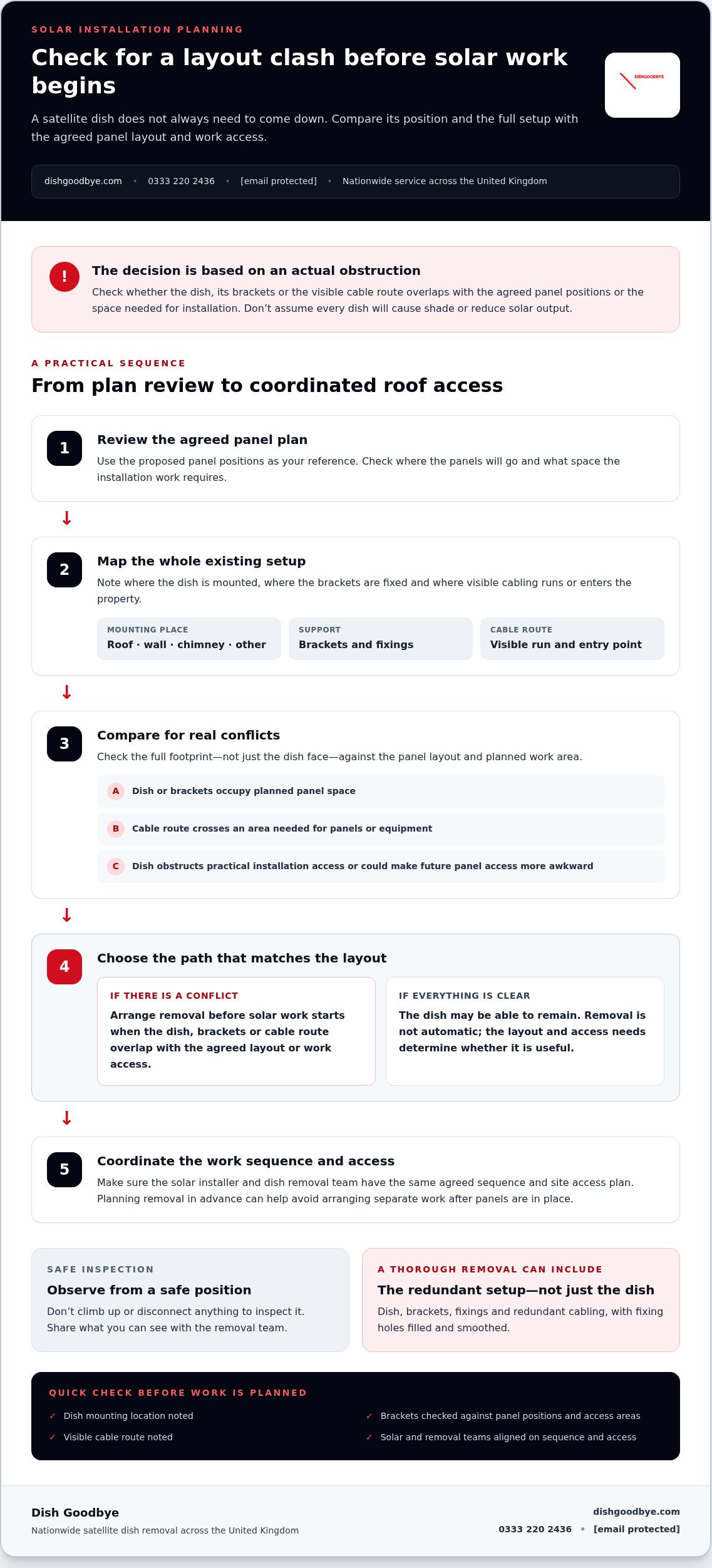
A clear sequence helps dish removal and solar work stay out of each other’s way. Start with the proposed panel layout, identify any conflict with the dish, brackets or cable route, arrange removal if needed, then coordinate site access with the project teams. Share the dish’s location and visible cable route so everyone can plan around the same details.
Timing depends on the solar project schedule and the access needed at your property, so there is no single appointment window for every installation. If the layout shows a clash, arrange removal before the planned panel work begins. This can avoid fitting extra roof work around panels later. For removing dish to install solar panels, agree the sequence early and keep both teams informed of schedule changes.
When should you arrange satellite dish removal?
Once the agreed panel layout reveals a conflict, arrange removal to fit the project plan and site access. Share the dish’s location with the removal team and coordinate the schedule with the solar installer. Timing depends on how the two jobs fit together. Planning ahead helps ensure the dish is dealt with before it obstructs the work.
What happens to the wall or roof after the dish comes down?
A complete removal deals with more than the dish. It can include brackets, fixings and redundant cabling, followed by filling and smoothing the holes left by previous installations. This tidies the affected fixing points, but it is not a complete roof repair or a guaranteed colour match to surrounding surfaces.
Before work is arranged, make sure both teams have the same practical details:
- The agreed panel layout and any identified overlap with the dish or its fixings.
- The dish’s position and visible cable route.
- The planned order of removal and solar work.
- How and when the teams will access the relevant parts of the property.
In short: review the panel layout, identify any dish conflict, arrange removal before the affected solar work, then coordinate site access with both teams.
Dish Goodbye removes redundant dishes, brackets, fixings and cabling, and fills and smooths the fixing holes. To arrange satellite dish removal as part of your solar project preparation, review the proposed layout and plan the work sequence.
Arrange Professional Dish Removal Before Your Solar Panels Go In
Start with the agreed panel plan. Compare it with the dish’s position, brackets and visible cable route before deciding whether removal is needed. If any part of the setup conflicts with panel positions or access for the planned work, arranging removal ahead of installation can help keep the project coordinated.
Dish Goodbye provides professional satellite dish removal across the United Kingdom. The service covers redundant dishes, brackets, fixings and cabling, dealing with the old equipment as a complete job rather than leaving parts to address later. Removed metal and electronic waste is processed through approved recycling centres.
What information helps arrange a removal?
Keep the details simple. Note whether the dish is attached to a roof, wall, chimney or another exterior surface, and describe any visible brackets and redundant cabling. If you know where the cable enters the property, include that too. Don’t climb up or inspect the equipment closely. These details help describe the setup and its place in your solar project.
What should you expect from the finished exterior?
Once the dish, brackets and fixings are removed, technicians fill and smooth the holes left by previous installations. This tidies the affected fixing points, though it is not a complete roof repair or a promise of an exact colour match. Any after photograph should show the cleared exterior, with no satellite dish or aerial visible.
For removing dish to install solar panels, arrange removal once you’ve compared the dish location with the agreed layout. That gives you a clear plan for dealing with redundant equipment before solar work begins.
Arrange professional satellite dish removal with Dish Goodbye, serving homes across the United Kingdom. Note the dish location and share what you know about its brackets and cabling to get started.
Call 0333 220 2436 or email [email protected].
Get Your Roof Ready for the Next Step
Before solar work begins, compare the dish and its fixings with the agreed panel layout. If they conflict with panel positions or access, arrange removal in line with the project schedule. Removal is not always necessary, but planning early can help avoid leaving extra roof work until later.
Dish Goodbye provides satellite dish and aerial removal nationwide across the United Kingdom. The service includes removing brackets, fixings and redundant cabling, then filling and smoothing the holes left behind. Removed metal and electronic waste is processed through approved recycling centres, helping leave the exterior tidier and the redundant equipment responsibly handled.
Ready to take the next step? Arrange professional satellite dish removal and prepare for your solar project with one less thing in the way.
Call 0333 220 2436 or email [email protected]. With the layout reviewed and removal planned, you can move forward feeling prepared.
Frequently Asked Questions
Do I need to remove my satellite dish before installing solar panels?
Not always. Remove the dish if its position, brackets or cable route conflict with the proposed panel layout or access needed for the work. For removing dish to install solar panels, compare the setup with the agreed plan. If it doesn’t obstruct the layout or planned work, it may be able to stay. If removal is needed, arranging it before panel work can make coordination simpler.
Can solar panels be installed around an existing satellite dish?
They may be installed around a dish if the proposed layout and access plan allow it to remain. The answer depends on the property and installation design. Compare the dish’s position with the planned panels and consider whether the equipment will remain accessible. If the dish, brackets or cabling create a conflict, arrange removal before the affected installation work begins.
Can I move a satellite dish instead of removing it?
A dish may be relocated if there’s a suitable position and it can still serve its purpose. Whether that’s practical depends on the property, cable route and solar layout. Moving it can involve more than shifting the dish, so don’t assume it’s a simple DIY task. Plan the intended position and work sequence with the relevant professionals, especially if the dish is roof-mounted or access is difficult.
Is it safe to remove a satellite dish myself?
Removing a dish yourself may be risky, particularly if it’s mounted on a roof or difficult to reach. The job can involve working at height, handling brackets and fixings, and avoiding damage to the exterior. Don’t climb or dismantle equipment if access is uncertain. A professional removal service can handle the dish, associated fixings and redundant cabling together, then fill and smooth the holes left by the installation.
Will removing a satellite dish damage my roof or wall?
Removing the dish and brackets leaves fixing points that need attention. Dish Goodbye fills and smooths the holes left by previous installations as part of its removal service. The result depends on the existing surface, so this work is not a guarantee of an exact colour match or a complete roof or exterior repair. Sharing the dish location and visible fixings when arranging removal helps describe the job.
What happens to the dish cables when the dish is removed?
Redundant cabling can be removed along with the dish, brackets and fixings. Before arranging the work, note where you can see the cable running and where it appears to enter the property. Don’t climb or disconnect it yourself. Dish Goodbye includes redundant cabling in its removal service, and removed metal and electronic waste is processed through approved recycling centres.
Dish Goodbye | dishgoodbye.com | 0333 220 2436 | [email protected]