
Could the way a dish comes off matter as much as the dish itself? When removing a dish from cladding, the visible brackets may not reveal how the fixings are secured or what lies behind the outer surface. Simply undoing what you can see can leave marks, cracks or holes to address. Dish Goodbye provides satellite dish removal across the UK. Visit dishgoodbye.com, call 0333 220 2436 or email [email protected].
It’s understandable to be concerned about damaging the exterior or leaving an opening where moisture could become an issue. Cladding needs consideration during removal, and awkward access or equipment that is difficult to handle can make a DIY attempt unsuitable.
This guide explains why cladding calls for care, what to consider before removal and what a thorough job should involve. You’ll learn how the dish, brackets, fixings and redundant cabling can all be addressed, with fixing holes filled and smoothed for a tidier finish. Dish Goodbye serves customers across the UK. For details, visit dishgoodbye.com, call 0333 220 2436 or email [email protected].
Key Takeaways
- Cladding needs a considered approach because the visible dish and bracket may not show the full fixing arrangement.
- Removing a dish from cladding can involve awkward access, equipment that is difficult to handle, brackets and cabling. Visible screws may not tell the whole story.
- Compare DIY with professional removal by considering access, equipment handling, uncertainty about the fixings and how the exterior will be finished.
- Before removal, note the dish’s location, check its visible condition, clear the work area and photograph existing marks for your records.
- Dish Goodbye provides UK-wide satellite dish removal, including associated brackets, fixings and redundant cabling, with fixing holes filled and smoothed.
Why removing a dish from cladding needs more care than removing one from masonry
Cladding is the outer layer of a building, so removing a dish means protecting that finish as well as taking down the equipment. Unlike a dish fixed directly to masonry, a dish on cladding may have fixings that pass through or meet an exterior layer. The visible surface may not reveal how the mount is attached or what lies behind it. The aim is to remove the equipment without avoidable marks or damage.
What makes a dish mounted on cladding different?
The dish sits on a bracket held by fixings at the building’s exterior. The visible plate and screws are only part of the assembly: the fixing points also meet or pass through the cladding surface. Cladding materials and installation methods vary, so don’t assume every dish is secured in the same way. For background on the variety of materials used as exterior cladding, see Wikipedia’s overview of siding.
With a masonry-mounted dish, the fixings are secured to the masonry itself. Cladding adds an exterior finish that needs consideration as the bracket and fixings are removed. A mark may be cosmetic, while a crack, loosened area or other change around a fixing point could indicate more than a simple scuff. Don’t treat every mark as evidence of deeper damage, or assume that a clean-looking surface tells the whole story.
Why do the fixing holes matter after the dish is gone?
Once the dish and bracket are removed, fixing points may remain visible. Leaving them unaddressed can spoil the finish. Depending on the cladding and its condition, an exposed opening may also provide a route for moisture. The risk varies, so a hole does not automatically mean damp will occur. The important point is to deal with the fixing points as part of the removal, rather than overlook them once the dish is down.
A careful finish helps leave the exterior looking more complete. Dish Goodbye’s removal service includes taking away associated brackets and fixings, then filling and smoothing holes left by previous installations. Read more about filling and smoothing exterior holes.
That’s the key difference: removing a dish from cladding is not just a matter of taking away what you can see. The exterior finish and fixing points deserve attention too, so the job is complete once the equipment is gone and the remaining holes have been addressed.
What can go wrong when removing a dish from cladding yourself?
The visible screws can make the job look simple, but they may be only part of the mount. The dish, bracket, fixings and cable all need to be accounted for. Removing the obvious parts without understanding what remains can leave loose hardware, overlooked cabling or fixing holes that still need attention.
Access adds another challenge. A dish may be high up, awkward to reach or difficult to handle. A bracket or dish can shift as it is released, and managing equipment from a ladder can leave little room to keep your balance. Don’t put yourself at risk to save time.
A simple-looking task isn’t necessarily safe or complete. Removal means managing access and equipment, protecting the cladding, and dealing with the fixings and cabling left behind.
Can removing the brackets damage the cladding?
It depends on the cladding material, its condition, how the mount is fixed and how removal is handled. A surface that looks sound may still shift or crack around a fixing point, while existing wear can make it more vulnerable. A cladding assembly can include more than its visible finish; Designing Buildings explains the components of a cladding system. There is no single removal method to assume is suitable for every property.
If the surface shifts, cracks or appears insecure, stop rather than forcing the bracket or continuing to undo fixings. Pushing on could worsen the damage. A loose component is another reason to pause and reassess the job.
When is DIY removal not a sensible option?
DIY may not be appropriate if the dish is high up, access is difficult, components feel loose or you can’t tell how the fixings meet the cladding. Awkward equipment can be hard to control, and cabling is easy to miss when your attention is focused on the dish. If you’re unsure you can manage the work safely and leave the exterior in good order, don’t press on.
For a complete removal that includes the dish and associated hardware, explore satellite dish removal from Dish Goodbye, available across the UK.
DIY or professional dish removal from cladding: how to weigh the options
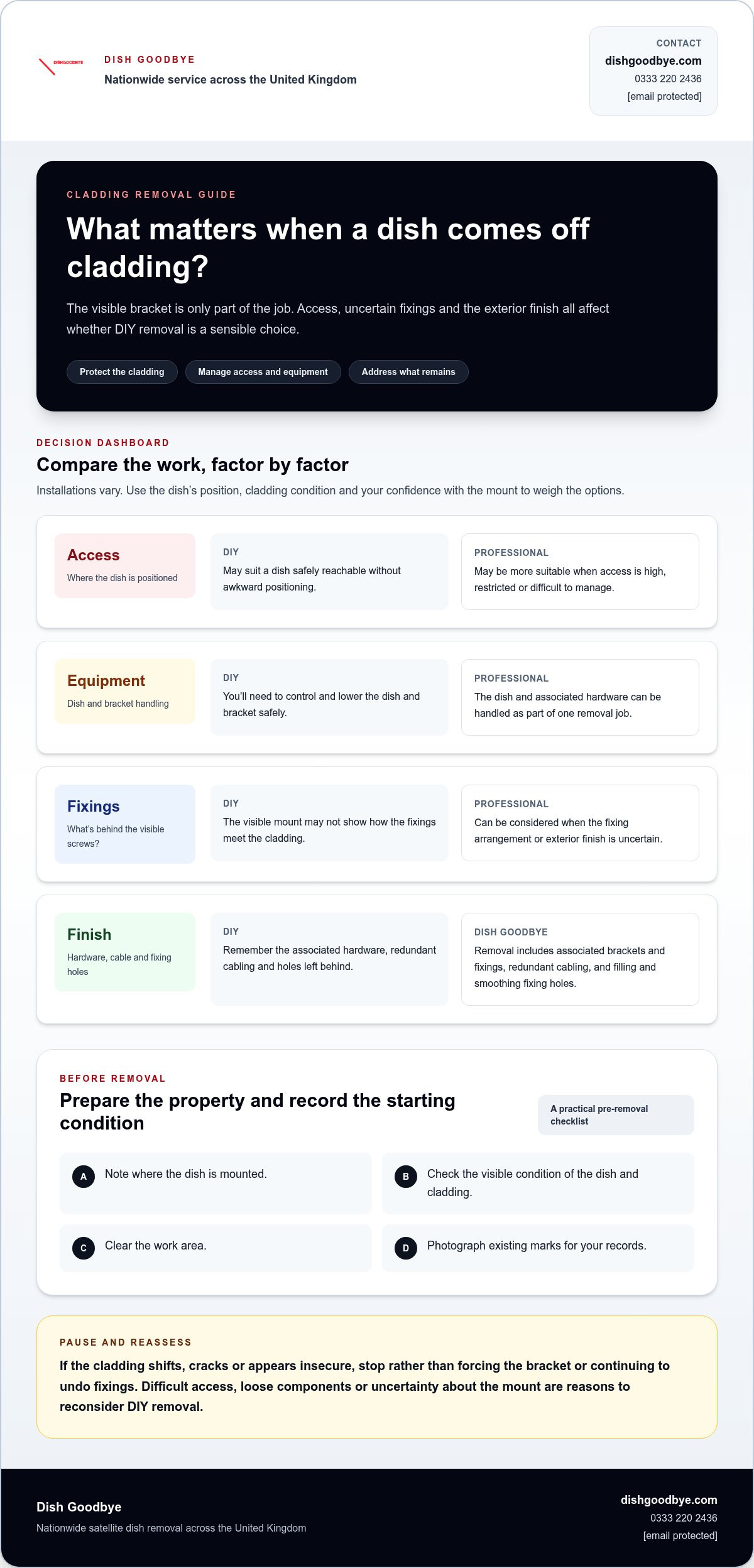
The right choice depends on the dish’s position, the condition of the cladding and how confident you are about the mount. A small dish within safe reach may look straightforward, but height, loose parts or uncertain fixings can quickly change the picture. Use this comparison to weigh the work involved, remembering that installations differ.
| Consideration | DIY removal | Professional removal |
|---|---|---|
| Access | May suit a dish that’s safely reachable without awkward positioning. | Can be more suitable when access is high, restricted or difficult to manage. |
| Equipment handling | You’ll need to consider how to control and lower the dish and bracket safely. | The dish and associated hardware can be handled as part of one removal job. |
| Cladding uncertainty | You may not be able to tell how the mount relates to the exterior finish. | The cladding and fixing points can be considered as part of the removal. |
| Finishing | Fixing holes and redundant cabling may need separate attention. | Removal can include brackets, fixings, cabling, and filling and smoothing holes. |
What should you assess before deciding how the dish comes down?
Start with the dish’s location and whether access feels safe. Then look at the visible condition of the cladding around the mount. Note whether the bracket appears loose or damaged, whether the dish is awkward to reach and how much redundant cabling is visible. You may not be able to see the full fixing arrangement from the ground. If anything feels uncertain or presents a safety concern, stop rather than proceeding.
Careful exterior upkeep includes paying attention to fixings and visible damage. BC Housing’s guidance on cladding maintenance and renewal offers background on maintaining cladding. It’s a useful reminder to treat the exterior finish as part of the job, not an afterthought.
What should a complete removal cover?
Depending on the installation, a thorough removal addresses the dish, brackets, fixings and redundant cabling, then deals with the fixing holes by filling and smoothing them. This leaves a tidier exterior than taking down the visible dish alone. Read what to expect from a professional dish removal service for more detail.
Dish Goodbye provides satellite dish removal across the UK, including associated hardware and cabling, with fixing holes filled and smoothed. If you’d rather have the whole job handled, explore satellite dish removal.
How to prepare your cladding and property for dish removal
A little preparation helps make removal more straightforward and gives you a record of the exterior before work begins. You don’t need to touch the dish or investigate its fixings. Note what you can see safely from the ground, then leave the equipment and cladding undisturbed.
What should you check before the removal visit?
Use this simple sequence:
- Note the dish location. Record which part of the property it’s on and whether you can see cabling running from it.
- Look over the visible condition. From a safe position, note any cracks, marks, loose-looking parts or existing damage around the dish and its mount. Don’t climb or pull at the equipment to inspect it.
- Clear the work area. Move garden furniture, pots or other movable items away from the area below the dish where practical. This helps keep access clear.
- Take photographs. Capture existing marks or damage for your property records. The images give you a reference for the exterior’s condition before removal.
Cladding materials and fixing arrangements differ, so the removal approach needs to account for the particular exterior and mount. Your notes and photos provide useful context without requiring you to assess anything beyond what’s safely visible.
How should fixing holes and redundant cables be addressed?
Removing the dish is only part of a tidy result. Once the equipment is gone, fixing holes may remain, and redundant cable can still be visible along the exterior. Dish Goodbye’s satellite dish removal service covers the dish, associated brackets and fixings, and redundant cabling. It also includes filling and smoothing holes left by previous installations.
The final appearance depends on the existing surface and its condition. Filling and smoothing helps leave a neater finish, but the repaired area may not look identical to the surrounding cladding. It’s best to expect a tidier, addressed surface rather than an exact match.
Preparing to have a dish removed? Arrange nationwide satellite dish removal with Dish Goodbye, serving customers across the UK.
Professional dish removal from cladding: what Dish Goodbye takes care of
A complete removal deals with more than the dish you can see. Dish Goodbye provides satellite dish removal across the UK, taking care of associated brackets, fixings and redundant cabling as part of the job. Removed metal and electronic waste is processed through approved recycling centres.
How does Dish Goodbye help leave the exterior tidy?
Removing a dish from cladding also means considering what remains on the exterior once the equipment is gone. Fixing holes are filled and smoothed, helping leave a neater finish rather than abandoned openings and visible hardware. The exact appearance depends on the existing cladding and its condition, so a perfect colour or texture match shouldn’t be assumed.
Dish Goodbye combines removal with this finishing work. The dish and related hardware are taken away, redundant cabling is addressed, and fixing holes left by previous installations are filled and smoothed. This attention to the details helps leave a cleaner-looking exterior without promising that repaired areas will be indistinguishable from the surrounding surface.
How can you arrange nationwide dish removal?
Dish Goodbye covers the whole of the UK. If your dish is no longer needed, arrange professional removal through satellite dish removal. The service accounts for the installation as a whole, not just the visible dish, so brackets, fixings, cabling and the remaining holes can all be addressed.
Before the work, note the dish’s location and photograph any existing marks from a safe position. This gives you a record of the starting condition and helps you describe what needs attention. There’s no need to disturb the mount or climb to inspect it. Leave the fixings in place and let the removal take account of the cladding and installation.
Choose Dish Goodbye for nationwide removal that addresses the equipment, the exterior finish and the responsible processing of removed metal and electronic waste.
Arrange satellite dish removal at dishgoodbye.com, call 0333 220 2436 or email [email protected].
Leave your cladding tidy after dish removal
Removing a dish from cladding takes more care than simply taking down the visible equipment. The fixing arrangement and exterior finish both need attention, and awkward access or uncertain fixings can make DIY unsuitable.
A thorough removal can cover the dish, brackets, fixings and redundant cabling, with fixing holes filled and smoothed. Dish Goodbye also sends removed metal and electronic waste to approved recycling centres. The finish depends on the cladding’s existing condition, but a complete job helps leave the exterior tidier.
Dish Goodbye provides satellite dish removal across the United Kingdom. Arrange professional dish removal with Dish Goodbye and leave the awkward work to the removal service.
Visit dishgoodbye.com, call 0333 220 2436 or email [email protected] to arrange removal.
Frequently Asked Questions
Can I remove a satellite dish from cladding myself?
Possibly, if the dish is safely accessible and you understand how the mount is secured, but don’t assume removing the visible screws is the whole job. The bracket, fixings, cabling and holes may also need attention. Removing a dish from cladding can be unsuitable if access is awkward, the mount looks loose or you’re unsure how the fixings relate to the exterior. Stop rather than putting yourself or the cladding at risk.
Will removing a dish damage cladding?
Damage isn’t inevitable, but it can happen. The risk depends on the cladding material and condition, the fixing arrangement and how the dish and bracket are removed. A surface may crack, shift or become marked around a fixing point. There’s no single approach that suits every installation. If the cladding moves, cracks or appears insecure, stop and don’t force the mount. A careful removal also considers the holes and cabling left behind.
Can a satellite dish fixing hole let water into the property?
An exposed fixing hole may provide a route for moisture, depending on the cladding and the condition of the area, but a hole doesn’t automatically mean water is entering the property. The sensible approach is to have fixing points addressed as part of a complete removal rather than leaving them open. Dish Goodbye fills and smooths holes left by previous installations. If you notice existing damage, record it and have it assessed as part of the work.
Should the brackets and cables be removed with the dish?
Where they’re associated with the redundant dish, brackets, fixings and cabling should be considered as part of the removal. Taking down only the dish can leave hardware attached to the exterior or redundant cable visible along the property. Dish Goodbye’s removal service covers associated brackets, fixings and redundant cabling, helping deal with the installation as a whole. The items involved depend on what’s fitted at your property.
How are holes left by a satellite dish treated?
Dish Goodbye fills and smooths holes left by previous installations as part of its removal service. This helps leave a tidier exterior once the dish and associated fixings are gone. The final appearance depends on the existing cladding and its condition, so an exact visual match shouldn’t be assumed. If you’re preparing for removal, photographing existing marks from a safe position gives you a useful record of the starting condition.
Is it safe to remove a satellite dish from a roof or upper wall?
It may not be safe to attempt yourself, particularly if the dish is difficult to reach or would require working at height. Handling awkward equipment while trying to maintain safe access can increase the risk of a fall or damage to the exterior. Don’t climb or disturb the fixings if you’re unsure. If access feels unsafe or the mount is loose, leave the removal to a professional service.
What happens to the old dish after professional removal?
Dish Goodbye removes redundant satellite dishes along with associated brackets, fixings and cabling. Removed metal and electronic waste is processed through approved recycling centres. Dish Goodbye serves customers across the UK. To arrange satellite dish removal, visit dishgoodbye.com, call 0333 220 2436 or email [email protected].