
Can one straightforward job clear an old aerial, its brackets and cables, then leave the exterior tidier? Yes. Dish Goodbye’s service to remove and recycle old aerials covers the equipment and the finishing work, so you’re not left with loose fixings or redundant cabling. Visit dishgoodbye.com, call 0333 220 2436 or email [email protected].
An unused aerial can make a roofline look cluttered, but removing fixed equipment at height can be difficult to tackle yourself. A complete removal service leaves the dismantling to technicians and helps restore a neater finish, with installation holes filled and smoothed.
This article explains what aerial removal can include, how the removed metal and electronic waste is handled, and how to arrange a job across the United Kingdom. Removed materials are processed through approved recycling centres, bringing removal, exterior finishing and responsible recycling together in one service.
Key Takeaways
- A complete removal can include the aerial, brackets, fixings and redundant cabling, helping leave the exterior clearer.
- Technicians fill and smooth installation holes as part of the finishing work.
- A service to remove and recycle old aerials combines removal with processing metal and electronic waste through approved recycling centres.
- Removing equipment at height can be difficult to tackle yourself. Professional removal leaves the dismantling to technicians.
- To arrange a nationwide job across the UK, be ready to describe where the aerial is and any visible cables.
What does a service to remove and recycle old aerials include?
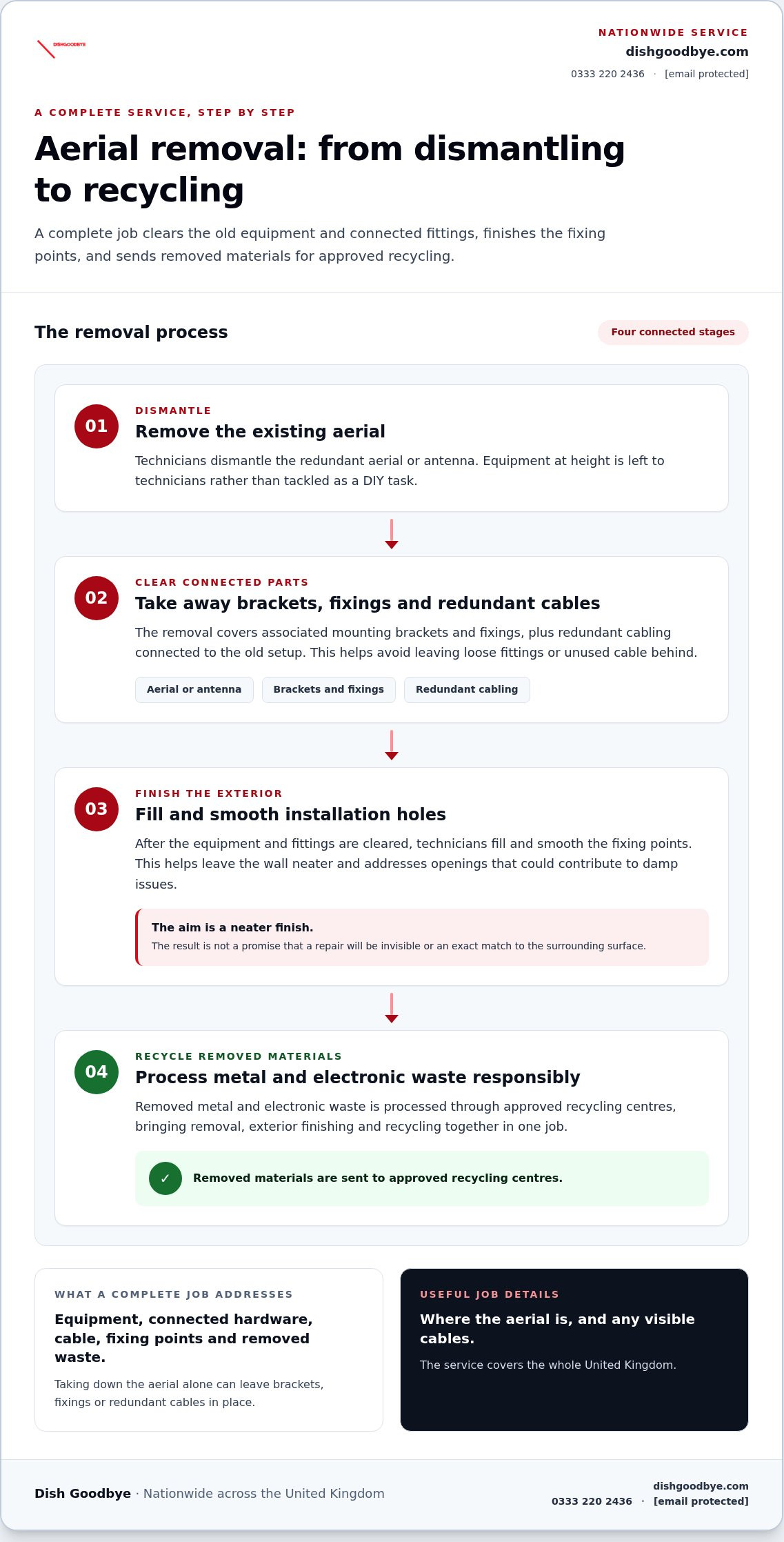
A complete aerial removal involves more than taking the equipment off a roof or wall. Dish Goodbye removes redundant aerials and antennas, clears associated exterior fittings and cabling, fills and smooths installation holes, and sends removed metal and electronic waste to approved recycling centres. This leaves a less cluttered exterior and ensures the removed materials are responsibly processed.
The service covers dismantling existing equipment. It is intended for clearing an unused setup, with removal, exterior finishing and recycling brought together in one job.
Which parts of an old aerial installation can be removed?
Installations differ, but removal can cover the aerial or antenna, its mounting brackets and fixings, and redundant cabling connected to the setup. Clearing these associated items helps avoid leaving loose fittings or unused cable behind after the main aerial is gone.
Removed metal and electronic waste is processed through approved recycling centres. For broader background on the waste and recycling framework, see WEEE Directive regulations.
What makes removal different from simply taking down an aerial?
Taking down the aerial alone can leave brackets, fixings and redundant cables in place. A complete job considers the whole installation, including what remains on the exterior after the equipment is removed. Technicians also fill and smooth fixing holes, helping leave the wall neater and protect the property exterior.
A complete aerial removal clears the equipment, associated fittings and redundant cables, then finishes the fixing points and sends the waste for approved recycling.
This joined-up approach helps tidy a roofline or wall without leaving hardware behind to deal with later. Dish Goodbye provides aerial removal across the whole United Kingdom. Visit dishgoodbye.com, call 0333 220 2436 or email [email protected].
How professional aerial removal leaves the exterior neater
A tidy result depends on dealing with more than the aerial itself. The removal process takes account of connected parts and the fixing points left behind, so you’re not left with a bare mast location surrounded by unused hardware or cable.
Technicians dismantle the existing equipment and remove its associated brackets, fixings and redundant cabling. The setup varies between properties, so the work addresses the parts connected to that installation. You don’t need to tackle equipment at height yourself. Leave the dismantling and clearing to technicians for a cleaner roofline or wall.
How are brackets, fixings and redundant cables handled?
Mounting hardware is part of the removal, not an afterthought. Associated brackets and fixings are cleared along with redundant cabling connected to the old setup. This avoids the half-finished result of an aerial being gone while unused fittings or cable remain visible.
Removed metal and electronic waste is processed through approved recycling centres. Recycle Your Electricals explains the WEEE context for electrical items and recycling. The removal service brings equipment clearing and waste processing together, rather than leaving you to sort the dismantled materials yourself.
What happens to fixing holes after the aerial is removed?
After the equipment and fittings are cleared, technicians fill and smooth holes left by the installation. Closing exposed fixing points helps protect the property exterior and address potential damp issues associated with openings. The aim is a neater finish, not a promise that a repair will be invisible or an exact match to the surrounding surface.
The process is straightforward: dismantle the aerial, remove connected brackets, fixings and redundant cables, then finish the installation holes. Each step helps avoid leaving a different part of the old setup behind. A service to remove and recycle old aerials clears the equipment and leaves fixing points filled and smoothed.
If you’re arranging removal, describe where the equipment is and mention any visible cables. Any after photo should show the cleared exterior, with no satellite dish or aerial visible. For nationwide aerial removal across the United Kingdom, explore professional aerial removal.
Professional removal or DIY: which approach suits an old aerial?
Taking down an old aerial may seem like a small job, but the visible equipment is only part of the installation. Brackets, fixings and connected cables can remain behind, and the aerial may be positioned on a roof or another elevated part of the property. A DIY approach can leave you with several separate tasks: removing the equipment, clearing the attachments, handling the waste and finishing the fixing points.
Professional removal brings those stages together. It’s a practical option if you’d rather not work at height or want the whole exterior installation cleared in one job. Consider the equipment’s position, access and whether you’re comfortable handling the remaining fittings and finish.
Why can removing an aerial be more involved than it looks?
An aerial is attached to the property, often with mounting brackets and fixings, and may have cabling running along the exterior. Reaching the installation can also involve roof-level or other elevated access. These details make removal more than simply taking the aerial down. If access feels awkward or unsafe, don’t attempt work at height. Leave dismantling to technicians.
What does a complete service add beyond taking the aerial down?
A basic removal focuses on the main equipment. A complete service also considers associated brackets, fixings and redundant cabling, then addresses holes left by the installation. Technicians fill and smooth those fixing points to help protect the property exterior and leave it looking neater.
Use this comparison to decide what matters for your property:
- DIY: You take responsibility for access, removing the equipment and fittings, clearing cables, handling waste and finishing the fixing holes.
- Professional removal: Technicians handle the existing equipment and associated parts, with exterior finishing and recycling included in the service.
That’s the key difference. A service to remove and recycle old aerials aims to clear the full installation rather than leave brackets, cables or wall holes as follow-up jobs. It removes redundant equipment and leaves the exterior tidier.
If you want technicians to handle the height-related work, explore nationwide aerial removal from Dish Goodbye, covering the whole United Kingdom.
How to arrange old aerial removal and recycling across the UK
A little preparation helps explain what needs removing and where it’s attached. You don’t need to identify every fitting or measure the equipment. Describe what you can see, including the location of the installation, visible cables and any finishing work needed. The service includes filling and smoothing fixing holes and processing removed waste through approved recycling centres.
What details help explain the job?
Describe whether the equipment is an aerial, antenna or satellite dish, and where it sits on the property, such as on the roof or an exterior wall. Mention any visible brackets, fixings and cables linked to it. If you’re unsure what a part is, a plain description is enough.
Clear photographs can show the equipment’s position and visible parts of the installation. Take them from a safe place; don’t climb to get a closer view. Any after photo should show the cleared exterior, with no aerial or satellite dish visible.
- Equipment: Note whether it’s an aerial, antenna or satellite dish.
- Position: Describe where it’s attached to the property.
- Associated items: Mention visible brackets, fixings and redundant cabling.
- Photos: Share clear views if useful, without putting yourself at risk to take them.
What should readers expect from a nationwide service?
Dish Goodbye provides removal across the whole United Kingdom. Share the property location and a simple description of the setup so the work can be understood as a complete removal, rather than just taking down the most visible part.
The service to remove and recycle old aerials covers existing equipment, associated exterior fittings and cabling. Technicians also fill and smooth installation holes, while Each job is based on its individual requirements, so describe the access and visible installation as clearly as you can.
Once you’ve gathered those details, arrange nationwide aerial removal with Dish Goodbye and leave the height-related work to technicians.
Dish Goodbye removes, finishes, and recycles old aerials
Visit dishgoodbye.com, call 0333 220 2436 or email [email protected] to arrange removal across the United Kingdom. Dish Goodbye brings the practical parts of clearing redundant equipment together, so you can leave height-related work to technicians and enjoy a neater exterior.
What makes Dish Goodbye’s service convenient?
The job can cover the aerial or antenna, associated brackets and fixings, and redundant cabling. After removal, technicians fill and smooth installation holes to help protect the exterior. The service addresses what comes down, what remains on the property and how removed materials are handled.
Instead of treating each task as a separate chore, this service brings removal, exterior finishing and waste processing together. You don’t need to dismantle equipment at height or manage the removed materials yourself. Describe the setup, including where it’s attached and any visible cables, and technicians handle the removal work.
The service focuses on clearing existing equipment and leaving a tidier finish. For readers considering satellite dish removal as well, Dish Goodbye’s professional dish removal service offers further information about that related work.
How can readers take the next step?
Dish Goodbye provides a service to remove and recycle old aerials across the whole United Kingdom. To get started, describe whether the equipment is an aerial, antenna or dish, where it’s located on the property, and whether you can see associated brackets, fixings or cabling. Clear photographs can help illustrate the setup, provided they can be taken safely from the ground. Any after photo should show the exterior without an aerial or satellite dish.
Each property and installation has its own requirements, so a clear description helps explain the job. There’s no need to climb up or dismantle anything before getting in touch. Share the information you can see and arrange the next step with Dish Goodbye.
Arrange nationwide aerial removal, or call 0333 220 2436 or email [email protected]. Get in touch when you’re ready to clear the old equipment and enjoy a tidier exterior.
Clear the old aerial and enjoy a tidier exterior
Removing an unused aerial doesn’t have to leave you with a list of leftover jobs. A complete service to remove and recycle old aerials can clear the equipment, brackets, fixings and redundant cabling, then fill and smooth installation holes for a neater finish.
Dish Goodbye provides removal across the whole United Kingdom, leaving height-related work to technicians. Share where the equipment is and what associated parts you can see to help explain the job.
Ready to clear the clutter? Arrange your old aerial removal with Dish Goodbye. Call 0333 220 2436 or email [email protected] to take the next step towards a cleaner-looking exterior.
Frequently Asked Questions
For more information, visit dishgoodbye.com, call 0333 220 2436 or email [email protected].
Can old aerials, brackets, and cables all be removed together?
Yes. A complete removal can include the aerial or antenna, its associated brackets and fixings, and redundant cabling. This clears the exterior installation rather than leaving unused fittings or wires behind. Describe what you can see and where the equipment is attached when arranging the work, so technicians can handle the existing equipment and associated parts together.
What happens to an old aerial after it has been removed?
After dismantling, The service also covers associated brackets, fixings and redundant cabling, rather than leaving those materials for you to deal with. The parts vary between installations, but the aim is to remove the redundant setup and route the removed waste for processing at approved centres.
Are old aerials and their metal parts recycled?
Yes. This includes aerial equipment and associated metal parts removed as part of the job. Recycling is one part of a complete service to remove and recycle old aerials, alongside clearing brackets, fixings and redundant cables. You don’t need to dismantle the equipment or sort the removed materials yourself.
Do aerial removal technicians fill the holes left in the wall?
Yes. Technicians fill and smooth holes left by the aerial’s installation fixings. Closing these points helps protect the property exterior and address potential damp issues associated with exposed openings. The work aims to leave a neater finish, but it doesn’t promise an invisible repair or an exact match to the surrounding wall. The appearance can depend on the existing surface and finish.
Is professional aerial removal safer than taking an aerial down yourself?
Professional removal means you don’t have to dismantle equipment positioned on a roof or another elevated part of the property yourself. Aerial removal can involve access at height as well as attached brackets, fixings and cables, making it difficult to manage as a DIY task. Technicians handle the removal work, including associated parts. If access feels unsafe, don’t climb up to inspect or remove the equipment.
Does Dish Goodbye remove old aerials across the whole UK?
Yes. Dish Goodbye provides removal services across the whole United Kingdom. The service covers redundant aerials, antennas and satellite dishes, along with associated brackets, fixings and cabling. Technicians also fill and smooth installation holes, and When arranging the work, describe the equipment’s location and any visible fittings or cables.
What information should I provide when arranging aerial removal?
Describe whether the equipment is an aerial, antenna or satellite dish, where it’s attached to the property, and whether you can see brackets, fixings or cables. Clear photographs can help show the setup, but only take them from a safe place; don’t climb to get a closer view. To arrange removal, visit dishgoodbye.com, call 0333 220 2436 or email [email protected].