
If a satellite dish falls from a home and injures someone or damages property, is the homeowner automatically responsible? Not necessarily. Liability for falling satellite dish UK cases depends on the circumstances, including who controlled the property, what they knew about the dish’s condition and whether reasonable care could have prevented the incident. Dish Goodbye provides satellite dish removal across the UK. Visit dishgoodbye.com, call 0333 220 2436 or email [email protected].
When the dish’s owner, installer or maintenance history is unclear, it is important not to assume that ownership alone decides responsibility. The relevant facts may include the equipment’s condition, any warning signs and who could arrange work on it. This guide explains what may matter and what to do if a dish falls or looks insecure.
You’ll also find practical steps for preserving evidence and reducing risks from redundant equipment. Professional removal can address the dish, its brackets, fixings and cabling, as well as the holes left behind. Dish Goodbye provides satellite dish removal across the whole UK. Find details at dishgoodbye.com, call 0333 220 2436 or email [email protected].
Key Takeaways
- Liability for falling satellite dish UK cases depends on the facts, including control of the property and whether reasonable care was taken.
- Ownership alone may not settle responsibility. An owner, landlord, tenant, property manager or installer could be relevant, depending on the circumstances.
- If a dish falls or looks unsafe, keep people clear and document what you can from a safe position.
- Preserve relevant records and communications that may help establish who installed or controlled the equipment, and who knew about its condition.
- Professional removal of redundant equipment can include the dish, brackets, fixings and cabling, with fixing holes filled and smoothed afterwards.
Falling Satellite Dish Liability in the UK: Why Responsibility Is Not Automatic
A satellite dish that falls can cause injury or damage, but the fact that it came loose does not, by itself, prove that anyone was at fault. Liability for falling satellite dish UK incidents is assessed on the facts. The dish’s condition, any earlier warning signs, the harm caused and the actions of people connected with the property may all be relevant.
In general terms, liability means potential legal responsibility for harm. Whether it applies depends on the evidence and circumstances, including whether someone failed to take reasonable care and whether that failure contributed to the injury or damage. The details matter more than assumptions about who owned the dish.
What does liability for a falling satellite dish mean?
Liability for a falling dish is possible responsibility for harm, assessed against the evidence and the circumstances of the incident. A fall may prompt questions, but it does not establish that reasonable care was lacking. An assessment may consider whether the equipment was already loose, whether anyone knew about a problem and whether that issue was connected to the harm. Damage to a vehicle, a broken window and a personal injury may each raise different factual questions.
For a general introduction to the concept in England, see Occupiers' liability in English law. This is background information, not a decision about any particular incident.
Why dish ownership alone may not settle responsibility
Owning the dish is one relevant fact, but it may not be the whole answer. Practical control of the property, who arranged or carried out maintenance, and who knew about a possible fault may also matter. A landlord, tenant, property manager or installer could be relevant, depending on the arrangements and what happened. Responsibility should not be assumed before the facts are assessed.
Installation records, messages reporting movement or earlier photographs showing damage may help establish the dish’s history and condition. A dish that fell without any apparent warning raises different questions from one that had visibly shifted and was reported beforehand. These details can inform an assessment, but none determines the outcome automatically.
This is general information, not legal advice, and legal rules may differ across the UK. If someone has been injured, property has been damaged or a claim is being made, seek advice from a suitably qualified legal professional who can consider the specific facts.
Which Factors Can Affect Liability When a Satellite Dish Falls?
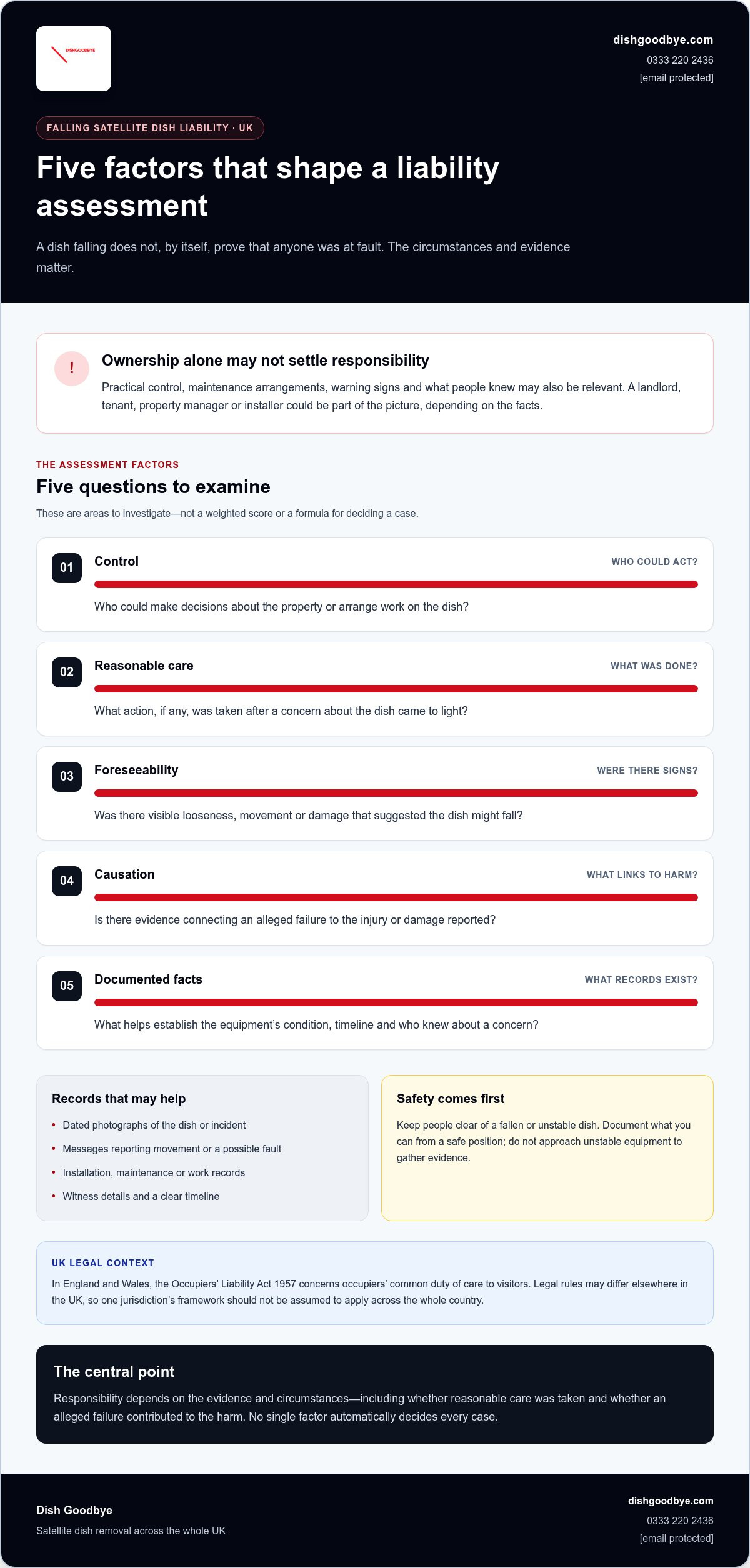
There is no single checklist that decides every case. When assessing liability for falling satellite dish UK incidents, useful questions include who had practical control, what steps were reasonable in the circumstances, whether a problem could have been anticipated and how the fall caused the reported harm. These are issues to investigate, not a formula for reaching an automatic conclusion.
In England and Wales, the Occupiers' Liability Act 1957 concerns occupiers’ common duty of care to visitors. The legal framework may differ elsewhere in the UK, so do not assume that one jurisdiction’s rules apply across the whole country.
- Control: Who could make decisions about the property or arrange work on the dish?
- Reasonable care: What action, if any, was taken after a concern came to light?
- Foreseeability: Were there signs that the dish might come loose or fall?
- Causation: Is there evidence linking an alleged failure to the injury or damage?
- Documented facts: What records help establish the timeline and condition of the equipment?
Control, maintenance, and warning signs
Practical control can matter as much as formal ownership. Consider who could arrange inspection or removal, who managed maintenance and whether anyone received a report about visible looseness, movement or damage. The answer may depend on property arrangements and the dish’s installation and maintenance history.
Dated photographs, messages, work records and reports can help show what was known and when. For example, a record of a concern raised before the fall may be relevant to assessing what could reasonably have been anticipated. It does not establish fault on its own, and there is no universal inspection schedule that applies to every dish.
Causation, foreseeability, and evidence
An assessment may look at how the dish came away, where it landed and whether the alleged failure caused the harm claimed. Weather or other events may form part of the account, but their presence alone does not settle responsibility. Physical evidence and a clear timeline help put the incident in context.
Responsibility depends on evidence connecting a person’s conduct, or lack of action, to the harm. Where it is safe, preserve photographs of the incident, witness details, relevant messages and records. Do not approach unstable equipment to gather evidence. Safety comes first.
If a redundant dish appears insecure, professional removal can address the dish, brackets, fixings and cabling. Learn about satellite dish removal across the whole UK.
Who May Be Responsible? Compare Common Falling-Dish Situations
Several people may be relevant after a dish falls, but a connection to the property does not automatically make someone responsible. Consider who controlled the equipment or exterior, who arranged the installation or maintenance, and who knew about any concerns. Those details help frame liability for falling satellite dish UK cases without jumping to a conclusion.
In England and Wales, the Occupiers' Liability Act 1984 addresses occupiers’ duties in relation to people who are not visitors. It is one part of the legal picture, not a shortcut to deciding a particular claim. Rules may vary across the UK, so anyone involved in an active dispute should seek advice from a qualified legal professional.
| Possible party | Facts that may matter | Evidence to check |
|---|---|---|
| Homeowner | Whether they arranged installation, controlled exterior maintenance or knew of a concern. | Installation documents, messages, photographs and maintenance records. |
| Landlord | Who managed the exterior and whether a reported issue was passed on or acted upon. | Tenancy documents, repair requests, correspondence and work records. |
| Tenant | Whether they arranged work or reported movement or damage to the relevant property contact. | Messages, dated photographs and records of any installation they commissioned. |
| Property manager | The scope of their role and whether they received or handled reports about the dish. | Management agreements, maintenance logs and communications. |
| Installer | When and how the dish was fitted, and whether evidence points to installation work as a cause. | Invoices, job records, photographs and any later assessment. |
Homes, rented properties and managed buildings
In an owner-occupied home, the owner may have arranged the work and managed the exterior, but the facts still need to be considered. In a rented or managed building, responsibilities may be divided. A landlord could oversee some work while a tenant arranged an installation, or a property manager might handle reports on the owner’s behalf. Contracts, permissions and actual practice can help clarify each person’s role. For related background, read this landlord property maintenance guide.
Installer involvement and different types of harm
Installation records can help establish when the dish was fitted and who did the work. The involvement of an installer does not, by itself, prove poor workmanship caused a fall. The equipment’s condition, later changes and other circumstances may matter, and an expert assessment may be needed.
An injury claim and a claim for damage to a neighbouring property raise different questions about the harm and its cause. Both require evidence and a fact-specific assessment. Preserve relevant records, and get qualified legal advice if a claim has been made or you are considering one.
What to Do if a Satellite Dish Falls or Looks Unsafe
Keep people away from the dish and do not climb up to inspect or remove it. A loose dish, bracket or piece of cabling could move or fall further. Keep others clear of the area, including the space beneath the equipment, and do not touch exposed cables. If someone is injured or there is immediate danger, seek urgent help through the appropriate emergency channels.
Immediate steps after a dish falls
Once it is safe, make a simple record of what happened. Photograph the scene from a safe position without approaching unstable equipment. Note the date, where the dish fell from or landed, any visible damage and the names of people who witnessed the incident.
- Keep relevant messages, reports and records about the dish or earlier concerns.
- Notify the landlord, property manager or other relevant property contact, depending on your circumstances.
- Contact your insurer and follow the steps set out in your policy if property has been damaged or a claim may follow.
These records may help establish the timeline and what was known, but they do not determine liability on their own. The facts behind liability for falling satellite dish UK incidents need to be assessed individually.
Reducing future risk from redundant equipment
A dish that looks loose or damaged, or is no longer used, should not simply be left unassessed. Do not try to secure or dismantle it yourself from a roof or ladder. If it appears unstable, keep the area clear and arrange a safe way to address it. Professional removal is a practical preventive step for redundant equipment.
Removal can cover the dish, brackets, fixings and redundant cabling, with fixing holes filled and smoothed afterwards. For more on this approach, read professional dish removal to protect your property from redundant equipment.
Dish Goodbye provides satellite dish removal across the whole UK. If your dish is redundant or appears insecure, arrange professional redundant dish removal to clear the equipment and leave the exterior neat.
How Professional Satellite Dish Removal Can Help Protect a Property
Removing a redundant or insecure dish can be a practical property-maintenance step. It clears equipment that is no longer needed and avoids leaving loose or damaged fixtures in place. Removal does not guarantee that no future damage will occur or decide liability for falling satellite dish UK claims. Any active legal dispute still needs advice from a suitably qualified legal professional.
What a complete removal service can address
A dish is only part of the installation. Brackets, fixings and redundant cabling may also remain on the property, so removing the associated equipment helps leave the exterior clearer and tidier. Dish Goodbye’s removal service covers redundant satellite dishes, aerials, brackets, fixings and cabling.
After the fixings are removed, the resulting holes are filled and smoothed as part of restoring the exterior. This finishing step helps leave the area neater instead of leaving fixing holes behind.
Removed metal and electronic waste is processed through approved recycling centres. This describes how those materials are handled without making broader claims about environmental impact.
A practical next step for redundant or insecure dishes
If a dish is no longer used, or appears loose or damaged, professional removal can address the equipment and its fixings without a risky do-it-yourself job. Keep people away from anything unstable and do not climb to inspect or dismantle it. Removal is a preventive maintenance choice, not a guarantee against liability or future damage.
For an active claim or disagreement about responsibility, get qualified legal advice alongside any practical steps you take for the property.
Book professional satellite dish removal across the UK. Visit dishgoodbye.com, call 0333 220 2436 or email [email protected].
Take the Next Step Towards a Safer, Tidier Property
Responsibility for a falling dish depends on the circumstances, not ownership alone. Control of the property, warning signs, the dish’s condition and evidence linking events to harm may all matter. If a dish has fallen or someone has made a claim, keep people safe, preserve relevant records and seek qualified legal advice about the specific dispute.
If equipment is redundant or appears insecure, professional removal is a practical way to address it. Dish Goodbye covers the whole UK, removing dishes along with brackets, fixings and redundant cabling. Fixing holes are filled and smoothed, and removed metal and electronic waste is sent to approved recycling centres. It is a practical step towards a cleaner exterior, though removal cannot determine or guarantee the outcome of a liability matter.
Arrange professional satellite dish removal and take a practical step towards a safer, tidier property.
Frequently Asked Questions
Who is liable if a satellite dish falls off a house in the UK?
There is no automatic answer based solely on who owns the dish. Liability for falling satellite dish UK incidents may depend on who controlled the relevant property or equipment, what they knew about its condition, what steps they took, how it fell and what harm resulted. Evidence helps establish these facts, and the applicable legal rules may vary across the UK. For advice about a specific incident or claim, speak to a qualified legal professional.
Can a landlord be liable if a tenant’s satellite dish falls?
A landlord may be relevant, but is not automatically responsible just because the dish is on a rented property. The answer can depend on the tenancy arrangement, who controlled exterior maintenance, who installed or authorised the dish and whether concerns were reported. Keep copies of messages, photographs and maintenance records, along with the property agreement. These details can help clarify the situation, but a qualified legal professional should advise on a specific incident.
Can a homeowner be liable for a satellite dish falling onto a neighbour’s property?
A claim may depend on what caused the fall, the dish’s condition, any warning signs, who controlled it and the evidence of damage. The fact that a dish landed on neighbouring property does not, by itself, settle responsibility. Photograph damage from a safe position, note when and where it happened, and notify relevant property contacts. If a claim arises, get advice from a qualified legal professional who can assess the specific facts.
What should I do if a satellite dish looks loose or is falling?
Keep people away, and do not climb up, touch the dish or try to remove unstable equipment. If it is safe, record what you can see from a distance and tell the relevant property contact, such as a landlord or property manager. If anyone faces immediate danger, seek urgent help through the appropriate emergency channels. Arrange a competent assessment or professional removal instead of attempting hazardous work yourself.
Could an installer be liable if a newly installed satellite dish falls?
An installer could be relevant to an investigation, but a fall alone does not prove that the installation was at fault. Records of the work, how the dish was fitted, the cause of the failure and evidence of resulting damage may all matter. Preserve paperwork and photographs if it is safe to do so. If someone is injured, significant damage occurs or a formal claim is made, seek qualified legal or technical advice.
Does removing a redundant satellite dish prevent future liability?
Removing unused equipment can address a potential source of risk, but it cannot guarantee that no incident or legal claim will occur. Professional removal can include the dish, brackets, fixings and redundant cabling, with fixing holes filled and smoothed afterwards. Keep records of removal or other relevant maintenance. If the dish has already fallen or a claim is underway, removal does not resolve the legal questions, so seek qualified advice about the incident.
Can I remove a loose satellite dish myself?
Do not climb up or handle a dish that appears unstable. Work at height, awkward fixings and exposed cabling can add risks, so keep people clear and arrange competent professional help instead. Do not try to secure or dismantle equipment if doing so would bring you close to a potential fall hazard. For a redundant dish, professional removal can address the dish and associated brackets, fixings and cabling without a risky do-it-yourself attempt.