
Could removing an old rooftop aerial put you at greater risk than leaving it in place? Falls, unstable access and dropped equipment can make a seemingly simple job unsafe. Health and safety for rooftop aerial removal starts with assessing the roof and planning how the equipment can be brought down without harming people or property. Dish Goodbye | 0333 220 2436 | [email protected] | dishgoodbye.com
It’s also understandable to worry about cracked roof coverings or rain entering through old fixing holes. A controlled removal should consider the exterior as well as the equipment, with fixing holes filled and smoothed afterwards.
This guide explains the main hazards to recognise, the safety controls to consider and what to expect from a planned removal. You’ll also learn when to stop a DIY attempt and how removed metal and electronic waste is handled. Dish Goodbye removes redundant rooftop aerials and dishes across the UK, including associated brackets, fixings and cabling. Call 0333 220 2436 or email [email protected] to arrange a removal.
Key Takeaways
- Understand how access, balance, weather and handling bulky equipment can make rooftop removal hazardous.
- Health and safety for rooftop aerial removal starts with assessing the equipment, roof and access before deciding how to control risks.
- Basic DIY skills don’t remove the risks of working at height. Know when to stop and leave dismantling to professionals.
- Before work begins, keep people away from the work area and pets indoors to help protect them from potential hazards.
- Professional removal can include taking away redundant equipment, brackets and cabling, treating fixing holes, and sending metal and electronic waste to approved recycling centres.
Health and safety for rooftop aerial removal: what can go wrong?
Health and safety for rooftop aerial removal covers more than taking down the visible equipment. The job may involve a redundant TV aerial or antenna, a satellite or Sky dish, plus its brackets, fixings and cables. Even a small fixture can be awkward to reach, firmly secured and difficult to control once detached.
Safe removal requires planned access, careful handling and measures to protect people below and the building itself. Working above ground brings together several risks: reaching the equipment, keeping balance, responding to changing weather and managing parts that may shift or come loose. A straightforward-looking job from the garden can be very different at roof level.
Which hazards matter before rooftop equipment comes down?
A person can be at risk of falling while getting into position or reaching across a roof. Unstable access and slippery surfaces can make movement harder to control. Wind can catch a dish or aerial as it’s loosened, while rain may affect footing and handling. Conditions that change during the job can make an already awkward task less predictable.
There’s also a risk to people below. Tools, fixings or a detached component could fall during dismantling. The work area should be considered from the ground as well as the roof, with people kept clear while equipment is being removed. Access needs to suit both the property and the task. Depending on the assessment, a professional may consider mechanical access such as Aerial Work Platforms (AWPs), rather than assuming a ladder is appropriate.
How can removal affect the roof and exterior?
There are property risks as well as personal ones. Pulling or levering equipment without care may disturb nearby roof coverings or damage the masonry around a bracket. Cables can be attached or routed in ways that aren’t obvious from the ground, so removing them roughly may affect the surrounding surface.
Once the fixings are removed, holes may remain in the roof or exterior wall. These need suitable attention because an exposed opening can let water in. The condition of the surrounding material matters, and removal can reveal existing wear or damage. Filling and smoothing fixing holes helps protect the exterior, but doesn’t mean every mark or pre-existing defect can be fully repaired. A careful finish is part of the job, not an afterthought.
How a rooftop removal safety assessment identifies the right controls
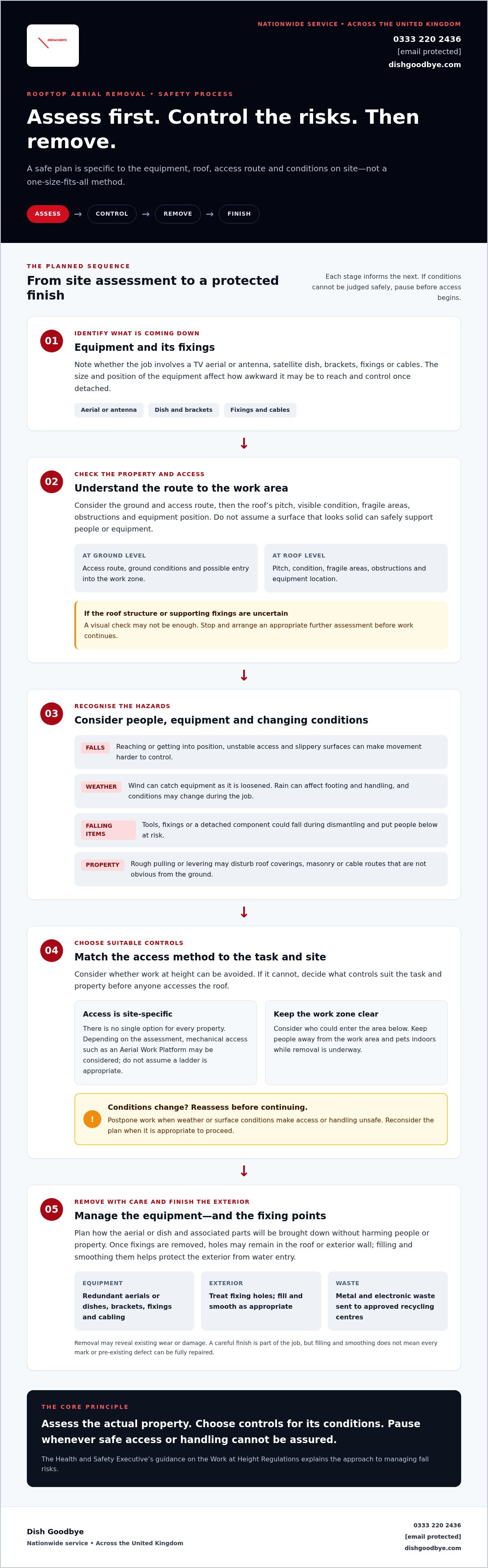
A safe plan starts with the actual property, not a one-size-fits-all method. For health and safety for rooftop aerial removal, the assessment follows a clear sequence: identify what needs to come down, examine how it can be accessed, consider the hazards, then decide how to control them.
The equipment matters. A small aerial, a dish with a wide surface, and their brackets or cables can each create different handling challenges. The roof’s visible condition, the equipment’s position, nearby obstructions and the route to the work area all influence the suitable approach. The work plan must fit the specific property because every roof, access route and removal task has its own conditions.
An initial visual assessment can help identify obvious concerns, but it isn’t the same as a specialist survey. If the roof structure or supporting fixings appear uncertain, or site conditions can’t be safely judged from a visual check, a further assessment may be needed before removal proceeds. Don’t assume that a surface that looks solid can safely support people or equipment.
The Health and Safety Executive’s guidance on The Work at Height Regulations explains the approach to managing fall risks. In practice, the assessment should consider whether work at height can be avoided and, if not, what controls suit the task and site. The aim is to choose a safe, considered method rather than improvise once someone is already on the roof.
What should be considered before access begins?
Consider the route to the work area, ground conditions and whether people could enter the work zone. At roof level, relevant factors include the pitch, visible condition, fragile areas, obstructions and the equipment’s location. The access method depends on these details; there’s no single option that suits every property. If the structure’s condition is uncertain, stop and arrange an appropriate assessment before work continues.
How do weather and changing conditions affect the plan?
Conditions need attention before access begins and while work is underway. Rain can affect footing, while wind can make equipment harder to control. If the weather changes or the surface becomes slippery, the original plan may no longer be safe. Work should be postponed when conditions make access or handling unsafe, then reconsidered when it’s appropriate to proceed.
For redundant aerials or dishes, a property-specific plan helps make removal more controlled and straightforward. Explore Dish Goodbye’s rooftop equipment removal as a practical alternative to taking on roof access and dismantling yourself.
DIY or professional rooftop aerial removal: how the safety risks compare
A dish or aerial can look like a quick job from the ground. But a simple-looking fixture may be difficult to reach, awkward to handle and more firmly secured than expected. Familiarity with basic tools doesn’t remove the risks of rooftop access or working at height. This comparison shows what changes when removal is planned and carried out professionally.
| Consideration | DIY attempt | Professional removal |
|---|---|---|
| Access | The property owner must judge whether the route and access are safe, which can be difficult to assess from the ground. | Access is considered as part of the work plan, based on the property and equipment location. |
| Work-at-height exposure | The owner takes on the risks involved in reaching and working at the equipment. | The removal team handles the access and removal tasks, rather than the property owner. |
| Component handling | A dish, aerial, bracket or cable may shift or prove awkward to control during removal. | Removal is planned to include the equipment and associated parts, not just the most visible item. |
| Exterior finish | Rushed or careless work can disturb roof coverings or leave fixing points untreated. | Fixing holes are filled and smoothed to help protect the exterior. |
Professional work doesn’t make every roof or access route the same. It does shift the access and dismantling task away from the homeowner and gives attention to what happens after the equipment comes down. Health and safety for rooftop aerial removal means considering the whole job, not just whether someone can reach the dish.
When should a homeowner avoid attempting removal?
Don’t proceed if access feels uncertain, roof areas appear damaged, the equipment is awkwardly positioned, or conditions make safe handling doubtful. If you can’t confidently judge the route, surface or risk to people below, stop rather than test it by climbing. Leaving the equipment in place until it can be assessed and removed professionally is the safer decision.
What does professional removal add beyond taking equipment down?
A thorough removal can cover the redundant dish or aerial, brackets, fixings and associated cabling. The fixing points matter too: exposed holes can let water in, so filling and smoothing them helps protect the exterior. For details about a professional dish removal service, see how Dish Goodbye handles redundant rooftop equipment.
What to prepare before rooftop aerial removal begins
A little preparation can make a removal visit smoother without asking you to take on any risky work. Health and safety for rooftop aerial removal depends on a plan that fits the property, so share useful details and leave roof-level checks to the professionals. You don’t need to climb or inspect the equipment up close.
What information helps the removal visit run smoothly?
From the ground, note where the redundant aerial or dish is mounted and whether you can see brackets or associated cables. Tell the removal team about access restrictions, such as a locked side gate, and mention visible damage or concerns about the roof. Don’t go onto the roof to gather details. These observations help the team understand the job and take account of the property’s layout and visible condition.
How can the area be kept clear and safe?
Before work begins, help keep the immediate work area clear. Move people away from the zone and keep pets indoors during the visit. Where practical, move portable items away from the area below the equipment. The removal team manages its work area and equipment, but a clear space helps reduce disruption and keeps household members away from the activity.
- Identify the redundant equipment from a safe position.
- Share what you know about remaining brackets or cables.
- Point out access restrictions or visible property concerns.
- Keep people and pets clear of the work area.
Every property is different. A dish above an easy-to-reach area presents different access considerations from an aerial near an obstruction, so the work plan should reflect the actual site rather than assume all roofs are alike. For more detail about the process, read the TV aerial removal guide.
Preparation doesn’t mean dismantling anything yourself. Dish Goodbye’s removal service covers redundant dishes, aerials, brackets, fixings and associated cabling, with fixing holes filled and smoothed to help protect the exterior. Removed metal and electronic waste is sent to approved recycling centres. View Dish Goodbye’s removal service for a practical way to arrange removal without taking on rooftop access yourself.
How Dish Goodbye handles rooftop aerial removal from assessment to finish
Safe removal is about more than getting an old dish off the roof. Health and safety for rooftop aerial removal means considering the property and equipment, carrying out a controlled removal, then attending to the fixing points and waste. Dish Goodbye removes redundant satellite dishes, Sky dishes, aerials and antennas across the UK.
The work takes the specific property into account. Equipment position, brackets, fixings and associated cabling all form part of the removal. This avoids treating a roof-mounted dish as a single loose item when its supports and cables may also need attention.
What happens to brackets, fixings, cables, and holes?
Removal can include the dish or aerial, its brackets and fixings, and redundant cabling. Once the equipment is down, fixing holes are filled and smoothed to help protect the exterior and leave a tidier finish. Open fixing points can provide a route for water to enter, so dealing with them matters. This work isn’t a complete roof refurbishment, and it doesn’t mean every existing mark or defect will be repaired.
Removed metal and electronic waste is sent to approved recycling centres. The process considers what happens to the equipment after it leaves the roof, not just how it comes down. Responsible recycling is one part of a complete removal.
How can readers arrange a safer, simpler removal?
Choosing professional removal means you don’t have to take on rooftop access or dismantling yourself. The service covers redundant equipment and associated parts, with attention to the fixing points and responsible handling of removed waste. It’s a straightforward next step when a dish or aerial is no longer needed.
Arrange removal with Dish Goodbye and leave the access, dismantling and finishing work to the removal team. Explore Dish Goodbye’s rooftop removal service.
Dish Goodbye
0333 220 2436
[email protected]
dishgoodbye.com
Make rooftop removal the safer, simpler next step
Good health and safety for rooftop aerial removal starts with a property-specific plan, controlled access and careful handling. A fixture that looks small from the ground can still be awkward to reach, so don’t take on a climb if access or the roof condition is uncertain. A thorough removal also considers the fixing points and what happens to the equipment afterwards.
Dish Goodbye removes redundant dishes, aerials, brackets, fixings and cabling across the United Kingdom. Fixing holes are filled and smoothed to help protect the exterior, while removed metal and electronic waste is processed through approved recycling centres. It’s a practical way to clear unwanted rooftop equipment without taking on the access and dismantling yourself.
Arrange a simpler rooftop aerial removal with Dish Goodbye and take the next step towards a tidier exterior and a job handled with care.
Dish Goodbye | 0333 220 2436 | [email protected] | dishgoodbye.com
Frequently Asked Questions
Is it safe to remove a rooftop aerial yourself?
It isn’t automatically safe, even if the aerial looks small or you’re comfortable using basic tools. Reaching it may involve uncertain access, roof surfaces you can’t assess from the ground, or awkward equipment that shifts as it’s detached. Don’t climb or start dismantling if you’re unsure about access, roof condition or how to control the equipment. Professional removal means you don’t have to take on those rooftop tasks yourself.
What are the main health and safety risks of rooftop aerial removal?
The main risks include falling while accessing or working near a roof edge, losing balance on a slippery surface, and handling equipment that moves unexpectedly. Tools, fixings or detached parts could also fall and injure someone below. Health and safety for rooftop aerial removal means considering people on the roof and at ground level, as well as the building. Access, weather and equipment position all affect the risks.
Can bad weather make rooftop dish or aerial removal unsafe?
Yes. Rain can make surfaces slippery, while wind may make a dish, aerial or loose component harder to control. Conditions can change during the work, so a plan that seemed suitable beforehand may need to be reviewed. If weather makes access or equipment handling unsafe, the work should be postponed until conditions are more suitable. Don’t try to overcome unsafe conditions by rushing or improvising.
How can removing a satellite dish damage a roof?
Careless pulling or levering can disturb nearby roof coverings or damage the masonry around a bracket. A dish may be securely fixed, and its supports or cables can be awkward to remove without affecting surrounding surfaces. Once fixings come out, holes may remain and could let water in if left exposed. Careful removal and attention to fixing points help protect the exterior, but won’t necessarily repair existing damage.
Should people and pets stay clear during rooftop equipment removal?
Yes. Keep household members and visitors away from the immediate work area, and keep pets indoors during the visit. Tools, fixings or equipment could fall while work is underway, so avoid standing beneath the removal area or allowing people to pass through it. Move portable items away from the space below where practical. The removal team manages its work area and equipment, while you help keep others clear.
What happens to the holes left after an aerial or dish is removed?
Fixing holes are filled and smoothed to help protect the exterior and leave a tidier finish. This matters because exposed holes can provide a route for water to enter and potentially contribute to damp issues. The work addresses the fixing points left by the previous installation, but it isn’t a complete roof refurbishment. Existing marks, wear or damage around the holes may need separate attention.